Maenan Abbey: A Cistercian Monastery in Wales
Site at a Glance
- Popularity
- Medium
- Country
- United Kingdom
- Primary era
- Medieval
- Eras represented
- Medieval, Early Modern
- Civilizations
- English
- Site type
- Religious
- Remains
- Monastery
On this page9 sections
History
Maenan Abbey was a Cistercian monastery at Maenan near Llanrwst in Wales, United Kingdom, established there in 1283 after its community had moved from Aberconwy. The Cistercians were a Catholic monastic order whose members followed a shared religious rule and way of life.
From Rhedynog Felen to Maenan
Monks from Strata Florida Abbey founded the community at Rhedynog Felen, near Caernarfon, in 1186. In 1190 or 1191, it moved to Conwy and established Aberconwy Abbey. In 1283, Edward I ordered the monks to move again, because he had chosen their former home at Aberconwy as the site for a castle.
Royal foundation and suppression
At Maenan, the monastery was dedicated to Saint Mary and All Saints and regarded as an English royal foundation. Edward I attended its establishment, provided financial support for its buildings, and gave it a set of glass windows. Edward was king of England from 1272 to 1307.
The 1535 Valor Ecclesiasticus, a survey of the wealth of religious institutions in England and Wales, placed the abbey among the smaller houses liable to early suppression. It assessed the abbey’s income at £162 and recorded net income of £162 15s. Abbot Richard ap Robert kept the community going until its suppression in March 1537, when its gross revenue was valued at £179 10s 10d.
The Wynne estate and later investigation
In 1563, the abbey site and the township of Maenan were granted to Elizeus Wynne. He demolished many of the monastic buildings and built a mansion there. A Wynne family pedigree traces later inheritance through Mary, heiress of Maenan Abbey, who died in 1632, to John Wynne of Melai and Maenan, sheriff of Denbighshire in 1712. John’s co-heirs included Jane, who married Sir John Wynn of Bodvean and was the mother of Thomas Wynn, created Lord Newborough in 1776. Lord Newborough was named as the owner in 1885.
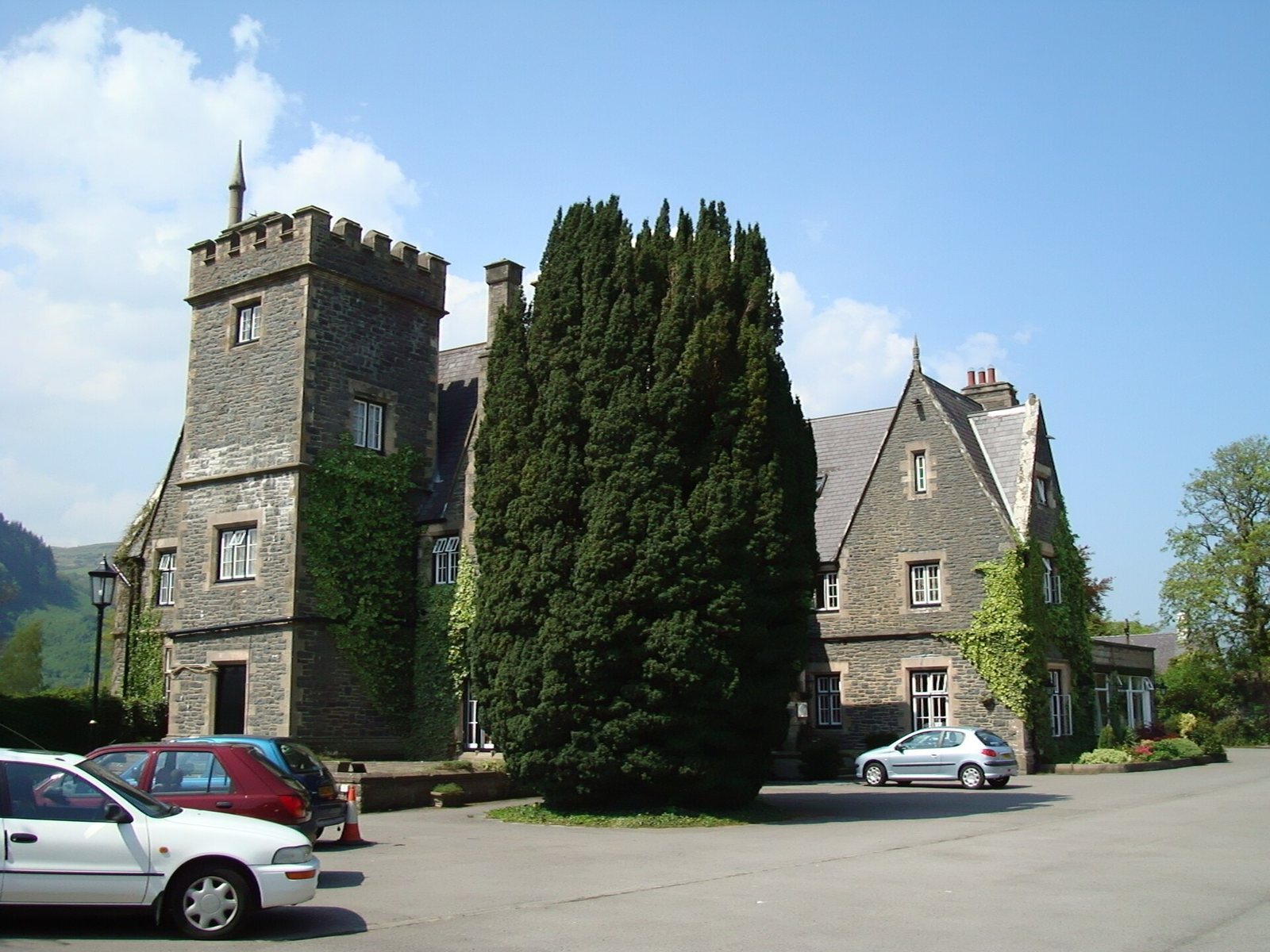
The abbey grounds were excavated in 1963, and the site was later developed as the Maenan Abbey Hotel. Drainage work in the hotel grounds in 2011 exposed three medieval walls, and Cadw, the Welsh government’s historic-environment service, visited to assess the excavation.
Remains
The physical remains include masonry at the former abbey site, building material reused elsewhere, and a stone coffin transferred to Llanrwst.
Masonry at Maenan
Arch
A small arch survives as part of the original abbey fabric.
Walls thought to belong to the cloister
Three walls uncovered in the hotel grounds during drainage work in 2011 are thought to have formed part of the cloister, the covered passage around a monastery’s central courtyard. Each is about six feet thick, and the walls are dated to 1282.
Reused stone and transferred coffin
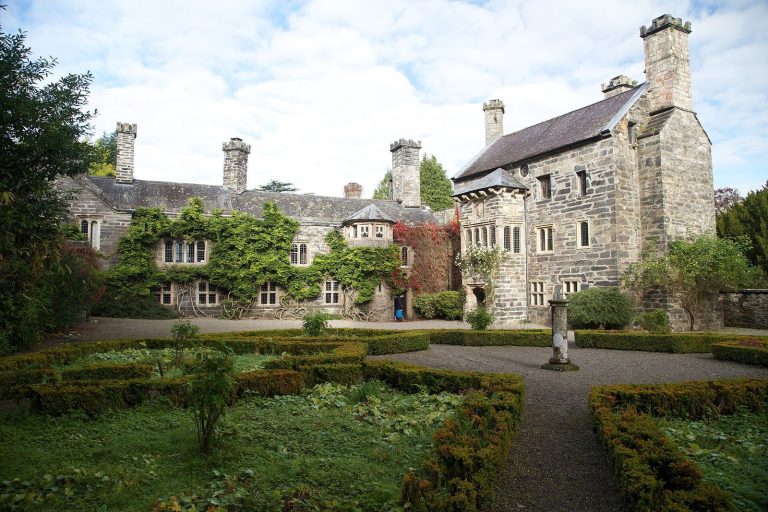
A large house built with material from the abbey was described as still standing in 1885. Abbey stone was also incorporated into Gwydir Castle, while other material was used to repair the justice’s hall at Caernarfon. A stone coffin of Prince Llewelyn the Great, a leading ruler of Gwynedd in the early thirteenth century, was moved from the abbey to Gwydir Chapel at the church in Llanrwst.