Berga Castle and Estate: An Agricultural School and Naval Site in Sweden
Site at a Glance
- Popularity
- Medium
- Country
- Sweden
- Primary era
- Modern
- Eras represented
- Bronze Age, Iron Age, Modern
- Civilizations
- Swedish
- Site type
- Domestic
- Remains
- Castle
On this page12 sections
History
Village and estate
Berga Castle and Estate is a historic estate in Berga, Sweden. The village has prehistoric origins, and its name appears as Dygraberghom in 1401 and Berghom in 1437. Between 1554 and 1573, Berga comprised four mantal, a Swedish land-tax assessment unit rather than a fixed area, and a church homestead at Fors.
The farm that became Berga seat farm passed through a succession of owners. Gierss held it in 1669, Ulfsparre in 1670, and Ehrenhjelm in 1686. It later passed to Törnflycht, returned to Ehrenhjelm in 1722, and changed hands again, going to Colling in 1735, Flach in 1740, and Aulævill in 1772. Later owners included the commercial councillor Ljunggren, managing director Zethelius, and merchant A. Tydén.
In the 1850s, the estate consisted of a two-mantal seat farm, five dependent holdings, a mill, and a sawmill. By the 1880s, its holdings included Berga, assessed at five mantal, Dalby at one, Kapp Ekeby at two, Fors at one, and Ormesta at one. The mill and sawmill at Fors were also part of the estate. Later owners held Vitsgarn Island, outside Berga in Muskö parish.
Castle and agricultural school
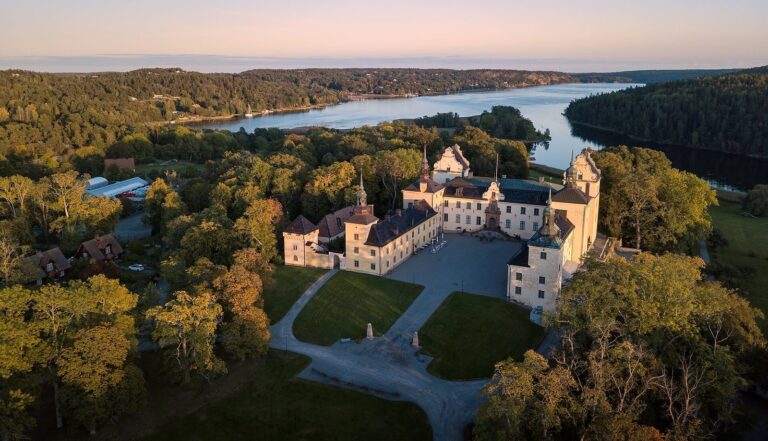
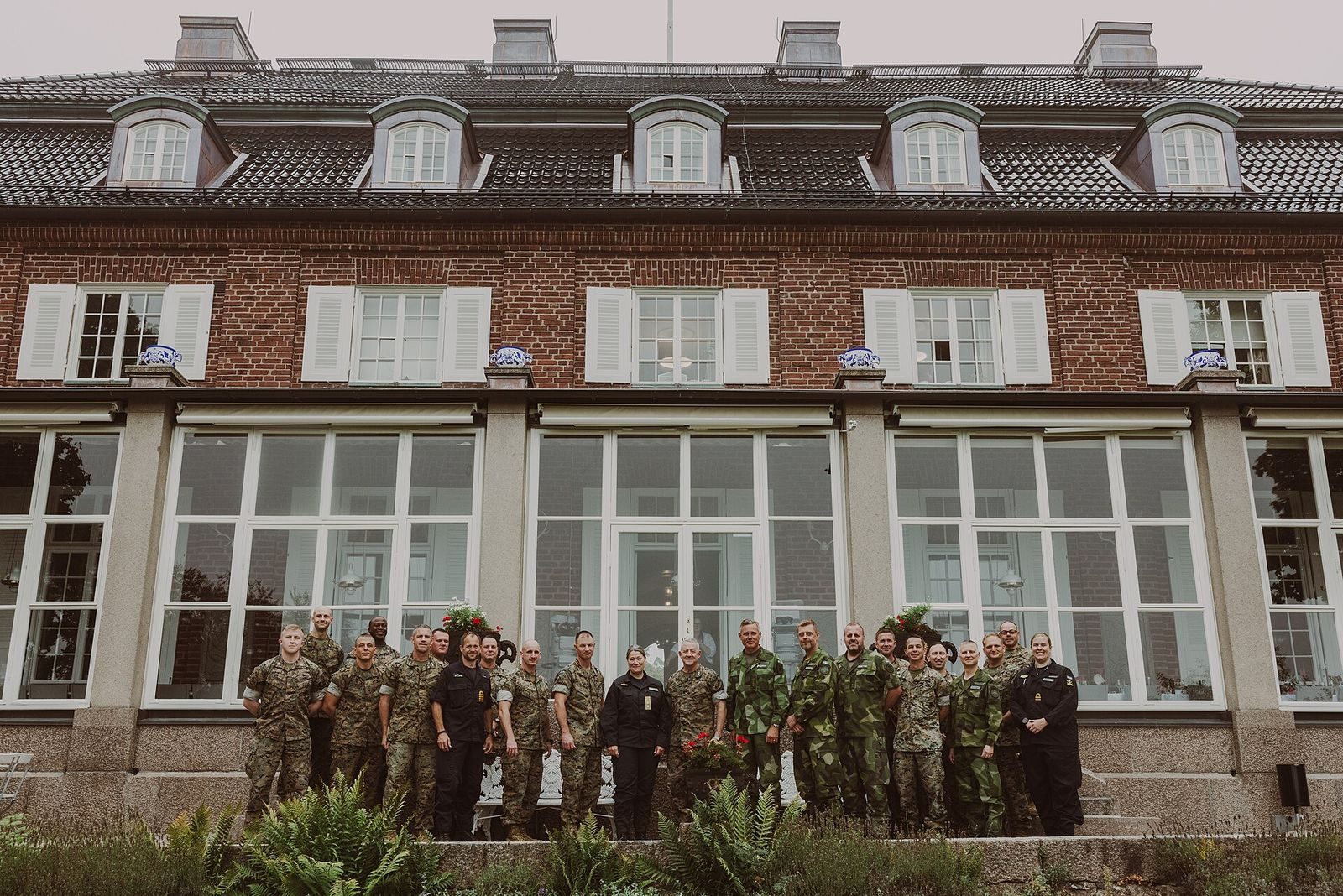
Industrialist and art patron Helge Axelsson Johnson commissioned Berga Castle, which was built in 1913–15 to designs by architect Torben Grut. Autumn moose hunts were an estate tradition. King Gustaf V, Sweden’s king from 1907 to 1950, and his party used a wing of the castle during the hunts. Johnson became hovjägmästare, a senior official associated with the royal hunt, and the building was elevated to the status of a castle. The estate’s hunting ground included European bison, which were later transferred to Johnson’s private facility in Avesta.
Berga Agricultural School began at the mansion and its facilities in 1921. It continues as Berga naturbruksgymnasium, an upper-secondary school for natural resource management. Johnson died in 1941, and his estate was sold under the terms of his will. Several charitable grants were made, while most of the estate formed the Helge Ax:son Johnson Foundation, which awards grants for cultural purposes.
Naval establishment
In 1944, the Swedish state acquired Berga seat farm. The Swedish Navy took land beside Hårsfjärden, while the Swedish Forest Service assumed responsibility for agricultural land and Berga property. The area included a coastal strip from Vitså harbor to Näringsberg, divided between a naval port and naval schools, as well as land used by the agricultural school. The naval school at Skeppsholmen in Stockholm moved to Berga.
The area expanded for military use during the final years of the Second World War and afterward. The Swedish Navy Non-Commissioned Officers’ School began operating there in 1946. Under the Swedish Armed Forces, the castle served practical purposes, including use by staffs and school management, and later as a naval command. An office overlooking Hårsfjärden remains at the disposal of the Chief of Navy.
Remains
Castle and estate buildings
The castle
The castle is a two-storey red-brick building on a granite base. Its courtyard-facing side has two wings with towers, and its säteri roof (a two-level Swedish estate roof separated by a short wall) gives the building its distinctive roof form. The castle held works collected by Johnson, including pieces by Anders Zorn, Bruno Liljefors, and Carl Eldh.
Other estate buildings
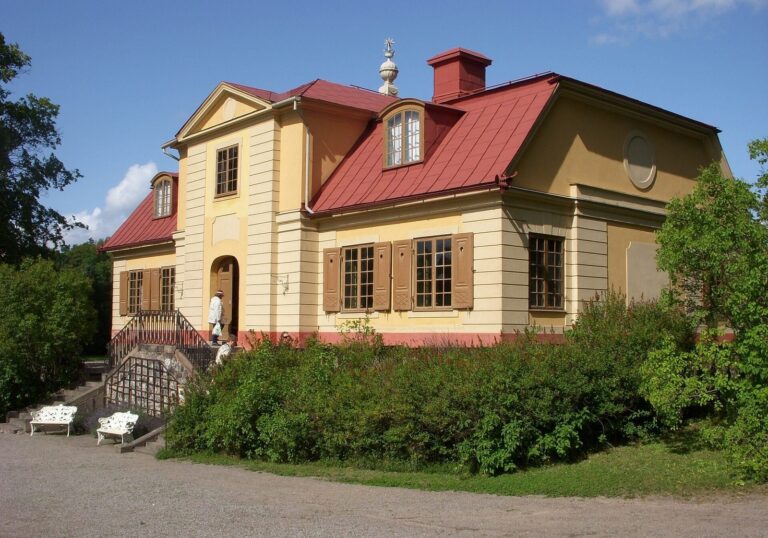
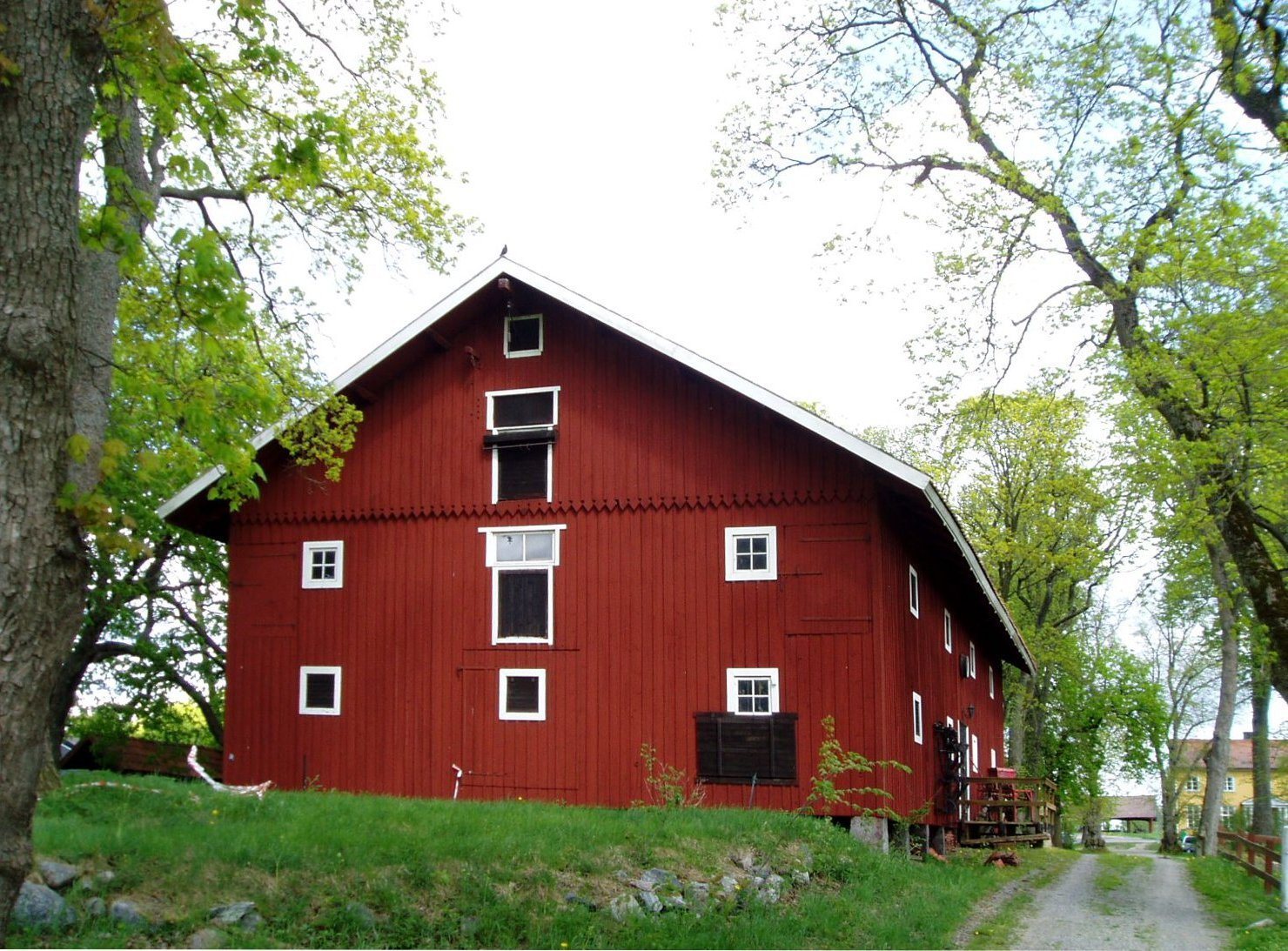
The estate’s agricultural buildings included a mill and sawmill at Fors. Its mansion and associated facilities housed the agricultural school founded in 1921.
Estate grounds and archaeological features
Burial grounds
Burial cairns from the Bronze Age and Late Iron Age lie on the mountains west of the village. Grave fields from the Early Iron Age occupy open land to the east and south.
Farms, cup marks, and runestone
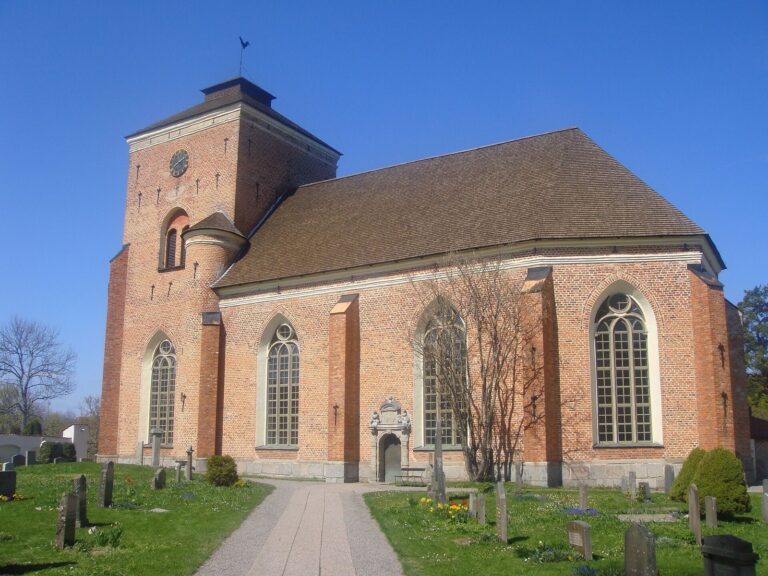
Cup marks and traces of smallholdings and farms are present in the landscape; the farms were in use from the Middle Ages. Runestone Sö 237 stands at the edge of the farm entrance at Fors.
Park and wildlife
During Johnson’s ownership, the park included deer, roe deer, European badgers, foxes, hares, and a variety of bird species. The estate’s hunting ground also held European bison, later moved to Johnson’s private facility in Avesta.