Are Castle: A Medieval Stronghold in Altenahr, Germany
Visitor Information
Google Rating: 4.6
Popularity: Medium
Country: Germany
Civilization: Medieval European
Site type: Military
Remains: Castle
History
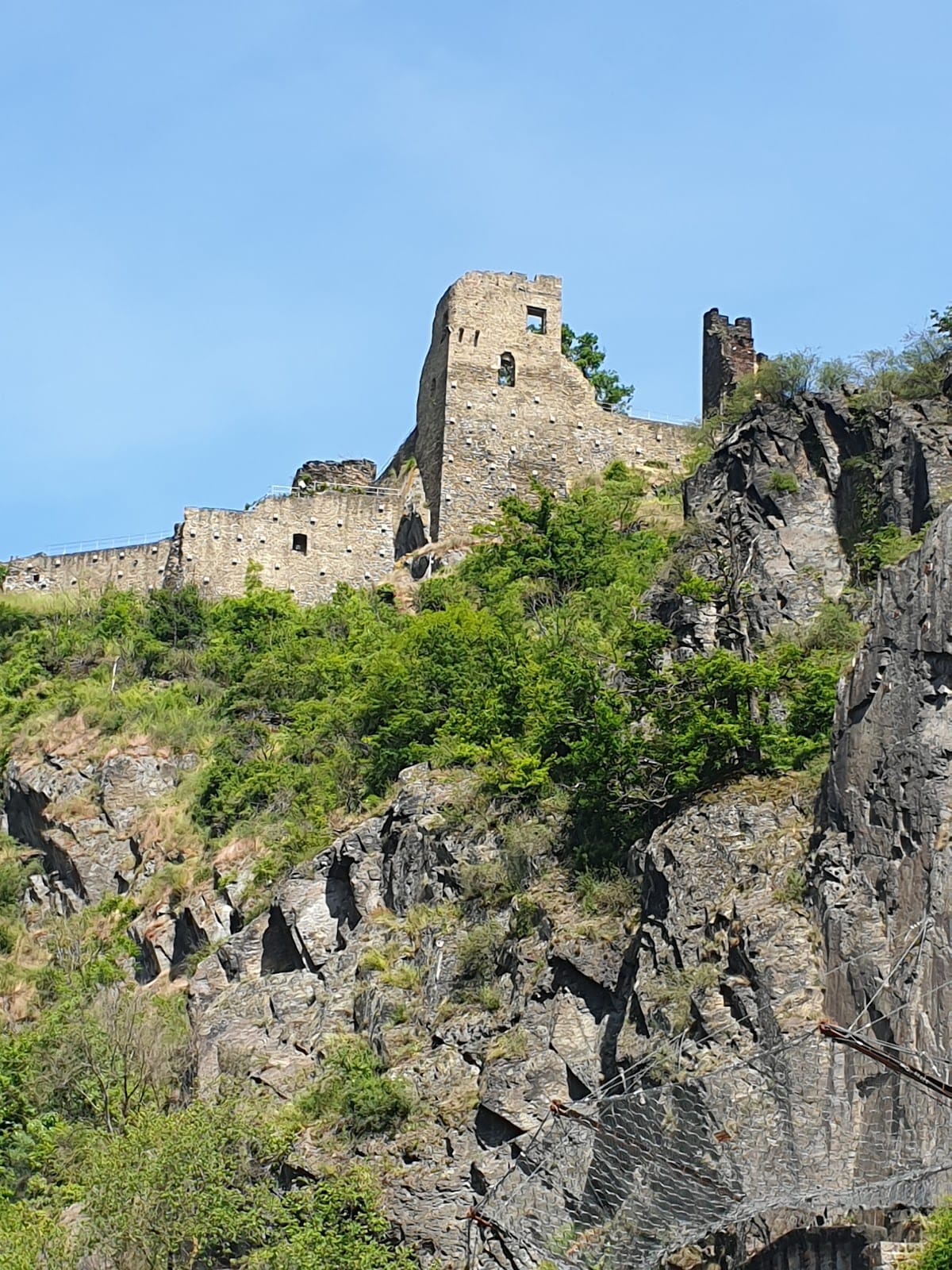
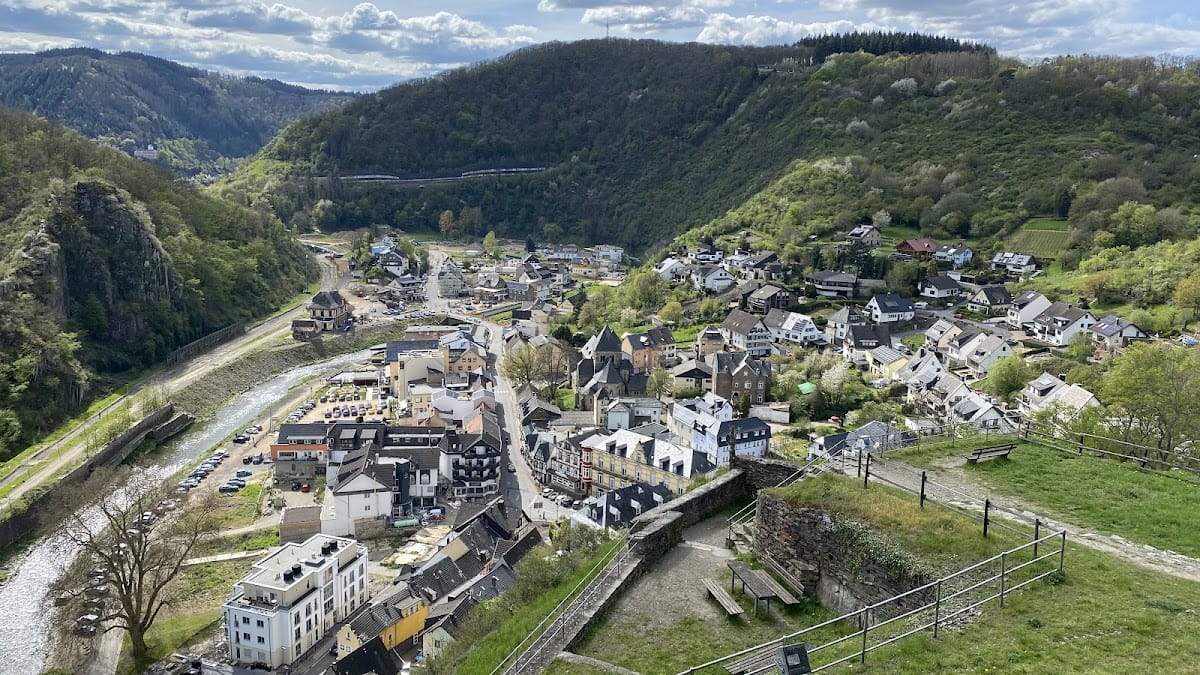
Are Castle stands above the town of Altenahr in present-day Germany and was built by the medieval German nobility during the late 11th and early 12th centuries. Count Dietrich I of Are initiated its construction between 1095 and 1105, establishing it as a stronghold on a hill rising 240 meters above sea level.
The castle originally belonged to the noble House of Are, named after the nearby Ahr River. Around 1140, this family divided into two branches known as Are-Hochstaden and Are-Nürburg. Members of the Are family gained prominence, with some serving significant ecclesiastical roles such as bishops and archbishops. Notably, Conrad of Hochstaden, who was connected to the family, played a key role in building Cologne Cathedral.
In 1246, the castle and its surrounding county were transferred to the Archbishopric of Cologne. This transfer occurred when Count Frederick of Hochstaden, with consent from his brother Conrad, handed over the county and the castles of Are, Hardt, and Hochstaden. Under the archbishops’ ownership, the castle gained increased military and administrative importance. During the 14th and 15th centuries, the fortress was expanded with a surrounding defensive wall to protect the Electoral Cologne’s estates in the Ahr region.
Beyond its military functions, Are Castle served as a prison for opponents of the Cologne archbishops and acted as a religious and cultural center for the area. Over time, the castle was leased to various vassals along with the Altenahr district. Many of these occupants lived on-site but often neglected upkeep, resulting in gradual deterioration. One exception was during the time of Henry of the Horst, who died in 1625; his period of stewardship saw considerable care given to the castle’s maintenance.
The castle’s military significance drew it into conflict during the late 17th and early 18th centuries. In 1690, French forces captured Are Castle after a siege lasting nine months, inflicting substantial damage. Although the French withdrew in 1697, they reoccupied the castle at the outbreak of the War of the Spanish Succession in 1701. Electoral Cologne’s troops regained control in 1706.
After these turbulent years, Prince Elector Joseph Clemens of Bavaria ordered the demolition of the castle’s walls in 1714, with local villagers agreeing to this plan. This dismantling transformed Are Castle into a ruin. Materials salvaged from the demolition were repurposed for constructing a district house at the foot of the castle hill.
Centuries later, in the late 20th century, efforts were made to conserve the site. Between 1997 and 1999, a costly stabilization project secured the ruins to prevent further decline and protect nearby infrastructure. This work included reinforcing walls and making the area accessible. Unfortunately, during this restoration phase, a fatal helicopter accident occurred while transporting materials in 1997. Archaeological interest continued into the early 21st century with an extensive excavation of the castle’s well from 2005 to 2012, removing debris and securing it.
The legacy of the noble family and the castle endures locally, as reflected in the naming of a school, the Are Gymnasium in Bad Neuenahr-Ahrweiler, since 1965.
Remains
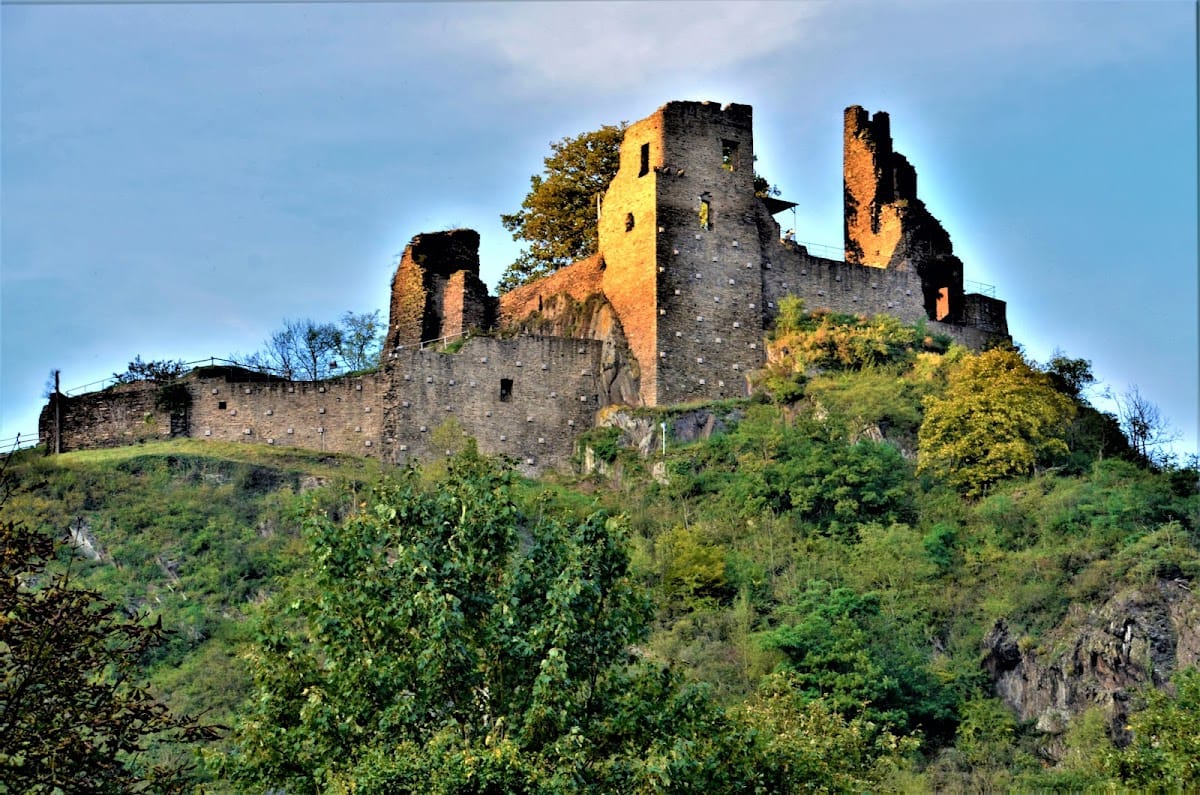
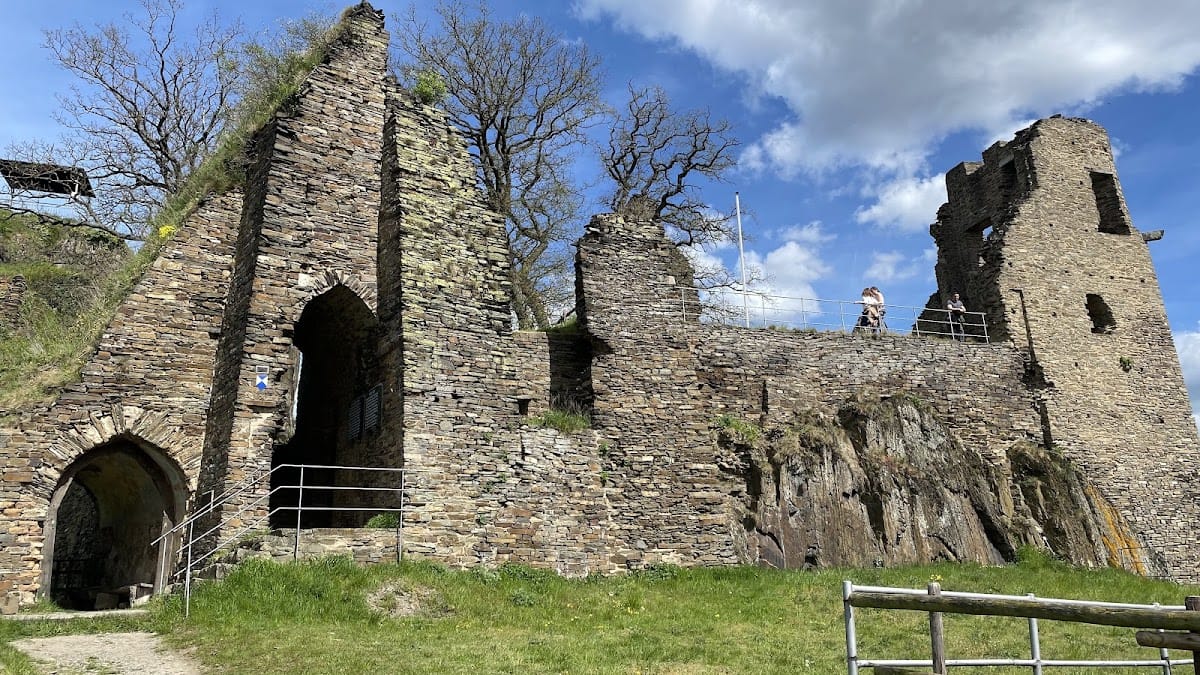
Are Castle occupies a rectangular site atop a hill and is primarily constructed from the local slate rock common in the region. Archaeological investigations reveal parts of the old outer ward and a defensive wall that once encircled the castle, dating especially to expansions made during the 14th and 15th centuries. These fortifications protected the fortress in its role guarding the Electoral Cologne possessions.
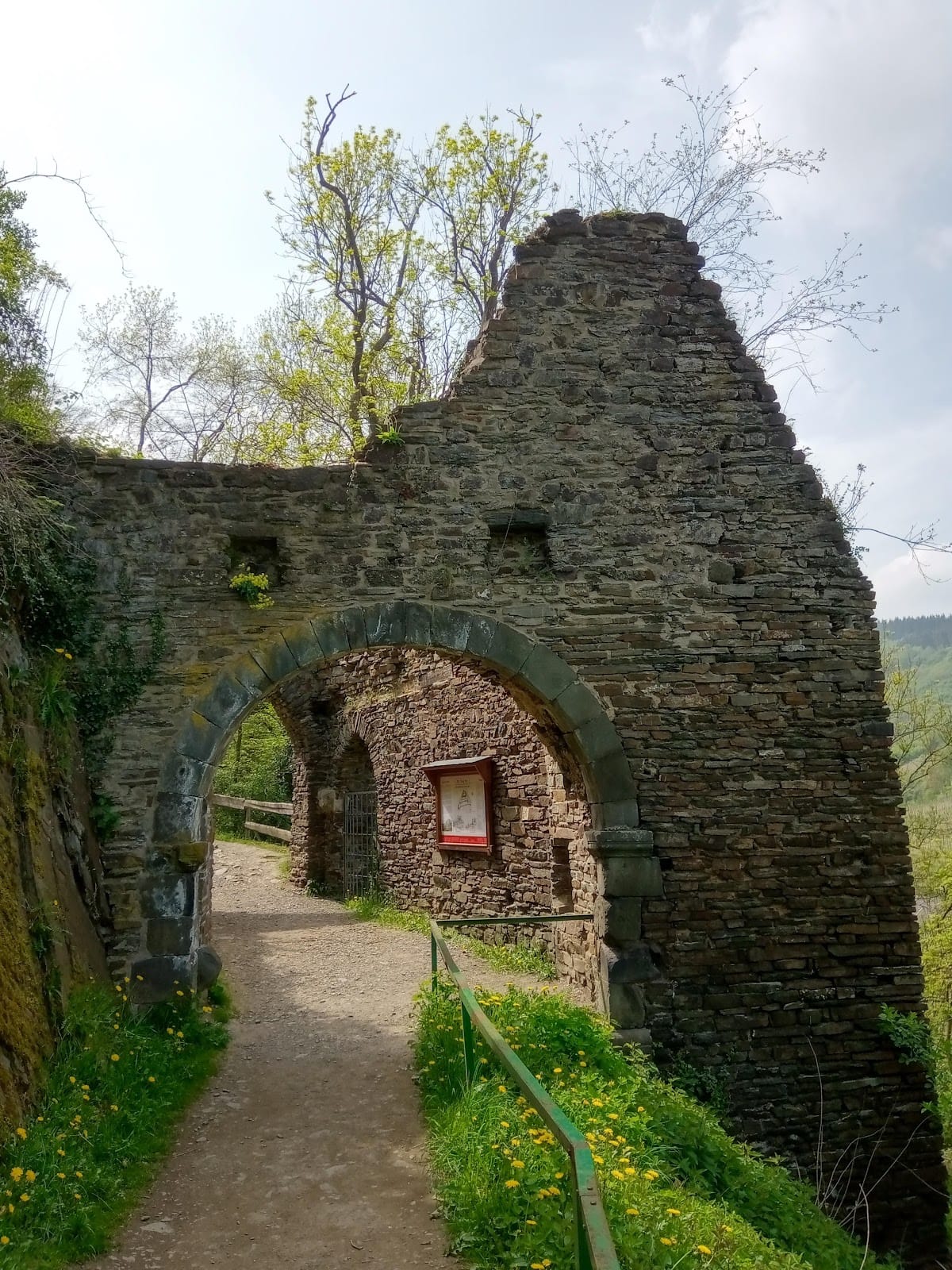
One of the prominent surviving features is the gate complex known as the Gymnicher Porz, located below the main castle on the approach road. This lower gate structure includes a gatehouse over the roadway, an attached residential building with a basement and two upper floors, and a tower positioned alongside. This complex took its name from the House of Gymnich, which held the castle as a fief in parts of the 14th and 16th centuries. At times, the Gymnicher Porz operated as a separate fiefdom. Among its ruins, remnants of chimneys testify to the domestic use of this building.
On the castle’s southern side lies the Schellenturm, an old gate tower adjacent to the remains of the palas—the main residential building of the castle. The palas housed a heated chamber reserved for bishops, indicating the building’s high-status function within the fortress. Restoration efforts in 1997 stabilized the palas wall, which measures approximately 22 meters in length, along with two adjoining side walls. For structural security, metal anchors were driven deep into the underlying slate rock to prevent collapse.
At the northern corner of the site, a pointed rock outcrop served as the foundation for the first bergfried, or main tower, a common feature in medieval castles for defense and observation. North of where the bergfried once stood lie the ruins of the castle chapel, built in the Romanesque style dating to the 12th century. These chapel remains reflect the religious role the fortress played within the region.
The castle well, a vital water source throughout the castle’s occupation, was excavated in the early 21st century down to a depth reaching 29 meters. Filled with debris since the early 18th century, the well shaft was cleared and fitted with a metal grate for preservation.
Overall, the site today contains extensive remains of defensive walls, gates, residential quarters, and the chapel, all testament to its complex history. These elements together reveal a castle that evolved over centuries under various owners and uses, constructed primarily from slate and adapted to meet military, residential, and religious needs. The ruins are protected as a cultural monument and have been preserved to allow ongoing study and appreciation of this medieval stronghold.
Nearby sites