Alte Ennsburg: A Medieval Fortress and Lordly Seat in Austria
Site at a Glance
- Popularity
- Medium
- Country
- Austria
- Primary era
- Medieval
- Eras represented
- Medieval
- Civilizations
- Duchy of Bavaria, Holy Roman Empire
- Site type
- Military
- Remains
- Castle
On this page6 sections
History
A refuge and early castle
Alte Ennsburg was a hilltop castle on Georgenberg in Austria, where an early defensive refuge preceded the castle dated to around 1000. The refuge was established after the Roman city of Lauriacum declined, to defend against incursions by the Avars and Magyars. Royal representatives may have met on the hill around 791 at a place identified as Wartberg.
The name Anesapurch appears in records dated either 901 or 977. The fortress was transferred to the Bishopric of Passau in 976; in 977, Bishop Adalbert transferred it to Henry, Duke of Bavaria and brother of Emperor Otto I. It was also characterized as a castle of a Carolingian royal palatinate, a royal residence and administrative centre associated with the Frankish ruling dynasty of the eighth and ninth centuries.
Succession and territorial rule
The castle later passed to the Otakars, the ruling dynasty of Styria before the Babenberg succession. Medieval rulers and territorial princes lodged there while travelling through Enns, and the castellans who administered the lordship of Enns used it as their seat. At the castle, Otakar IV of Styria, who had no male heir, reached an agreement with Leopold V of Austria that Styria would pass to the Babenbergs after Otakar’s death. Known as the Georgenberger Handfeste, the agreement regulated the succession. The transfer of the castle from the last Otakar to Leopold is dated either 1186 or 1192.
After Frederick the Quarrelsome, the last male Babenberg, died, the castle and lordship passed to Ottokar II Přemysl in 1254. Under the Peace of Ofen that year, Pitten and the Traungau, including Enns, were separated from Styria and incorporated into the Duchy of Austria. This change helped form the distinct lands of Upper and Lower Austria.
The Habsburgs, who held the territory from 1278, pledged the castle to Heinrich von Wallsee in 1309 and redeemed it in 1345. The holding gave rise to the Enns branch of the Wallsee family. Eberhard I von Kapellen held the pledge in 1356. After the Kapellen family died out, Hanns Ponhalm and then his son Clemens served as stewards for the territorial rulers. In 1477 the castle was pledged to Johann, Archbishop of Gran.
Decline and reuse
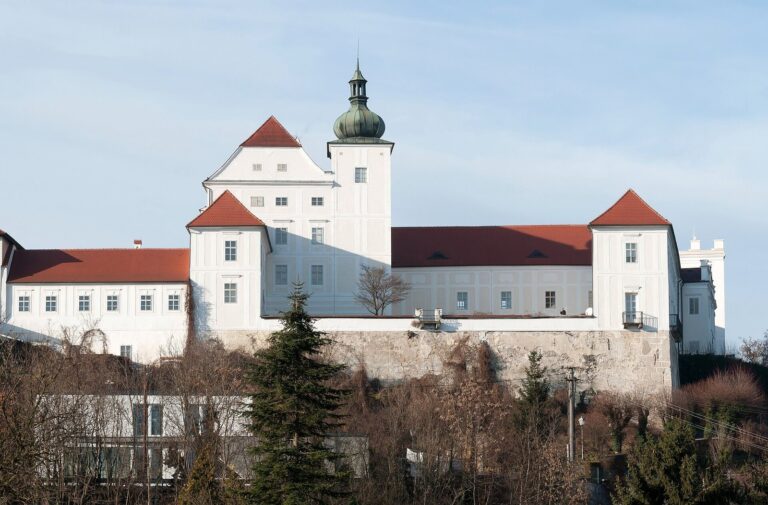
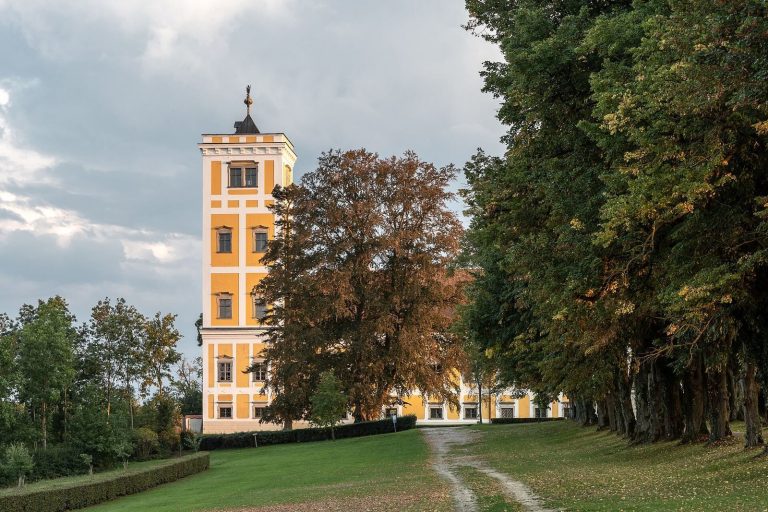
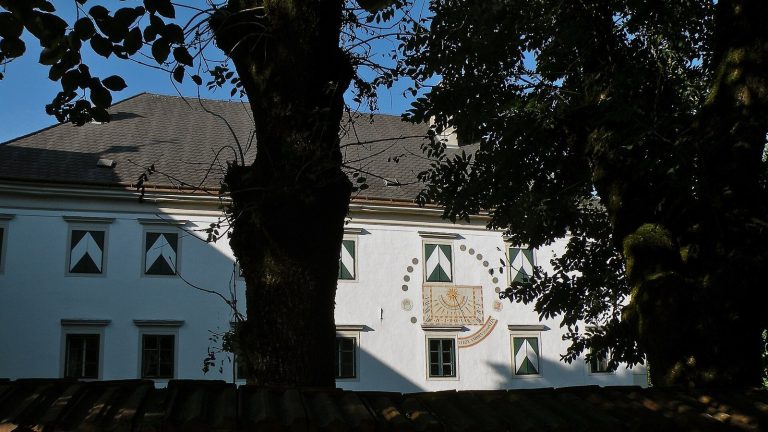
By the late fifteenth century the castle had fallen into such poor condition that it was not renovated. A New Ennsburg was built in 1475 south of the old town as the territorial rulers’ seat. Between 1565 and 1570, Ennsegg Castle was built using parts of the old castle. The old castle ruins and the remains of the late Gothic Church of St George also supplied building material. During the Thirty Years’ War, the remains were used as an entrenchment. This European conflict lasted from 1618 to 1648.
Remains
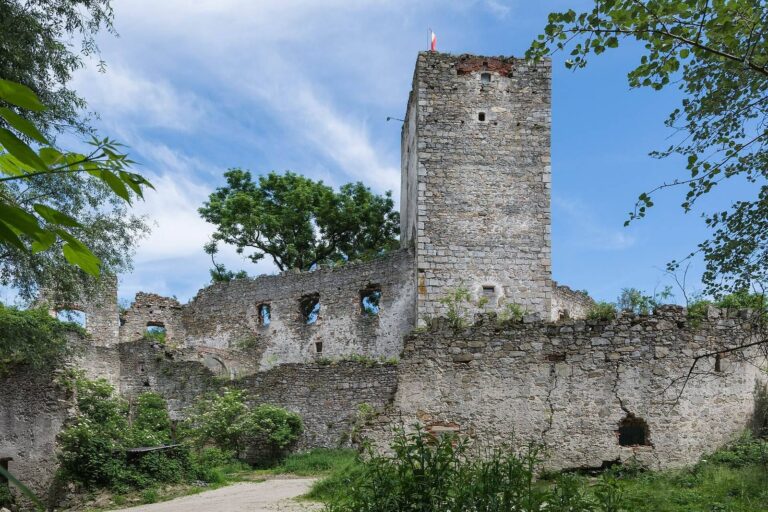
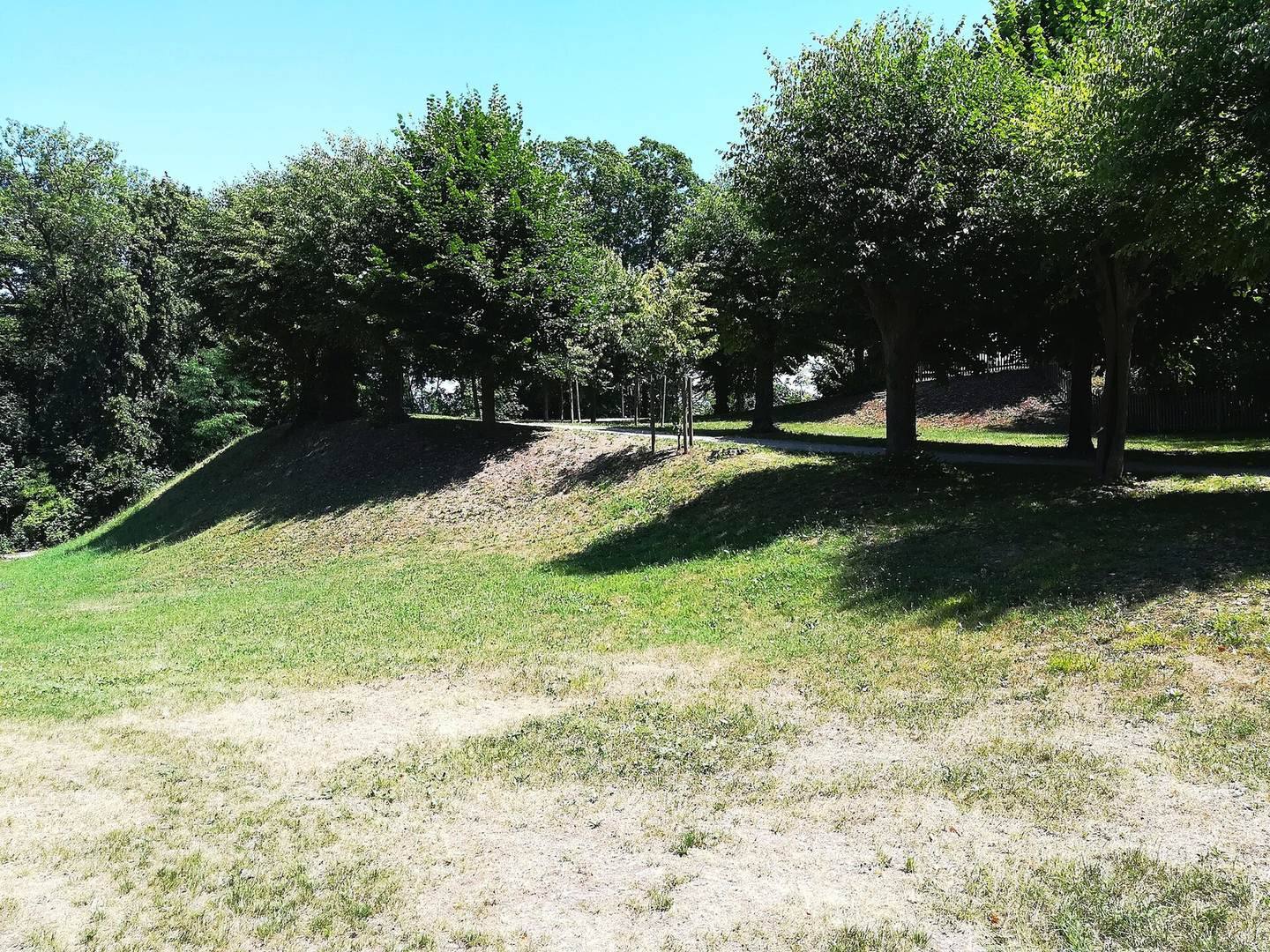
Alte Ennsburg occupied the summit of Georgenberg at an elevation of 265 metres and formed part of the city’s ring wall on its northeastern side. The site lies at the northeastern edge of the present Ennsegg Castle park, above a steep slope down toward the Enns. A mound from the former castle complex remains and has been adapted as a viewing terrace.
Earlier occupation and castle fabric
A Celtic hilltop settlement preceded the fortification, and a Roman temple precinct occupied the summit. The Roman city of Lauriacum lay below Ennsberg. When Ennsegg Castle was built, it incorporated parts of Alte Ennsburg that included a two-storey courtyard with rows of arches, a stair tower, and a connecting section to the city wall.