Roman Sites in Greece: Explore Public Courts, Imperial Buildings and Cisterns
Roman sites in Greece include public buildings added to older Greek cities, imperial architecture at Thessaloniki, performance spaces and substantial water-storage installations. Mosaic floors preserve the decoration of smaller residences alongside those larger structures. The collection extends from the mainland to Crete and Kefalonia.
Many places contain several ancient building phases. Corinth’s Roman forum lies beside a much older temple, while Thessaloniki’s Rotunda was adapted for Christian worship after its imperial foundation. The examples below identify the particular rooms, courts and surviving structures that belong to these changing settings.
Primary Function: All
Type: All
Popularity: All
Rating: All
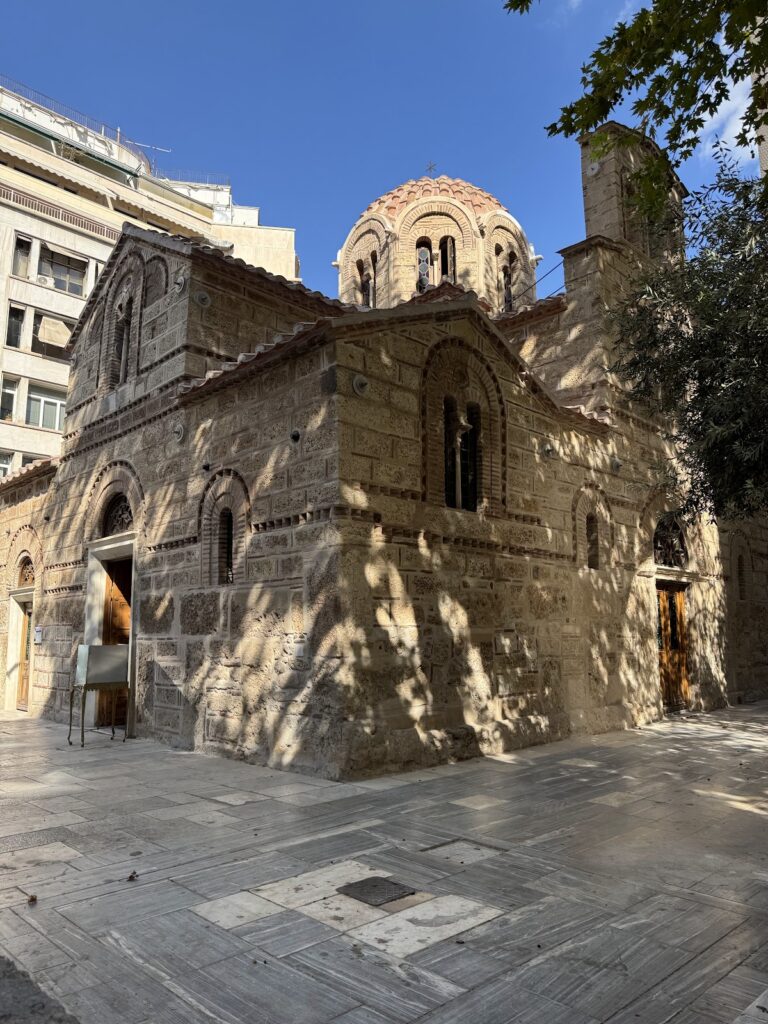
Agii Theodori is an eleventh-century Byzantine church in central Athens, known for its preserved cross-in-square plan, cloisonné masonry, decorated…
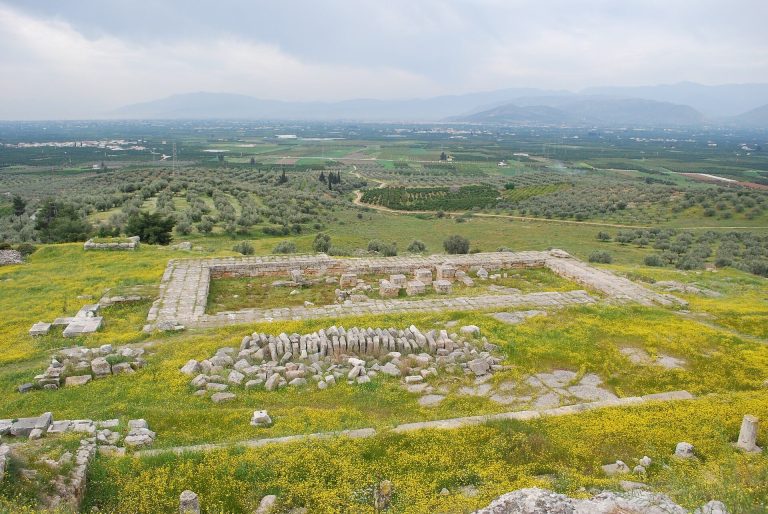
The Heraion of Argos was the principal sanctuary of Hera for Argos and a regional religious center in the Argolid. Used from the 3rd millennium BCE,…
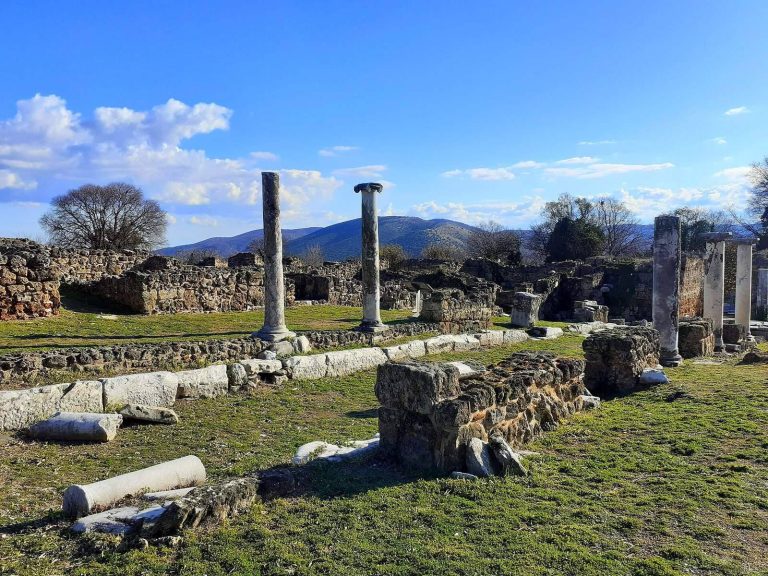
The archaeological site at Longos preserves the lower city and acropolis of ancient Edessa, a Macedonian settlement shaped by the Via Egnatia, Roman…
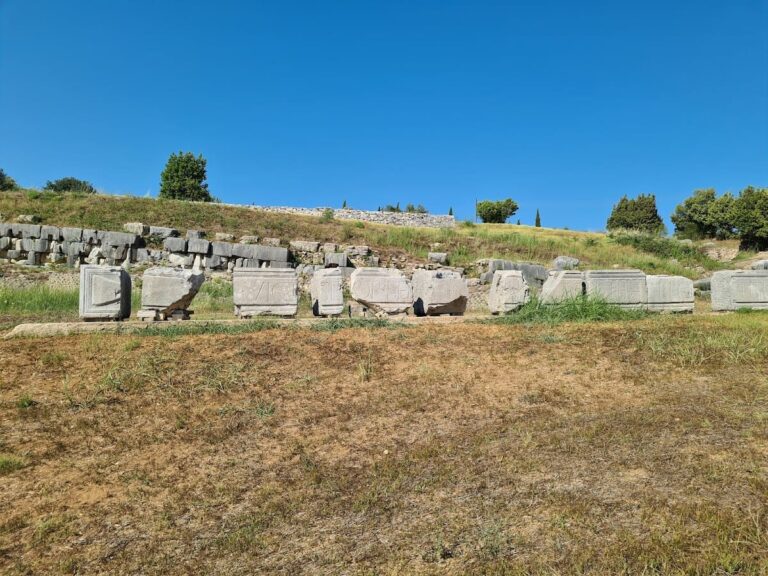
Built between 29 and 27 BC, the monument at Nicopolis commemorated Octavian’s victory at Actium through captured naval trophies, religious…
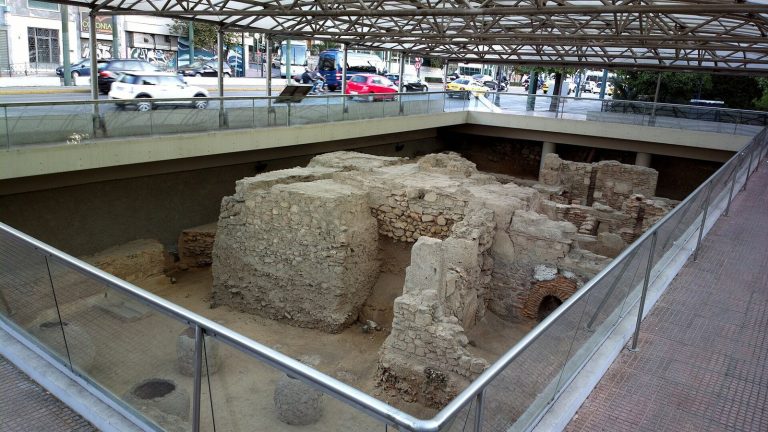
The Zappeio Roman Baths preserve a late Roman bathing complex in central Athens, including heated rooms, water installations, later Christian-era…
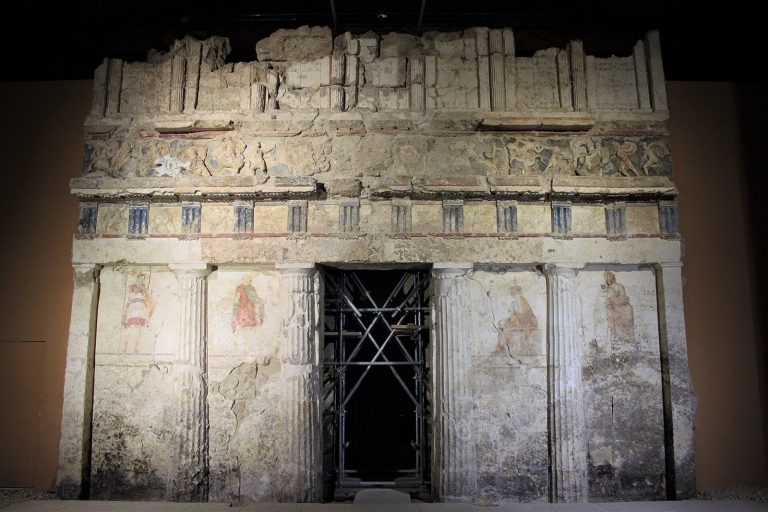
The Ancient Theatre of Mieza belonged to the ancient Macedonian city of Mieza and developed through Hellenistic and early Roman phases before…
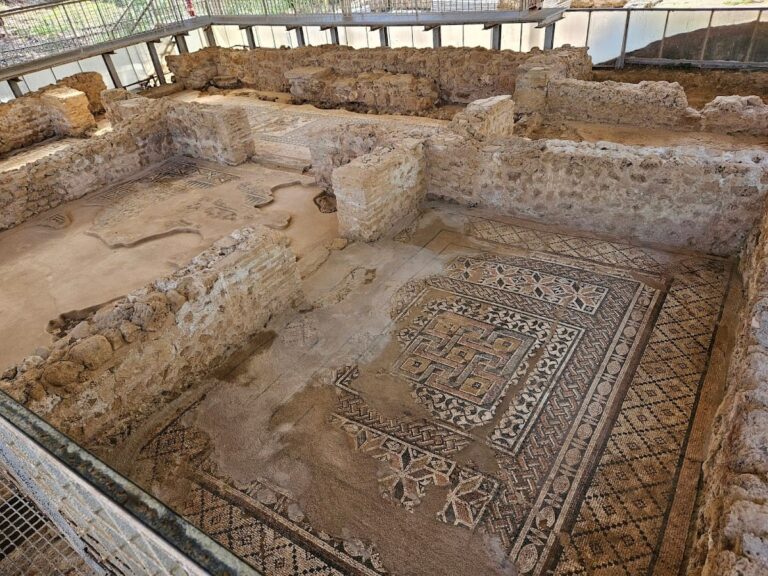
The Roman Villa of Skala offers insight into Roman domestic life in Greece during the 2nd to 4th centuries AD, featuring well-preserved mosaics and…
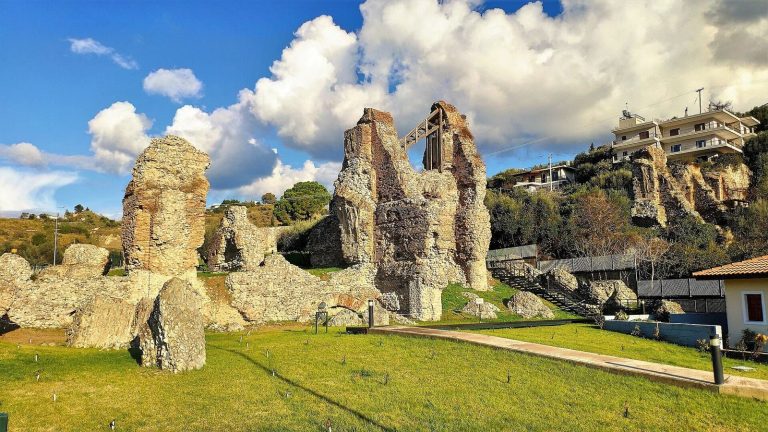
The Roman and Medieval Aqueducts of Patras trace the city’s water supply from a Roman system built probably under Hadrian to a later aqueduct…
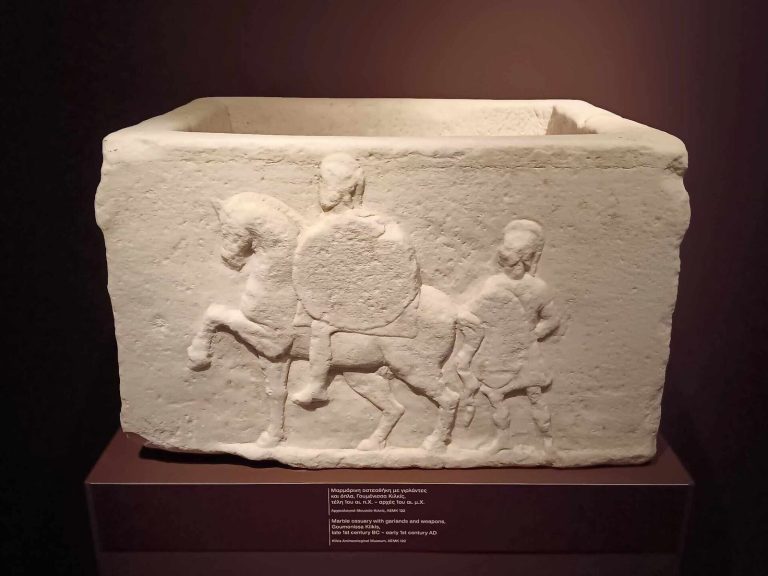
Opened in 1972, the Archaeological Museum of Kilkis preserves finds from Neolithic, Iron Age, Classical, Hellenistic, and Roman sites across the…
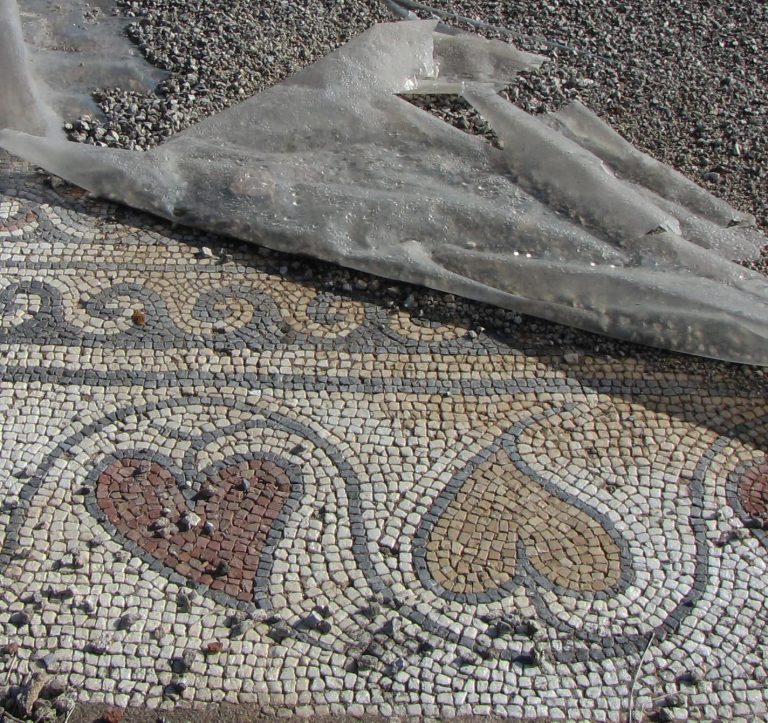
The Archaeological Park of Amphipolis preserves the remains of a city founded by Athens in 438/437 BC and later developed as a Macedonian and Roman…
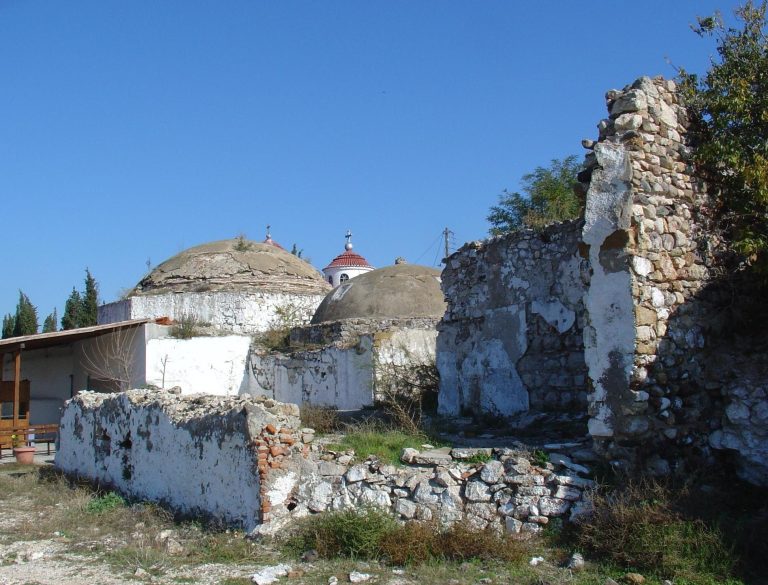
The Thermal Baths of Traianoupoli preserve evidence of a Roman provincial capital, Byzantine religious center, and later Ottoman way station shaped…
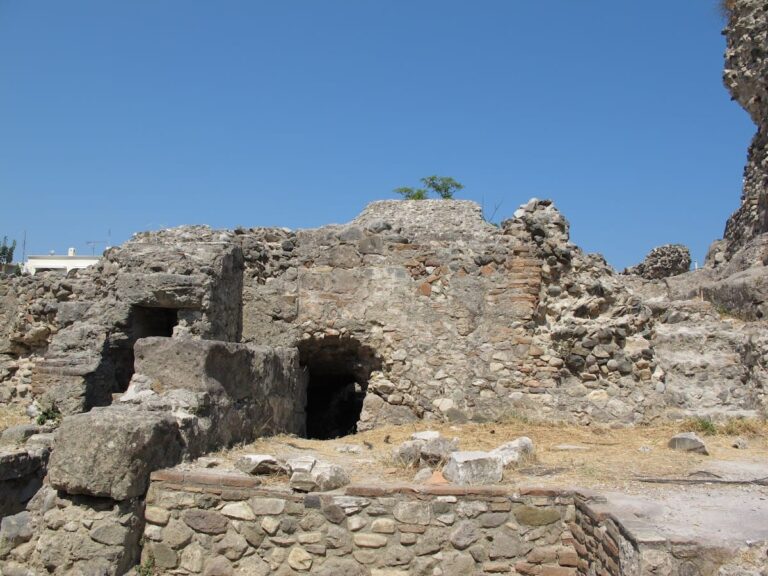
An extensive urban complex on Kos preserving Hellenistic athletic and civic foundations later reshaped by Roman public buildings — baths, a gymnasium…
For details on how to use the maps, which sites are included, how popularity and ratings are determined, and how sites are classified, see the help page.
On this page6 sections
Public courts at Athens and Corinth
Hadrian’s Library in Athens enclosed a large courtyard behind a marble entrance façade. A colonnaded walk surrounded an ornamental pool, and rooms occupied the eastern side. Niches in the central room probably held cupboards for scrolls and documents; adjoining spaces have been interpreted as reading or teaching rooms, although their exact functions remain uncertain.
The surviving western wall and Corinthian columns preserve the scale of the entrance. Later churches occupied the court, adding religious buildings within the earlier Roman enclosure. Their remains belong to the subsequent use of the complex rather than its original library arrangement.
At Ancient Corinth, the Roman forum contained a raised ceremonial platform, the Bema, used for public addresses and official proceedings. Nearby, Roman rebuilding gave the older Peirene Fountain an architectural façade and enclosed courtyard. Chambers and collection basins connected to channels beneath the town. The standing Doric columns of Apollo’s temple predate these Roman works by several centuries.
Galerius’s palace and Thessaloniki’s Rotunda
The Palace of Galerius in Thessaloniki preserves courtyards, mosaic fragments, bathing structures and the plan of a large octagonal hall. Niches opened from the hall’s interior, and an entrance vestibule had apses at both ends. Marble paving replaced an earlier mosaic floor. Its precise function is debated, with an audience room and formal dining hall among the interpretations.
The Rotunda belonged to the wider imperial complex. Thick brick walls, deep internal niches and a high dome enclose its circular interior. Conversion into a church enlarged an eastern niche into a sanctuary and introduced a new entrance arrangement. The surviving Christian mosaics belong to that religious phase, while much of the great circular shell derives from the Roman building.
Patras’s odeon and stage building
The Roman Odeon at Patras preserves a semicircular performance space supported by radiating walls and vaulted galleries. Stairs connected these passages with the seating and orchestra, while entrances and niches articulated the high stage wall. Marble and mosaic fragments record parts of the building’s former finish.
The stage wall, seating and orchestra have undergone extensive restoration and partial reconstruction. Their present arrangement helps explain movement through the building, from the supporting galleries to the audience levels, while the ancient masonry and reconstructed surfaces remain different parts of its fabric.
Aptera’s cisterns and bathing complexes
At Aptera on Crete, two large public cisterns supplied baths farther down the slope. One has three internal aisles; the other bends into an L-shaped plan. Waterproof mortar lined their walls, and exterior buttresses resisted the pressure of stored water. Smaller channels and cisterns connected with the wider supply system.
The cisterns include earlier construction as well as Roman-period use. The surviving stone vaults of the three-aisled reservoir belong to later rebuilding associated with the medieval monastery; its original brick roofing was lost. The large chambers nevertheless preserve the storage capacity and layout required by the ancient city’s bathing establishments.
Figured mosaics at the Roman villa of Skala
The Roman villa at Skala on Kefalonia preserves decorated room floors with geometric borders and strongly defined central scenes. One represents Envy as a young man attacked by animals. Another shows a boar, bull and ram prepared for sacrifice.
These pavements belong to a residence founded in the Roman period and later destroyed by fire.
Explore the collection
Explore sites on the map or in the grid. Map icons reflect each site’s primary function, helping you identify different kinds of places at a glance. Narrow the results by primary function, site type or era, with additional filters for popularity and rating. Select a map marker to view the site’s details and open its article, or open the article from its grid entry.