Historic Sites in Spain: Explore Castles, Ancient Cities and Palaces
Explore more than 1,500 historic sites across Spain, including medieval castles, Roman towns, mosques, cathedrals and royal palaces. Use the map and grid to explore a region, browse by building type or find places around your chosen destination.
Castles and other defensive structures form the largest part of the collection. Alongside them are religious buildings, historic residences, bridges, aqueducts and burial monuments. The examples below introduce several of these categories through their surviving streets, walls, rooms and interiors, from prehistoric stone tombs on Menorca to royal apartments at Aranjuez.
Primary Function: All
Type: All
Civilization: All
Popularity: All
Rating: All
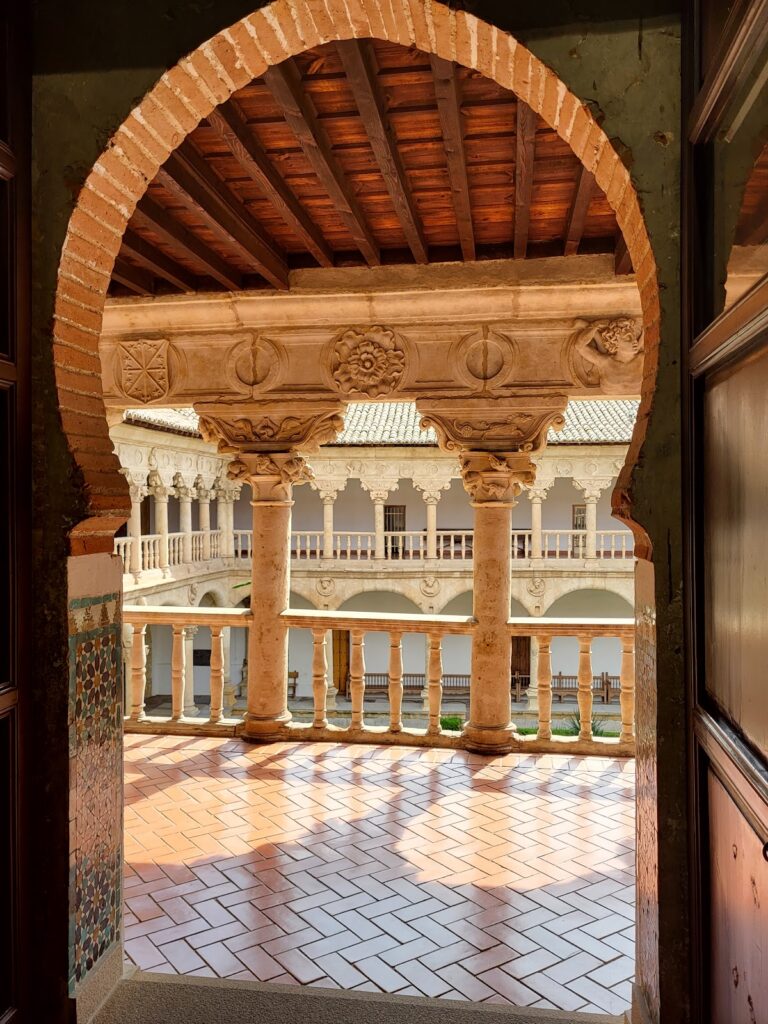
Founded in 1419, the Convent of Las Dueñas in Salamanca combines surviving palace fragments with a late Gothic church, a Plateresque portal, and an…
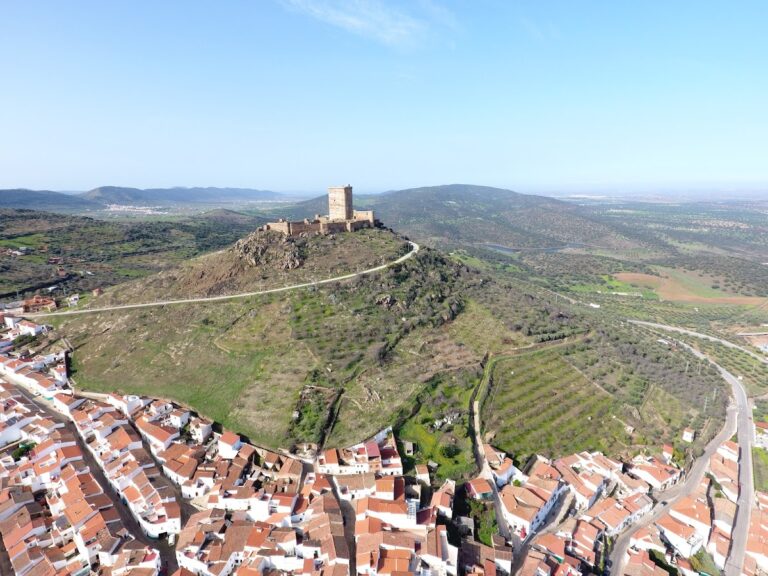
Castle of Feria is a medieval hilltop fortress shaped by Celtic, Roman, Muslim, and Christian phases of occupation. Its fifteenth-century keep and…

Castle of San Julián is a historic military fortification on San Julián Mountain in Cartagena, Spain. Developed around an English tower from 1706, it…
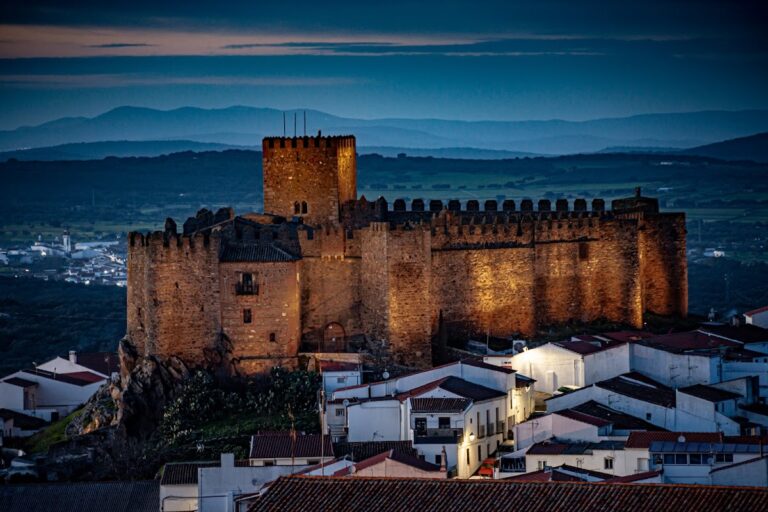
The Castle of Segura de León is a thirteenth-century fortress in Extremadura that served as the seat of an Order of Santiago commandery and was…
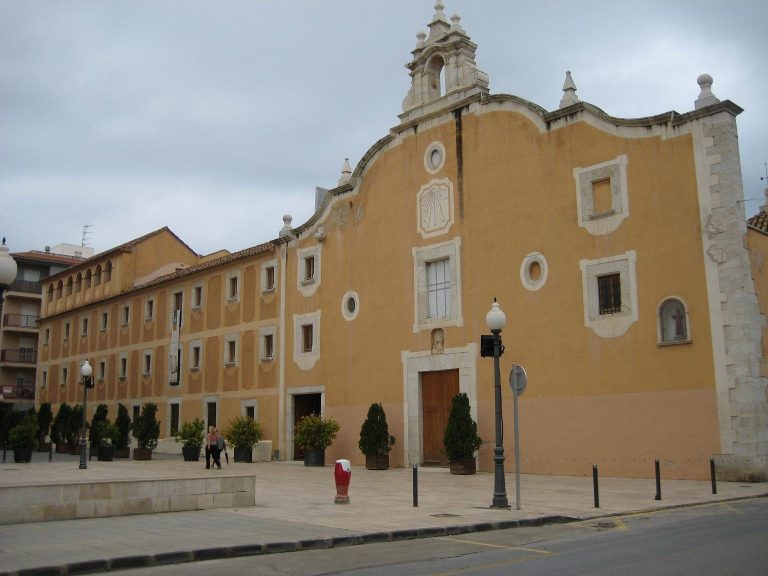
Founded in 1578 outside Benicarló, the former Franciscan convent was expanded in the eighteenth century and later adapted for schools, a hospital,…
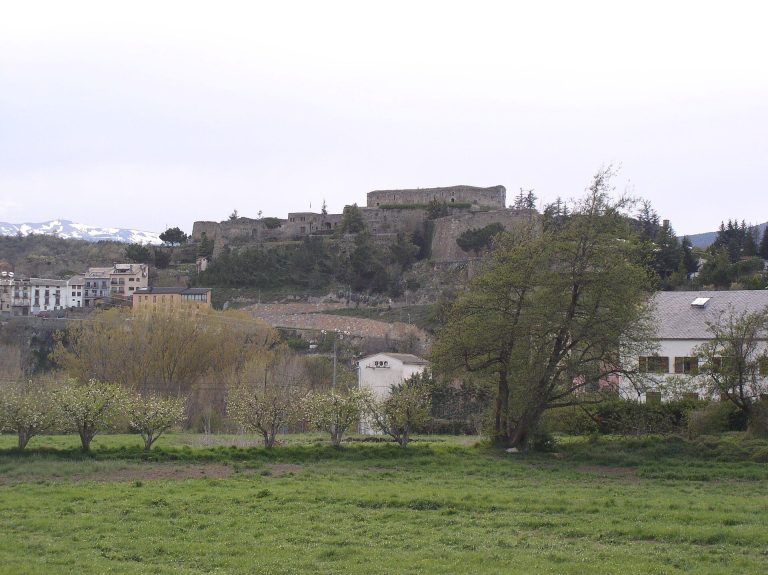
Castell de Ciutat is a fortified site above Castellciutat in the Urgellet valley, shaped by medieval disputes between the counts of Urgell, the…

Castillo de Montealegre de Campos is a medieval fortress in Valladolid, Spain, associated with the Alburquerque family and later reused as a grain…
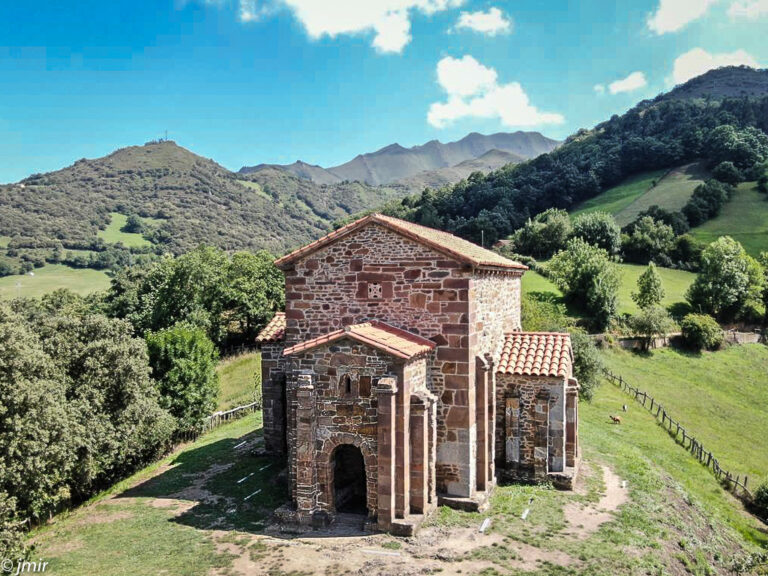
Santa Cristina de Lena is a ninth-century Asturian pre-Romanesque church associated with the medieval Kingdom of Asturias. Its unusual single-nave…
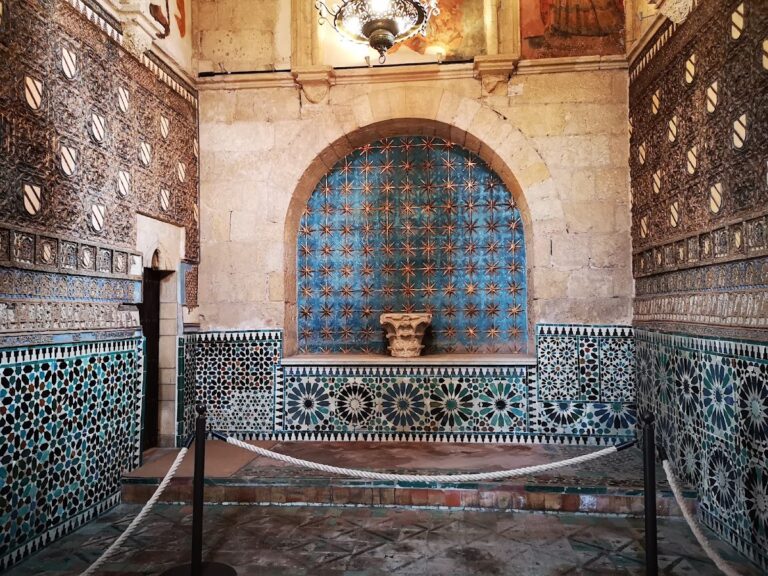
Capilla de San Bartolomé is a late medieval funerary chapel in Córdoba, built between 1399 and 1410 and distinguished by its Mudéjar architecture,…
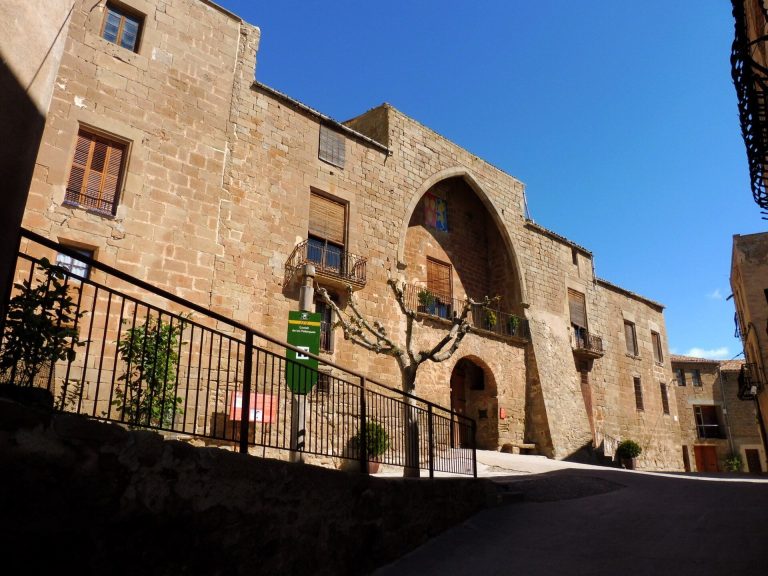
Castell de les Pallargues is an eleventh-century castle-palace in Les Pallargues, Lleida, shaped by successive extensions and a long history of…
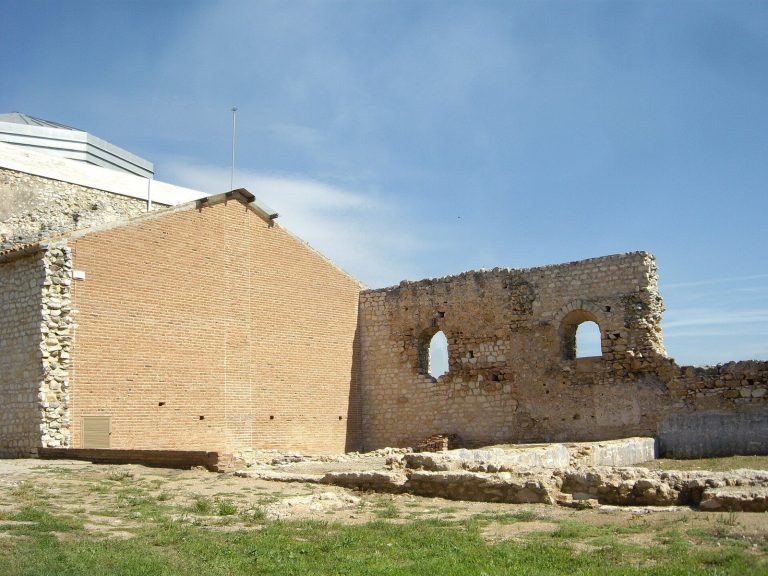
The Roman villa of Centcelles near Constantí developed from a Republican-period settlement into a large estate with baths, agricultural facilities,…
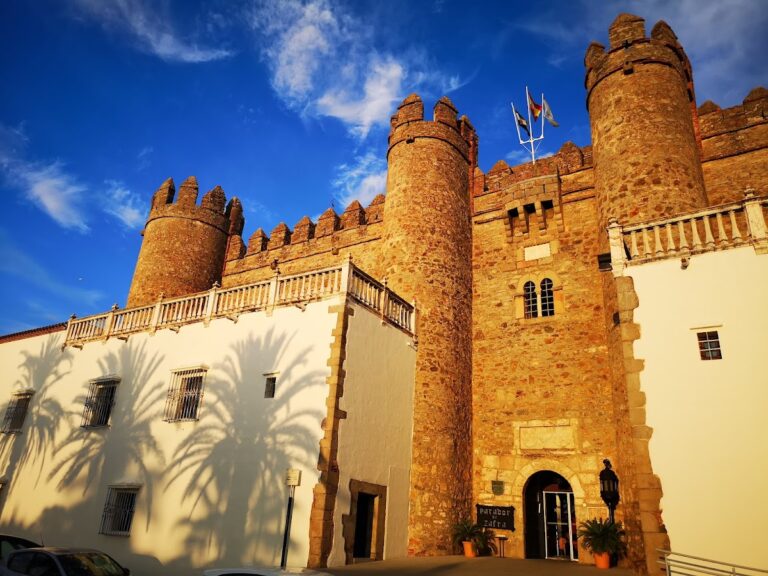
Castle of Zafra, also known as the Palace of the Dukes of Feria, was built between 1437 and 1443 as a lordly residence and part of Zafra’s defenses.…
For details on how to use the maps, which sites are included, how popularity and ratings are determined, and how sites are classified, see the help page.
On this page7 sections
Castles and coastal fortresses
The Templar Castle of Ponferrada occupies a hill beside the rivers Sil and Boeza in León. The Knights Templar established a commandery here in the late twelfth century and were entrusted with protecting pilgrims travelling this section of the Way of Saint James.
The extensive enclosure developed through successive building campaigns. Much of the surviving fabric dates to the fifteenth century, after the Templar period. A moat protected the approach, and two towers flanked the principal entrance. On the northwestern side, the river provided a natural defensive barrier.
Peñíscola Castle occupies the summit of a coastal rock in Castellón. Its stone-built rooms have barrel vaults, and quadrangular towers rise around the enclosure. Templar heraldry survives above the entrance and the chapel doorway.
Ponferrada’s defences expanded around a riverside stronghold, while Peñíscola’s compact fortress occupies the highest part of a rocky coastal site. At Peñíscola, guardrooms, storage spaces and a cistern occupy the lower level, with the chapel and principal halls arranged above them.
Palaces and historic residences
The Royal Palace of Aranjuez stands beside the Tagus, within an estate laid out with gardens and tree-lined avenues. Its red-brick façades have white limestone details, and projecting wings enclose the principal courtyard on three sides.
Inside, the Porcelain Room preserves an eighteenth-century decorative scheme made by the Royal Porcelain Factory of Buen Retiro. White porcelain plaques cover the walls and ceiling, with reliefs of plants, birds, dragons and human figures.
The plaques were fitted to timber walls, and large mirrors repeat the surrounding decoration. Made between 1760 and 1765, the room served at different times as a games room, a royal cabinet and a music room.
Mosques, churches and cathedrals
The Mosque of Cristo de la Luz in Toledo was completed in 999. Its original prayer hall measures about eight metres across and contains nine bays, each covered by a differently designed vault.
Four central supports carry horseshoe arches. Above them, interlacing ribs form distinct patterns, with the central vault rising higher than its neighbours. After the building became a Christian place of worship, a brick apse was added in the late twelfth century.
Burgos Cathedral was begun in 1221. Its central nave rises approximately 25 metres, with aisles continuing around the eastern end. Flying buttresses support the high masonry walls.
Later work added the openwork tower spires and richly decorated chapels. The building preserves successive Gothic construction campaigns, with further alterations such as the replacement of the central western doorway in the eighteenth century.
Ancient cities and settlements
Baelo Claudia stands beside the Strait of Gibraltar near Bolonia. Its economy depended on fishing, fish salting and the production of garum, a fermented fish sauce. Maritime connections linked the town with North Africa, particularly Tangier.
The excavated town follows a grid of streets crossing at right angles. Its principal east–west street connected entrances on either side of the settlement. Around the forum, the surviving layout brings together the public square, basilica and raised temple platforms.
Beside the sea, fish-salting workshops preserve the spaces used to prepare the town’s exports. The best-preserved workshop retains workrooms, a freshwater well and basins sunk into the floor.
Roman theatres and amphitheatres
Spain’s Roman performance buildings include theatres with seating facing a stage and amphitheatres arranged around an arena. Entrances, seating divisions and supporting galleries remain visible at sites in the collection.
At the Roman Theatre of Cartagena, the seating occupies the slope of La Concepción hill near the harbour. Built between 5 and 1 BC, the theatre accommodated approximately 7,000 spectators.
The lower and central seating sections were cut into the natural rock, while the sides rested on vaulted supports. Inscriptions above the entrances named Gaius and Lucius Caesar, the grandsons of Augustus, to whom the building was dedicated. The restored auditorium combines surviving Roman fabric with reconstructed sections of seating.
Prehistoric tombs and burial chambers
On Menorca, the Naveta d’Es Tudons preserves a stone funerary building shaped like an overturned boat. It measures approximately 14.5 metres long and survives to about 4.5 metres high, including restored upper stone courses.
Large limestone blocks were fitted together without mortar. A low doorway leads through a short passage and antechamber to the lower burial chamber, with a second chamber above it. The enclosed spaces were used for collective burial during the late second and early first millennia BC.
Explore the collection
Explore sites on the map or in the grid. Map icons indicate each site’s primary function, helping you identify different kinds of places at a glance. Narrow the results by primary function, site type, civilization or era, with additional filters for popularity and rating. Select a map marker to view the site’s details and open its article, or open the article from its grid entry.