Santa Maria Assunta: A Historic Church in La Spezia, Italy


Site at a Glance
- Rating
- 4.4
- Popularity
- Very Low
- Country
- Italy
- Primary era
- Medieval
- Eras represented
- Medieval, Early Modern, Modern
- Civilizations
- Genoese, Italian
- Site type
- Religious
- Remains
- Church
On this page20 sections
History
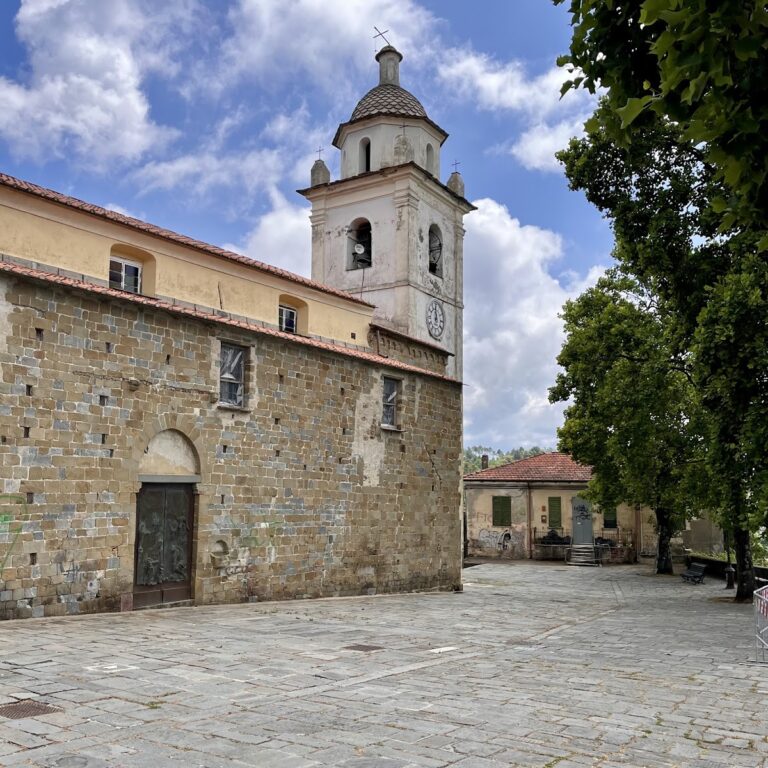
Santa Maria Assunta is a Catholic Roman-Rite church in La Spezia, Italy, dedicated to the Assumption of Mary and located in the city’s historic center. Its origins are traditionally placed in 1271, while the church is first known to have existed by 8 June 1371, when an agreement joining two local administrative districts under Genoese authority was signed inside it. At that time it depended on the older church of Marinasco and had not yet become a parish. It acquired parish status in 1434.
Medieval foundation and Renaissance rebuilding
In 1436, during the wars between Genoa and Milan, the church was demolished because its position outside La Spezia’s rectangular defensive circuit could have allowed the Milanese commander Niccolò Piccinino and his forces to use it as a base against the city walls. The defensive circuit was later enlarged to include the church, which was rebuilt on the same site in 1443. It was consecrated in 1471, and work concluded in 1550 with the construction of a Renaissance sandstone facade.
The medieval and Renaissance building had a late Gothic character. Its Latin-cross plan, three naves, pointed arches, groin vaults, and alternating white-and-black wall bands shaped the church for centuries. Six columns made from sections of white Carrara marble divided the interior. The church’s ecclesiastical standing also developed over time. On 12 October 1685, the parish became a provostry, an institution headed by a provost. In 1712, a papal bull of Clement X made it a collegiate church with a chapter of clergy, and in 1734 it became an abbey collegiate church, whose parish priest held the title of abbot.
Nineteenth-century religious and civic life
Abbot Domenico Battolla governed Santa Maria Assunta from 1850 to 1884. During his tenure, he brought the first Salesians and the Pious Franzonian Mothers to La Spezia, founded the local Conference of Saint Vincent de Paul on 14 May 1858, and directed major restoration work between 1860 and 1872. After flooding in 1864, the Madonna della Neve icon was temporarily transferred to Santa Maria. It remained there until 1881, when it was given to the Salesians for their new church of Our Lady of the Snow.
Twentieth-century destruction and reconstruction
In 1927, the architect Franco Oliva designed a new facade that retained elements of the sixteenth-century composition. That same year Pope Pius XI established the Diocese of La Spezia-Sarzana-Brugnato. Santa Maria Assunta consequently became the diocese’s procathedral, a church temporarily serving as a cathedral, on 19 March 1929, while a permanent cathedral was awaited.
The old sixteenth-century campanile was demolished in 1935 on the orders of Abbot Giovanni Battista Cafferata. Traditionally attributed to Simone da Pistoia, it had housed the bell called Lavezàa, which was rung at noon to announce the pause for the midday meal. On 19 April 1943, a major bombing raid during the Second World War almost entirely destroyed the church. The campanile, part of the presbytery, and the two columns facing it survived.
After the war, the church was rebuilt and enlarged by extending the nave toward Piazza Giulio Beverini. Franco Oliva designed a facade recalling the lost structure through white-and-black bands and references to Genoese Gothic decoration. Bishop Giuseppe Stella reconsecrated the rebuilt church on 20 November 1954 during the Marian Year proclaimed by Pope Pius XII. Abbot Cafferata celebrated the accompanying Mass, which included a four-voice composition by Domenico Cortopassi. On 8 December of that year, Bishop Stella renewed the consecration of La Spezia and its diocese to the Immaculate Heart of Mary.
In the late 1950s, Abbot Antonio Mori placed the fifteenth-century wooden crucifix known as the Venerable in a dedicated chapel. The people of La Spezia have particularly venerated the crucifix and associated it with miraculous graces during difficult periods in the city’s history. Later changes followed the Second Vatican Council, the Roman Catholic council held from 1962 to 1965 that encouraged reforms in worship and pastoral practice. Under Abbot Giacinto Bertonelli, engineer Ferdinando Carrozzi moved the high altar toward the rear of the choir and converted it into an episcopal cathedra, the bishop’s official seat. A new altar table was consecrated on 8 September 1969, and Abbot Dino Viviani installed the former pulpit as an ambo, or liturgical reading stand, in the presbytery.
After the Cathedral of Christ the King of the Centuries opened in 1975, Santa Maria Assunta ceased to be the diocese’s procathedral. Further major restoration took place under Abbot Monsignor Ilvo Corniglia. On 22 January 2012, Bishop Francesco Moraglia established a diocesan center for perpetual Eucharistic adoration in the Chapel of the Most Holy Crucifix opposite the church. Santa Maria Assunta is listed in Italy’s General Catalogue of Cultural Heritage.
Remains
The present church preserves a broad, rebuilt interior organized around a central nave, two smaller side aisles, and raised chapels beside the presbytery. Columns divide the naves, while the roof is formed by vaults with gray-stone ribs against pale-yellow plaster. The building combines the memory of the medieval and Renaissance church with postwar reconstruction. Its facade has five bays, with the three central bays rising in stages, horizontal bands of colored marble, and a splayed central oculus in place of the earlier rose window.
Facade and entrance sculpture
Marble lunettes
The three entrances are surmounted by marble lunettes carved by Angiolo Del Santo. From left to right, they represent the transportation of the relics of Saint Terenzio of Luni, the Assumption of Mary, and Saint Venerio driving away a dragon. Their subjects connect the facade with the church’s Marian dedication and with local saintly traditions.
Gate of Mercy
The central bronze portal, inaugurated in 1999, is called the Gate of Mercy. Guglielmo Carro sculpted its eight low-relief panels, which portray the seven works of mercy together with Pope John Paul II in prayer.
Chapels and devotional sculpture
Chapel of the Immaculate Conception
The Chapel of the Immaculate Conception stands to the left of the presbytery. Navarrini decorated the chapel, which contains an altar by Baratta dating from the seventeenth or eighteenth century. Its principal object is the Venerable, a wooden crucifix carved by an anonymous Piedmontese sculptor during the second half of the fifteenth century. Restoration brought out its original appearance, including the contracted expression and arched body that convey the drama of the Crucifixion. A late-fifteenth-century stoup with grooved workmanship also survives in the chapel.
Chapel of the Sacred Heart
The Chapel of the Sacred Heart occupies the right side of the church. The La Spezia painter Luigi Agretti covered it with frescoes in the 1930s. It also contains a marble statue of Christ the Redeemer, made in 1936 by Angiolo Del Santo specifically for the chapel.
Chapel of Mercy
The Chapel of Mercy contains several wooden sculptures, a seventeenth-century marble altar, and Giovanni Battista Casoni’s painting of Our Lady of Mercy. The composition presents the Christ Child in glory holding the monogram of Saint Bernardino. The Virgin, Saint John the Baptist, Saint Joseph, Saint Bernardino, and other Franciscan saints appear at the sides.
Presbytery and music tradition
Altar and choir
The presbytery contains a marble altar table carved from a single block by Ferruccio Vezzoni. Its imagery addresses Christ’s Redemption in the light of the Second Vatican Council, placing Old and New Testament themes on one side and the Council on the other. A cross and a portable loudspeaker by the La Spezia sculptor Claudio Ambrogetti are also located in the presbytery. Behind the eighteenth-century wooden choir hangs a large oil painting of the Assumption of the Virgin, dated to the sixteenth or seventeenth century. Once attributed to Domenico Fiasella, it is now regarded as a work from his workshop and was commissioned for its correspondence with the church’s dedication.
Former music chapel
The former music chapel was established at the end of the sixteenth century and remained active for at least 370 years. Its surviving musical materials include autographed works and printed or manuscript sacred orchestrations from the nineteenth and twentieth centuries. They include compositions associated with the directors Domenico Cortopassi and Mario Fiorentini. Cortopassi’s works include a pastoral and a Mass written for Christmas 1936, as well as the four-voice Mass performed at the 1954 reconsecration.
Paintings, monuments, and transferred works
Works from former churches
Several works entered Santa Maria Assunta after churches suppressed or demolished during the late nineteenth and early twentieth centuries were removed during the growth of the modern city, the opening of roads, or the construction of the military arsenal. On the counterfacade hangs Giovan Battista Casoni’s Multiplication of the Loaves and Fishes, painted in 1642 for the refectory of the former San Francesco convent.
The left side of the church contains Andrea Semino’s late-sixteenth-century Annunciation, Aurelio Lomi’s seventeenth-century Miracles of Saint Diego, a marble statue of Saint Anthony the Abbot attributed to Fabio Del Medico of Seravezza, and a marble statue of Our Lady of Mount Carmel by Carlo Tantardini of Introbio. The first bay on the left holds the funerary sarcophagus of Marchesa Francesca Malaspina of Mulazzo and her husband Baldassarre Biassa, a La Spezia commander of the papal fleet. Resting on lion’s paws, the fifteenth- or sixteenth-century sarcophagus has worn inscriptions and coats of arms on its front.
Coronation of the Virgin
A glazed terracotta group representing the Coronation of the Virgin stands in the left nave. Approximately three meters high and about 2.5 meters wide at the base, it has a lunette-shaped top. The upper section shows the Virgin among angels before God enthroned, with the Holy Spirit represented as a dove. Six saints occupy the lower section, including three Franciscans, Saint John the Baptist, and Saint Mary Magdalene. A high-relief garland of fruit and leaves frames the composition, while its lower predella has been permanently lost. Once attributed to Luca della Robbia, the work is now identified as a creation of his nephew Andrea della Robbia.
The group originally stood in the choir of the former San Francesco Grande church. Napoleon’s confiscations transferred it to Arles on 26 November 1814. It returned to La Spezia on 4 September 1817 and was placed on the altar of Mercy at Santa Maria, but Franciscan friars recovered it in 1823. After the convent was demolished in 1863 for the military arsenal, the sculpture was assigned to the Ligurian Academy of Fine Arts until 1892 and then to Genoa’s Palazzo Bianco Museum. Following efforts by the Marquis Da Passano and the Society for Moral and Industrial Encouragement of La Spezia, it returned permanently to the city and was installed in the left nave in 1904.
Right nave and baptistery
The right nave contains Giuseppe Palmieri’s Saint Francis in Ecstasy and Saint Francis in Prayer, together with Luca Cambiaso’s Martyrdom of Saint Bartholomew, which includes a portrait of the armed commissioner. The baptistery enclosure contains a sixteenth-century baptismal font and Bartolomeo Guidobono’s painting Madonna of the Milk.
Organ
The pipe organ was built in 1932 by the Milanese firm Balbiani Vegezzi-Bossi. It has electric transmission, two 61-note keyboards, and a 32-note concave-radial pedalboard. The instrument was later modified and restored several times.
Nearby sites