Umberto I Fort: A Coastal Battery on Palmaria Island, Italy


Site at a Glance
- Rating
- 4.4
- Popularity
- Very Low
- Country
- Italy
- Primary era
- Modern
- External website
- Open
- Eras represented
- Modern
- Civilizations
- Italian
- Site type
- Military
- Remains
- Fort
On this page13 sections
History
Construction and defensive role
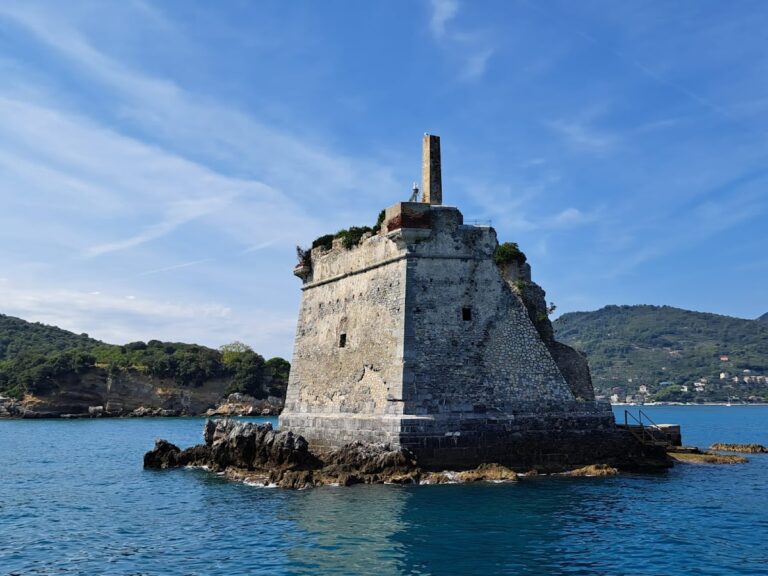
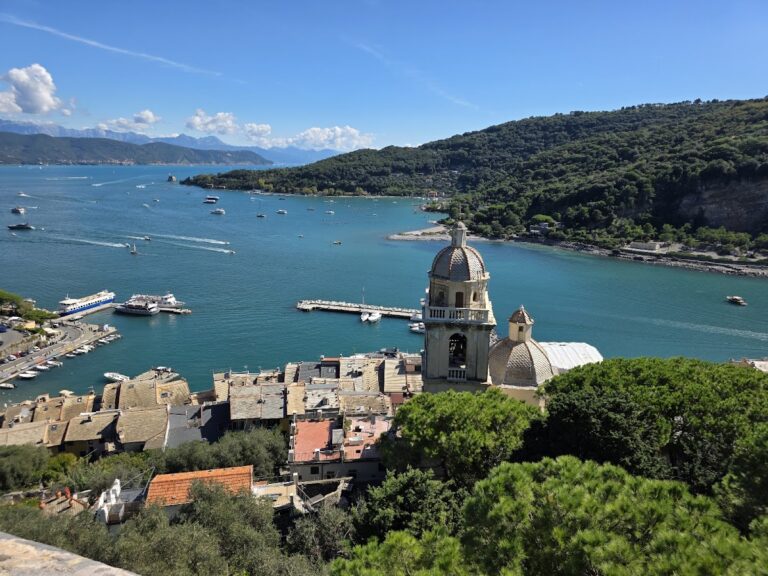
Umberto I Fort is a late nineteenth-century coastal battery in Italy, at Punta Scola on the northeastern tip of Palmaria Island within the municipality of Portovenere. The Kingdom of Italy commissioned it between 1887 and 1890 as part of the fortified system of the Gulf of La Spezia. Built about 30 metres above sea level, it protected Palmaria Island and the Gulf of Poets.
The fort formed part of Palmaria’s defensive installations together with Fort Cavour and the Semaforo Battery. Lieutenant Colonel Ferdinando Spegazzini designed the structure, which was positioned as a low battery and recessed into the coastal terrain. Its armament was intended to counter a possible naval reprisal directed from the island.
Later military phases
During the 1930s, the Schenello Battery was added around the pre-existing armored cupola. This anti-aircraft installation carried six 76/40 guns, extending the fort’s military use into a period when defense from the air had become an important concern.
Umberto I Fort was decommissioned after the Second World War. Around the 1950s, the former defensive site was converted into a military prison, but that use ended after only a few months and the complex was abandoned again.
Restoration and cultural use
The Province of La Spezia later acquired the fort and recovered and restored it with European funds under an agreement with the municipality of Portovenere. Managed by the Marenostrum Foundation, established in 2002, the restored site became a cultural centre devoted to the sea, with spaces for exhibitions and conferences and educational laboratories concerned with underwater archaeology and marine sciences. A pilot project for opening the fort to visits began in 2016. The fort is included in the General Catalogue of Cultural Heritage and is owned by the Province of La Spezia.
Remains
Setting and concealed construction
Umberto I Fort is built into the northeastern coastal projection of Palmaria Island. Part of the mountainside was cut away to make room for the structure, which follows the natural contours of the ground and occupies a rocky niche. Its position concealed it from ships approaching from the sea, while the landward approach exposed only two sides to a possible attack.
Heavy artillery and armored protection
Krupp guns
The main battery held two Krupp 400/25 guns. Krupp was a major German industrial and arms manufacturer, and the designation indicates a calibre of 400 millimetres with a barrel length equal to 25 calibres. Each gun measured 14 metres, weighed 121 tonnes, and had a 270-degree field of fire with a range of 5,000 metres. Steam machinery helped move the armament, using four Cornish-type boilers. These boilers produced steam by passing fire through a large internal flue surrounded by water.
Armored cupola
The guns were protected by a cast-iron armored cupola, a protective gun emplacement that shielded the artillery and its operating mechanisms while leaving controlled openings for fire. The cupola consisted of 15 plates, each weighing 87.50 tonnes. The mounting may have cost nearly ten million lire, a high expense that may help explain why the only similar structure was Fort Vittorio Emanuele II on San Paolo Island at Taranto, built between 1883 and 1901.
Later battery and architectural details
Schenello Battery
The 1930s Schenello anti-aircraft battery was arranged around the existing armored cupola. It contained six 76/40 guns, whose designation identifies 76-millimetre calibre and a barrel length equal to 40 calibres.
Entrances and drainage
Access to the fort is through rusticated portals. Rustication uses visibly emphasized joints or rough, block-like masonry surfaces to give a building a fortified appearance. The complex also has metal waterspouts shaped as animals. These drainage outlets, which discharge rainwater from the building, provide an unusual decorative detail for a military structure of the period.
Restored interior spaces
The restored complex contains exhibition and conference spaces together with educational laboratories devoted to underwater archaeology and marine sciences. These spaces occupy the former defensive site while retaining its relationship to the sea and its military structure.
Nearby sites