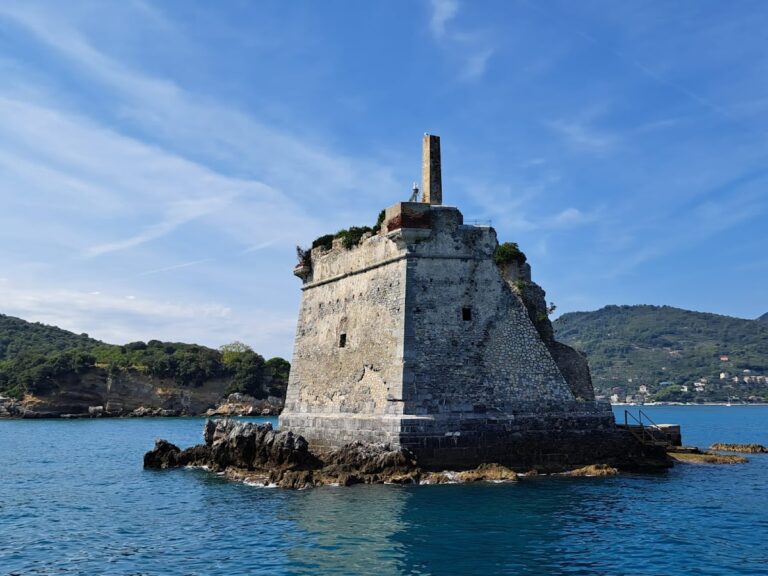
Forte Cavour: A Nineteenth-Century Fortress on Palmaria Island


Site at a Glance
- Rating
- 3.5
- Popularity
- Very Low
- Country
- Italy
- Primary era
- Modern
- Eras represented
- Modern
- Civilizations
- Italian, Kingdom of Sardinia
- Site type
- Military
- Remains
- Fort
On this page8 sections
History
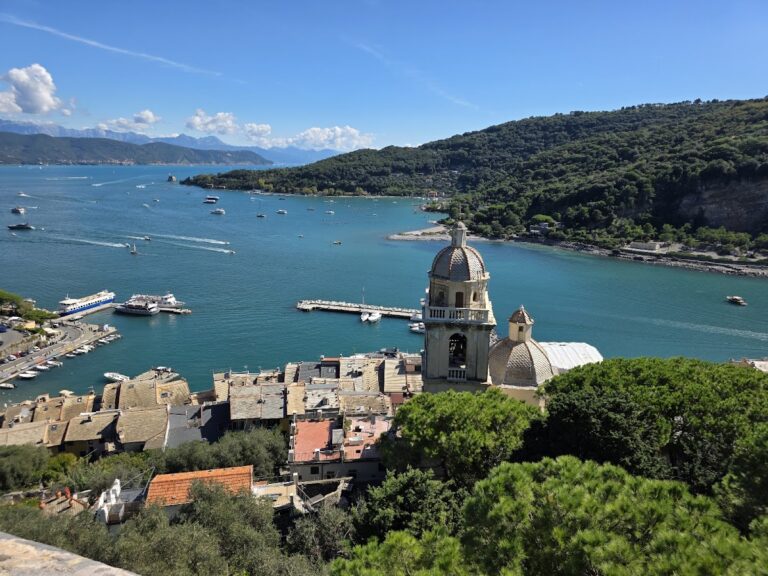
Forte Cavour is a nineteenth-century military fortress on Palmaria Island in Italy, within the municipality of Portovenere. Formerly known as Forte Palmaria, it formed part of the fortified system of the Gulf of La Spezia, also called the Gulf of Poets because of the area’s longstanding connections with poets and literary figures. The fort was built to protect and control Palmaria, the surrounding archipelago, and the gulf.
Napoleonic origins
The idea of constructing a fort on Palmaria emerged in 1808, during the Napoleonic period of the Ligurian Republic, a French-backed state in Liguria. The proposed installation was intended to dominate Palmaria and the La Spezia Archipelago. The French general François Chasseloup-Laubat prepared an initial outline design.
Construction under the Kingdom of Sardinia
Plans for the fort were revived under the Kingdom of Sardinia, the nineteenth-century state that later led the political unification of Italy. In 1849, a special commission examined the project as part of wider military studies linked to the proposed transfer of naval activity from Genoa to La Spezia.
Captain Ernesto Belli, a Sardinian military engineer, presented the project between 1857 and 1859. Construction was completed in 1861, the same year in which the Kingdom of Italy was established. The finished fortress retained a planned capacity of 330 men, although its design differed from the original proposal.
Later military use
Forte Cavour served successively under the Kingdom of Sardinia, the Kingdom of Italy, and the Ministry of Defence. Its defensive system was expanded in stages. A battery with six 28-centimetre howitzers was added in 1880. A further artillery position using 305/17 howitzers followed at the beginning of the twentieth century, and anti-aircraft positions were installed during the 1930s.
The fort’s strategic military function ended after the Second World War. It remains the property of the Ministry of Defence, but is disused, abandoned, and deteriorated. Together with Forte Umberto I and the Semaforo Battery, it forms part of Palmaria’s defensive positions within the fortified system of the Gulf of La Spezia. Forte Cavour is included in the General Catalogue of Italian Cultural Heritage, and a 2022 thesis proposed its functional recovery.
Remains
Forte Cavour is a large military installation on the summit of Palmaria Island, with a frontage of approximately 450 metres. Its completed form occupies a single level and is organized as a heavily protected artillery fortress. The surviving complex includes the covered barracks, the central battery, raised artillery platforms, later gun positions, and anti-aircraft works. The installation is currently abandoned and deteriorating.
Fortress layout and protection
Main fortress
The initial plan called for a two-storey fortress enclosed by a moat and flanked by two cavaliers, raised artillery platforms designed to fire over lower defensive works. One cavalier was planned to the east and the other to the west. The completed fort was instead built on a single level, while retaining the intended accommodation capacity for 330 men.
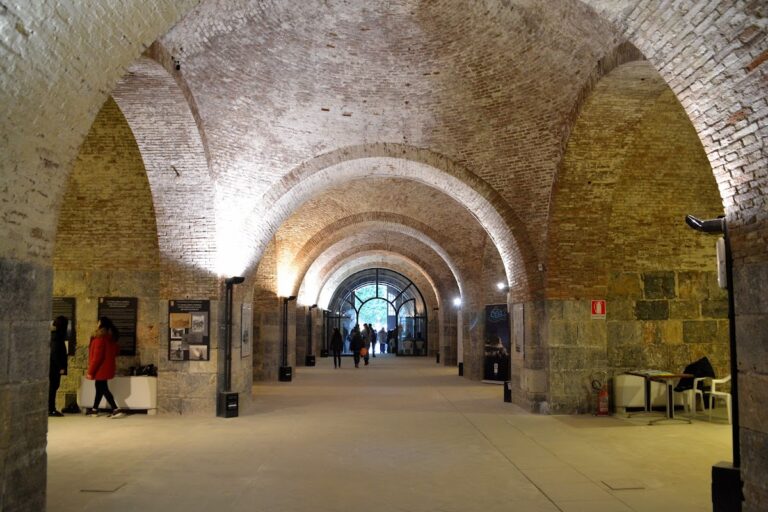
The barracks were entirely covered by a bomb-resistant structure. A substantial concrete layer was topped with layers of soil, while channels carried rainwater away from the protected roof. This construction formed the main protective covering of the accommodation areas and remains a defining feature of the fort’s military design.
Artillery positions
The central battery was equipped with six 280/16 GRC howitzers, guns designed to fire shells on relatively high trajectories so they could strike targets behind obstacles. The eastern cavalier held ten 240-millimetre GRC howitzers, while the western cavalier held eleven of the same type.
The recorded armament also included eight additional guns, comprising 120-millimetre GR and 90-millimetre BR types. A battery of six 28-centimetre howitzers was added in 1880, followed by the early twentieth-century position for 305/17 howitzers. Anti-aircraft positions added during the 1930s form part of the later military alterations to the site.
Nearby sites