Segesta Archaeological Park: An Elymian and Roman Site in Western Sicily
Table of Contents

Visitor Information
Google Rating: 4.6
Popularity: Medium
Official Website: parchiarcheologici.regione.sicilia.it
Country: Italy
Civilization: Greek, Roman
Site type: Burial, City, Civic, Domestic, Economic, Entertainment, Infrastructure, Military, Religious, Sanitation
Context
Segesta Archaeological Park is situated near Calatafimi in the province of Trapani, western Sicily, Italy. The site occupies a strategically elevated plateau surrounded by rugged hills, providing natural defensive advantages that influenced its urban development. Positioned inland yet within proximity to the Tyrrhenian Sea, Segesta controlled routes linking the interior of Sicily to coastal areas, facilitating both communication and trade networks in antiquity.
Archaeological evidence indicates that Segesta was established by the Elymians, an indigenous Sicilian people, during the late 6th century BCE. The site experienced continuous occupation through the Classical and Hellenistic periods, with Roman presence from the 3rd century BCE onward. Its decline and eventual abandonment likely occurred by the early medieval period, although the precise causes remain archaeologically unconfirmed. The park’s rural location and limited modern disturbance have contributed to the preservation of key monuments, enabling ongoing research and conservation efforts that illuminate the city’s historical trajectory and material culture.
History
Segesta originated in the late 6th century BCE as the principal city of the Elymians, a native Sicilian population distinguished by their cultural refinement and political autonomy. Throughout its history, Segesta maintained a distinct identity while engaging in complex diplomatic and military relations with neighboring Greek city-states and Carthaginian powers. Its inland position near the Tyrrhenian coast allowed it to act as a regional player in western Sicily. The city flourished architecturally and politically during the Classical and Hellenistic periods. With the expansion of Roman influence, Segesta allied with Rome, securing privileges that preserved its autonomy within the provincial system. The city’s decline began in the late Roman era, culminating in abandonment by the early Middle Ages. Subsequent medieval occupation is evidenced by fortifications and religious buildings, reflecting the site’s enduring strategic significance.
Elymian Period and Early History (Late 6th–5th centuries BCE)
Segesta was the foremost urban center of the Elymians, an indigenous Sicilian people whose origins remain partially obscure. While ancient literary traditions linked the Elymians to Trojan refugees led by Aeneas, archaeological data do not conclusively support direct cultural connections to Asia Minor. The Elymians developed a sophisticated culture emphasizing political independence amid the competing influences of Greek colonists and Carthaginians. Segesta’s defensible plateau location facilitated its growth and survival. During this period, the city engaged in fluctuating alliances and rivalries, notably opposing the Greek city of Selinunte. Its alliance with Carthage was a central element of its foreign policy, enabling it to balance regional power dynamics without succumbing to Greek domination.
Classical and Hellenistic Periods (5th–3rd centuries BCE)
During the Classical and Hellenistic eras, Segesta evolved into a powerful city-state that retained its Elymian ethnic identity while assimilating significant Greek cultural influences. Monumental architecture from this period, including a Doric temple and a theater, exemplifies this cultural synthesis. The temple, constructed at the end of the 5th century BCE, is architecturally atypical due to the absence of an internal cella and roof, suggesting adaptation to local religious customs rather than strict adherence to Greek temple conventions. The theater, situated on Monte Barbaro, incorporates a Bronze Age cave and exhibits architectural features transitional between Greek and Roman styles. Its precise construction date remains debated, with proposals ranging from the mid-4th to the 2nd century BCE. Politically, Segesta maintained amicable relations with Carthage while cautiously responding to Rome’s rising power in the region.
Punic and Roman Periods (3rd century BCE–Early Middle Ages)
Amid the Punic Wars, Segesta shifted allegiance to Rome around 260 BCE, recognizing the Republic’s ascendancy in Sicily. This alliance granted Segesta exemption from tribute payments and confirmed its political autonomy, legitimized by shared Trojan heritage narratives. Under Roman administration, Segesta was incorporated into the provincial framework of Sicily but retained local privileges and magistracies. The urban landscape included an agora and elite residences such as the “house of the navarch,” indicating ongoing civic life and social stratification. Unlike other Sicilian cities, Segesta did not undergo extensive urban expansion during Roman rule. Archaeological evidence points to a gradual decline in occupation during the late Roman period, with abandonment occurring by the early medieval era. The causes of this decline remain uncertain, as no direct evidence links it to specific invasions or natural disasters.
Medieval Period
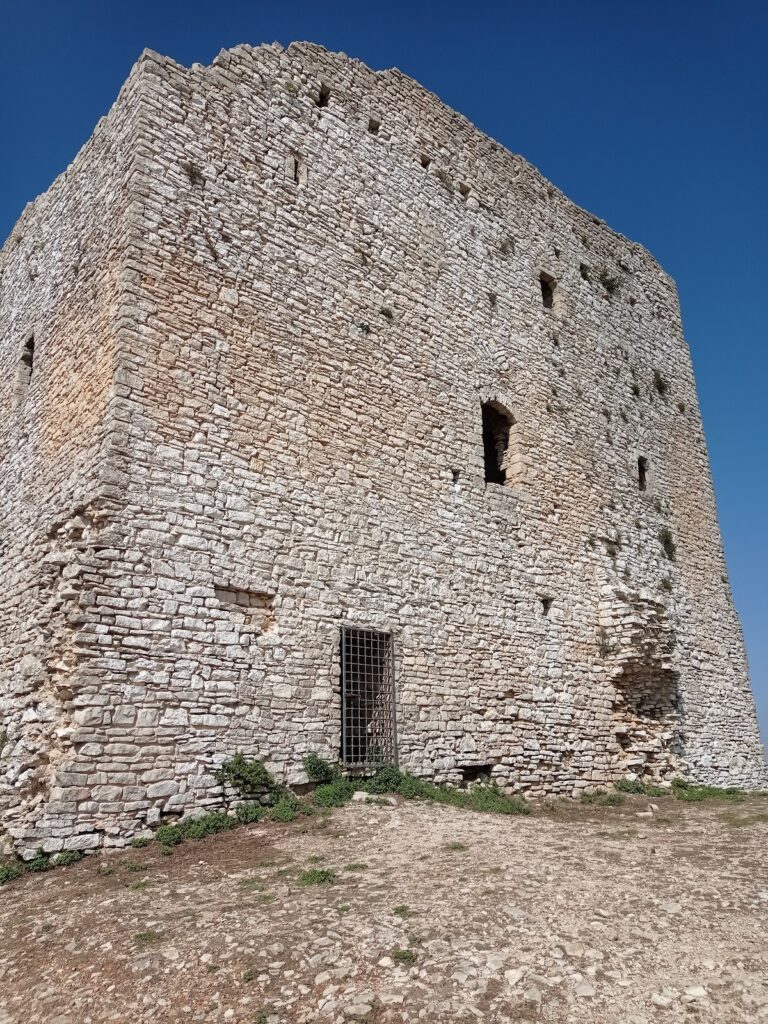
Following the Roman abandonment, Segesta’s strategic location ensured its continued military and administrative relevance during the medieval period. The city’s defensive walls were modified, and a castle was constructed adjoining the ancient theater, repurposing monumental architecture for fortification. The presence of two churches dating to the Norman and post-medieval periods, alongside a medieval neighborhood and a mosque, reflects the complex religious and cultural transformations under successive rulers. These structures illustrate the layering of Christian and Islamic influences characteristic of medieval Sicily. Although Segesta no longer functioned as a major urban center, its fortifications and religious buildings attest to sustained, albeit reduced, occupation through the later Middle Ages.
Daily Life and Importance by Period
Elymian Period and Early History (Late 6th–5th centuries BCE)
During its early phase, Segesta was inhabited predominantly by the Elymians, whose cultural identity remained distinct despite external influences. Social organization likely centered on patriarchal family units, with elites comprising landowners and religious figures, though direct epigraphic evidence is limited. Men engaged in agriculture, warfare, and diplomacy, while women managed domestic affairs. The economy was based on small-scale agriculture, including cereals, olives, and vineyards, supported by the fertile plateau and surrounding terrain. Artisanal crafts such as pottery and textiles were produced at household or workshop levels. Trade occurred primarily via overland routes connecting Segesta to coastal ports, facilitating exchange with Carthaginian allies and neighboring Greek cities. Dietary staples included locally grown grains, olives, fruits, and fish from nearby coastal areas. Clothing likely consisted of woolen tunics and cloaks, consistent with Mediterranean norms. Religious practices centered on indigenous Elymian cults, possibly involving open-air rituals, as suggested by the temple’s atypical design. Civic organization was based on tribal or clan leadership, with Segesta emerging as the Elymians’ political nucleus.
Classical and Hellenistic Periods (5th–3rd centuries BCE)
In this period, Segesta’s population included Elymian elites and artisans who increasingly adopted Greek architectural styles and artistic motifs, reflecting a cultural synthesis. Social hierarchy became more complex, with civic magistrates and religious officials administering urban life, although specific names are unrecorded. Economic activities expanded modestly, maintaining agriculture as the economic foundation, supplemented by craft production and limited maritime trade through Carthaginian alliances. Workshops producing pottery and textiles likely operated within the city, while olive oil and wine were important local products. The agora functioned as a marketplace and civic center, indicating organized commercial and political activity. Dietary remains reveal consumption of bread, olives, wine, and fish, consistent with Mediterranean staples. Clothing incorporated Greek elements such as chitons and himations, adapted to local customs. Domestic architecture featured elaborated residences like the “house of the navarch,” with peristyles and decorative motifs including ship prows, suggesting elite status and possible maritime associations. Religious life was marked by the construction of the Doric temple, an unusual open-air sanctuary reflecting Elymian ritual practices rather than orthodox Greek temple design. The theater on Monte Barbaro hosted cultural performances blending Greek theatrical traditions with local adaptations. Festivals and communal gatherings likely reinforced civic identity. Politically, Segesta skillfully navigated alliances with Carthage and Rome, preserving its regional significance as a fortified inland city with strategic coastal access.
Punic and Roman Periods (3rd century BCE–Early Middle Ages)
Following its alliance with Rome around 260 BCE, Segesta integrated into the Roman provincial system while retaining notable autonomy and privileges. The population comprised Elymian descendants alongside Roman settlers and administrators, reflecting a multicultural environment. Social stratification included local elites, Roman officials, artisans, and possibly slaves. Inscriptions attest to civic magistrates, though specific names are rare. Economic life continued to emphasize agriculture—grain, olives, and vineyards—supported by rural estates and smallholdings. Elite residences such as the “house of the navarch” indicate sustained wealth among the upper class. Local workshops produced pottery and other goods for domestic use, while trade networks connected Segesta to broader Mediterranean markets. Transport relied on overland routes and nearby ports, facilitating movement of goods and people. Diet remained Mediterranean, with archaeological evidence pointing to bread, olives, fish, and wine as staples. Clothing conformed to Roman styles, including tunics and cloaks, with possible distinctions between social classes. Domestic spaces featured courtyards, kitchens, and storage areas; mosaic floors and painted walls may have adorned wealthier homes, though preservation is limited. Religious practices incorporated Roman deities alongside traditional Elymian cults, reflecting syncretism. The agora functioned as a civic and commercial hub, and public buildings supported administrative and social functions. Educational or cultural activities are not directly attested but may have included Roman-style public readings or gatherings. Segesta’s status as a municipium or allied city granted it self-governance under Roman oversight, preserving local magistracies and legal autonomy. Decline in the late Roman period led to reduced occupation and eventual abandonment, with no clear evidence of catastrophic causes.
Medieval Period
After Roman abandonment, Segesta’s population diminished, but the site retained strategic military importance. Medieval inhabitants included local Sicilians and incoming Norman and Islamic populations, as reflected in the construction of churches, a mosque, and a castle. Social organization centered on feudal and ecclesiastical authorities, with military commanders overseeing the fortified settlement. Economic activities shifted toward subsistence agriculture and local craft production, supporting a smaller, less urbanized community. Markets likely served basic needs, with limited long-distance trade. Transport relied on footpaths and animal caravans adapted to the rugged terrain. Diet and clothing conformed to medieval Sicilian norms, with cereals, legumes, and locally raised livestock forming the diet. Religious life was diverse, encompassing Christian and Islamic practices, as evidenced by surviving religious structures. The presence of churches and a mosque indicates coexistence and cultural layering. Educational activities may have included ecclesiastical instruction, but direct evidence is lacking. Segesta’s role evolved from an autonomous city-state to a fortified outpost within shifting medieval political frameworks, reflecting its enduring strategic position despite demographic and economic contraction. The layering of religious and military architecture illustrates the complex cultural transformations characteristic of medieval Sicily.
Remains
Architectural Features
Segesta Archaeological Park preserves a range of structures spanning the Elymian, Classical, Hellenistic, Roman, and medieval periods. The site’s urban layout reflects a fortified settlement with religious, residential, and defensive components. The city’s fortifications comprise substantial stone walls constructed during the Elymian period and subsequently modified in the medieval era. These walls incorporate the Porta di Valle, a gate featuring articulated architectural elements. The defensive circuit follows the natural contours of the plateau, enhancing the settlement’s protection. Construction techniques vary from finely cut ashlar masonry in monumental buildings to rubble and mortar in later fortifications. The city’s main growth occurred during the Classical and Hellenistic periods, with limited expansion under Roman rule. The rural setting and rugged terrain have contributed to the preservation of many structures, although some remain fragmentary or only partially excavated.
Key Buildings and Structures
Temple of Segesta
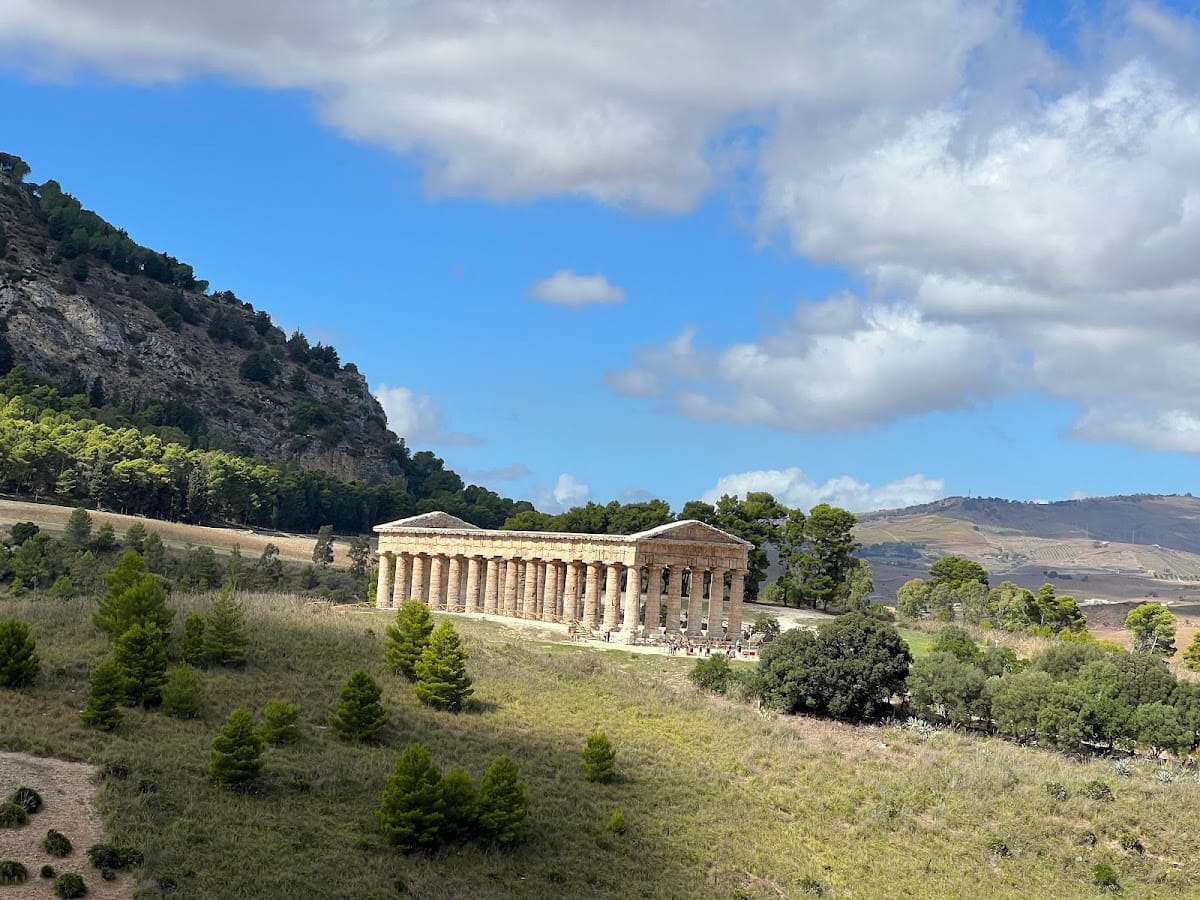
The Doric temple, erected at the end of the 5th century BCE, occupies a prominent hill outside the city walls, visible from considerable distances. Its architectural design diverges from canonical Greek temples by lacking an internal cella (inner chamber) and roof, leading to scholarly debate regarding its function. Some propose it was an unfinished Greek-style temple, while others argue it was intentionally designed as an open-air sacred enclosure adapted to Elymian religious practices. The temple’s external form follows Greek Doric conventions, likely influenced by nearby Greek cities such as Selinunte. The stone construction has survived remarkably intact, with no significant collapse recorded. Recent conservation efforts have focused on stabilizing the masonry and mitigating erosion damage. The temple remains a dominant landmark within the archaeological park.
Theatre of Segesta
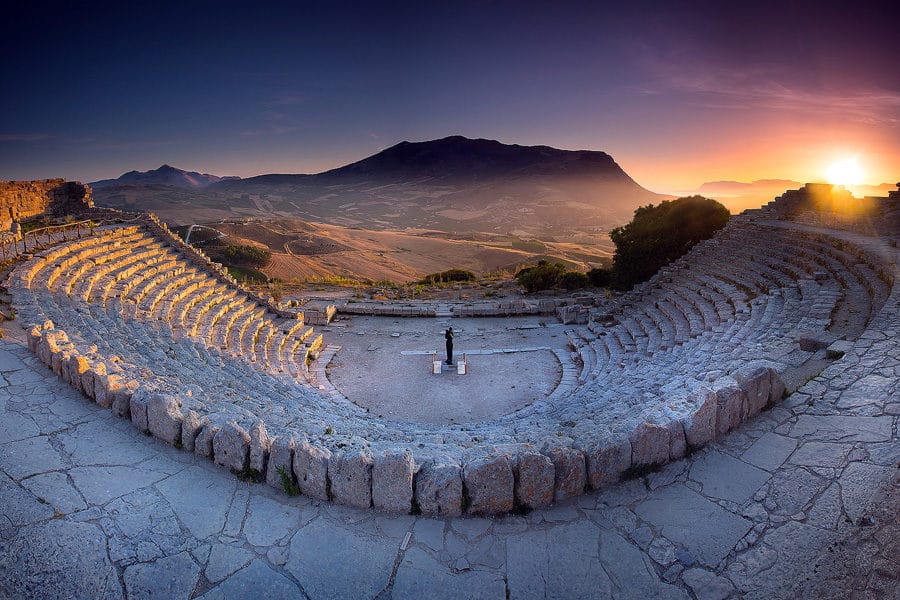
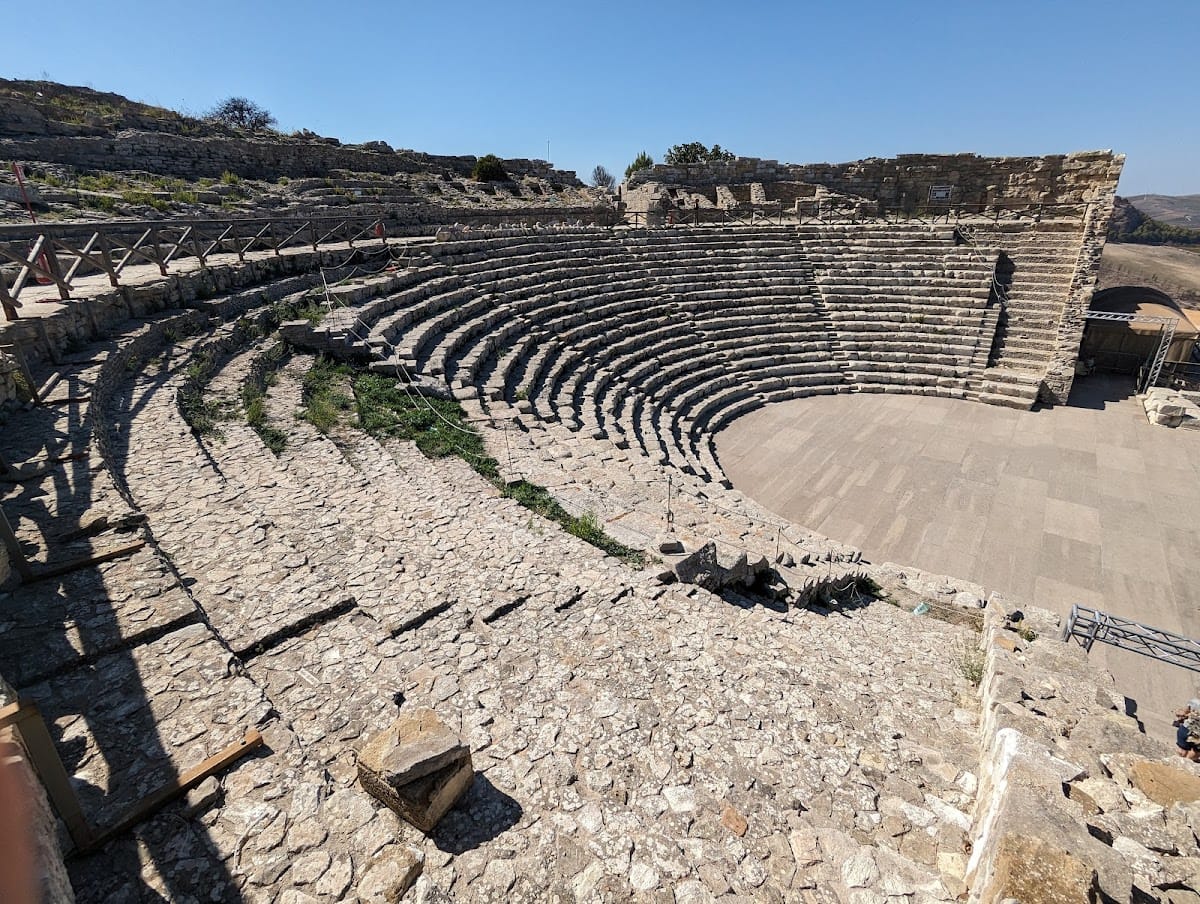
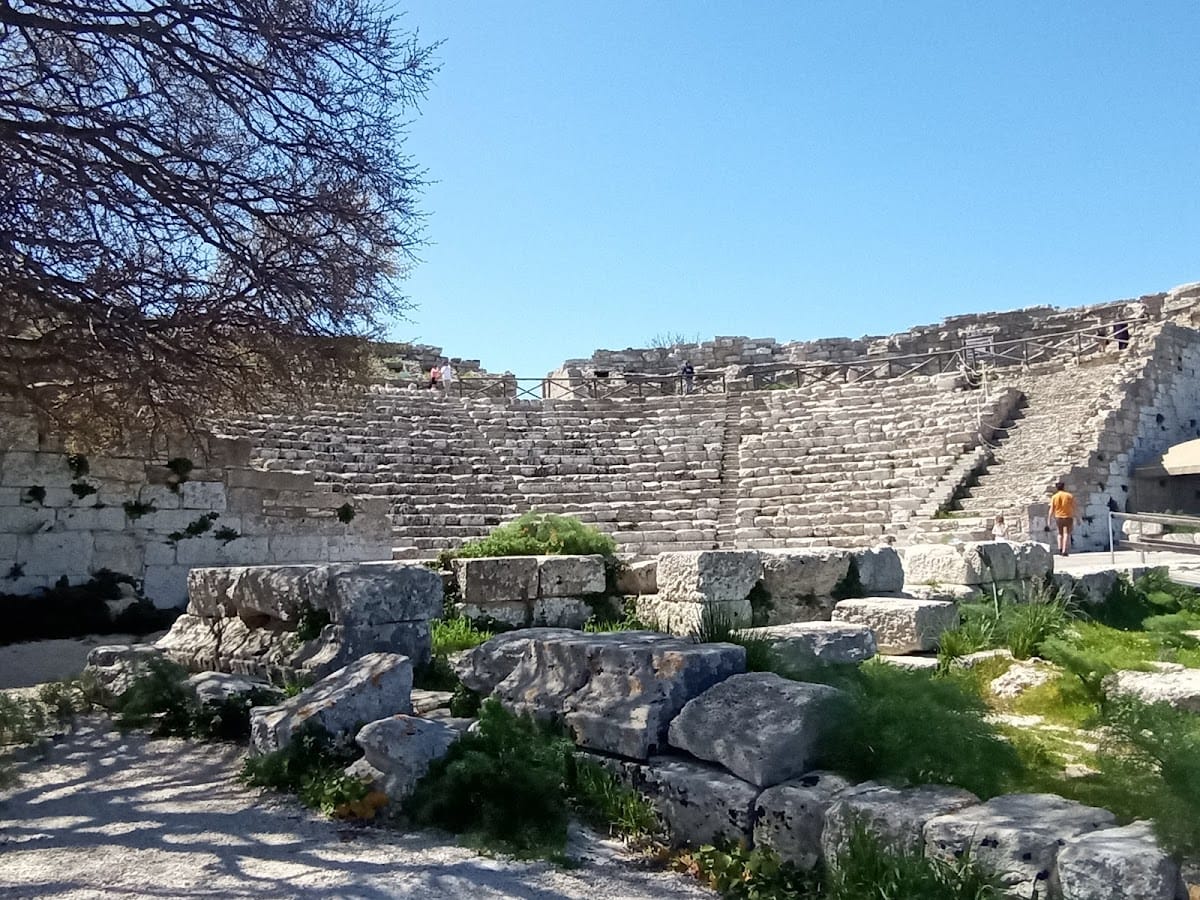
Located atop Monte Barbaro, the theater was constructed either in the mid-4th century BCE or the 2nd century BCE, with scholarly debate persisting regarding its precise date. The site incorporates a Bronze Age cave into its structure, a feature also observed in the theater of Syracuse. The theater’s design reflects Greek architectural principles, with a semicircular seating area (cavea) partly carved into the rock and partly supported by a substantial retaining wall. It represents a transitional architectural form between Greek and Roman theater types. Despite Segesta’s non-Greek identity, the theater likely fulfilled similar cultural and social functions as Greek theaters. The structure remained visible throughout history, was partially excavated in the early 20th century, and has undergone recent restoration. It is integrated into the archaeological park and is occasionally used for theatrical performances.
Sanctuary of Contrada Mango
This sanctuary, dating to the 6th century BCE, lies outside the city walls and is enclosed by a temenos wall defining a large sacred precinct. Archaeological excavations have uncovered numerous architectural fragments, including capitals and columns, indicating the presence of multiple buildings within the sanctuary. Excavations remain in early stages, and the sanctuary’s precise cultic function has not yet been determined. The layout resembles Greek practices of situating extensive sacred precincts beyond urban boundaries, suggesting a significant religious role within the Elymian cultural context.
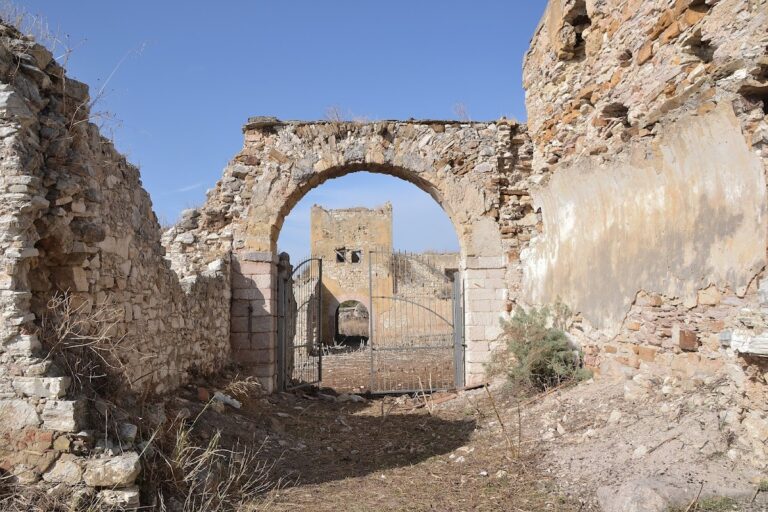
City Walls and Porta di Valle
The city’s defensive system comprises substantial stone walls constructed during the Elymian period and later modified in the medieval era. The walls incorporate the Porta di Valle, a complex gate featuring articulated architectural elements. Medieval refurbishments and additions to the fortifications are evident in the masonry and structural details. The walls follow the natural topography of the plateau, enhancing the defensive capacity of the settlement. Portions of the walls are fragmentary or collapsed, but key sections remain visible and have been subject to conservation.
Residential Quarter and “House of the Navarch”
Archaeological investigations have identified residential areas within Segesta, including a notable dwelling known as the “House of the Navarch.” This building dates to the Hellenistic-Roman phase and is distinguished by high-quality decorative elements. It features an elegant peristyle courtyard with sculpted ship prows on its sides, indicating maritime associations or symbolism. The construction and decoration reflect the social status of its occupants during the late Hellenistic or early Roman period. Preservation is limited primarily to foundations and decorative fragments.
Medieval Structures
The medieval phase of Segesta includes a castle annexed to the ancient theater, constructed to utilize existing monumental architecture for defense. Two churches dating to the Norman and post-medieval periods are present within the site, alongside a medieval neighborhood and a mosque. These structures illustrate the religious and cultural transformations of the site during the Middle Ages. The city walls also exhibit medieval modifications, including restorations and additions to the original Elymian fortifications. Structural elements of these buildings survive but show signs of decay.
Other Remains
The agora of the Hellenistic-Roman city has been identified through surface surveys but remains insufficiently excavated and described. Various architectural fragments and surface traces indicate additional buildings and structures within the urban area, including scattered masonry, column drums, and foundation remains. These suggest further civic or domestic constructions, though their functions remain unclear due to limited excavation. Future research may clarify these aspects.
Archaeological Discoveries
Excavations at Segesta have yielded artifacts spanning from the Elymian through medieval periods. Pottery assemblages include locally produced and imported amphorae and tableware, reflecting trade connections and domestic use. Inscriptions are limited but include dedicatory formulas confirming the city’s political autonomy under Roman rule. Coins from Roman Republican and Imperial periods have been recovered, indicating economic activity and circulation. Tools related to agriculture and crafts have been found in residential contexts, alongside domestic objects such as lamps and cooking vessels. Religious artifacts include statuettes and ritual vessels discovered within sanctuary precincts. These finds contribute to understanding the material culture of Segesta’s inhabitants but do not provide direct evidence for specific cult practices or social structures.
Preservation and Current Status
The Temple of Segesta is among the best-preserved Doric temples in Sicily, with its stone columns and stylobate largely intact. Restoration efforts have focused on stabilizing the masonry and counteracting erosion. The theater’s seating area and retaining walls survive in good condition, with recent restorations facilitating structural consolidation. The integrated Bronze Age cave remains visible. The city walls and Porta di Valle gate are partially preserved, with medieval modifications evident. Some wall sections are fragmentary or collapsed. The “House of the Navarch” and other residential remains survive in varying states, often limited to foundations and decorative fragments. Medieval buildings, including the castle and churches, retain structural elements but also show signs of decay. Conservation by Italian heritage authorities continues to address environmental threats such as erosion and vegetation growth. Excavation and restoration proceed selectively, balancing preservation with research objectives. Some areas remain stabilized but not fully restored to maintain archaeological integrity.
Unexcavated Areas
Several parts of Segesta remain unexcavated or only partially explored. The sanctuary of Contrada Mango is still in early excavation stages, with much of its precinct uninvestigated. The agora and other civic areas within the city have been identified through surface surveys but lack comprehensive excavation. Residential quarters beyond the “House of the Navarch” are known from surface remains but remain largely unexplored. Future excavations are planned but constrained by conservation policies and the site’s protected status. Limited modern development in the surrounding rural landscape allows potential for further archaeological work. Non-invasive methods such as geophysical surveys and surface studies continue to inform research priorities without extensive intrusive excavation at present.
Nearby sites