Gneisenau Castle: A Historic Water Castle in Austria

Site at a Glance
- Rating
- 4.3
- Popularity
- Very Low
- Country
- Austria
- Primary era
- Early Modern
- External website
- Open
- Eras represented
- Early Modern, Modern
- Civilizations
- Habsburg, Holy Roman Empire
- Site type
- Domestic
- Remains
- Castle
On this page8 sections
History
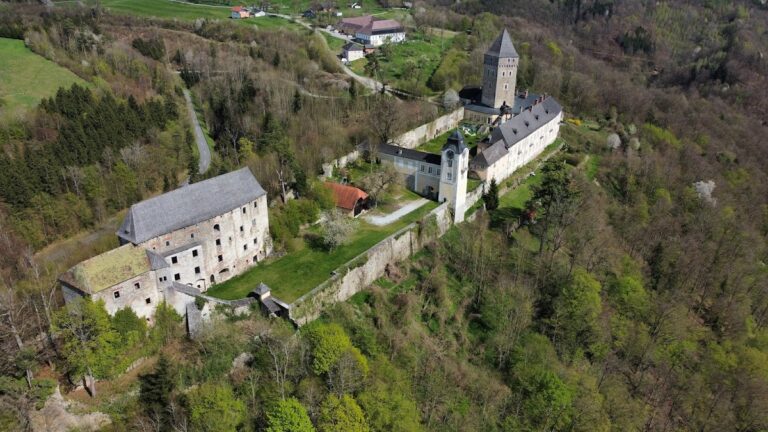
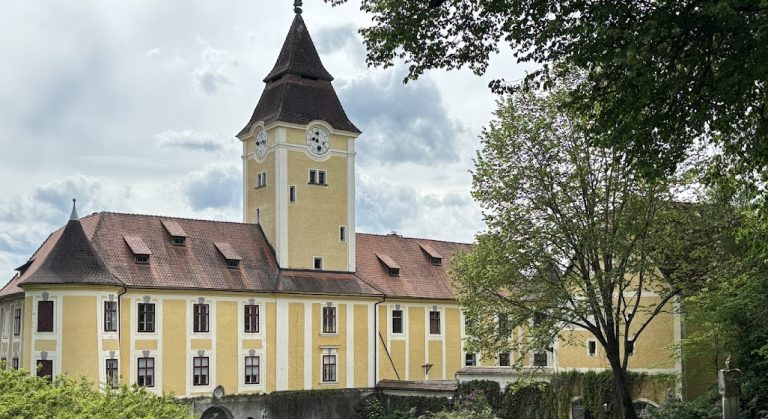
Gneisenau Castle is a historic castle in Austria, near Kleinzell im Mühlkreis in Upper Austria, whose present water-castle complex was probably built at the beginning of the sixteenth century. A noble residence at the site was first documented in 1161. The castle stands in the Rohrbach district, about 30 kilometres northwest of Linz, and reflects a long succession of aristocratic ownership, rebuilding, and changing use.
Medieval Lords and Early Owners
Until 1338, the residence belonged to the Gneussen, a Passau ministerial family. A ministerial was a member of the medieval service nobility who commonly performed administrative or military duties for a higher-ranking lord. Sigeboto of Gneuß was the first member of the family recorded at the site. The Teuerwanger family, originally from Steyr, held Gneisenau from 1338 to 1370. The Harrach and Diendorfer families followed, possessing it from 1434 to 1524.
Georg Perkhammer owned the estate from 1524 to 1540. Erasmus and Anna Kaplan of Tandleinsbach then held it and sold it in 1547 to their brother-in-law, Seibold Raiger. The Neithart family possessed Gneisenau from 1556 to 1589. Originally patricians from Ulm, the Neitharts adopted the designation “von Gneissenau” in the eighteenth century. Their family included Johann Eberhard Neidhardt, a Catholic cardinal and imperial court official, and August Neidhardt von Gneisenau, a Prussian field marshal and military reformer of the Napoleonic era.
Ownership in the Early Modern Period
The Hohenegg family followed the Neitharts. In 1597, Gneisenau passed to Hanns Pranter, the Pfleger of Weidenholz. A Pfleger was a local official responsible for administering a lordship or estate. Erasmus Märk of Haimerhofen owned the castle from 1602 to 1630. During the Peasants’ War of 1626, the prudent conduct of Hans Christoph Mäerk spared Gneisenau from plundering. In 1630, the lordship was sold to Christoph Heinrich Murhamber of Murau.
The Counts Fieger owned Gneisenau from 1634 to 1767. Johann Philibert, Baron von Fieger, commissioned three chapels on the castle grounds, dedicated to Maria Hilf, Maria Trost, and Johann Nepomuk. In 1767, the lordship was sold to Count Franz Gundaker of Starhemberg, and its administration was transferred to Eschelberg.
Rebuilding and Twentieth-Century Use
In 1875, Josef Penn, a miller from Zwettl an der Rodl, acquired the castle and intended to develop it with its associated land as a model property for the Heimstättenbund he had founded. A fire and financial difficulties led to its sale to the Upper Austrian Volkskredit in 1906. Captain Friedrich Engl owned Gneisenau from 1907 to 1910 and had it rebuilt. Rudolf Wilhelmseder acquired it in 1910, Hugo Ferger in 1911, and the operetta composer Heinrich Reinhardt in 1917.
Reinhardt introduced romantic and historicizing alterations to the older fabric. After another change of ownership in 1924, the Viennese architect Fritz Zeymer renewed parts of the historic structure, adapted the building for modern residential use, and enlarged it with an addition. Miss Whitehead, who came from England, retained possession until 1938.
Soviet soldiers plundered Gneisenau in 1945 and occupied it until 1953. The severe damage that followed required a complete renovation, carried out according to plans by the architect Krohn and the master builder Sparschuh. Since 1959, the castle has housed a district residential home for older people.
Remains
Water Castle Layout
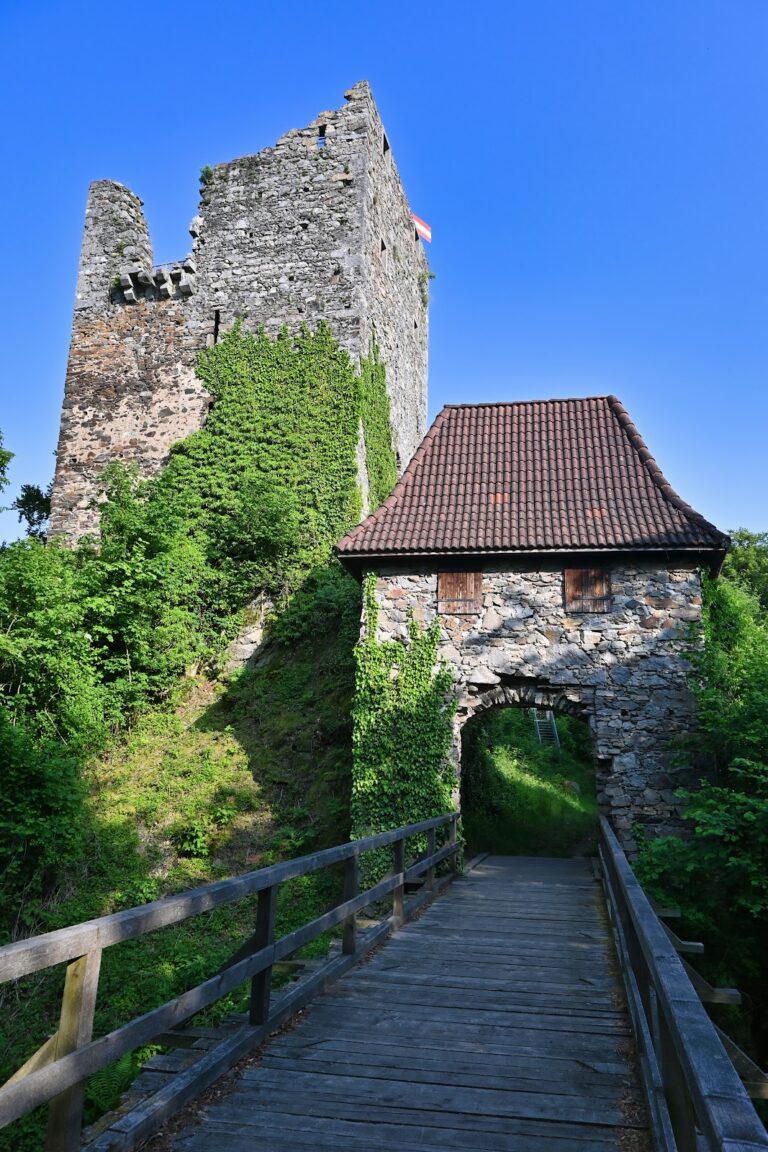
Gneisenau was a compact former water castle set in the middle of a circular pond. A stone bridge crossed the pond to the gate tower and then to the castle courtyard. The new castle may incorporate walls from the earlier fortress. Its four wings were formed by inserting buildings into the original ring wall, while additional wings were added during the modern period after renovation.
Gate Tower and Courtyard
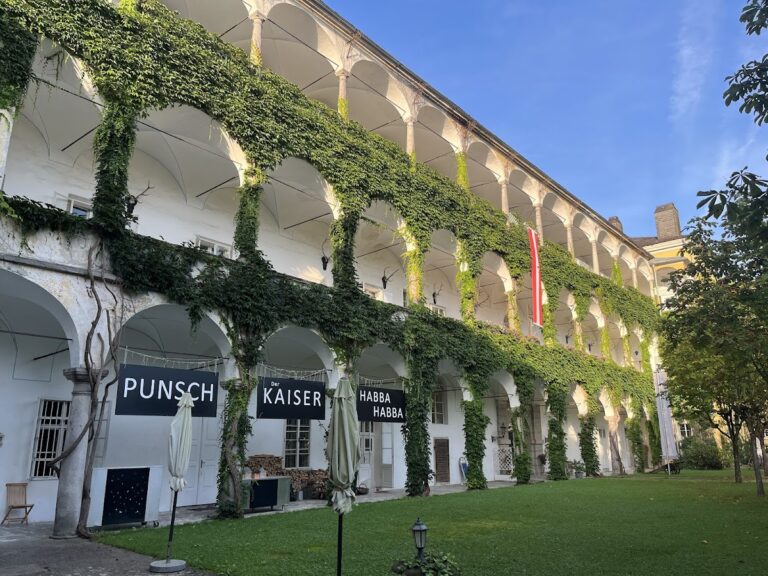
The massive gate tower and the arcaded galleries in the courtyard survive in approximately their original form. Together they preserve the principal elements of the former entrance and interior circulation around the courtyard, despite the structural changes made to the castle over subsequent centuries.
Castle Chapels
The castle grounds include the Maria Hilf, Maria Trost, and Johann Nepomuk chapels. Johann Philibert, Baron von Fieger, commissioned them during the period of Fieger ownership. Their presence forms part of the religious architectural group associated with the castle estate.
Nearby sites