Palazzo Cenci-Bolognetti: A Baroque Urban Residence in Rome


Site at a Glance
- Rating
- 4.8
- Popularity
- Very Low
- Country
- Italy
- Primary era
- Early Modern
- Eras represented
- Early Modern, Modern
- Civilizations
- Papal States
- Site type
- Domestic
- Remains
- Elite Residence
On this page11 sections
History
Petroni Origins and Eighteenth-Century Expansion
Palazzo Cenci-Bolognetti is a historic urban residence in Rome, Italy, in the Pigna district. It developed from a sixteenth-century palace built for the Petroni family, who came from Civita Castellana and had lived in Rome since the fifteenth century. Their purchase of the property was ratified on 11 December 1563.
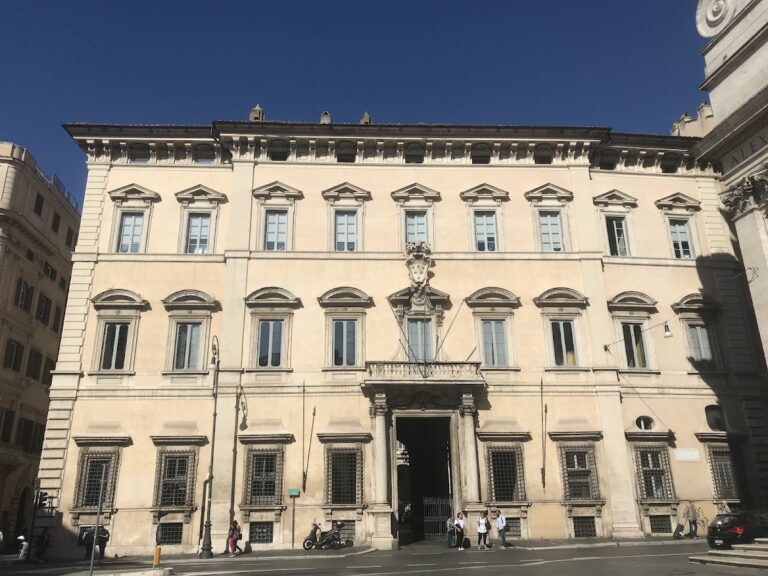
An earlier Petroni palace, dated to 1536, stood on Via d’Aracoeli. Around 1737, Count Alessandro Petroni decided to enlarge the residence, and in 1745 he commissioned Ferdinando Fuga, an eighteenth-century Italian architect known for major Roman works, to design the facade facing Piazza del Gesù. The expanded building formed the southern side of the square beside the Church of the Holy Name of Jesus.
Between 1718 and 1735, the painter Giacomo Zoboli lived in apartments provided for the representative of the Duke of Modena in Rome. His residence reflects the palace’s role as both a private home and an urban setting for diplomatic and aristocratic life.
The Cenci Bolognetti Inheritance
After Alessandro Petroni died in 1771, the palace passed to his daughter Maria Isabella, who was married to Girolamo Cenci Bolognetti, Prince of Vicovaro. Through this inheritance, the building became associated with the Cenci Bolognetti family.
During the second half of the nineteenth century, Virginio Cenci Bolognetti, the seventh Prince of Vicovaro, undertook further restoration. He altered the interiors to reflect his preferences and the changing character of the new century.
Diplomatic, Political, and Institutional Uses
From 1928 to 1931, Palazzo Cenci-Bolognetti housed the Embassy of the Republic of Poland to the Holy See. Władysław Skrzyński served as ambassador during this period, before the embassy moved in 1931 to Palazzo Frascara on Piazza della Pilotta.
From 1944 to 1994, the palace served as the principal headquarters of Christian Democracy, a major Italian political party that governed or joined national governments for much of the period after the Second World War. The building later continued to house one wing of a political formation founded in 2002 under the same name. It also accommodated offices of the Popular Party and the United Christian Democrats, as well as the editorial office of the satirical magazine Il Male.
Beatrice Fiorenza, Virginio Cenci Bolognetti’s only daughter, inherited the palace and other properties. On 16 October 1955, she bequeathed them to the University of Rome La Sapienza to establish an Italian Pasteur Institute. Since that year, the building has belonged entirely to the Cenci Bolognetti Foundation-Pasteur Institute rather than to the family. Interior restoration was carried out in 1990. The palace is also associated with the later Christian Democratic organization and the Association of Popular Banks.
Remains
Facade and Urban Setting
Ferdinando Fuga’s Facade
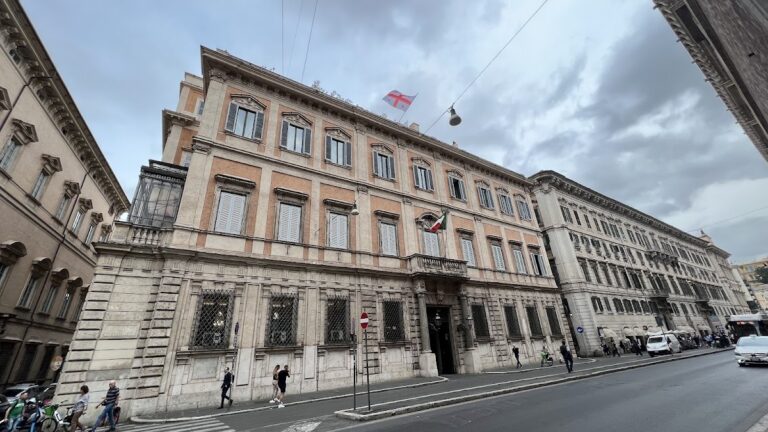
Palazzo Cenci-Bolognetti is an urban residential building in Italian Baroque architecture with Rococo elements. Its facade, designed by Ferdinando Fuga and completed around 1745, belongs to the enlargement of the earlier Petroni residence. The building occupies the southern side of Piazza del Gesù beside the Church of the Holy Name of Jesus.
Relationship to the Surrounding Streets
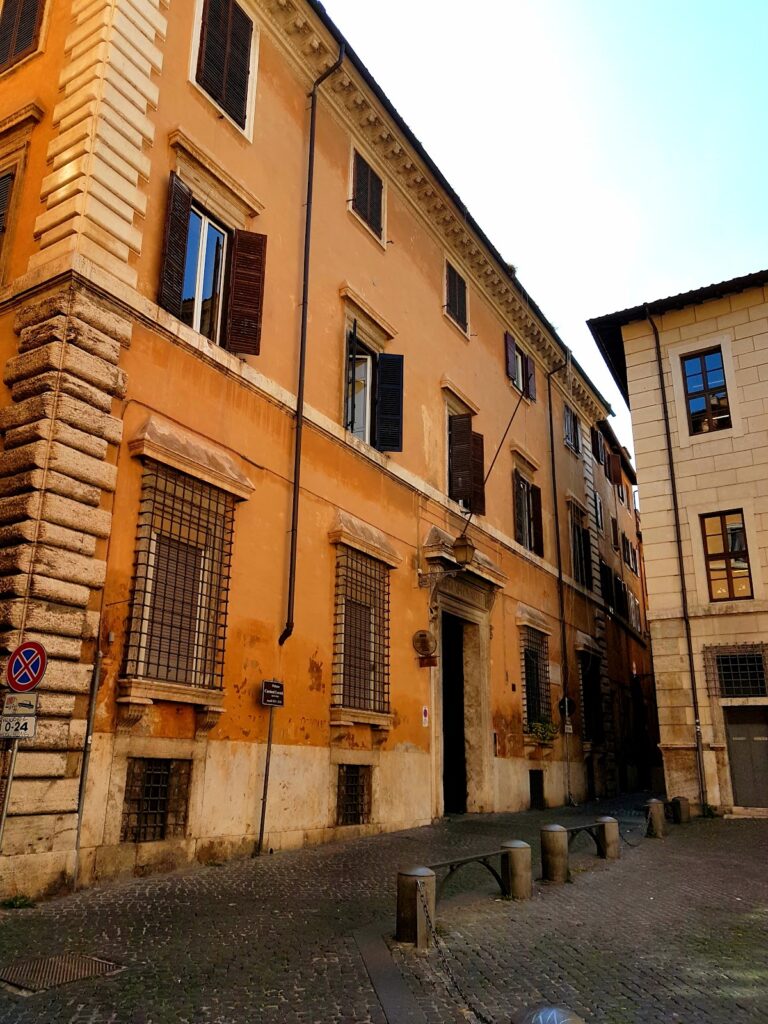
The palace was aligned with Piazza del Gesù, Via d’Aracoeli, and Via Capitolina, the latter opened in 1741. Fuga’s design also incorporates elements associated with Palazzo Odescalchi, whose facade was designed by Giovanni Lorenzo Bernini, a leading seventeenth-century Italian sculptor and architect whose work strongly influenced Roman Baroque architecture.
Interior Decoration and Memorial Features
Painted Rooms and Chapel
Several rooms contain frescoes showing the story of the Judgment of Paris. The palace chapel holds a copy of a Madonna painting by Guido Reni, a prominent Italian Baroque painter known especially for religious and mythological subjects.
Countess’s Apartment and De Gasperi Plaque
Paneling survives in the area known as the countess’s apartment. A commemorative plaque marks the tenth anniversary of the death of Alcide De Gasperi, an Italian statesman and leading figure in Christian Democracy who served as Italy’s prime minister after the Second World War.
Nearby sites