Château de Sauvan: An Eighteenth-Century Classical Estate in France


Site at a Glance
- Rating
- 4.7
- Popularity
- Low
- Country
- France
- Primary era
- Early Modern
- External website
- Open
- Eras represented
- Early Modern
- Civilizations
- French
- Site type
- Domestic
- Remains
- Elite Residence
On this page7 sections
History
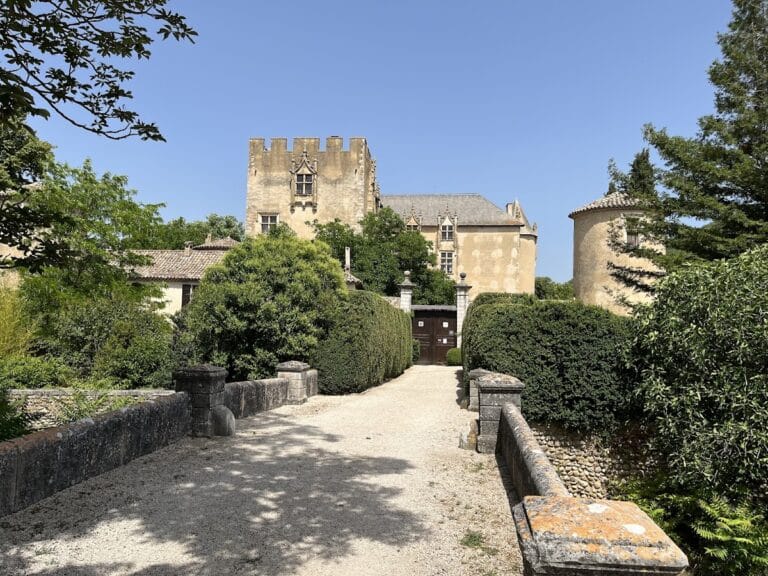
Château de Sauvan is an eighteenth-century classical château in France, near Mane in the Alpes-de-Haute-Provence department. It was built between 1719 and 1720 for Joseph Palamède de Forbin-Janson, a member of the Janson branch of the prominent Provençal Forbin family, whose members had held the marquis title since 1626. The plans were prepared by Jean-Baptiste Franque, an architect from Avignon known for working in the classical tradition.
The Forbin-Janson succession
After Joseph Palamède de Forbin-Janson, the property passed successively to Michel de Forbin-Janson, Joseph de Forbin-Janson, Michel-Palamède de Forbin-Janson, and Charles de Forbin-Janson. Their periods of ownership extended from the eighteenth century into the first half of the nineteenth century, with Charles de Forbin-Janson dying in 1849.
Revolutionary upheaval and later ownership
The French Revolution, the period of political upheaval that ended the French monarchy and transformed France, caused little damage to Château de Sauvan. The main recorded alteration was the hammering of the pediment on the principal façade. A tradition from the revolutionary period tells that the Countess and Princess de Gallean Forbin-Janson, who was said to resemble Marie-Antoinette, offered to take the queen’s place in the Conciergerie, the Paris prison where Marie-Antoinette was held before her execution. The countess reportedly gathered one million francs for the plan, but Marie-Antoinette refused. When the plot was exposed, the countess was forced to leave the country.
Charles Théodore Palamède de Forbin-Janson sold the château to Abbé Henri-Anne Solliers in 1810. It later passed to Solliers’s niece, Marie-Rose Chambaud de Cochet, who married Count Paul Servan de Bezaure in 1902.
Restoration and protection
Jean-Claude and Robert Allibert, two antique dealers, purchased Château de Sauvan in 1981, when it was almost ruined. They undertook extensive restoration, completely refurnished the château, and recovered part of its original furniture. The property remains privately owned.
Protection under France’s historic-monuments legislation was introduced in stages. The façades, roofs, and staircase enclosure were classified in 1957. In 2003, the château and its dependencies, the entire park, and its original component parcels were registered. The park received the French “Remarkable Garden” designation in 2005, a heritage recognition for gardens valued for their historical, artistic, or landscape qualities.
Remains
Château de Sauvan is a classical, one-story rectangular building set within a large park. Its formal composition centers on a projecting section of the façade, while the roof is concealed behind a balustrade, a row of posts supporting a parapet or railing. The surrounding estate retains terraces, retaining walls, statues, portals, basins, fountains, and a hydraulic system, together with the original kitchen garden and orchard.
The château
The principal building has a central projecting section containing a balcony supported by four columns. Above it, a triangular pediment forms the upper feature of the façade. The pediment was damaged during the French Revolution, while the château’s façades, roofs, and staircase enclosure retain their protected status. The building was extensively restored after its purchase in 1981 and was refurnished with some of its original furniture.
The park and formal gardens
The estate’s large park is organized through terraces and retaining walls and includes statues, portals, basins, fountains, and a hydraulic system. Its protected grounds also encompass the original kitchen garden and orchard. The French formal gardens have been restored, preserving the designed landscape as part of the château’s surviving setting.