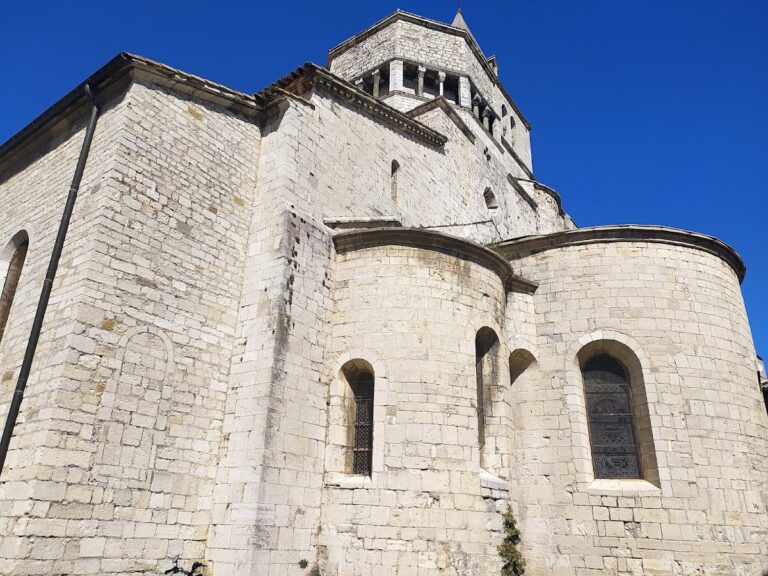
Forcalquier Cathedral: A Former Co-Cathedral in France


Site at a Glance
- Rating
- 4.5
- Popularity
- Low
- Country
- France
- Primary era
- Medieval
- Eras represented
- Medieval, Early Modern
- Civilizations
- County of Provence, French
- Site type
- Religious
- Remains
- Cathedral
On this page12 sections
History
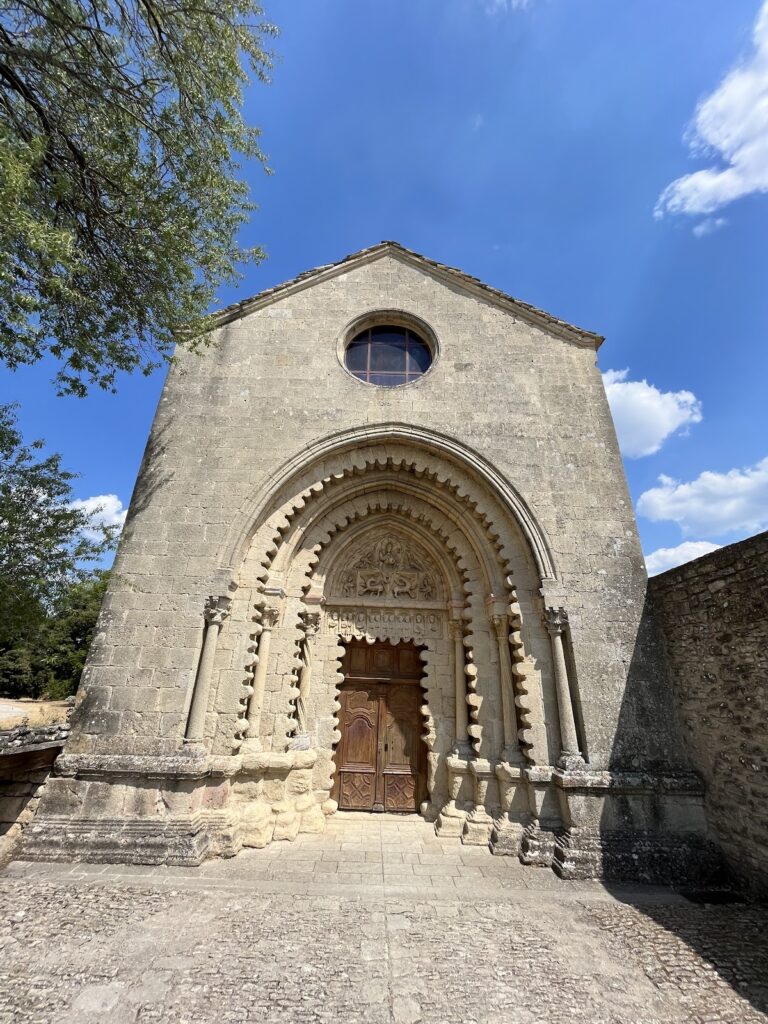
Forcalquier Cathedral is a Roman Catholic church in Forcalquier, France, dedicated to Notre-Dame, the traditional title for the Virgin Mary. Dating from the twelfth century, it became a co-cathedral, a church sharing cathedral status with another church in the same diocese, and is now a parish church in the Diocese of Digne. Its architecture is predominantly Romanesque, with an early Gothic treatment in its principal medieval elements.
From Saint-Mary to Notre-Dame-du-Bourguet
An earlier collegiate church called Saint-Mary served as Forcalquier’s co-cathedral from 1065. Only a few elements of that Romanesque building remain. Notre-Dame-du-Bourguet succeeded it as the co-cathedral church during the twelfth century.
The bishop of Sisteron established a second episcopal seat at Forcalquier because a dispute with the cathedral chapter prevented him from entering Sisteron. A collegiate church is administered by a college of clergy rather than by a bishop’s cathedral chapter. In 1408, the church at Forcalquier was formally raised to co-cathedral status, reflecting its continuing role as the bishop’s second seat.
Medieval and later development
The building grew through successive phases between the thirteenth and seventeenth centuries. Its central medieval structure belongs chiefly to the early thirteenth century, while later work added or altered parts of the bell structures and side aisles. The early Gothic treatment has been described as one of the first adaptations of Gothic architecture in the Pays d’Oc, the historical cultural region of southern France associated with the Occitan language, and as one of the earliest Gothic examples in southern France.
The Diocese of Sisteron was abolished in 1801. After that change, the former co-cathedral continued to serve as a parish church. France classified the church as a historic monument on 18 April 1914. In 2008 and 2009, the dome of the small bell tower was rebuilt after lightning damage, its lightning conductor was replaced, and its clock was remade.
Remains
Forcalquier Cathedral measures approximately 40 metres in length, 29.5 metres in width, and 36.5 metres in height. Its surviving fabric combines substantial Romanesque construction with early Gothic treatment. The principal medieval layout is formed by the nave, choir, and transept, with later side aisles and additions to the bell structures completing the present building.
Church structure and bell towers
Nave, choir, and transept
The central nave, the main longitudinal body of the church, joins the choir, the area associated with the clergy and principal liturgy, and the transept, the cross-arm intersecting the nave. These principal elements date from the early thirteenth century. Their architecture combines the rounded-arch, heavy-masonry character associated with Romanesque buildings and an early Gothic treatment that reflects the transition toward pointed arches, rib vaults, and taller structural forms.
Bell structures
The main bell tower includes early-thirteenth-century work and a second stage added in the seventeenth century. A separate campanile, a bell-bearing structure, belongs to the sixteenth century. The small bell tower received a rebuilt dome after lightning damage in 2008 and 2009, together with a replacement lightning conductor and a remade clock.
Side aisles
The side aisles date from the seventeenth century and extend the principal body of the church. They belong to the later building phase that shaped the cathedral’s current width and internal arrangement.
Art, bells, and furnishings
Paintings and statues
The church contains Nicolas Mignard’s Triumph of Christ. Mignard was a seventeenth-century French painter associated with the Baroque period. Other furnishings include a Virgin and Child statue and a statue of Saint Anne with the Virgin. Saint Anne is traditionally regarded as the mother of Mary.
Organ and Maria-Sauvaterra bell
The organ dates from 1630, while its first stops, sets of pipes producing particular tones, date back to 1629. Its tribune and case are protected as historic monuments. The Maria-Sauvaterra bell was cast in 1609 and weighs approximately 1,200 kilograms.
Liturgical objects
Recorded liturgical furnishings include a nineteenth-century chalice, two monstrances used to display the consecrated Eucharistic host, a crucifix, burettes and their tray, two copper collection plates, and an eighteenth-century chasuble. The 1819 monstrance, crucifix, burettes and tray, copper collection plates, and chasuble received historic-monument classification in 1980. The nineteenth-century chalice and one of the monstrances were stolen in September 1994.
Nearby sites