Château du Bois-Guy: A Louis XIV-Style Estate in France


Site at a Glance
- Rating
- 4.4
- Popularity
- Low
- Country
- France
- Primary era
- Early Modern
- External website
- Open
- Eras represented
- Medieval, Early Modern
- Civilizations
- Duchy of Brittany, French
- Site type
- Domestic
- Remains
- Castle
On this page7 sections
History
Château du Bois-Guy is a historic château in France, at Le Bois Guy near Parigné, whose present complex was built in the seventeenth century in the Louis XIV style, a formal and symmetrical classicism associated with the reign of Louis XIV. It replaced an earlier manor and became the center of an estate whose ownership passed through several Breton families.
From Manor to Château
The Bois-Guy estate already contained a fifteenth-century manor, chapel, farm, and outbuildings. In the middle of the fourteenth century, the property belonged to the Pichot family. It later passed by marriage into the possessions of the de Gaullaye family, also known as de Gaulay. The family was recorded as lord of Bois-Le-Bon in 1513, and the château remained in its patrimony for roughly two centuries.
After the death of the last representative of the de Gaullaye family, Jean Picquet purchased the château in 1703. Picquet was chief clerk of the Parliament of Brittany and lord of La Motte and Melesse. His family subsequently added “Bois-Guy” to its surname, linking the name of the estate with the family identity.
The Picquet du Bois-Guy Family
Alexandre-Marie Picquet married Bonne-Josèphe Du Bois-Lebon at Fougères in 1769. Their children included Guy Picquet du Boisguy, born in 1772, and Aimé Picquet du Boisguy, born in 1776. Through this marriage, the château returned to the family.
During the French Revolutionary period, Aimé Picquet du Bois-Guy was a royalist allied with the Chouans, royalist insurgents who fought the Revolutionary government in western France, including Brittany. He used the château as a base for raids across the region.
Sale, Agricultural Reuse, and Restoration
Madame du Bois-Lebon offered the château and the Bécannière property at Javené for sale in 1802. The estate was sold in 1804 to Mr Dubuat, who left it to his daughter, the wife of Henri-Charles d’Estanger. A notary from Fougères later acquired the buildings.
The complex was converted into a large farm and remained in that use until shortly before the Second World War. The château and its outbuildings then deteriorated. By the 1980s, only blind windows and isolated wall sections remained. In 1994, a Fougères industrialist bought the château, by then reduced to the ground floor and one tower covered with ivy. He restored it over more than six years with the intention of creating a hotel-restaurant.
In 2009, two young restaurateurs took over the property and transformed it into a prestige establishment, adapting the outbuildings as seminar rooms. The current owners are identified as M. Linhoff and Haefeli. The estate also accommodates a football center and a golf practice facility. Temporary exhibitions have been held there, and a football pitch named for Rennes and France international midfielder Eduardo Camavinga was inaugurated in his presence on 23 September 2020.
Remains
Main Château and Estate Buildings
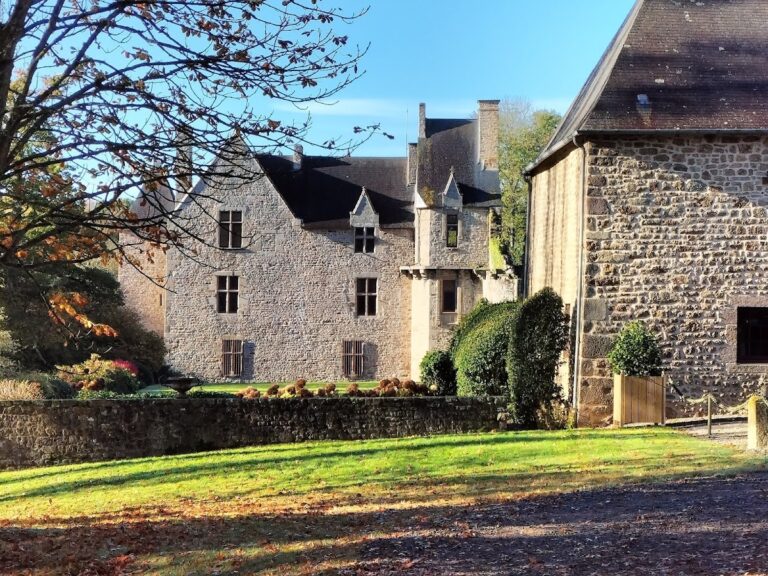
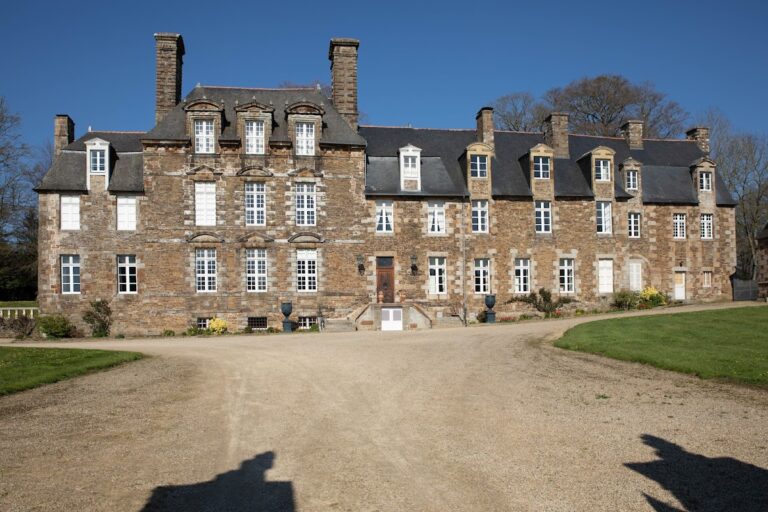
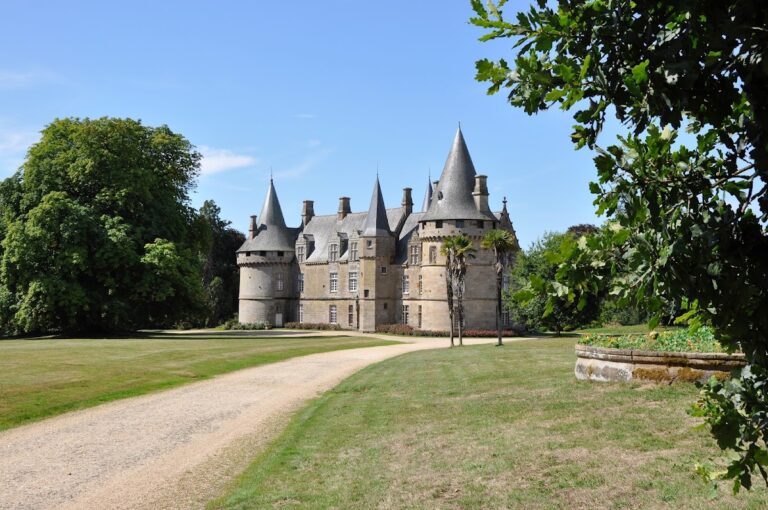
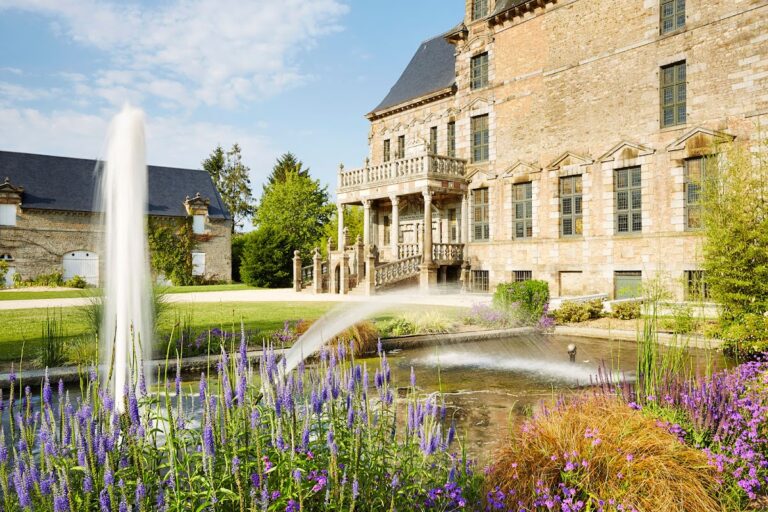
The seventeenth-century château occupies the site of the earlier manor. Its Louis XIV-style design has a façade with a tower at each corner. At the rear, a square turret contains a notable granite staircase. The outbuildings are topped with oeil-de-boeuf windows, small round or oval openings used as decorative features near the upper parts of buildings. The estate also included a French formal garden. Former service buildings now serve as seminar rooms, while other parts of the grounds contain a golf practice area and a football pitch inaugurated in 2020.
Saint Martin Chapel
The fifteenth-century Saint Martin Chapel is attached to the main château. Its exterior retains a pointed-arch doorway and a trefoil window. Inside, the window is partly concealed by an original seventeenth-century altarpiece that was recovered and preserved.
The chapel was abandoned at the end of the nineteenth century and converted into a storage building. In 1984, Souvenir breton installed a plaque commemorating the military exploits of the Picquet du Bois-Guy siblings.