Château de Maubreuil: A Nineteenth-Century Residence in France


Site at a Glance
- Rating
- 4.7
- Popularity
- Medium
- Country
- France
- Primary era
- Modern
- External website
- Open
- Eras represented
- Early Modern, Modern
- Civilizations
- French
- Site type
- Domestic
- Remains
- Castle
On this page13 sections
History
Château de Maubreuil is a nineteenth-century château in Carquefou, France, built as a residence after an earlier estate complex was burned during the French Revolution. Before the Revolution, the estate was written “Maubreil,” and its history reaches back to the lords of the Couppegorge family.
The Couppegorge and Ménardeau estates
Guillaume de Couppegorge was recorded as lord of Maubreil in 1398, followed by Alain de Couppegorge in 1516, François de Couppegorge in 1542, and Bertrand de Couppegorge in 1544. In 1575, Arthur Ménardeau became lord through his marriage to Marguerite de Couppegorge, lady of Maubreuil. The property then remained associated with the Ménardeau family for several generations.
Noël Ménardeau was recorded at the estate in 1649. Michel Ménardeau founded a chaplaincy there on 25 December 1671 under the patronage of Saint Anne. A chaplaincy was a religious foundation supporting a chapel and clerical service, usually through the patronage of an estate. Jean-François Ménardeau was associated with Maubreil in 1744, and Bonaventure-Armand Ménardeau, a captain of dragoons, held it in 1750.
Revolutionary upheaval and nineteenth-century rebuilding
In 1783, Jacques-Louis-Marie de Guerry de Beauregard became associated with the estate through his marriage to Marie-Bonne-Félicité Ménardeau. He had been a battalion commander in the Guards of Monsieur, a royal guard unit linked to the traditional title for the king’s younger brother. During the Revolution, he emigrated, meaning that he left France for political or royalist reasons, and later joined the Chouans, royalist insurgents active particularly in western France. He was killed at the Battle of Aizenay on 20 May 1815.
After his father’s death in 1815, Jacques-Armand de Guerry de Beauregard inherited Maubreuil. He was heavily indebted, and the estate, including six tenant farms, was seized and sold through the courts for 171,000 livres to Félix Cossin de Chourses. A Nantes shipowner involved in privateering and the slave trade, Cossin de Chourses also served as a Nantes municipal councillor from 1805 to 1815.
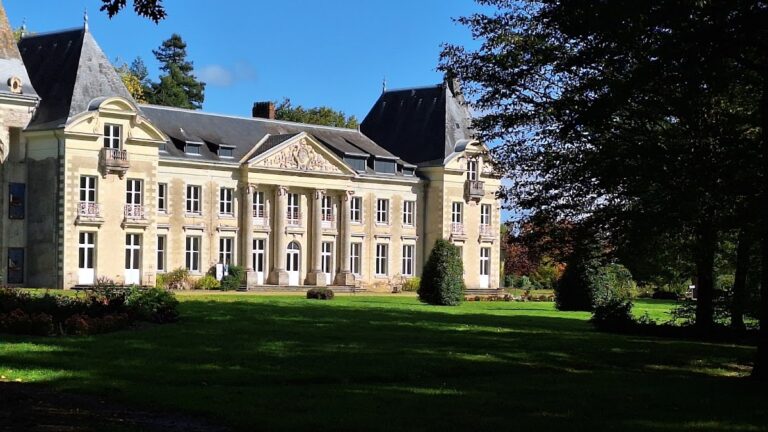
Félix Cossin de Chourses died in 1816, and his son, who bore the same name, took possession of the property. The younger Félix later became mayor of Carquefou. He demolished the remains of the earlier château, which had been burned during the Revolution, and commissioned the present nineteenth-century château on its site.
Later ownership and institutional use
Later owners included Albert-Guillaume-Louis-Joseph de Dion, who married Laure-Félicie Cossin de Chourses in 1855, and Jules-Albert de Dion, a marquis and automobile manufacturer associated with De Dion-Bouton, who owned the estate from 1901.
In 1934, the marquis de Dion transferred the estate to the département. A sanatorium, a medical institution intended for long-term treatment and convalescence, was built in the park, and its buildings were inaugurated in 1938. From 1972, they housed a functional-rehabilitation centre, providing treatment intended to restore physical abilities after illness or injury.
Restoration and present use
In 2012, the château was acquired by Philippe Rousse, a Nantes entrepreneur. In 2013, a steering committee involving the hospital, the Loire-Atlantique departmental council, Nantes Métropole, and Carquefou approved changes to the ownership and use of the estate. The château, its dependencies, the lakeside house, and the former farm were transferred to Astrolade, while the municipality acquired the remainder of the estate.
Philippe Rousse carried out a seven-year restoration that adapted the château for hotel use. The privately owned estate now functions as a hotel, restaurant, and spa.
Remains
The château and surviving earlier structures
The nineteenth-century château
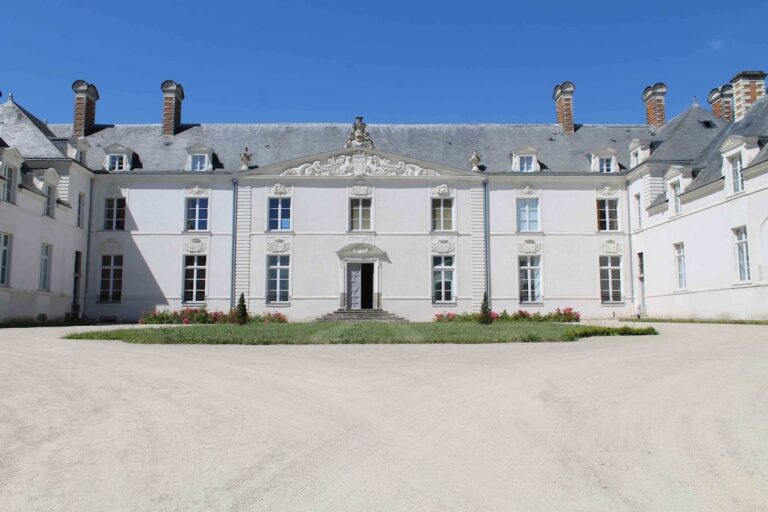
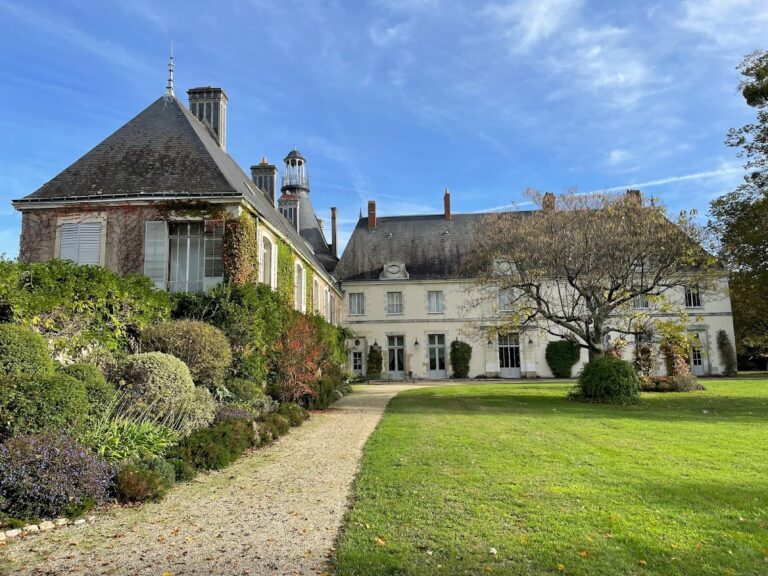
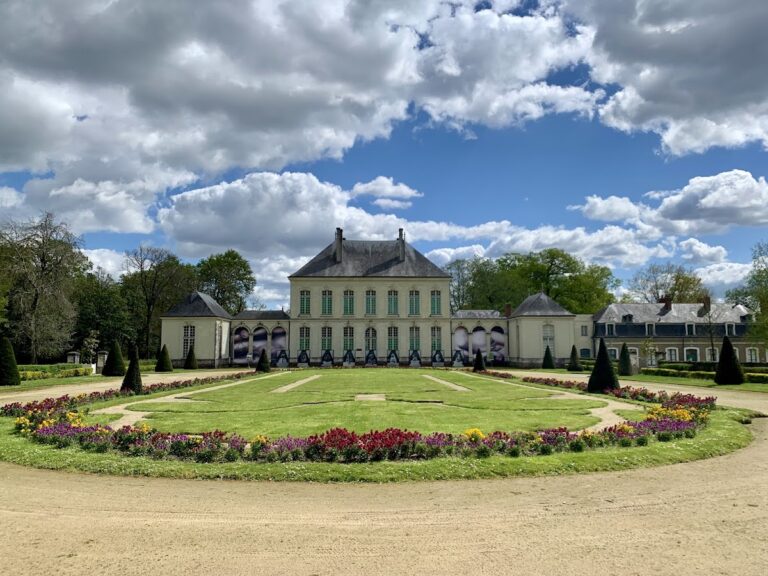
The present Château de Maubreuil is a nineteenth-century residence that replaced the earlier château. Its restored interior contains fourteen suites and three apartments. The building’s current arrangement reflects the seven-year restoration, which adapted the residence for hotel use while retaining its role as the central structure of the estate.
Earlier estate remains
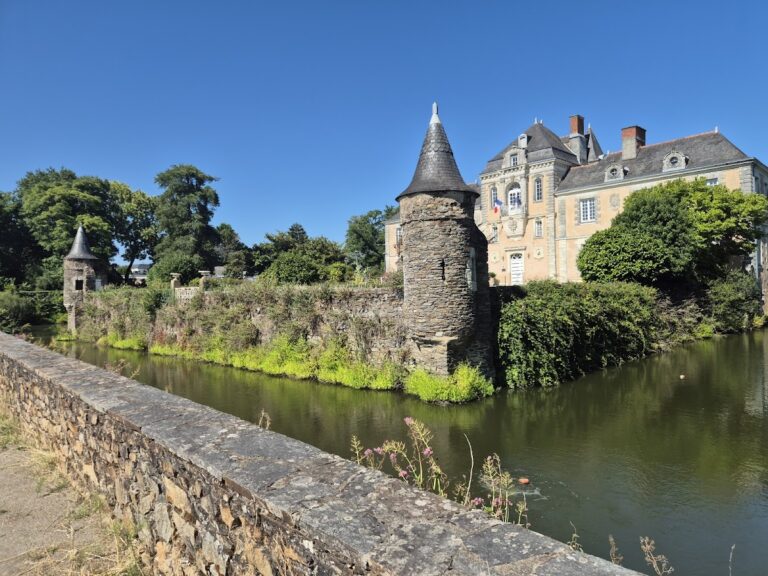
Three structures from the earlier complex survived the burning of the former château during the French Revolution: a pigeon loft, a private chapel, and a seventeenth-century hunting pavilion. These buildings preserve physical elements of the estate that preceded the present residence.
Estate buildings and park
Dependencies and agricultural buildings
The property includes the château’s dependencies, a lakeside house, and a former farm. The former estate also comprised six tenant farms, linking the residence to an agricultural holding that was part of its nineteenth-century property.
Park institutions
The park contains the buildings of the sanatorium inaugurated in 1938. From 1972, these buildings served as a functional-rehabilitation centre. Their institutional use formed a later phase in the physical and social development of the estate.
Restored hotel facilities
The restored château now incorporates a Cinq Mondes partner spa and the gastronomic restaurant La Table du Marquis. These facilities occupy a residence whose present form results from its conversion into a hotel.
Nearby sites