Schloss Oberwinzer: A Medieval Hilltop Castle in Germany


Site at a Glance
- Rating
- 4.4
- Popularity
- Low
- Country
- Germany
- Primary era
- Medieval
- Eras represented
- Medieval, Early Modern
- Civilizations
- Holy Roman Empire
- Site type
- Military
- Remains
- Castle
On this page6 sections
History
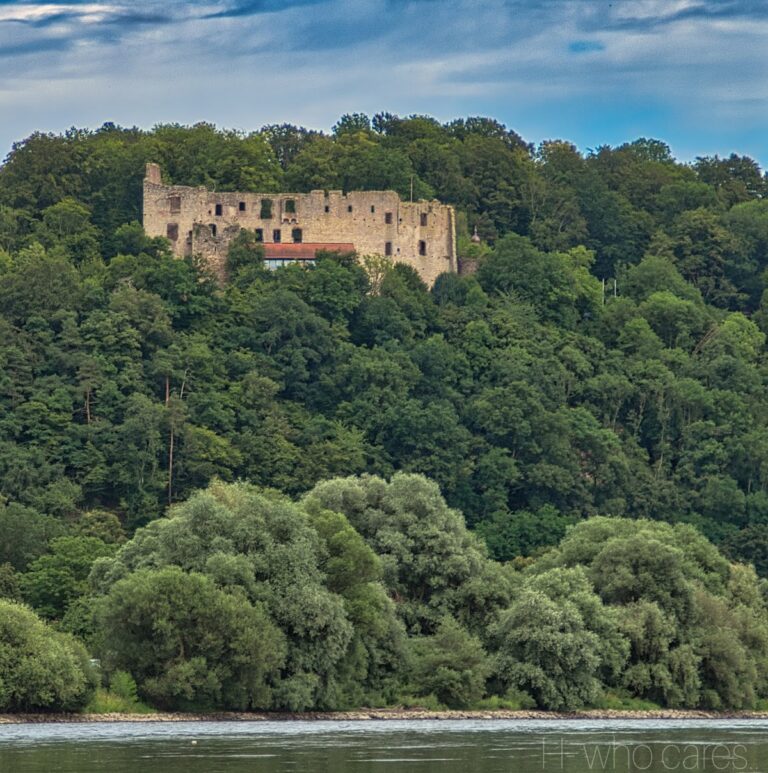
Schloss Oberwinzer, also called Burg Oberwinzer, is a medieval castle in Germany above the market town of Winzer. It was built during the eleventh century by a ministerialis, a dependent official or military retainer serving an ecclesiastical lord, on land that had been settled earlier. The castle protected the area and became the seat of the family that took the name Winzerer.
Foundation and Noble Lords
Winzer was first mentioned in a donation charter in 1005. Around 1009, the Duke of Bavaria transferred the Winzer estate to the Bishop of Bamberg. During the eleventh century, one of the bishop’s retainers established the castle, linking its origins to the administration and protection of the estate.
In 1190, the castle was recorded as an imperial fief, meaning property held from the Holy Roman Emperor or imperial authority in return for obligations or service. From 1230, the Winzerers belonged to the noble knights. Their lineage ended in 1324, after which the Lords of Puchberg held the castle until 1558. The Lords of Schwarzenberg then owned it from 1558 to 1603.
Expansion, Destruction, and Preservation
Otto Heinrich von Schwarzenberg, described as the most powerful and wealthiest of Winzer’s lords, had the castle lavishly expanded. After 1603, the property passed to Bavaria. On 1 November 1744, during the War of the Austrian Succession, an eighteenth-century European conflict over Maria Theresa’s inheritance of the Habsburg lands, Hungarian hussars under the Pandur commander Franz Freiherr von der Trenck blew up the castle. Hussars were light cavalry, while Pandurs were irregular troops associated with Trenck.
During the nineteenth century, surviving masonry was used as a quarry. The ruin was later placed under monument protection by King Ludwig I of Bavaria, who ruled from 1825 to 1848 and supported historic preservation and the arts. The Bavarian State Office for Monument Protection classifies the site as a landscape-defining architectural monument and as an archaeological monument encompassing medieval and early-modern remains, two section ditches, and a Roman Imperial-period settlement in the castle area.
Remains
Hilltop Castle
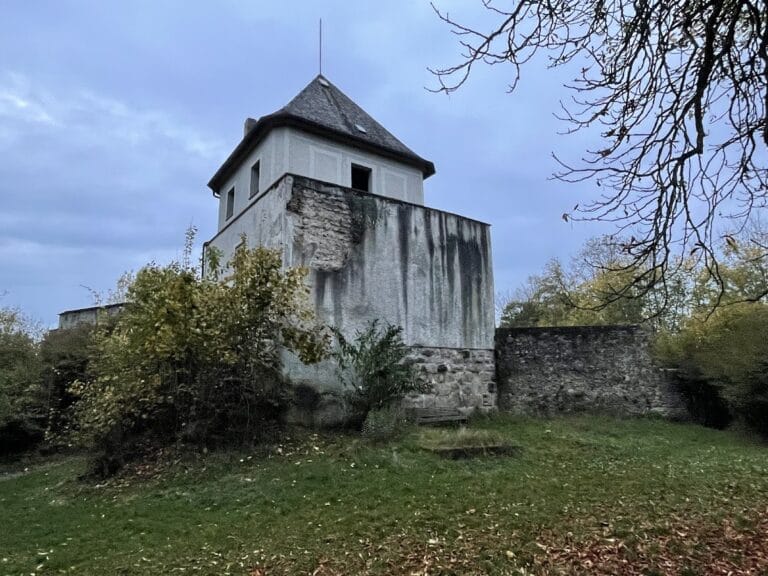
The ruin occupies a summit position on the 347.6-metre Schlossberg above Winzer. Its surviving layout reflects an early-medieval core, a keep, and a double enceinte, or two defensive enclosures. Wall fragments reach approximately eight metres in height. Sections of the ring wall and outer defensive wall remain, together with tower stumps associated with the north, west, and south sides. Additional wall remains survive on the western and eastern sides facing the town. Round-arched elements visible in the ruin were restored during the nineteenth century.
Archaeological Area
The castle area also contains two section ditches and underground remains from the medieval and early-modern periods. Beneath and around the ruin, the archaeological area includes evidence connected with the castle’s successive phases and a settlement dating from the Roman Imperial period.