Bu Maher Fort: A Historic Coastal Fortification in Bahrain




Site at a Glance
- Rating
- 4.3
- Popularity
- Low
- Country
- Bahrain
- Primary era
- Modern
- External website
- Open
- Eras represented
- Early Modern, Modern
- Civilizations
- Portuguese
- Site type
- Military
- Remains
- Fort
On this page7 sections
History
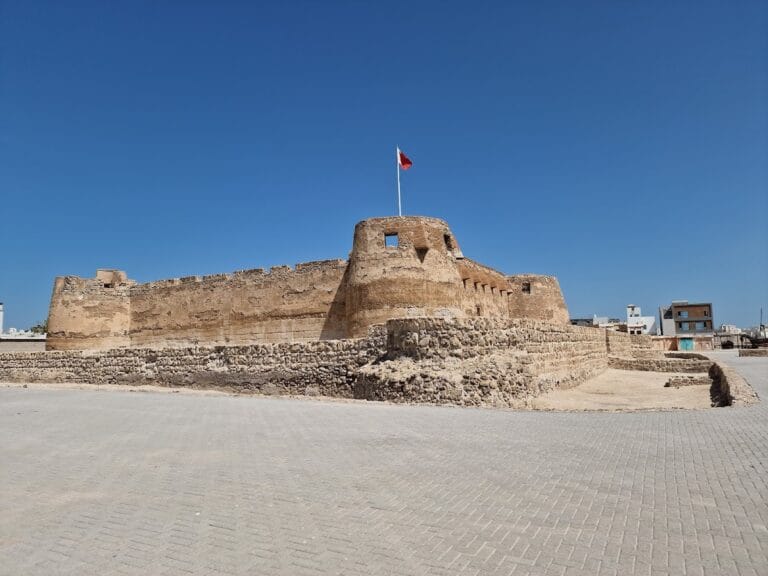
Bu Maher Fort is a historic coastal fortification in Bahrain, located in Muharraq and built in 1840 by Abdullah bin Ahmed Al Khalifa. A member of Bahrain’s ruling Al Khalifa dynasty, Abdullah created the fort as a sister fort to Arad Fort, with the purpose of guarding the passageway of Muharraq Bay.
Early Occupation and Portuguese Fortification
The site may have been occupied much earlier. Artefacts recovered during an excavation by an Oxford Brookes University team suggest possible use during the Umayyad period or the early Abbasid period, two successive eras of Islamic rule in the Middle East. The fort’s origins probably also relate to a sixteenth-century Portuguese fortification. Bu Maher Fort first appears in an official document on a Portuguese map dated 1635.
Nineteenth-Century Fort
The 1840 construction established Bu Maher Fort as part of the defensive system around Muharraq Bay. Its relationship with Arad Fort reflects a coordinated role in protecting the bay and its approach during the nineteenth century.
Destruction and Restoration
British warships destroyed the fort in 1868 during the Qatari–Bahraini War, after which it was abandoned. The island and fort were partially restored in 1930 for use as a smallpox quarantine station, a facility for isolating people with, or exposed to, contagious disease. A Bahraini archaeological team carried out further reconstruction in the 1970s, followed by additional excavations in 2010. In 2012, Bu Maher Fort became part of the Bahrain Pearling Trail, a heritage route documenting Bahrain’s historical pearling industry, and a UNESCO World Heritage Site. The Bahrain Authority for Culture and Antiquities manages the site.
Remains
Fortification Layout
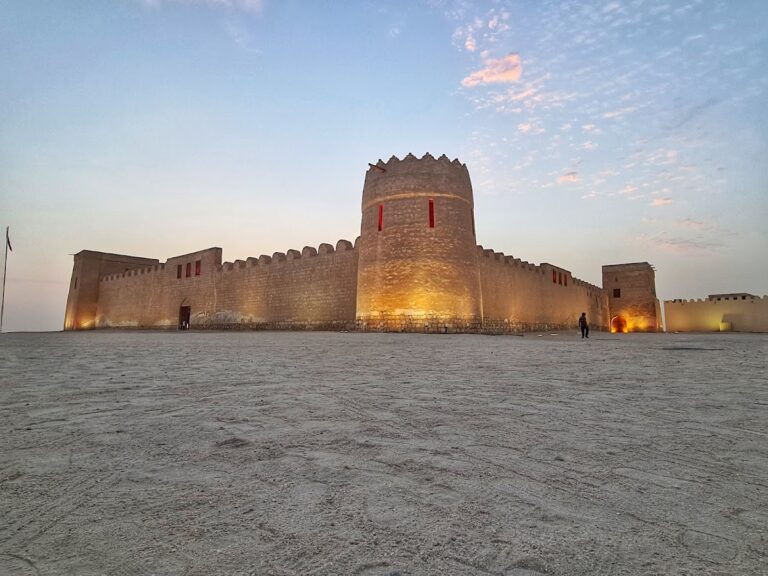
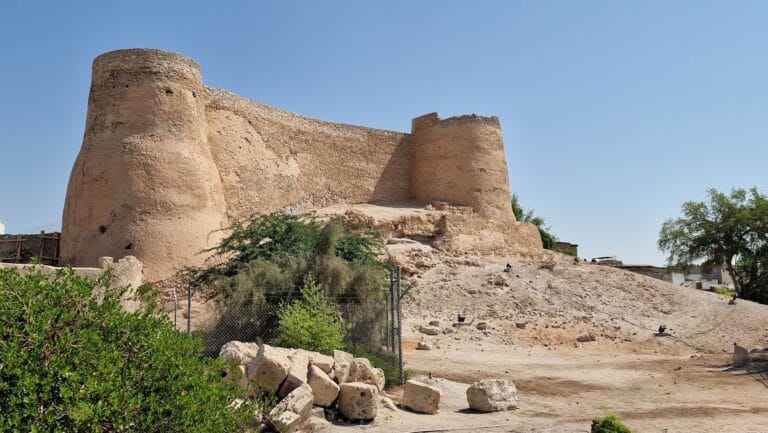
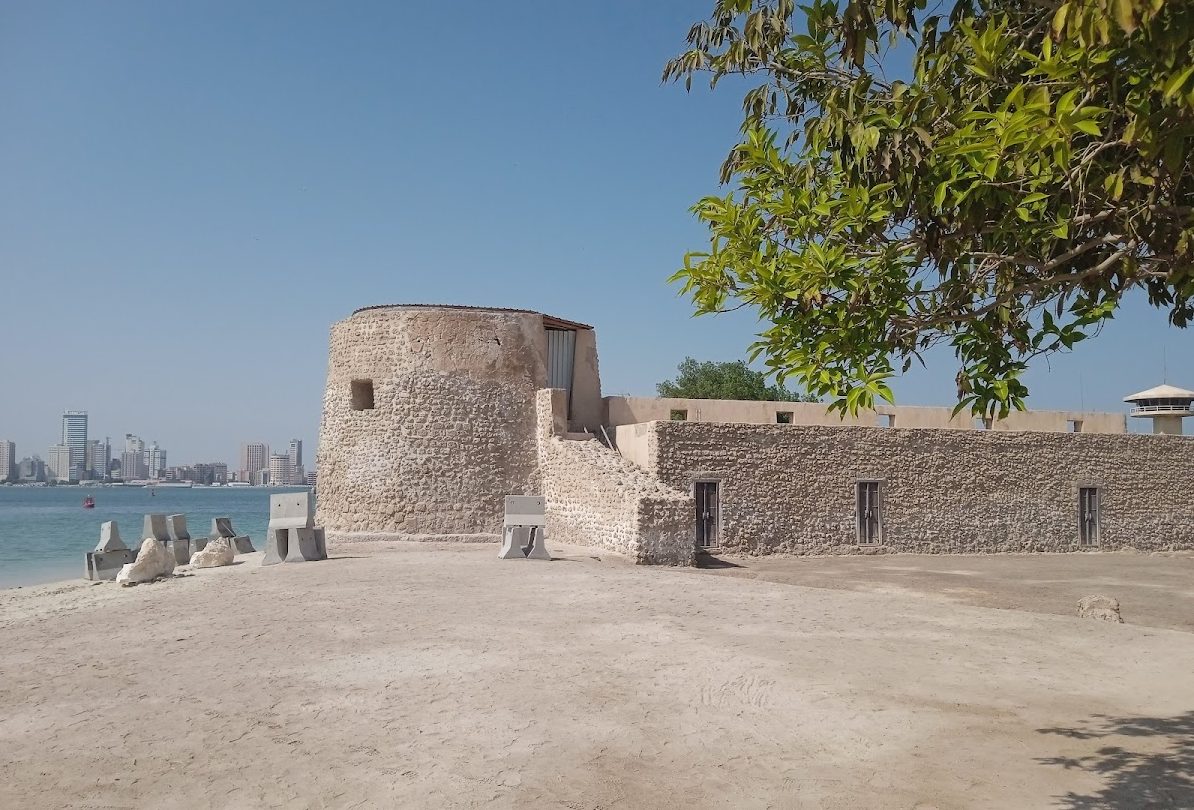
Bu Maher Fort was a rectangular stone fortification covering approximately 2,800 square metres and standing about 2.2 metres high. Its original plan contained four circular towers, while the surviving structure now consists of a solitary tower. The present remains reflect the fort’s rebuilding and the changes that followed its destruction and later archaeological work.
Waterlogged Setting
Archaeological findings indicate that the site was periodically submerged or affected by flooding and rain. These conditions form part of the physical history of the fort and its preservation. A Bahrain Coastguard base is located beside the surviving fort.