Roßrieth Castle: A Renaissance Moated Castle in Bavaria
Site at a Glance
- Rating
- 4.4
- Popularity
- Very Low
- Country
- Germany
- Primary era
- Early Modern
- Eras represented
- Medieval, Early Modern
- Civilizations
- Holy Roman Empire
- Site type
- Military
- Remains
- Castle
On this page8 sections
History
Roßrieth Castle is a Renaissance moated castle and former manor house in Germany, near Mellrichstadt. The complex took its present form around 1590, during the Renaissance, a European architectural period influenced by the revival of classical forms. Its history reaches back to the twelfth century and includes destruction, feudal transfers, rebuilding, and later changes in ownership.
Medieval origins and destruction
Roßrieth was first mentioned in 1140. A further reference from 1345 names Conrad von Rosserieth, a medieval nobleman associated with the site. In 1361, the castle belonged to the Schenken von Stretelingen. They transferred part of the property to Fulda and received it back as a fief, meaning land or property granted by a superior lord in return for service or allegiance.
In 1401, captains enforcing the public peace destroyed the castle, probably because it was being used as a stronghold by robber knights. The site nevertheless continued to exist in some form. In 1548, the Counts of Mansfeld granted it as a fief to the Barons von Thüngen.
Rebuilding and noble ownership
Large sections of the lower structure were built in 1563. After Kunz von Thüngen died, the Lords von Bibra received Roßrieth as a Saxon fief in 1589. They rebuilt the castle in approximately 1590, creating the form that defines the Renaissance complex. An alliance coat of arms, combining the heraldic arms of the Bibra and Gebsattel families, was placed on the stair tower.
Hilmar von Grappendorf acquired the castle in 1681 and sold it to the Barons von Stein in 1768. The von Stein family retained it into the nineteenth century. In 1835, Roßrieth Castle was voluntarily transferred to the Bavarian state.
Modern use and preservation
After the Second World War, a farmer acquired the castle and used it as a grain store and chicken shed. Extensive exterior renovation took place between 1980 and 1985. Roßrieth Castle is designated as an architectural heritage monument in Bavaria.
Remains
Renaissance complex
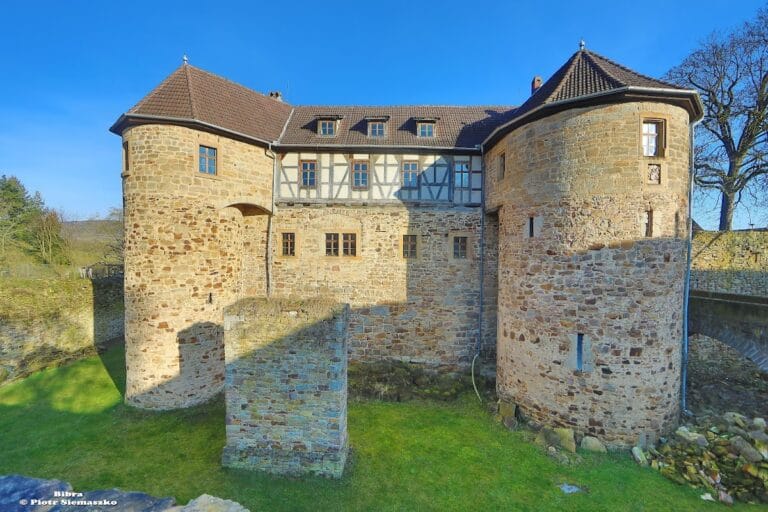
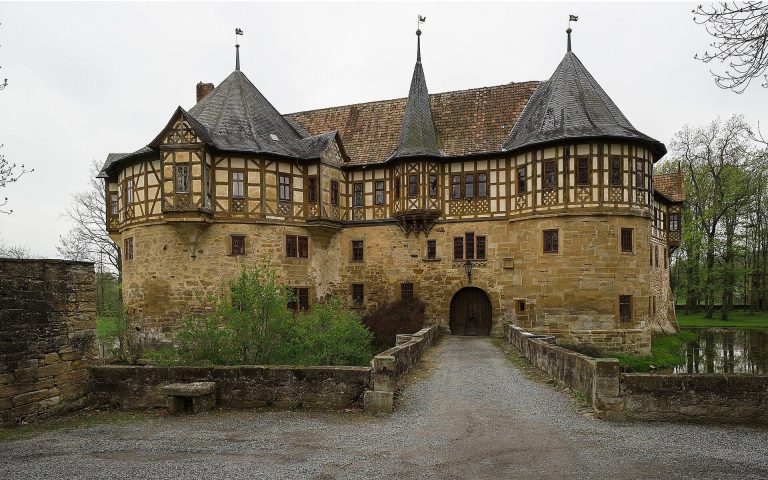
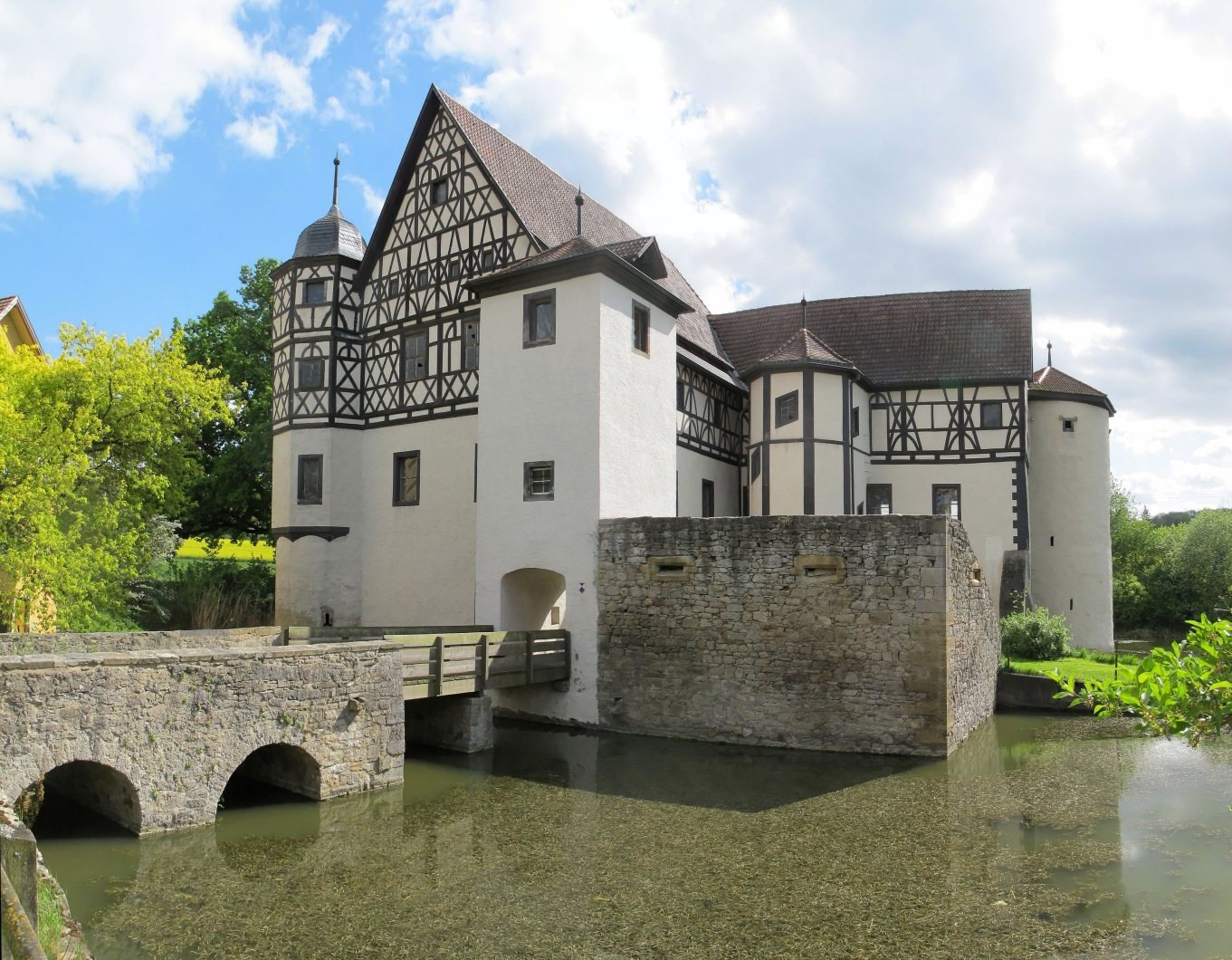
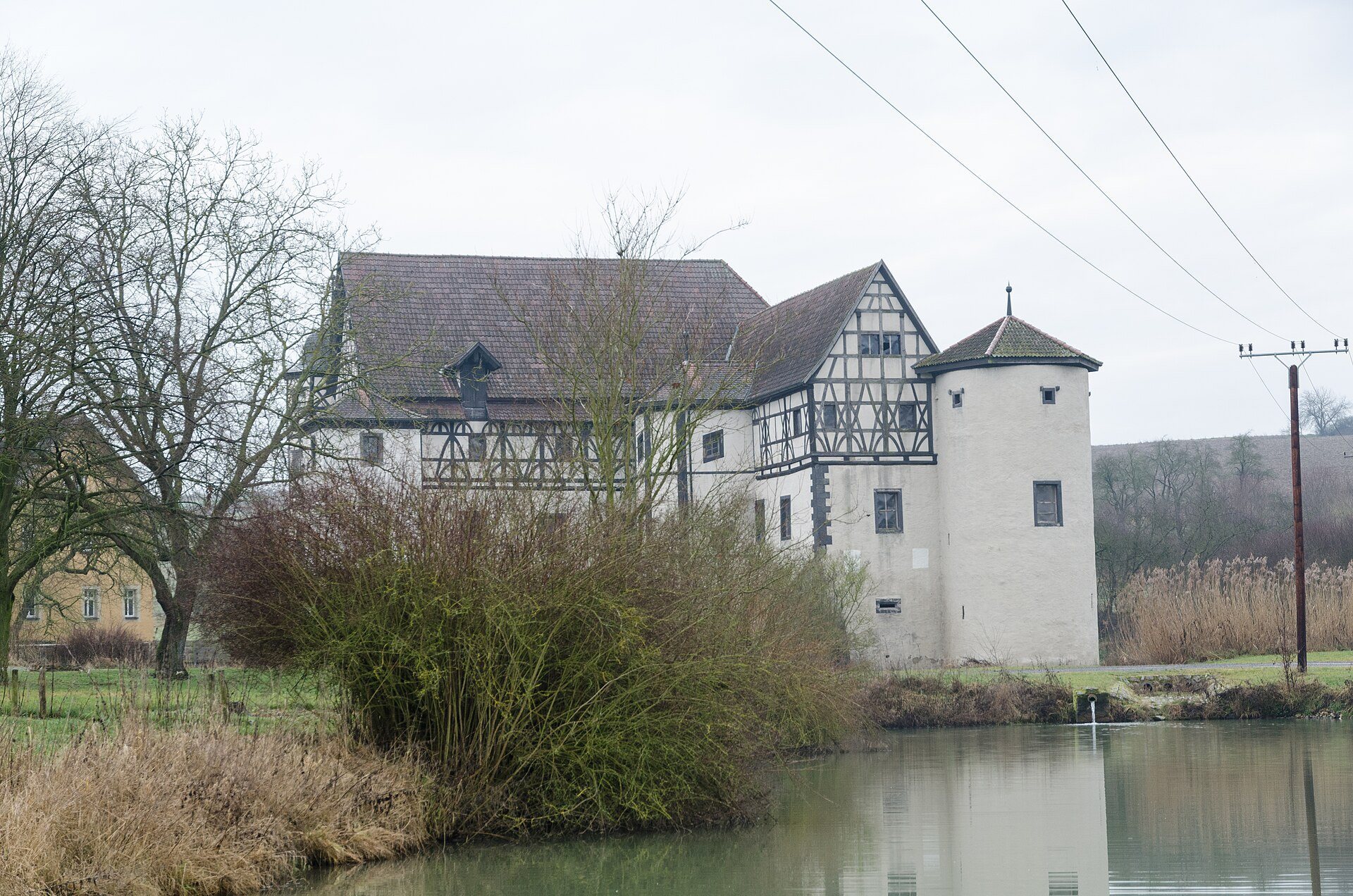
The castle has a square plan formed by two wings and is enclosed by a water-filled moat approximately 20 metres wide and 2 metres deep. Two corner towers are part of the complex. The buildings include half-timbering, a construction method in which a visible timber frame is filled with masonry or plaster. These structures belong to the sixteenth-century reconstruction and incorporate substantial parts of the earlier castle.
Medieval core and entrance
The lower storey of the corner towers dates from the Middle Ages and represents the origin of the castle complex. The former keep retains medieval loopholes and its original form up to the half-timbered superstructure. The gate complex contains features indicating that it was constructed before the sixteenth century.
Estate and defensive features
The associated remains include a castle park, castle-estate buildings, a barn, ancillary buildings, a bridge, and a fortification wall. Together, these components form the broader physical setting of the castle and its former estate.