Castle Bibra: A Medieval Water Castle in Germany


Site at a Glance
- Rating
- 4.5
- Popularity
- Low
- Country
- Germany
- Primary era
- Early Modern
- External website
- Open
- Eras represented
- Medieval, Early Modern
- Civilizations
- Holy Roman Empire
- Site type
- Military
- Remains
- Castle
On this page11 sections
History
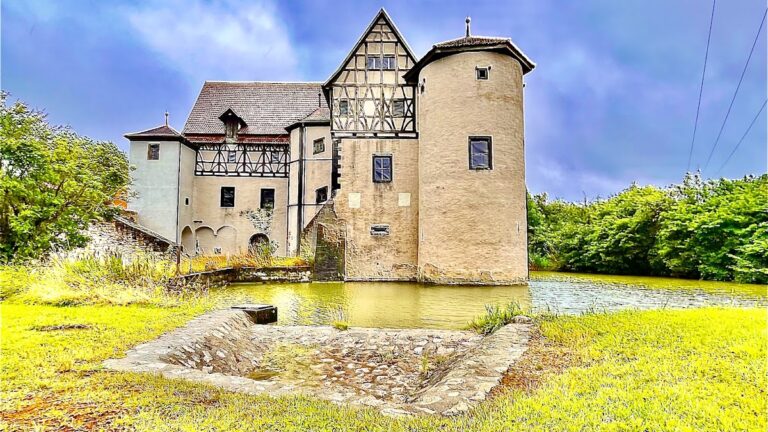
Castle Bibra is a medieval water castle in Bibra, Germany, built in the twelfth century by the Franconian noble family von Bibra. Constructed on an artificial island, it gave its name to the settlement that grew around it. As one of the oldest fortifications in Thuringia and Germany, the castle occupied a strategic position on a north-south trade route through the Werra valley between Untermaßfeld and Meiningen.
Medieval Foundation and Royal Residence
The fortress was first recorded in 1119, when its owner was named as Rubertus de Bibera. The lords of Bibra were vassals of Henneberg, a medieval ruling house whose lands included parts of present-day Thuringia and Franconia. Over the centuries, the castle developed into an important royal residence. In 1486, it held the status of a royal palatinate, a royal residence and administrative center used by a traveling medieval ruler, and was arranged in the manner of a Franconian royal court.
Destruction and Rebuilding
Castle Bibra was repeatedly besieged and changed hands. During the German Peasants’ War, a series of major uprisings in the German-speaking lands in 1524 and 1525, insurgents captured and destroyed the castle in 1525. Its owners then rebuilt it. The complex suffered near-total destruction during the Thirty Years’ War, the European conflict fought from 1618 to 1648 that brought especially severe devastation to the German lands. It was rebuilt and reconstructed afterward.
Ownership and Modern Restoration
Members of the von Bibra family retained ownership for centuries. After the Second World War, the authorities of the German Democratic Republic, the socialist state that governed East Germany from 1949 until reunification in 1990, nationalized the family estate. Following German reunification, Castle Bibra was returned to the former owners, the Barons von Bibra, a hereditary noble rank within the family.
In 2002, the owners received substantial support from the Thuringian government for restoration, and the work was recognized with the Thuringian Monument Protection Prize. Since 1994, one of the surviving buildings has housed a small seminar center with accommodation for 17 people.
Remains
The surviving complex occupies the northeastern part of Bibra, within the historic village and on the artificial island that formed the castle’s setting. Its water-castle design used surrounding water as part of the fortification. The remains combine partly preserved and supplemented buildings with fragments of the earlier defensive enclosure, all constructed primarily from stone and brick.
Defensive Remains
Moat and Outer Wall
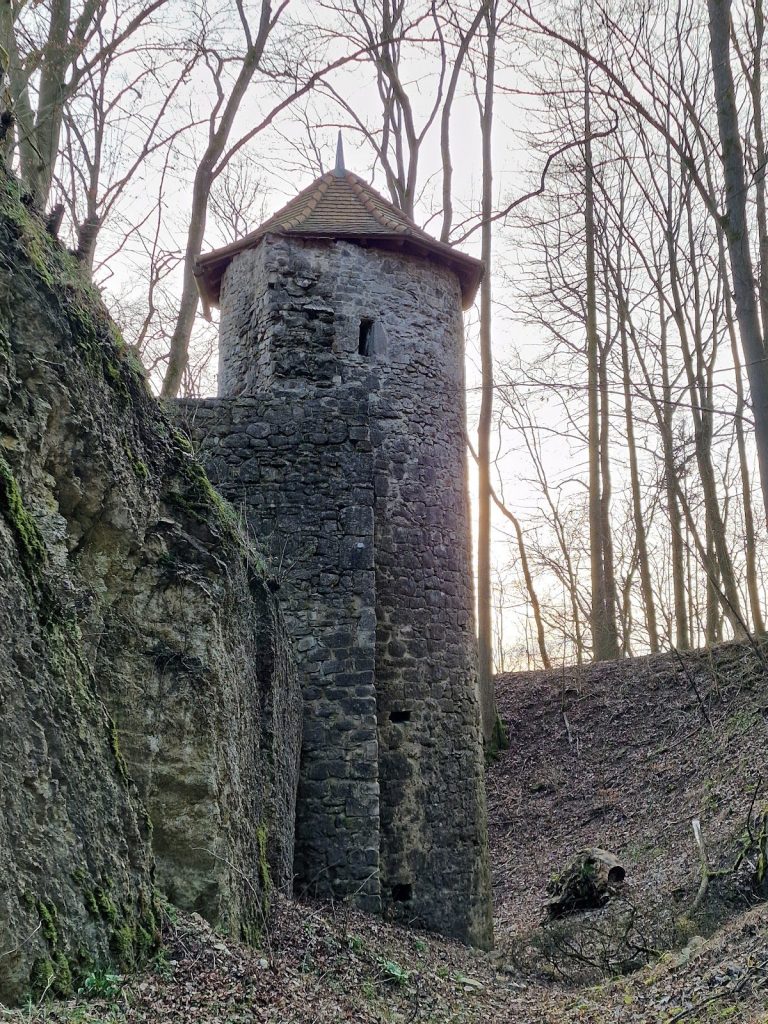
Parts of the original castle moat survive around the artificial island. The sixteenth-century fortress is represented by fragments of its outer wall and corner towers, which preserve elements of the defensive arrangement after the castle’s repeated destruction and rebuilding.
Coat-of-Arms Tower
One surviving tower bears the coat of arms of the von Bibra family, linking the remaining structure to the noble lineage that built the castle and held it for centuries.
Surviving Buildings
Restored Castle Buildings
The remaining buildings are partly preserved and partly supplemented through restoration. Built of stone and brick, they include interior spaces within the surviving complex and present the castle in a partially preserved and restored condition.
Seminar-Center Building
One of the surviving buildings now contains the seminar center established there in 1994. Its continued use forms part of the present function of the restored castle complex.