Castillo de Autol: A Medieval Military Fortification in Spain
Site at a Glance
- Rating
- 4.2
- Popularity
- Very Low
- Country
- Spain
- Primary era
- Medieval
- Eras represented
- Medieval
- Civilizations
- Unclassified
- Site type
- Military
- Remains
- Castle
On this page10 sections
History
Early origins
Castillo de Autol is a military fortification in Spain, at Autol, probably built by Muslim builders in the tenth or eleventh century. Archaeological discoveries made in the 1990s at the foot of the promontory revealed Celtiberian pottery. The Celtiberians were Iron Age communities of the interior Iberian Peninsula whose settlements predated Roman rule. The earlier settlement is estimated to date from the sixth century BC and is regarded as the origin of Autol. The later fortification may have been constructed over its remains after the Muslim invasion of the Iberian Peninsula.
The first documentary reference to the castle dates from 1036, when Lope Fortuniones held it. A later record names Fortún Garzeiz as its owner. Six years afterward, he appointed Sancho Garzeiz as owner. In 1162, Sancho Garzeiz donated the castle to Sancho the Wise, the medieval king of Navarre. The king later granted it to Alfonso VIII of Castile in 1179.
Changing lordship
In 1262, James I of Aragon, known as James the Conqueror, granted Castillo de Autol and three other strongholds to Alonso López de Haro. In 1369, Enrique II of Castile donated the fortification to Pedro Ximénez de Arnedo. The last recorded owners were the Counts of Azpa and the Marquises of Fontellas.
The seizure of 1445
One of the castle’s most violent episodes took place in 1445, while Diego López de Fuelles was its holder. The council of Calahorra bribed three of his men to seize the fortress. On 13 August, the men murdered López de Fuelles and his wife. Diego Goíez Manrique, acting as the dead lord’s representative, recovered the castle after a thirty-day siege and executed those responsible.
Protection and recent condition
Castillo de Autol is protected under the general declaration established by the Decree of 22 April 1949 and under Law 16/1985 on Spanish Historical Heritage. It therefore has the status of an Asset of Cultural Interest, a formal Spanish heritage designation that provides legal protection to historically or archaeologically significant places. Several cleaning operations took place in 2013. The municipality has repeatedly attempted to restore the castle or open it for tourism, while the surviving remains continue to deteriorate.
Remains
Promontory and construction
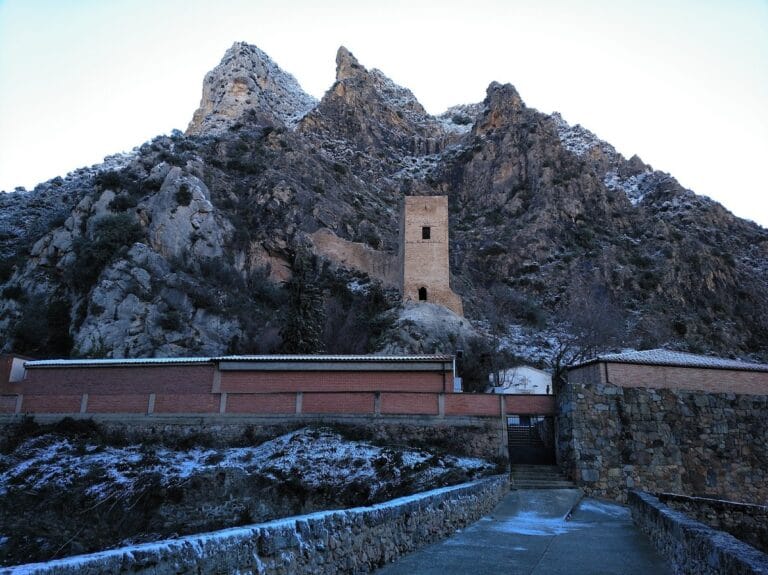
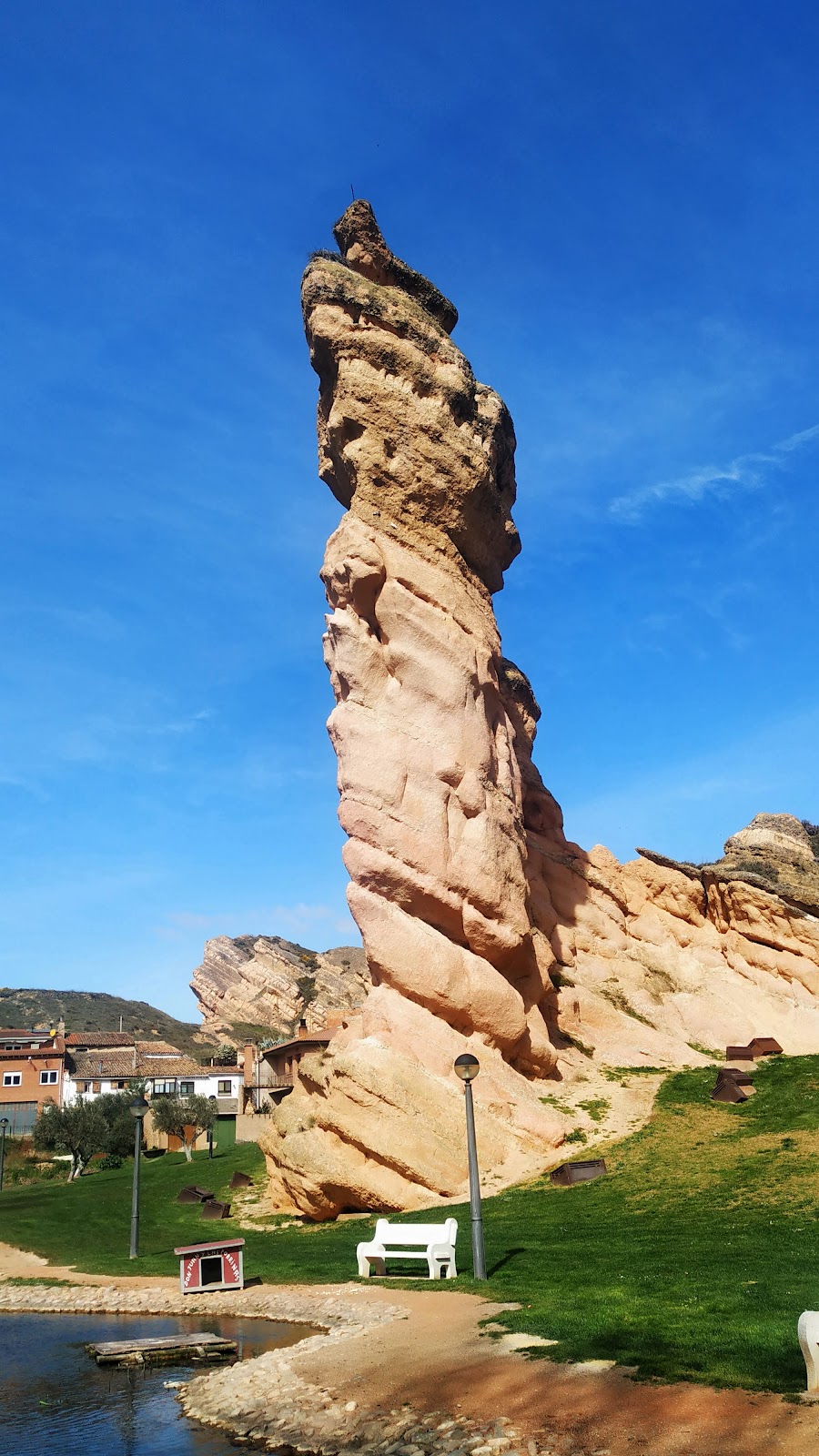
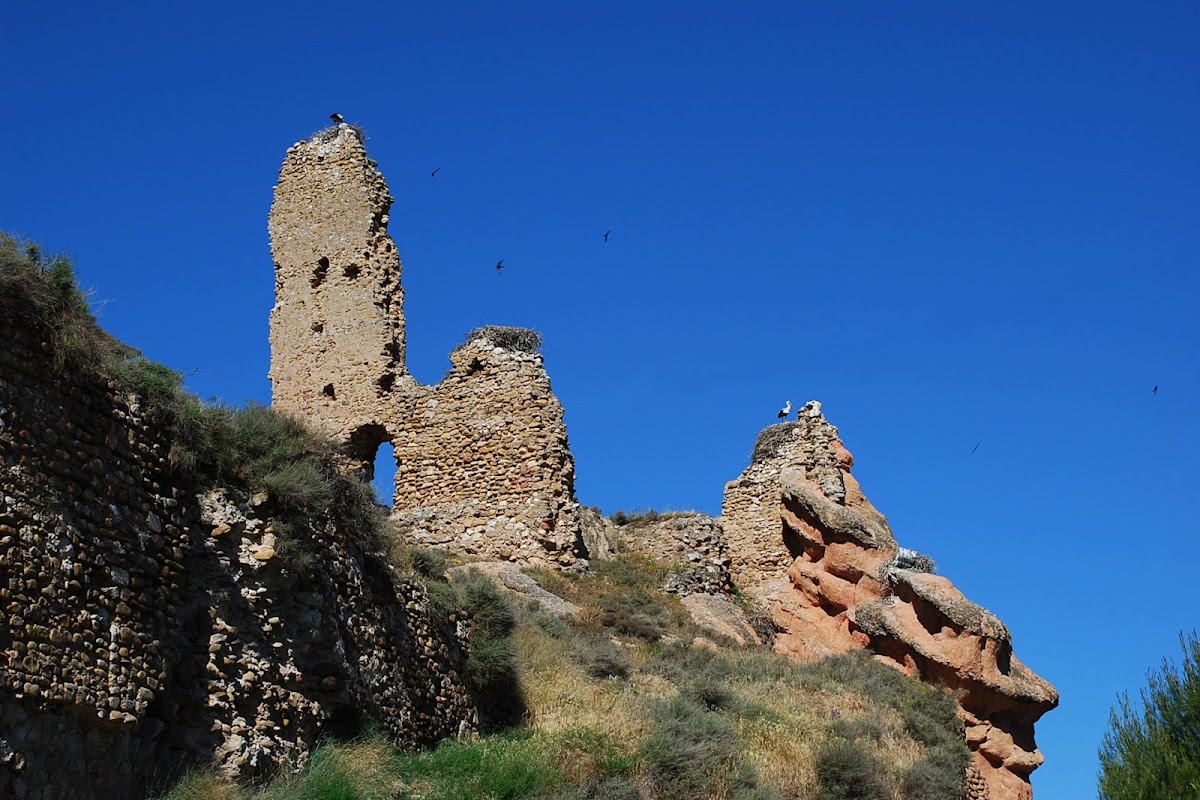
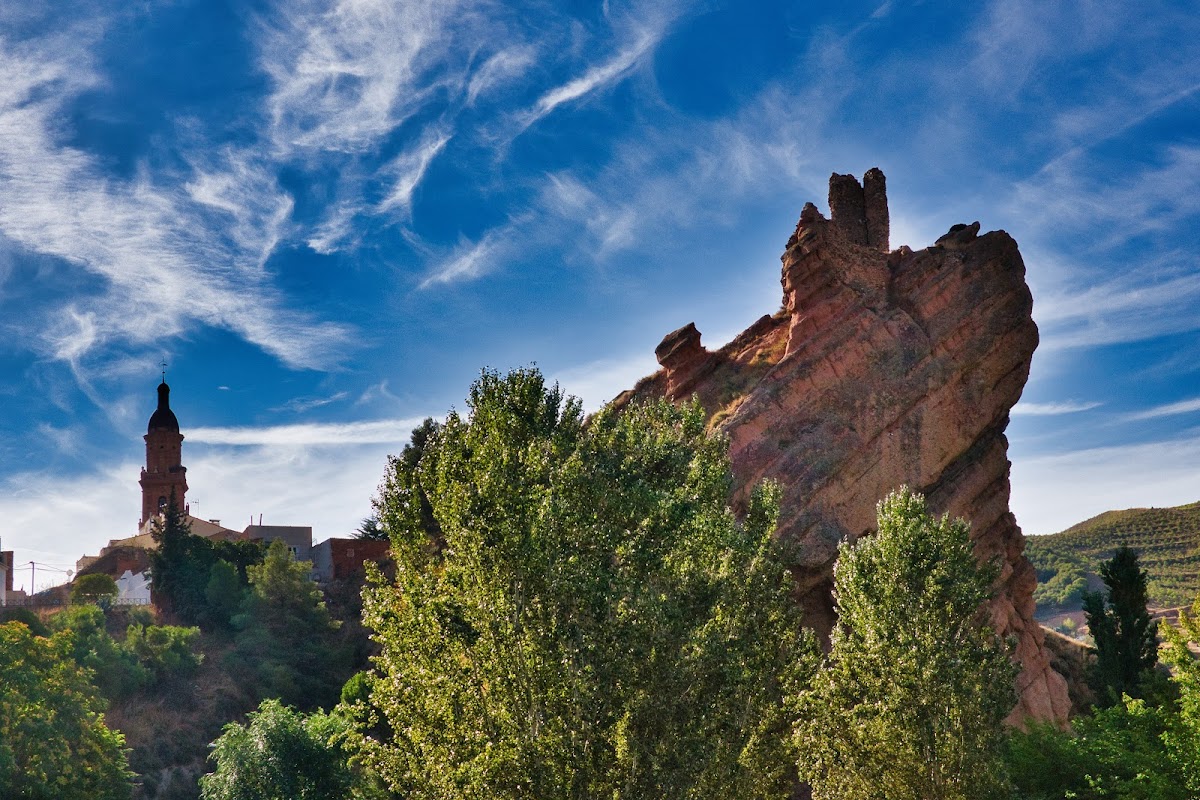
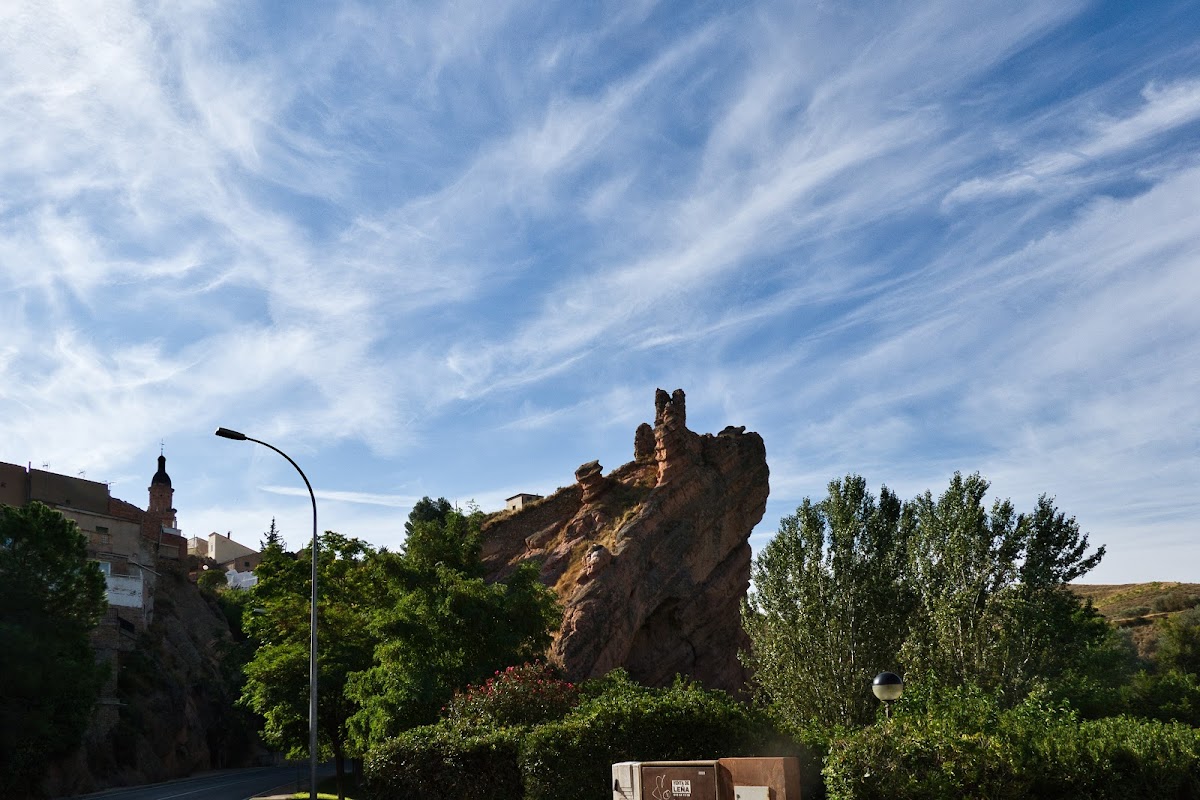
The castle occupies the highest part of a projecting rocky promontory southwest of Autol, forming a rock castle above the Cidacos River. The rock formations known as El Picuezo and La Picueza are visible from the fortress. River cobble is the principal building material, incorporated into rammed-earth walls. Rammed-earth construction forms walls from compacted earth, often mixed with stone or other material, and the nearby river provided a source for the cobble.
Surviving fortifications
Keep
The surviving keep has an irregular rectangular plan. Several putlog holes remain in its walls, suggesting that the structure had three floors and a terrace. Putlog holes are openings left for beams supporting construction platforms or floors. The keep forms part of the castle’s progressively ruined remains and currently presents a risk of collapse.
Protective wall
A wall runs parallel to the keep and appears to have been intended to protect the tower. It survives as part of the castle’s visible wall remains, whose condition reflects the site’s ongoing deterioration.