Castle of Aroche: A Frontier Fortress in Huelva, Spain
Site at a Glance
- Rating
- 4.4
- Popularity
- Low
- Country
- Spain
- Primary era
- Medieval
- External website
- Open
- Eras represented
- Medieval, Early Modern
- Civilizations
- Almohad, Almoravid, Crown of Castile
- Site type
- Military
- Remains
- Castle
On this page12 sections
History
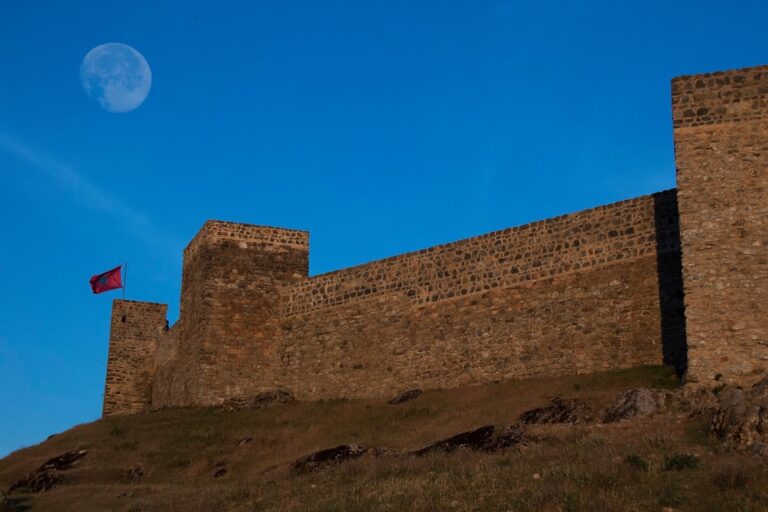
Castle of Aroche is a fortress in Aroche, Spain, whose earliest remains belong to the Islamic period and whose later form reflects the military history of the Castilian-Portuguese frontier. Its construction history is associated with both a possible Almoravid phase in the eleventh century and an Almohad phase in the twelfth and thirteenth centuries.
Islamic origins
The earliest phase may date to the Almoravid period, when the Almoravids ruled parts of the western Maghreb and Iberian Peninsula. This attribution rests on the fortress’s surviving rammed-earth construction and ceramic fragments recovered within it. Archaeological work using radiocarbon dating in 2004 instead assigned the fortress to the Almohad period, the later Islamic dynasty that controlled parts of the same regions during the twelfth and thirteenth centuries.
Castilian frontier stronghold
After Aroche came under the Crown of Castile, the fortress was probably rebuilt in 1293. A document issued by Sancho IV, king of Castile and León from 1284 to 1295, authorized Seville to build fortresses along the boundaries of its district and mentions the site in that context.
Repairs took place in 1386 and at several points during the fifteenth century. The works supported the castle’s role as a first-line defensive position on the frontier with Portugal. Continuing conflict led to further reforms at different times until the seventeenth century.
Decline and later protection
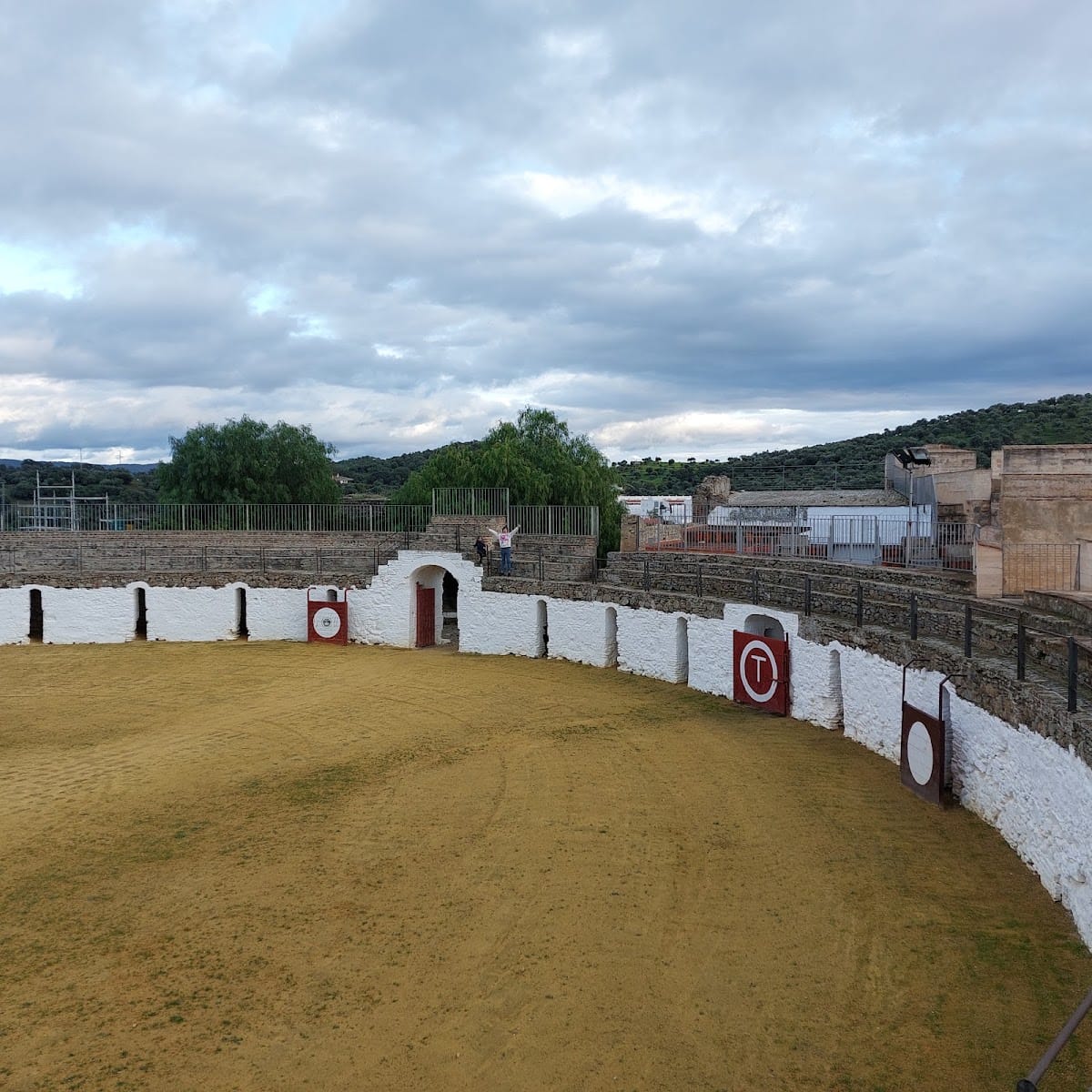
Once its military purpose had diminished, the fortress gradually deteriorated. Its interior was later adapted for bullfighting. Construction of a bullring had begun by 1801 despite repeated objections sent from Seville, and the management of the enclosure was offered at auction by March 1802. From 1804, the castle was used as a bullfighting enclosure.
Also known as the Castle of Arms, Castle of Aroche is protected by Spain’s 1949 decree concerning castles and by the 1985 Spanish Historical Heritage Law. It holds the statutory status of a Property of Cultural Interest in the category of Monument, a designation formally recorded in 1993.
Remains
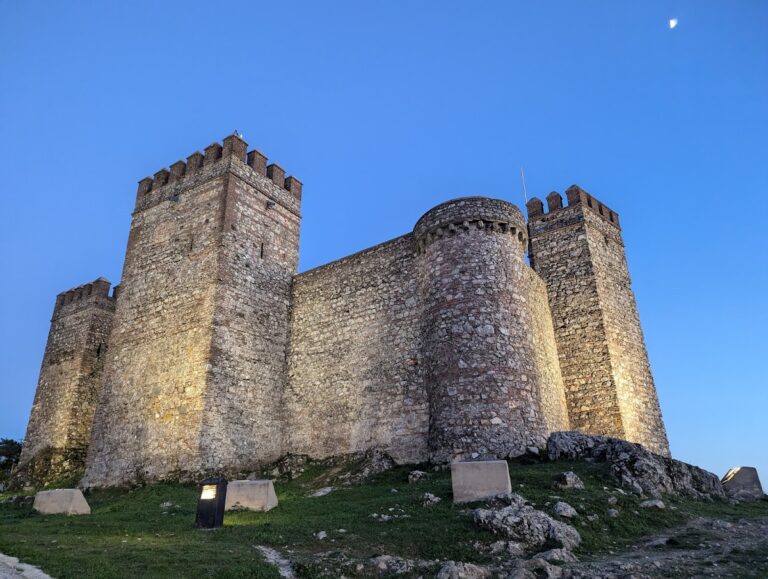
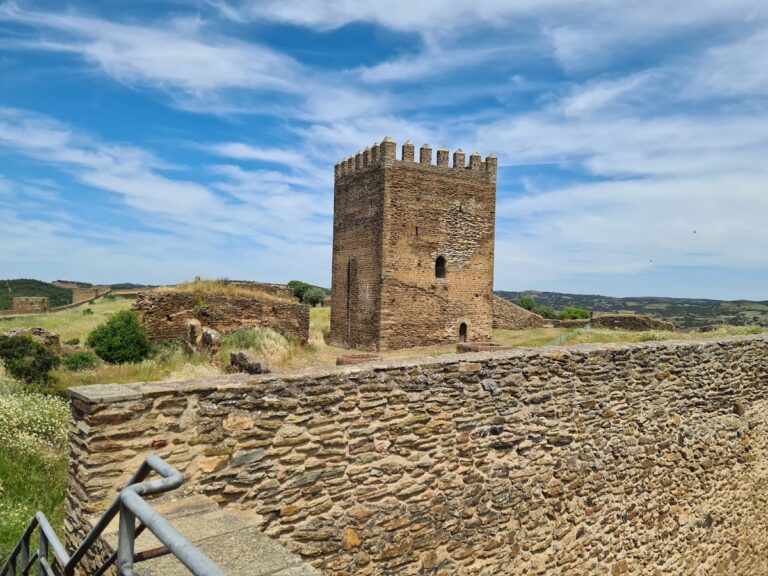
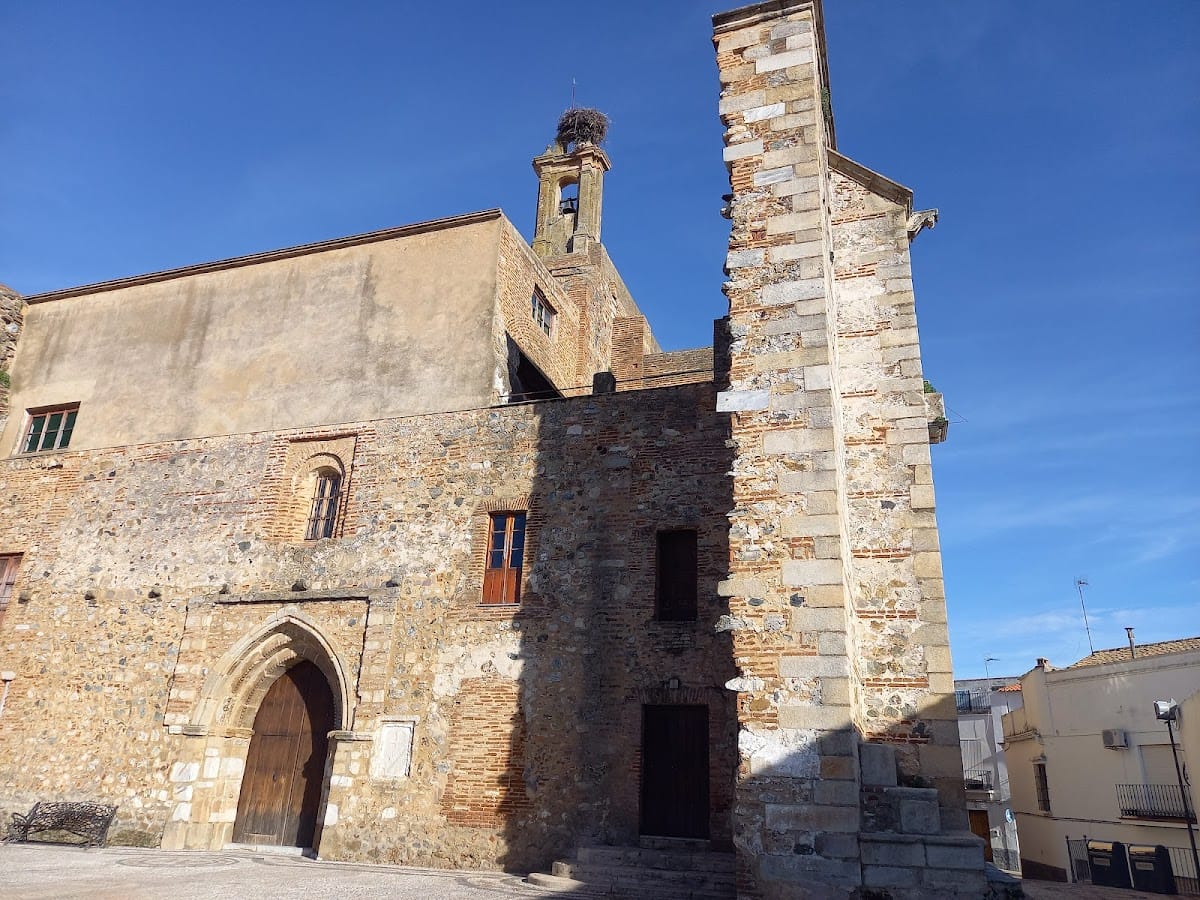
The fortress occupies a hill within Aroche’s built-up area, around which the town’s urban fabric developed. Its rectangular enclosure covers approximately 2,650 square metres and follows a perimeter of about 273 metres. The plan belongs to the Islamic cuadribugium model, a rectangular fortress organized around four corner defenses, with additional towers set along the walls. Ten towers survive in the layout, four at the corners and six between the curtain walls.
Gates and defensive circulation
Queen’s Gate
On the southern side, the Queen’s Gate forms a direct-entry gateway with a straight passage and two horseshoe arches. It may belong to the earliest construction phase of the fortress, linking one of the oldest surviving elements to the site’s Islamic origins.
Present entrance
The entrance used today dates from the eighteenth century, reflecting a later stage in the castle’s physical development after its main medieval frontier role.
Enclosure walk
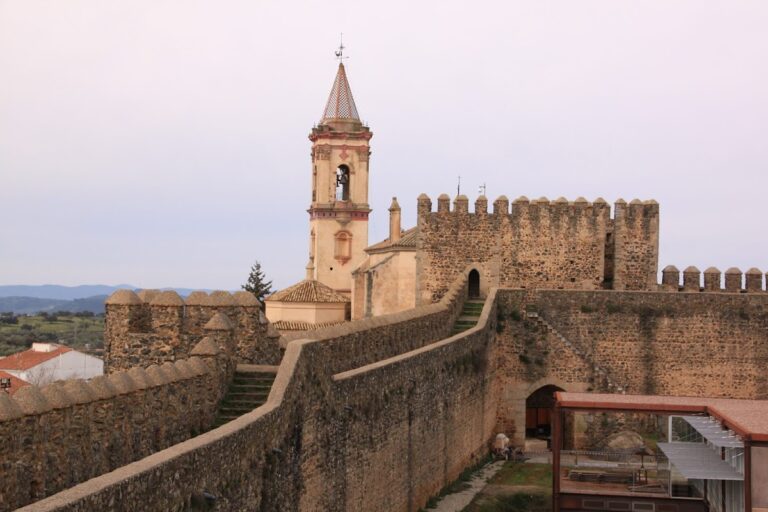
A defensive wall walk runs around the perimeter, using the thickness of the enclosing walls as its passage. It currently survives without a parapet or the raised sections between battlement openings, known as merlons.
Towers and construction
Rammed-earth fabric
Rammed-earth construction forms part of the surviving fabric and provides evidence for the fortress’s early Islamic phase. Ceramic fragments found inside the enclosure reinforce the archaeological association with that period.
Surviving tower chambers
The towers no longer retain their internal chambers except for two positioned near the present entrance. These two surviving rooms are covered by half-barrel vaults, longitudinal vaults with semicircular cross-sections.