Castell d’Altafulla: A Renaissance Palace-Castle in Spain


Site at a Glance
- Rating
- 4.5
- Popularity
- Low
- Country
- Spain
- Primary era
- Early Modern
- Eras represented
- Medieval, Early Modern
- Civilizations
- Crown of Aragon, Spanish
- Site type
- Military
- Remains
- Castle
On this page7 sections
History
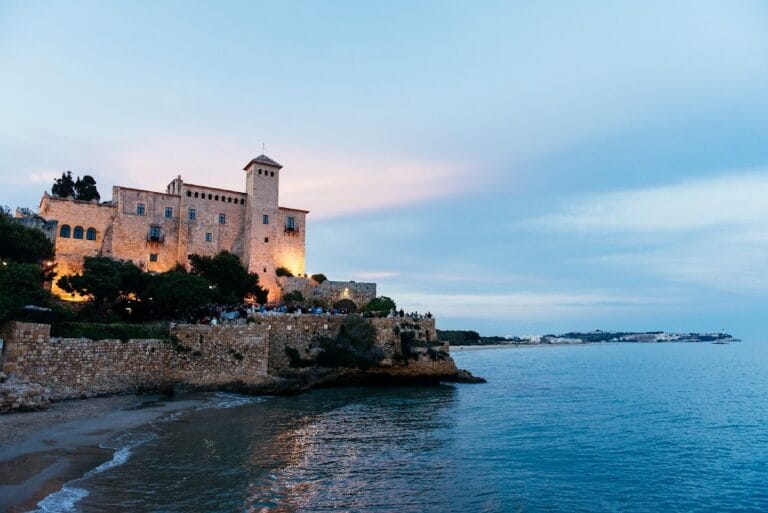
Castell d’Altafulla, also known as Castell dels Montserrat, is a palace-castle in Altafulla, Spain, dating from 1059 and now classified architecturally as Renaissance. It developed within a medieval frontier zone along the lower Gaià River, where castles marked the boundary between the County of Barcelona and al-Andalus, the Muslim-ruled part of the Iberian Peninsula.
Frontier origins
Feudal Altafulla appears to have begun as a quadra, a medieval Catalan territorial unit usually linked to a fortified settlement or local lordship, within the castrum of Tamarit. Its formation took place near the establishment of the Clarà quadra in 1057. Settlement and colonization continued during the second half of the eleventh century and especially through the twelfth century.
The castle appears in a boundary description dated 13 January 1060, when Ramon Berenguer I and Almodis de la Marca, counts of Barcelona, donated Puig Ullastrell to Bernat Amat de Claramunt and Arsenda. In 1066, Altafulla marked the western boundary of Puigperdiguers, later known as Montornès, when the same counts granted that territory to Ramon Transunyer and Rotlenda. Documents from 1173, 1174, and 1179 preserve the territorial names “Altafuya,” “Alta Folia,” and “Altafoia.”
Lordship and noble families
Evidence for the thirteenth century is scarce. During the fourteenth century, Jaume II of the Crown of Aragon, a composite monarchy that ruled territories in northeastern Iberia and the western Mediterranean, transferred Altafulla from the Crown to the Requesens family. Berenguer de Requesens was lord of Altafulla and La Nou de Gaià in 1337 and in the 1358 hearth census. He was followed by Lluís de Requesens, and the family continued to hold the lordship during the fifteenth century.
After a dispute with his sister Mateua de Requesens over the inheritance, Lluís de Requesens i de Cardona sold Altafulla and La Nou in 1472 to his cousin Pere de Castellet i de Requesens. In the seventeenth century, the marriage of Violant de Castellet to Lluís de Corbera-Santcliment transferred the lordship of the Barony of Altafulla, including La Nou de Gaià, to the Corbera-Santcliment lineage.
The Montserrat period
After Lluís de Corbera’s death in 1637, Josep de Corbera-Santcliment succeeded him. Between 1669 and 1673, Josep sold the lordship of Altafulla and La Nou to Francesc de Montserrat i Vives, castellan of Montbrió, Baron of Rivelles, and lord of Morell, Tamarit, and Botarell. A castellan was responsible for the custody or administration of a castle or fortified territory.
In 1681, Charles II of Spain granted Francesc de Montserrat the title of Marquis of Tamarit. His descendants remained lords of Altafulla until the abolition of the seigneurial system. The castle underwent repeated alterations, particularly during the seventeenth century, when most of its structure was renewed. It has been protected as a Cultural Asset of National Interest, classified as a historic monument, since 1988.
Remains
Palace-castle and defensive exterior
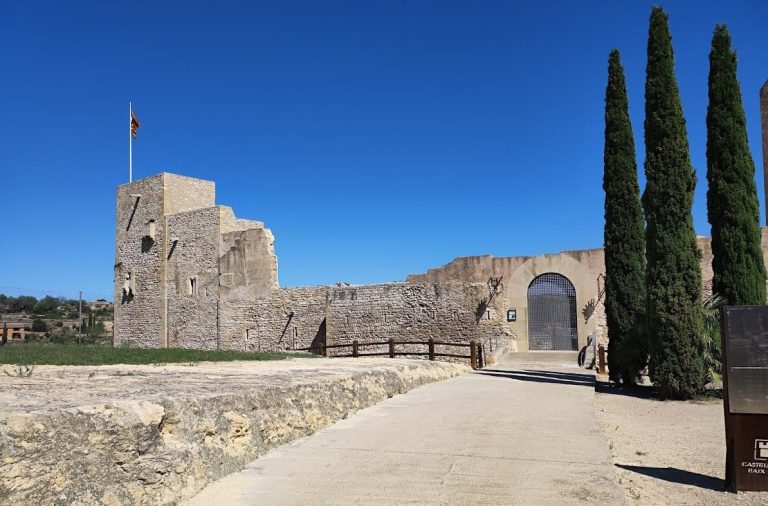
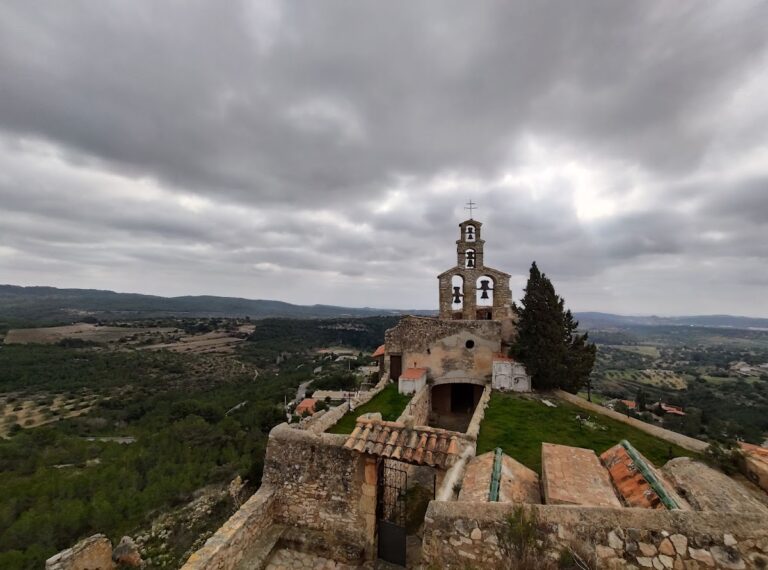
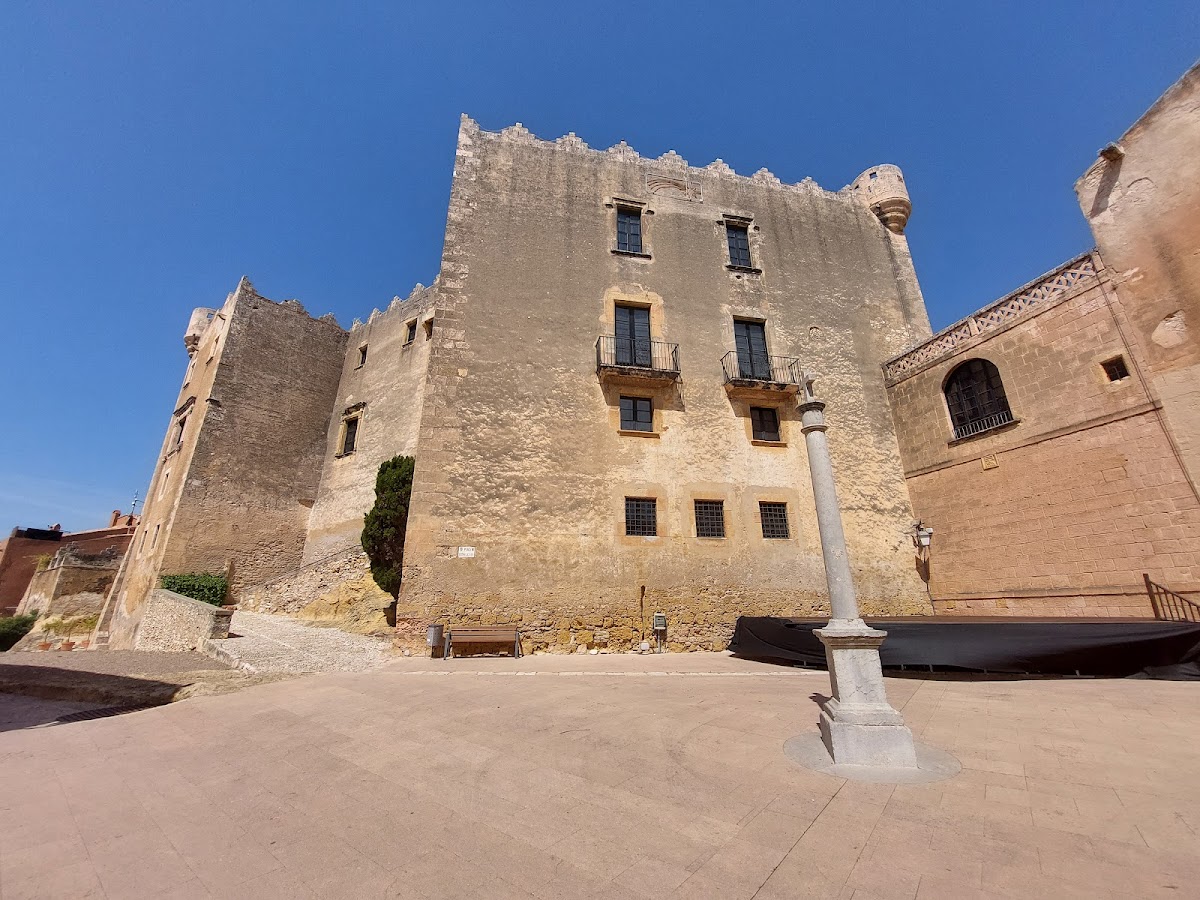
Castell d’Altafulla occupies the highest point of Altafulla, directly beside the parish church of Sant Martí. Its large building follows an irregular polygonal plan. Projecting bodies at the corners create tower-like elements crowned with merlons, the raised solid sections between the openings of a battlement. These features, together with the fortified external appearance, give the building a defensive character while its overall form remains that of a palace-castle.
Courtyard and Renaissance gallery
An intact central courtyard forms the interior focus of the building. Its upper section contains a notable Renaissance gallery, reflecting the architectural traditions that revived and adapted classical forms in Europe from the fifteenth century onward. Although the present structure is classified as Renaissance, extensive later modifications make it difficult to determine whether Romanesque elements from the earlier castle survive.