City Walls of Bruntál: Medieval Town Fortifications in Czechia
Site at a Glance
- Rating
- 4.6
- Popularity
- Medium
- Country
- Czechia
- Primary era
- Medieval
- External website
- Open
- Eras represented
- Medieval
- Civilizations
- Holy Roman Empire
- Site type
- Military
- Remains
- Wall
On this page5 sections
History
The City walls of Bruntál in Czechia are the fragmentary remains of a medieval fortification system built to protect the town before the Hussite Wars, the religious and political conflicts that affected Bohemia and neighboring Central European regions in the early fifteenth century. The defenses were later modified during the Late Gothic period and are now protected as a Czech cultural monument, a status granted in 1963.
Medieval Fortification
A charter of 1405 mentions Bruntál’s town walls and gates while recording the division of the town between John II, Duke of Opava, and Nicholas IV, a medieval duke associated with Bruntál. The surviving fortifications and the limited written evidence do not allow their full historical development to be reconstructed. Modern interventions have also altered parts of the surviving walls and bastions.
Remains
The medieval town occupied a promontory surrounded by the Black Stream. Its generally rounded plan covered approximately 12 hectares, although the corner beside the castle at the northwest was rounded in a different way. The Gothic defenses probably comprised a main wall and an outer defensive wall, or zwinger, meaning an enclosed wall space beyond the principal fortification. Semicircular bastions or towers reinforced the circuit at intervals of about 40 to 50 metres.
Outer Defenses and Town Gates
Two short sections of the outer wall have been identified through archaeological work. A town view attributed to Werner, dated either 1752 or 1757, also depicts parts of this outer defense, although its accuracy is limited. The view shows the Olomouc Gate with a portcullis slot, an opening for a vertically descending gate grille, and a foregate. The Olomouc Gate stood on the southern side of the town, near the southern end of Dr. E. Beneš Street. The Nysa Gate marked the boundary between Sv. Čecha Street and Palacký Square, while the Krnov Gate stood on Revoluční Street near house number 9.
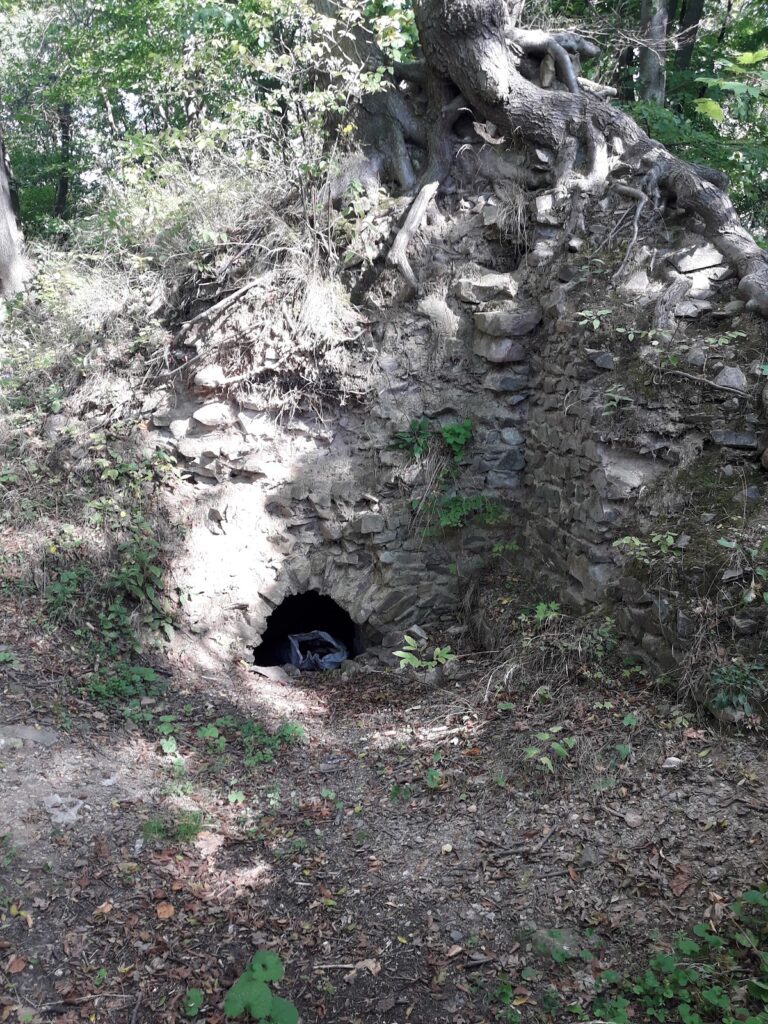
Surviving Wall Sections
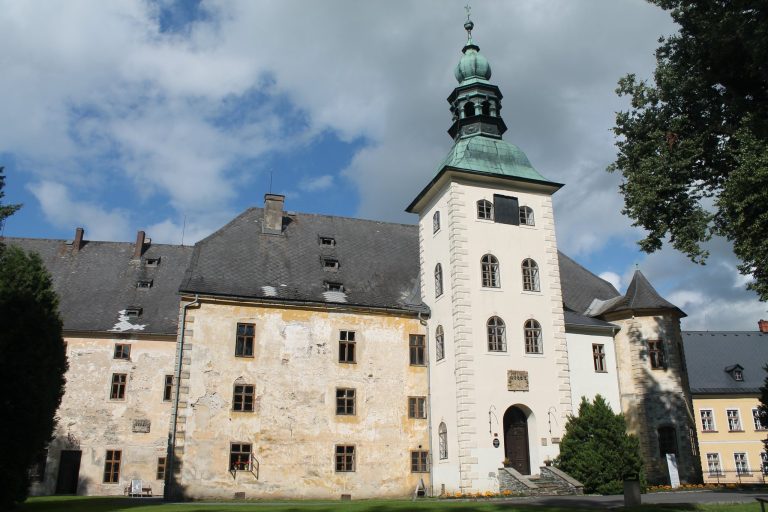
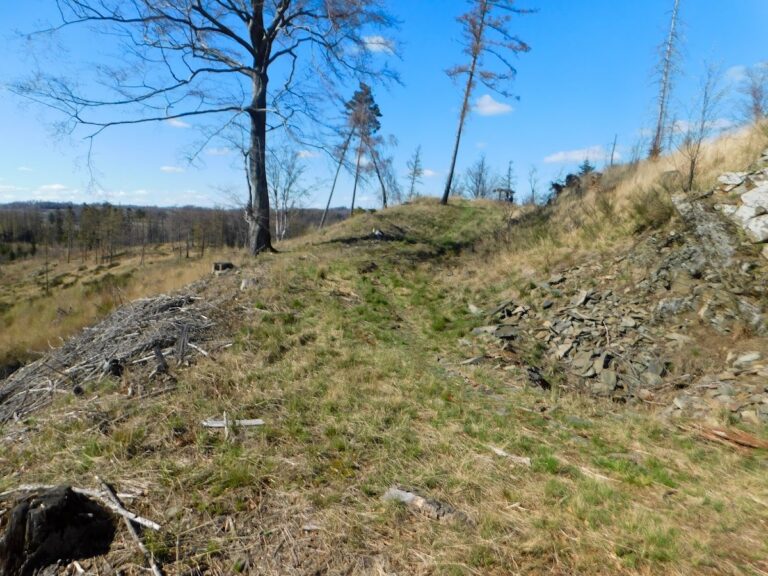
A larger surviving section with a bastion or tower lies west of the town, south of the castle. Another substantial section is preserved on the northeast side, where the Stone Bastion stands. Shorter sections remain beside the northeastern corner of the castle complex and within the block of houses between Sladovnická and Nerudova streets. Together, these Gothic fragments and the two surviving bastions or towers preserve parts of the town’s medieval defensive layout.