Hradec nad Moravicí Castle: A Historic Castle Complex in Czechia
Site at a Glance
- Rating
- 4.7
- Popularity
- Medium
- Country
- Czechia
- Primary era
- Modern
- External website
- Open
- Eras represented
- Medieval, Early Modern, Modern
- Civilizations
- Habsburg, Holy Roman Empire, Kingdom of Bohemia
- Site type
- Domestic
- Remains
- Castle
On this page11 sections
History
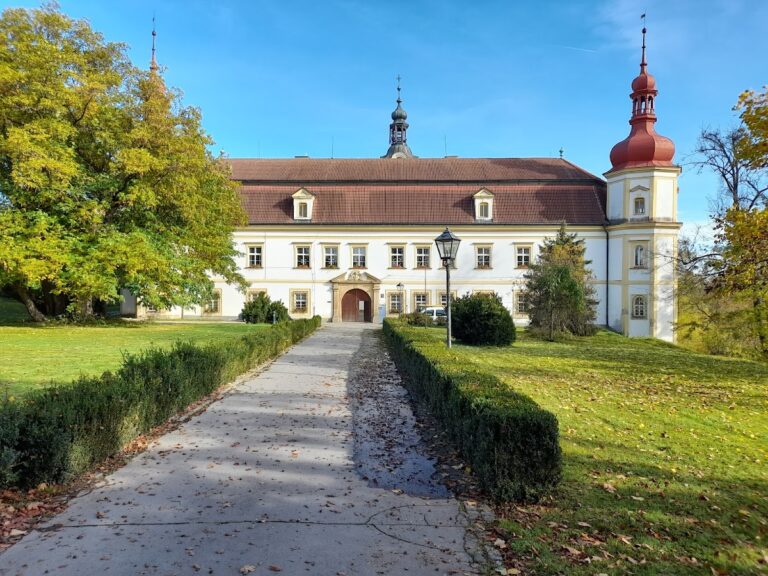
Hradec nad Moravicí Castle is a castle complex in Czechia whose principal White Castle developed from a thirteenth-century Gothic stronghold into a Renaissance, Baroque, and early Classical residence. Built on a rocky, elongated spur above the Moravice River, it controlled a route toward Poland and became an important administrative centre in the surrounding region.
Early settlement and the medieval castle
The spur was probably inhabited from the first half of the eighth century and had become a fortified settlement by the tenth century. By the late twelfth century, Hradec served as an administrative centre for the Holasice tribal territory. Its position above the river allowed it to oversee movement along an important route, while a customs station near Hradec is mentioned in a charter of 1078.
A failed Polish siege in 1060 was recorded by Gallus Anonymus. Another charter, from 1224, names Vítek as castellan of Hradec, an official responsible for administering the castle and its surrounding territory. An earlier stronghold was later destroyed by fire, and a large Gothic castle was built in its place, probably around the middle of the thirteenth century under King Přemysl Otakar II.
In 1269, Přemysl Otakar II’s illegitimate son Mikuláš I of Opava took charge of the Opava region and established the Opavian branch of the Přemyslid dynasty. The Přemyslids were the ruling dynasty of Bohemia, while the Opavian branch descended from Mikuláš and ruled the Duchy of Opava. This family held Hradec until the fifteenth century. After the Battle on the Marchfeld, Queen Kunhuta and Záviš of Falkenštejn temporarily settled at the castle.
Political rivalry and decline
Hradec and the Opava region became the subject of rivalry between Mikuláš of Opava and King Václav II. The castle was also temporarily pledged to the Polish Piast dynasty. A pledge transferred control or estate revenues to a creditor until a debt was redeemed. King John of Luxembourg redeemed the pledge in 1318, when the independent Duchy of Opava was established.
The Opavian Přemyslids later faced continuing financial difficulties and a decline in political prestige. In 1383, Duke Přemek I pledged the Hradec estate to the Moravian nobleman Lacek of Kravaře and subsequently moved the ducal seat to Opava. Hradec lost further importance, partly during the Hussite Wars, the fifteenth-century religious and political conflicts in the Bohemian lands.
King George of Poděbrady acquired Hradec from Jan III of Opava and granted it to his sons. In 1481, Prince Viktorín of Poděbrady gave Hradec town rights and a coat of arms. The town and castle nevertheless continued to lose influence to Opava. In 1530, Hradec was taken into pledge by the Žabkas of Limberg, and the castle burned the following year.
Renaissance residence and wartime damage
The Cetrys family of Kynšperk held Hradec for more than fifty years. They repaired the fire-damaged castle and began converting it into an early Renaissance residence. In 1581, during the reign of Emperor Rudolf II, Hradec was granted to Kaspar Pruskovský of Pruskov. The decision was connected with imperial efforts to make the predominantly Protestant Opava region wholly Catholic. Kaspar obtained the estate as hereditary property in 1584, ending its ownership by the Czech ruling dynasties.
Between 1585 and 1620, Kaspar Pruskovský led a major reconstruction that changed Hradec from a frontier fortress into a more comfortable Renaissance residence. During the Bohemian Revolt, Jan Kryštof Pruskovský refused to swear allegiance to Frederick V of the Palatinate. The insurgent Silesian estates confiscated Hradec, but the property was returned to him after the revolt was defeated.
Danish troops occupied Hradec in 1626 and 1627 before being expelled by Albrecht von Wallenstein. Enemy and imperial incursions caused severe damage during the Thirty Years’ War, the major European conflict fought from 1618 to 1648. The fortifications were also expanded during this period. After the war, the Pruskovský family completed the transformation of the castle into a Baroque residence with four wings arranged around a large courtyard.
The Neffzern and Lichnovský periods
Count Erdman Kryštof Pruskovský sold Hradec in 1733, ending approximately 150 years of Pruskovský ownership. The buyer, Baron Wolf Konrád Neffzern, was an imperial councillor and a wealthy entrepreneur in precious-metal mining. The Neffzerns added the Stations of the Cross on Kalvárie Hill in 1764 and continued the tradition of concerts and theatrical performances associated with the estate.
Prussian troops occupied Hradec several times during the Prussian-Austrian wars. In 1777, Wolfgang Karel Neffzern sold the estate to Prince Jan Karel Lichnovský for 270,000 gulden. Jan Karel had served Maria Theresa before accepting a princely title from King Frederick II of Prussia.
His successor, Karel Alois Lichnovský, undertook a radical rebuilding after a major fire in 1796. The family also established a large English landscape park, a naturalistic garden style based on irregular planting, lawns, water, and designed views rather than a rigid geometric plan. Hradec briefly passed outside the Lichnovský estate after the death of Prince Felix. His companion Dorothea, Duchess of Sagan, inherited it in 1848, settled its debts, and sold it back to the Lichnovský family in 1850 for 500,000 gulden. Prince Karel Maria Lichnovský united the family estates in 1857.
A nineteenth- and early twentieth-century cultural residence
The Lichnovský family maintained Hradec as a cultural residence. Ludwig van Beethoven and Ferenc Liszt, major nineteenth-century composers and performers, were among the musicians who visited, alongside other prominent cultural figures. Karel Maria Lichnovský began expanding the complex with the Red Castle, and German Chancellor Otto von Bismarck also visited Hradec.
Prince Karel Max Lichnovský served as German ambassador to Great Britain from 1912 to 1914 and was dismissed when the First World War began. He then moved to Hradec with his wife Mechtilde and their three children. Mechtilde maintained a social and musical salon at the castle, whose guests included Karl Kraus, Rainer Maria Rilke, Hugo von Hofmannsthal, Siegfried Jacobsohn, and Oskar Kokoschka. Kokoschka painted her portrait at Hradec in 1916.
Confiscation, public ownership, and conservation
The creation of Czechoslovakia brought the Lichnovský estate under the First Czechoslovak Land Reform. In 1921, the buildings of the castle complex were valued for insurance purposes at almost six million Czechoslovak crowns. Wilhelm, or Vilém, Lichnovský was the last private owner. Because maintaining the estate was costly, the possible demolition of the Red Castle was considered during his administration.
In late April 1945, the Lichnovský family left for Vienna ahead of the advancing front, taking the most valuable furnishings in only three vehicles. Hradec was confiscated in 1945 as German property. Hubert Obr, the former long-serving castle majordomo, became national administrator and tried to protect the castle and its furnishings from state interference. After his emigration in 1948, administration passed to the National Fund in Prague.
The castle opened to the public in 1949 and that year passed to the Regional National Committee in Ostrava. From 1952, the Regional Cultural-Educational Center administered it and hosted cultural events connected with former visitors, including the Beethoven Hradec music competition. The complex closed in 1979 for extensive reconstruction and reopened in 1996. Comprehensive restoration and conservation of the Red Castle followed in 2017–2019. Hradec became a national cultural monument of the Czech Republic in 2001 and has been administered by the National Heritage Institute since 2003. The complex is state-owned.
Remains
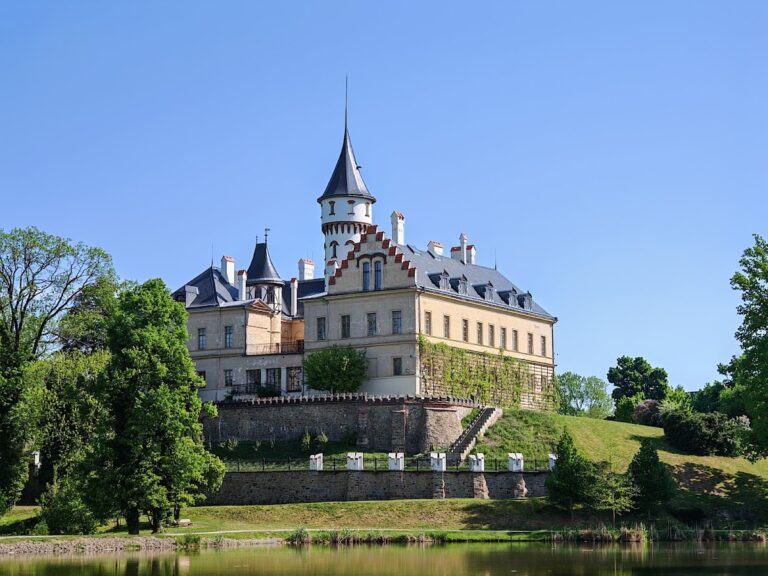
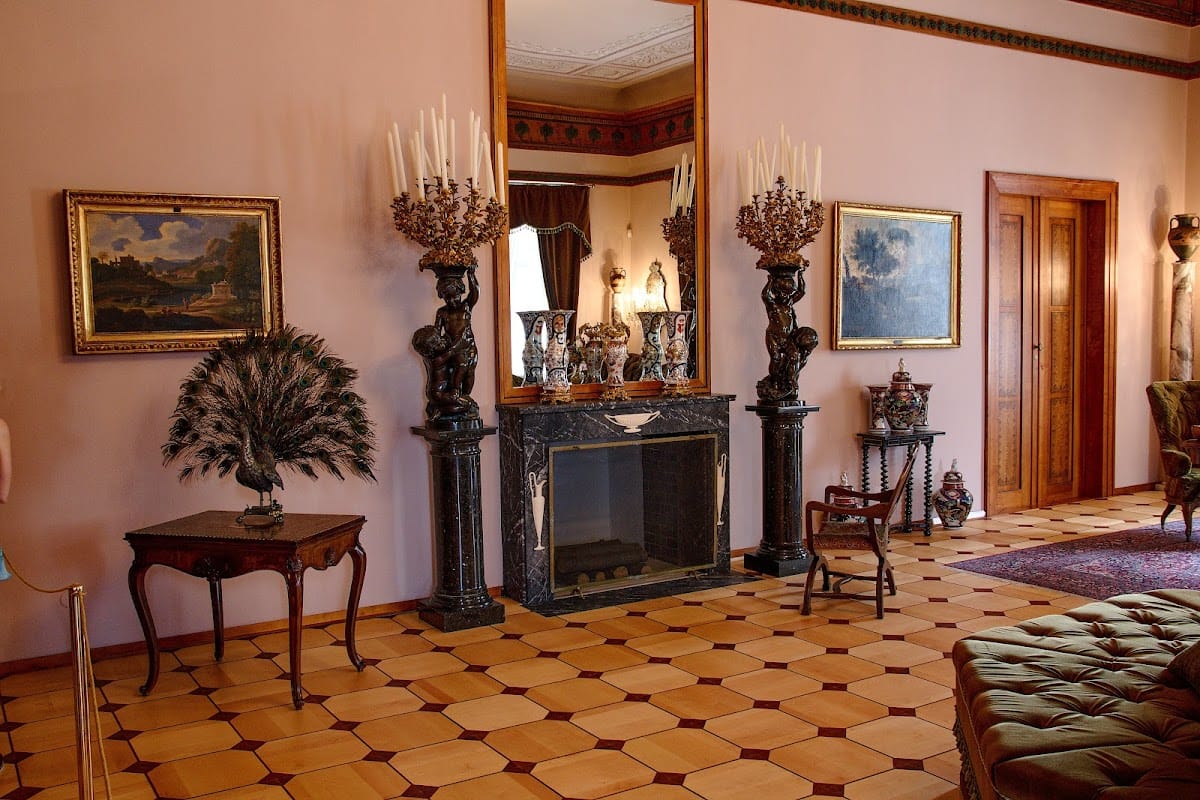
Hradec nad Moravicí occupies a rocky spur above the Moravice River. Its oldest principal component is the White Castle, while the Red Castle and White Tower were added in the nineteenth century. The surviving complex combines medieval foundations and later rebuilding with service buildings, a chapel, art collections, a library, and an extensive English landscape park.
White Castle
The original thirteenth-century Gothic castle had a quadrangular plan, two towers, massive fortification walls, and substantial defensive works. It replaced an earlier fortified structure. Renaissance rebuilding between 1585 and 1620 gave the principal building a regular plan. The residence initially had three wings and a wall along the west side; a fourth wing was added after 1648, creating the four-wing Baroque complex around a large courtyard.
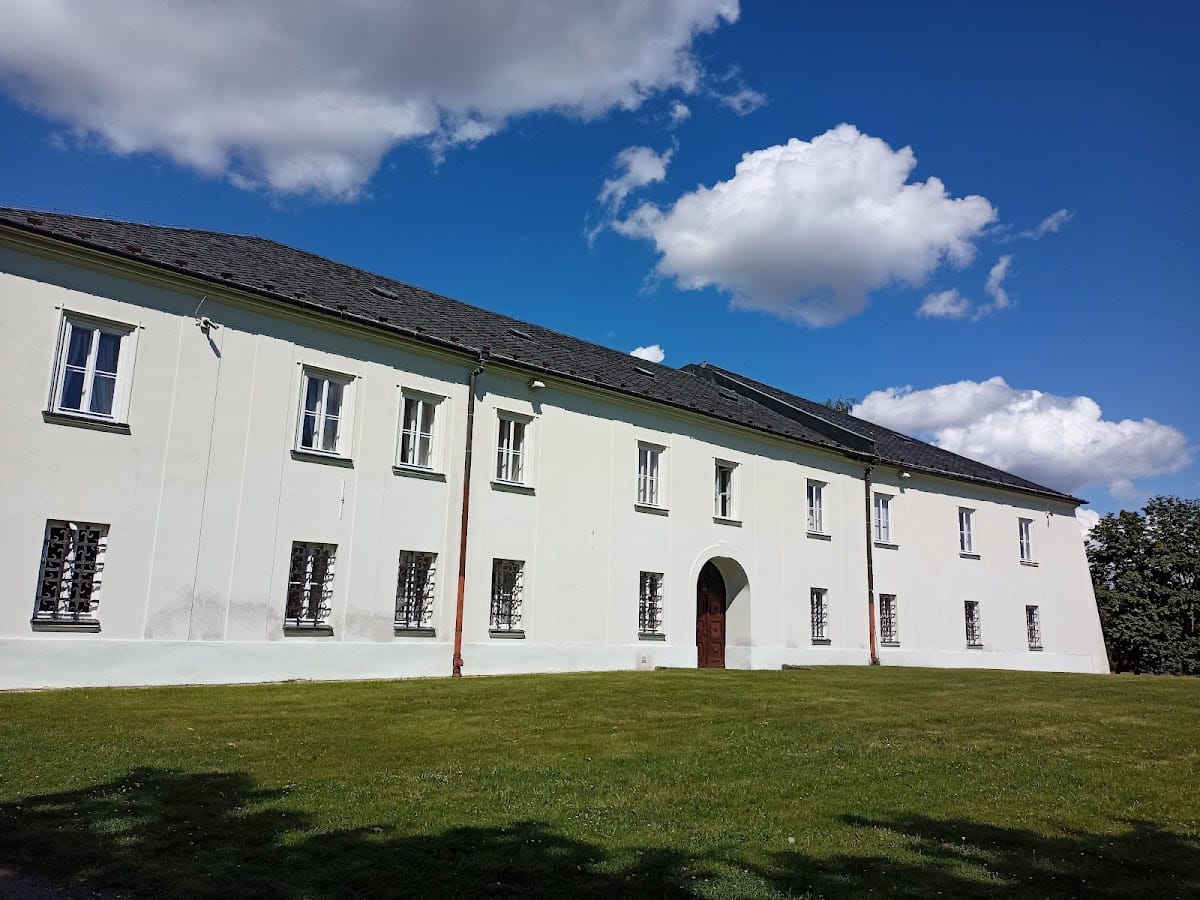
The fire of 1796 led the Lichnovský family to commission a fundamental reconstruction directed by the Krnov builder Johann Mihatsch. The remaining medieval walls and towers were removed, in part with gunpowder, and the rebuilding created the present form of the White Castle. The work is described as the first significant early Classical project in Silesia and influenced later architecture in the region.
An Ionic portico was added to the entrance wing in 1845 by Karl Klumpner. In 1861, Karl Lüdecke divided the courtyard with an arcaded corridor, and between 1872 and 1876 he modernized the interiors. Greenhouses and an orangery attached to the south wing later disappeared at the end of the nineteenth century. The White Castle now forms a four-wing reconstruction of the earlier Gothic and Renaissance castle and includes a chapel and park.
Red Castle
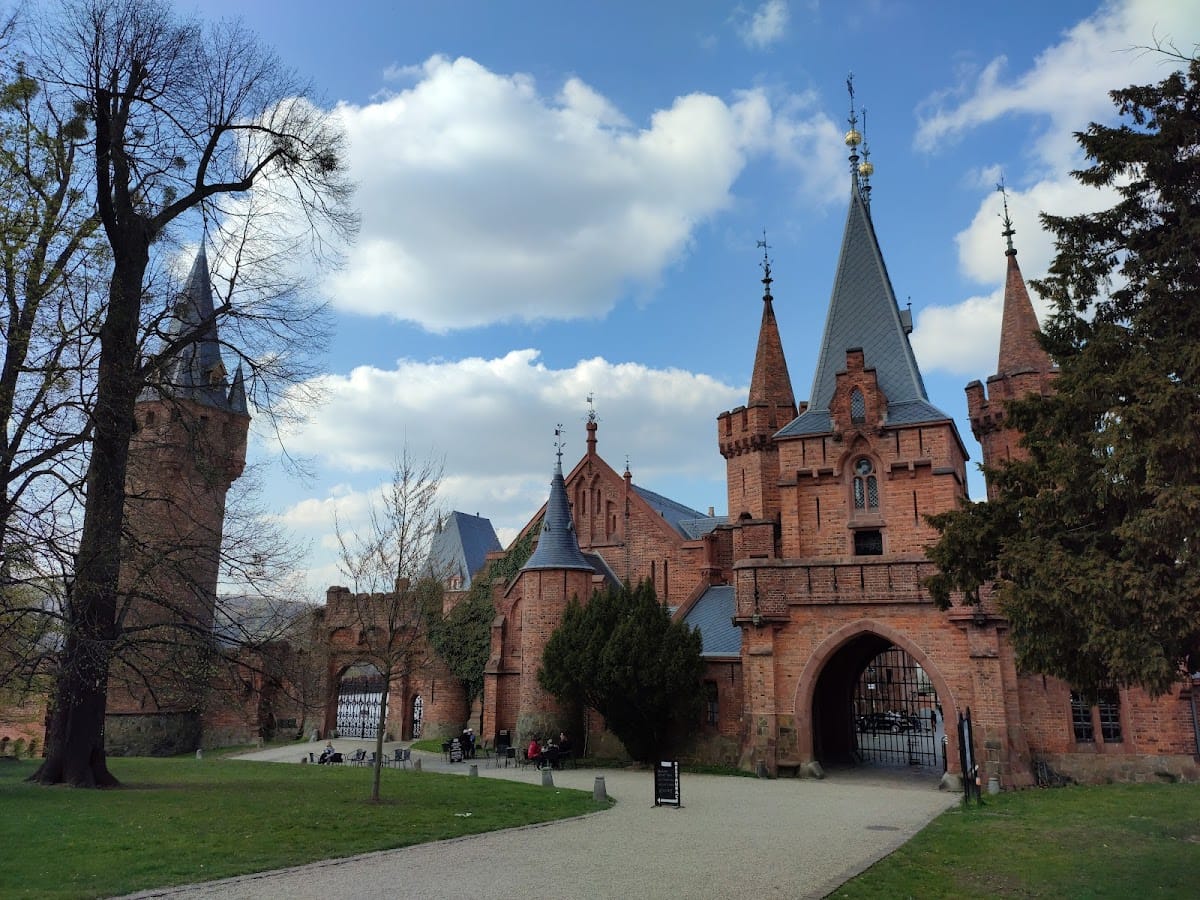
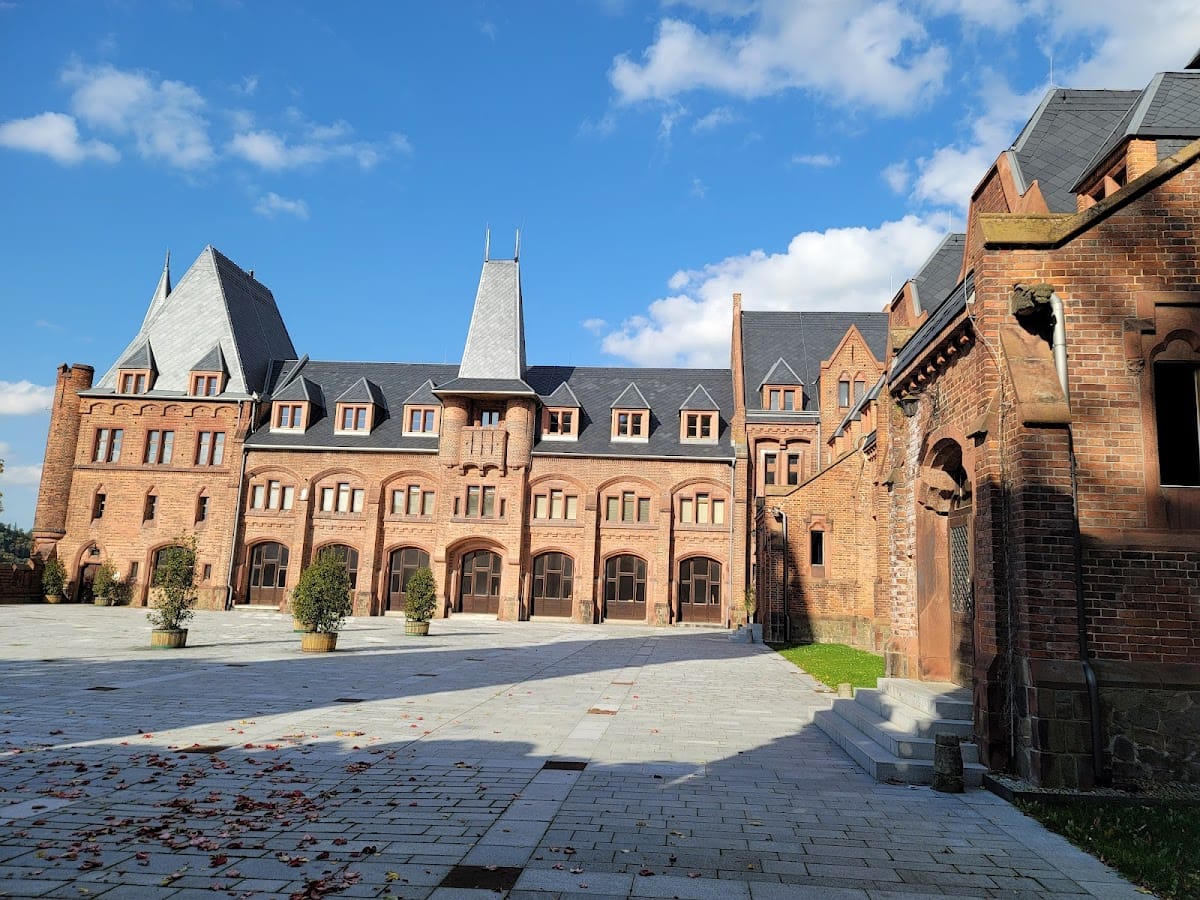
The Red Castle was built between 1874 and 1881 as a group of service and operational buildings, including stables and carriage facilities. Designed by Ernst Händel, it used exposed, unplastered brick and an elaborate Neo-Gothic historicist style, which revived and reinterpreted medieval architectural forms. Its L-shaped plan and monumental entrance gate nearly doubled the size of the castle complex, although the project was not completed in full.
The entrance enclosure consists of a rusticated masonry wall and a monumental gate with three towers. On the southern side of the Red Castle courtyard stands a five-storey clock tower with a circular plan and exposed masonry. The Red Castle underwent comprehensive restoration and conservation between 2017 and 2019.
White Tower and grounds
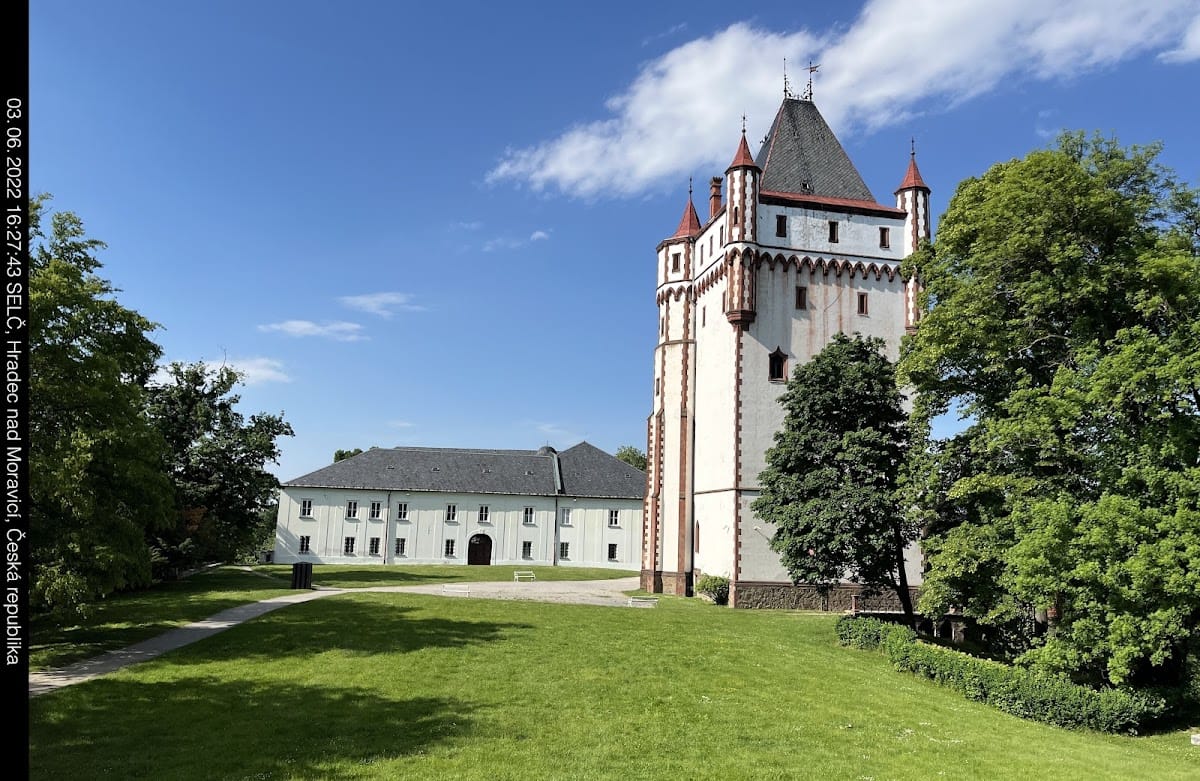
The White Tower was completed south of the White Castle in 1887. It has a prismatic base and a polygonal corner turret. For a period at the beginning of the twentieth century, it served as a water reservoir. The former defensive system was demolished during the nineteenth-century expansion, and the surrounding slopes were levelled.
The estate includes an extensive English landscape park inspired by the design of Bad Muskau Castle, as well as the Stations of the Cross established on Kalvárie Hill in 1764. The complex contains rich art collections and a library of more than 15,000 volumes. Together, its buildings and grounds form the largest castle complex in the Moravian-Silesian Region.