Vikštejn Castle: A Gothic Fortress Ruin in Czechia
Site at a Glance
- Rating
- 4.7
- Popularity
- Low
- Country
- Czechia
- Primary era
- Medieval
- Eras represented
- Medieval, Early Modern
- Civilizations
- Holy Roman Empire, Kingdom of Bohemia
- Site type
- Military
- Remains
- Castle
On this page7 sections
History
Vikštejn Castle is a Gothic stone castle ruin in Czechia, founded in the second half of the thirteenth century, around 1250–1300, to monitor the route toward Opava. Vítek of Kravaře, a medieval Moravian-Silesian nobleman, established the castle together with the settlement of Wigstadtl.
Medieval Foundation and Lords
The castle first appears in written records in 1377, during the division of the Duchy of Opava, a medieval principality ruled by the Opava princes. By the end of the fourteenth century, Vikštejn belonged to those princes. In the mid-fifteenth century, ownership passed to the Moravice noblemen and later to the Bírka family of Násile.
During the Bohemian-Hungarian War, Matthias Corvinus, the fifteenth-century king of Hungary and Croatia, captured and destroyed Vikštejn in 1474. The Plankner family of Kynšperk acquired the castle afterward. They repaired it around 1530 and remodelled it in the Renaissance style, adapting the medieval stronghold to architectural ideas centered on classical proportions, symmetry, and revised residential or defensive arrangements.
War, Repair, and Abandonment
From the end of the sixteenth century until 1708, Vikštejn belonged to the Oderský family of Lidéřov. The Thirty Years’ War, a European conflict fought mainly between 1618 and 1648 amid dynastic, political, and religious struggles, brought further damage through Danish and Swedish incursions. Imperial troops destroyed the castle in the mid-seventeenth century, although a partial repair followed during the second half of that century.
The Reich family acquired Vikštejn in 1708. By then, the castle served only economic and estate-management purposes. After a new residential estate was built at Horní Vikštejn, now Dubová, the castle was definitively abandoned after 1776 and gradually deteriorated. The ruins have been protected as a cultural monument since 1964.
Remains
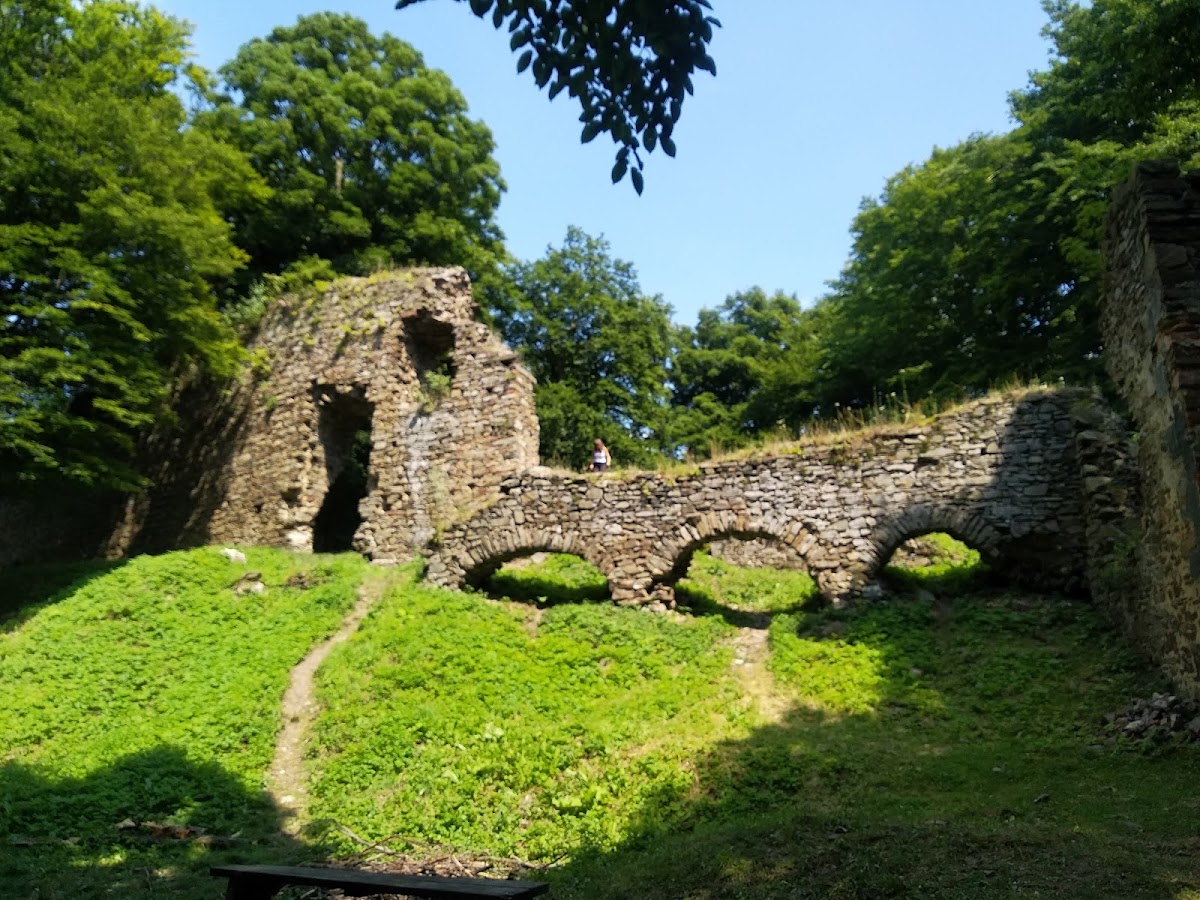
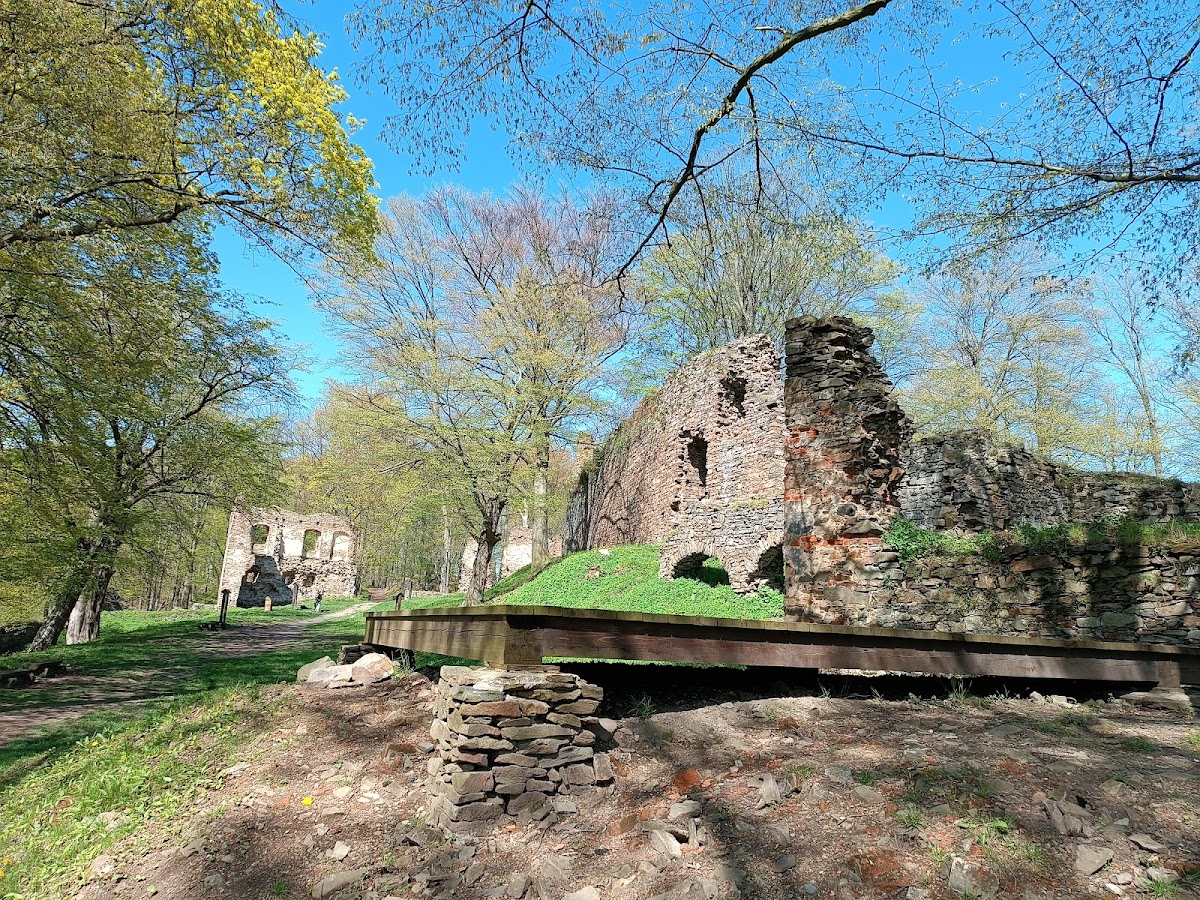
Vikštejn stands on a high, steep rocky outcrop above the Moravice River, near Radkov between Melč and Vítkov. The site is defined by the remains of a Gothic stone castle and a prominent tall tower. Its present condition reflects destruction in wartime, abandonment, and prolonged deterioration.
Fortifications
Rocky Castle Site and Tower
The castle occupies the elevated rock and retains a tall tower as its most prominent surviving feature. The masonry remains form a fragmentary ruin rather than a complete medieval residence, preserving the defensive character of the original Gothic complex.
Dry Moat and Bastions
During the reconstruction around 1530, the northern neck of the rocky site was cut through to form a deep dry moat, a defensive ditch without standing water. Bastions, projecting fortified structures intended to strengthen the defensive perimeter, were built above the moat. These Renaissance-era alterations remain part of the castle’s surviving defensive arrangement.