Radegg: Medieval Castle Ruins and Outworks in Switzerland

Site at a Glance
- Rating
- 4.5
- Popularity
- Very Low
- Country
- Switzerland
- Primary era
- Medieval
- Eras represented
- Medieval
- Civilizations
- Holy Roman Empire
- Site type
- Military
- Remains
- Castle
On this page10 sections
History
Radegg is a medieval spur castle in Switzerland, located above Wilchingen in the canton of Schaffhausen. Built around 1200, it occupied a rocky ridge above the Wangental and is also broadly classified as a thirteenth-century castle. Its builder, exact origins, and destruction remain uncertain.
The Radegg family and the castle
Radegg is associated, though not securely, with the barons of Radegg. Barons were members of the European hereditary nobility. The family linked to the castle first appears in 1188 through a reference to Heinrich Scado. Around 1225, the knight Rudolf was recorded as “Rudolf nobilis dictus Schade de Radegg,” and he is said to have maintained unspecified relations with Rheinau Abbey, a Benedictine monastery in the region.
A second family with the same name lived in the area during the thirteenth century. The bourgeois Schad von Radegg family later settled in Schaffhausen during the late Middle Ages, making it difficult to identify individual historical figures with certainty. The baronial family associated with Radegg died out in 1333. Johann Jakob Rüeger, a chronicler of Schaffhausen’s history, also recorded a relationship between the Randecker family and the lords of Randeck, Randenburg, and Randegg.
Destruction and investigation
The castle was probably destroyed shortly after 1300. One possible explanation connects its destruction with events around 1270, when the Radegg family may have tried to protect Rheinau Abbey from claims made by the bailiffs of the neighboring lords of Krenkingen. A bailiff was an administrative or judicial official acting for a territorial lord. The castle’s precise fate, however, remains unresolved.
Investigations and excavations took place between 1923 and 1937. Arrowheads and crossbow bolts were recovered during this work, adding evidence of the castle’s military character.
Remains
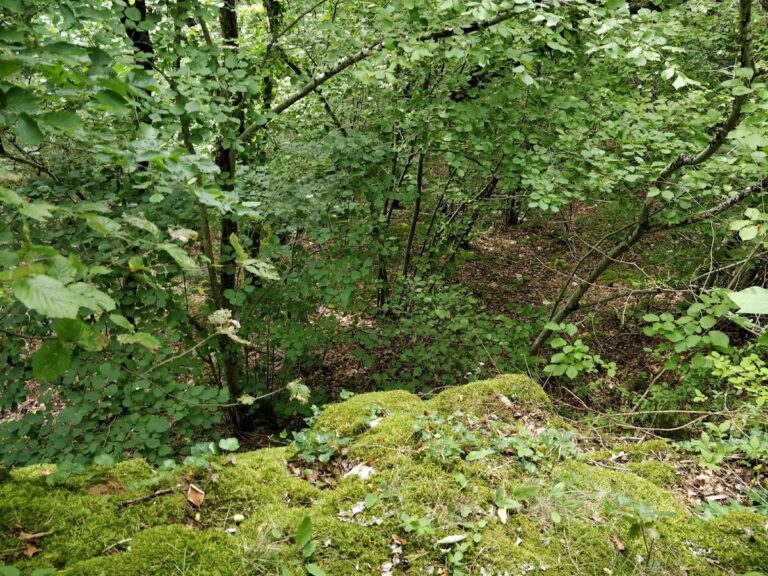
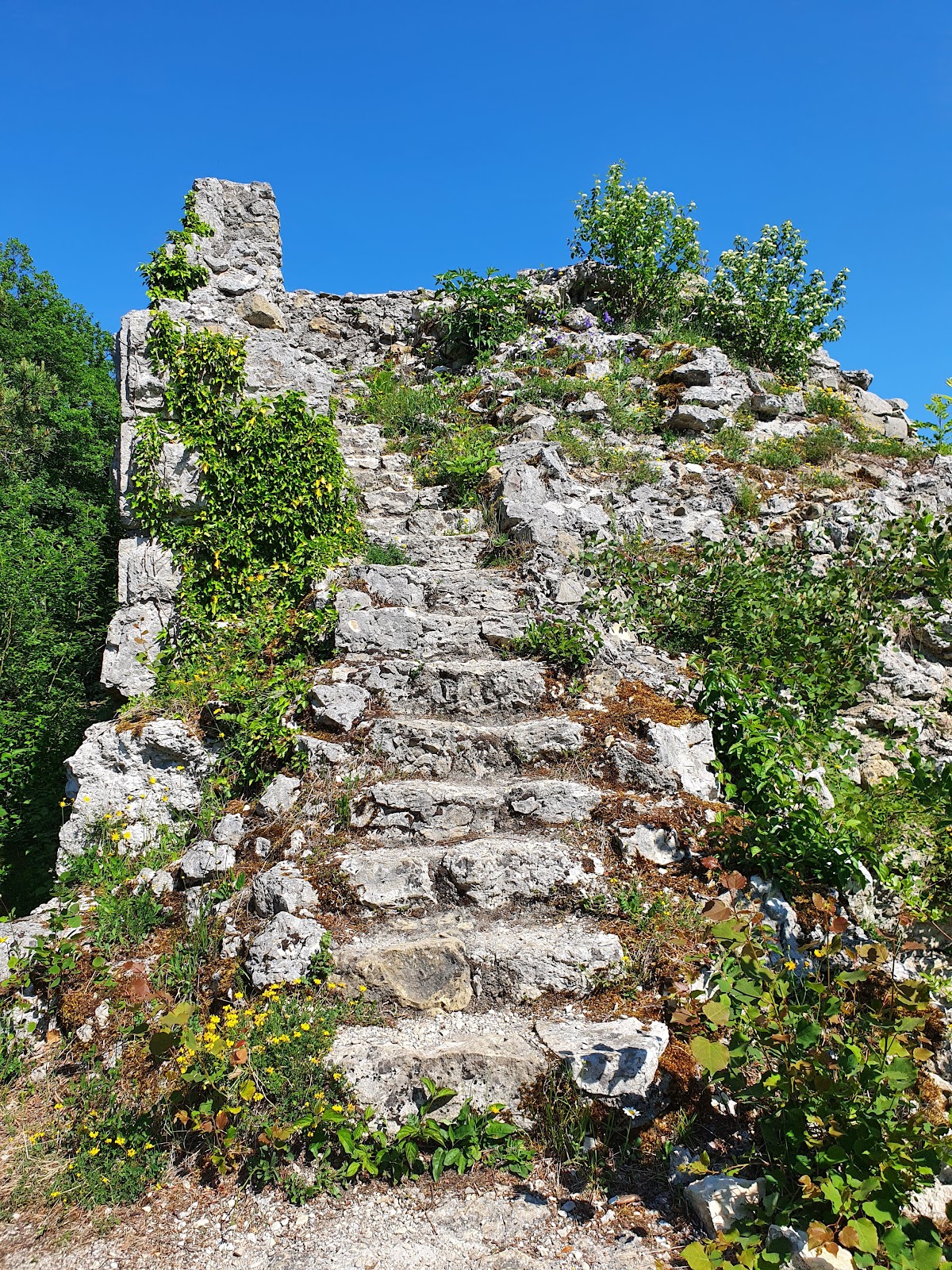
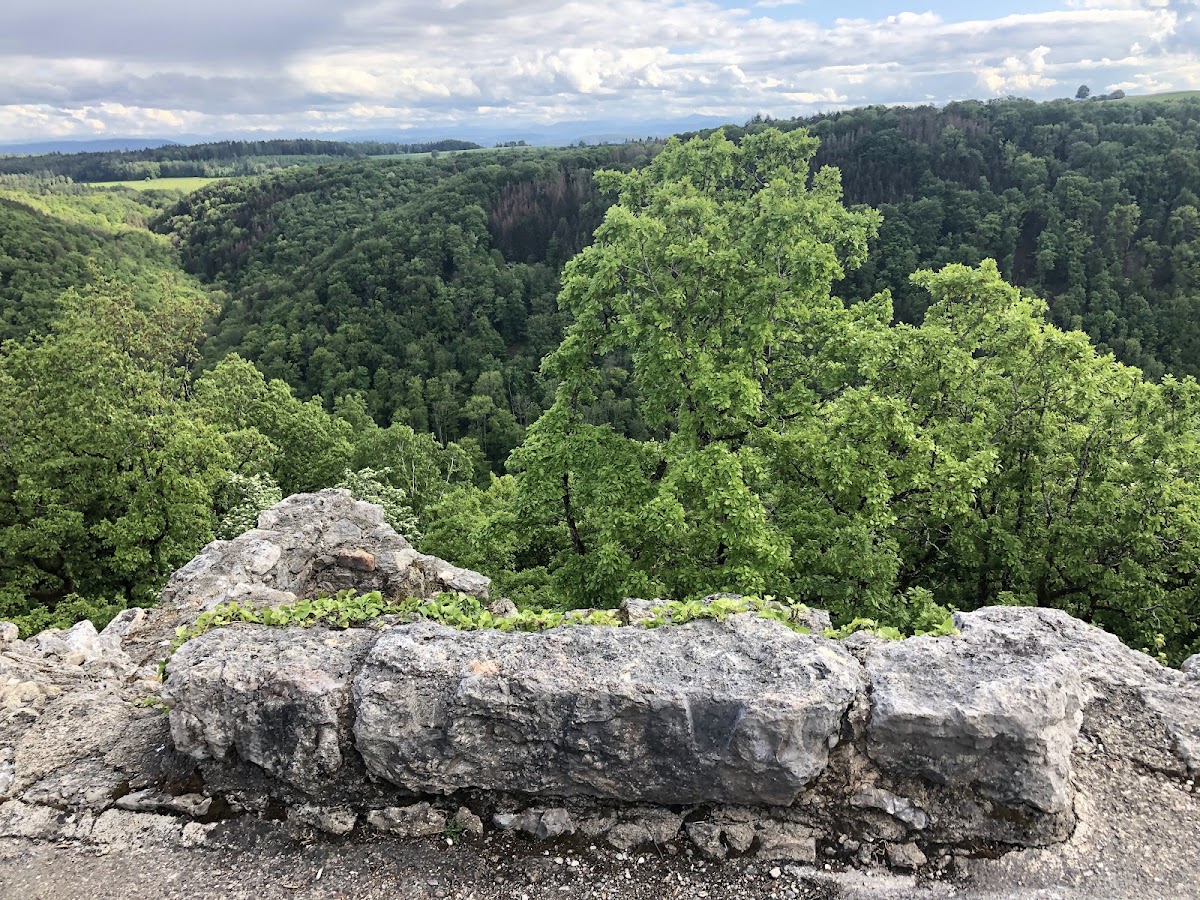
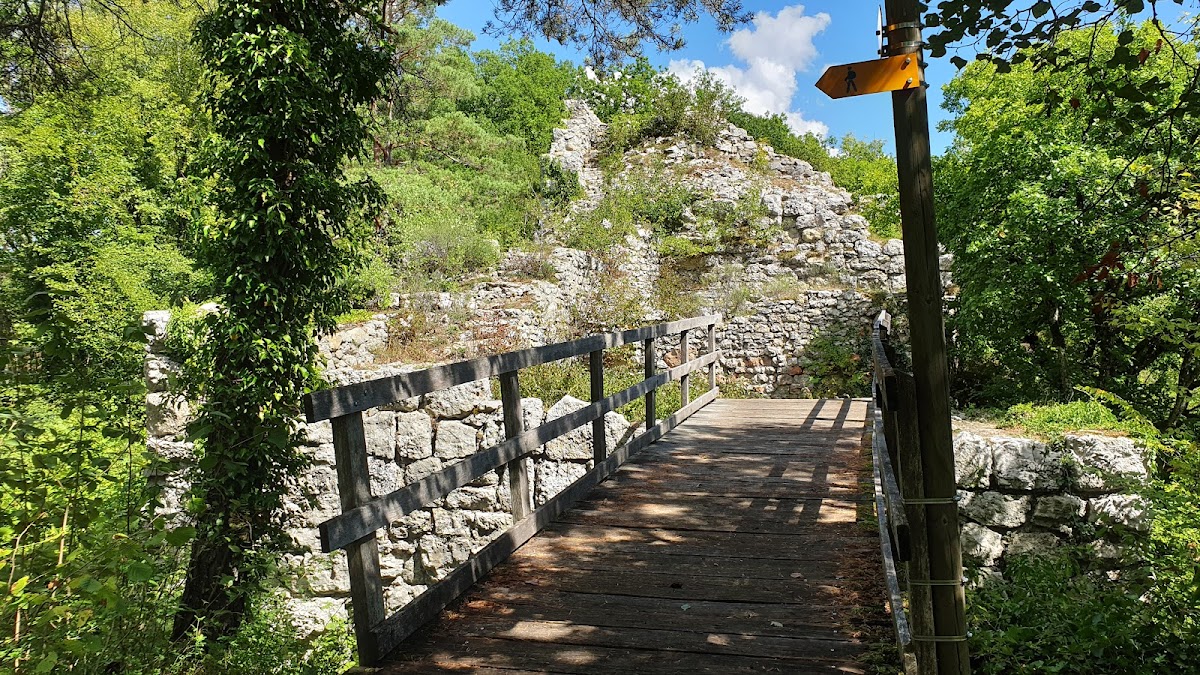
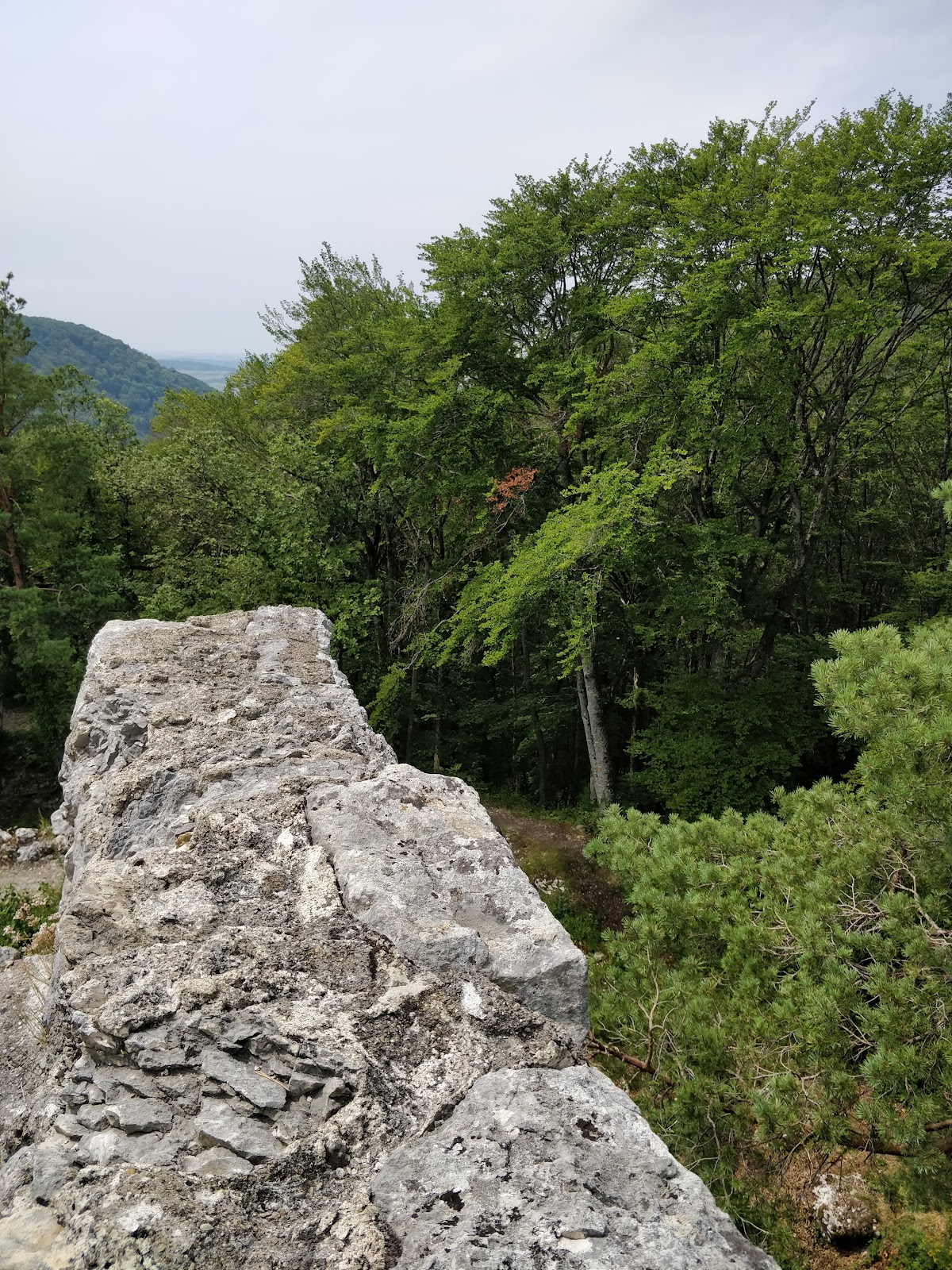
Radegg stands at about 560 metres above sea level on the Rossberg, on a rocky spur that drops steeply on three sides toward the Wangental. The valley floor lies approximately 170 metres below the castle. The surviving structure is ruinous and was built in a single east-west construction phase.
Main castle layout
East and west towers
From east to west, the castle consisted of a massive tower, an intermediate building or courtyard, and a second tower. Bossed corner ashlar, masonry made from dressed stones with projecting central faces, and other massive stone blocks form part of the construction. These features indicate a building date around 1200.
Intermediate building and cistern
The space between the two towers included an intermediate building or courtyard with a cistern, a tank used to collect and store water. This central element formed part of the castle’s single construction scheme and linked the two tower structures along the rocky spur.
Walls and external defenses
Fortification walls
The eastern side was more exposed and was protected by defensive walls up to four metres thick. The southern wall, facing the steep slope toward the Wangental, measures approximately 2.8 metres in thickness. Several limestone blocks on the inner side of the walls are reddened, providing evidence suggestive of a fire.
Outworks and quarrying traces
The northeastern plateau in front of the castle is protected by undated ramparts and ditches. These outworks, defensive features positioned outside the main fortification, formed an external defensive zone. Traces of earlier extraction of building material remain visible near the castle.
Nearby sites