Majorie Castle: Episcopal Seat and Cultural Complex in Sion, Switzerland
Site at a Glance
- Rating
- 4.8
- Popularity
- Very Low
- Country
- Switzerland
- Primary era
- Medieval
- External website
- Open
- Eras represented
- Medieval
- Civilizations
- Holy Roman Empire
- Site type
- Military
- Remains
- Castle
On this page10 sections
History
Medieval origins
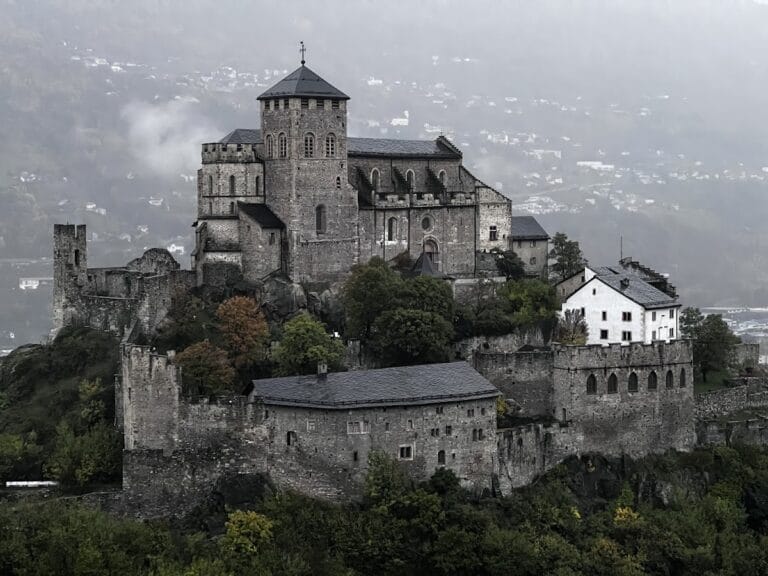
Majorie Castle is a fortified castle in Sion, Switzerland, built in the twelfth century. The Vidomnat, an administrative and residential complex associated with an official acting for a territorial lord or bishop, was mentioned as early as 1179. The Majorie tower was recorded by 1221, when its Saint Michael’s Chapel was first mentioned. At that time, the tower was known as the Sion Tower.
The episcopal seat
On 15 January 1373, Bishop Guichard Tavelli bought the castle. It then became the official residence of the Prince-Bishops of Sion. A Prince-Bishop combined ecclesiastical leadership with secular territorial authority, so Majorie Castle became a seat of political power in Valais as well as a residence. The bishops preferred it to Tourbillon Castle, which was more austere and less accessible.
During the seventeenth century, political authority in Valais was shared by the bishops and the cantonal Diet, the region’s representative political assembly. The Diet met at Majorie Castle, giving the complex a role in the government of Valais alongside its episcopal function.
Fire, rebuilding, and later uses
A fire destroyed the castle in 1529. Bishop Adrian I of Riedmatten ordered its rebuilding in 1536. Another fire, in 1788, destroyed the archives of the Diocese of Sion. Reconstruction projects followed, but the castle was not renovated. The bishop later built a palace near Sion Cathedral in 1839–1840.
The State of Valais subsequently acquired Majorie Castle and installed barracks there. Since 1947, the complex has housed the Valais Museum of Fine Arts. The canton of Valais owns the castle, which is protected as a Swiss cultural property of national significance.
Remains
Principal buildings
Majorie tower
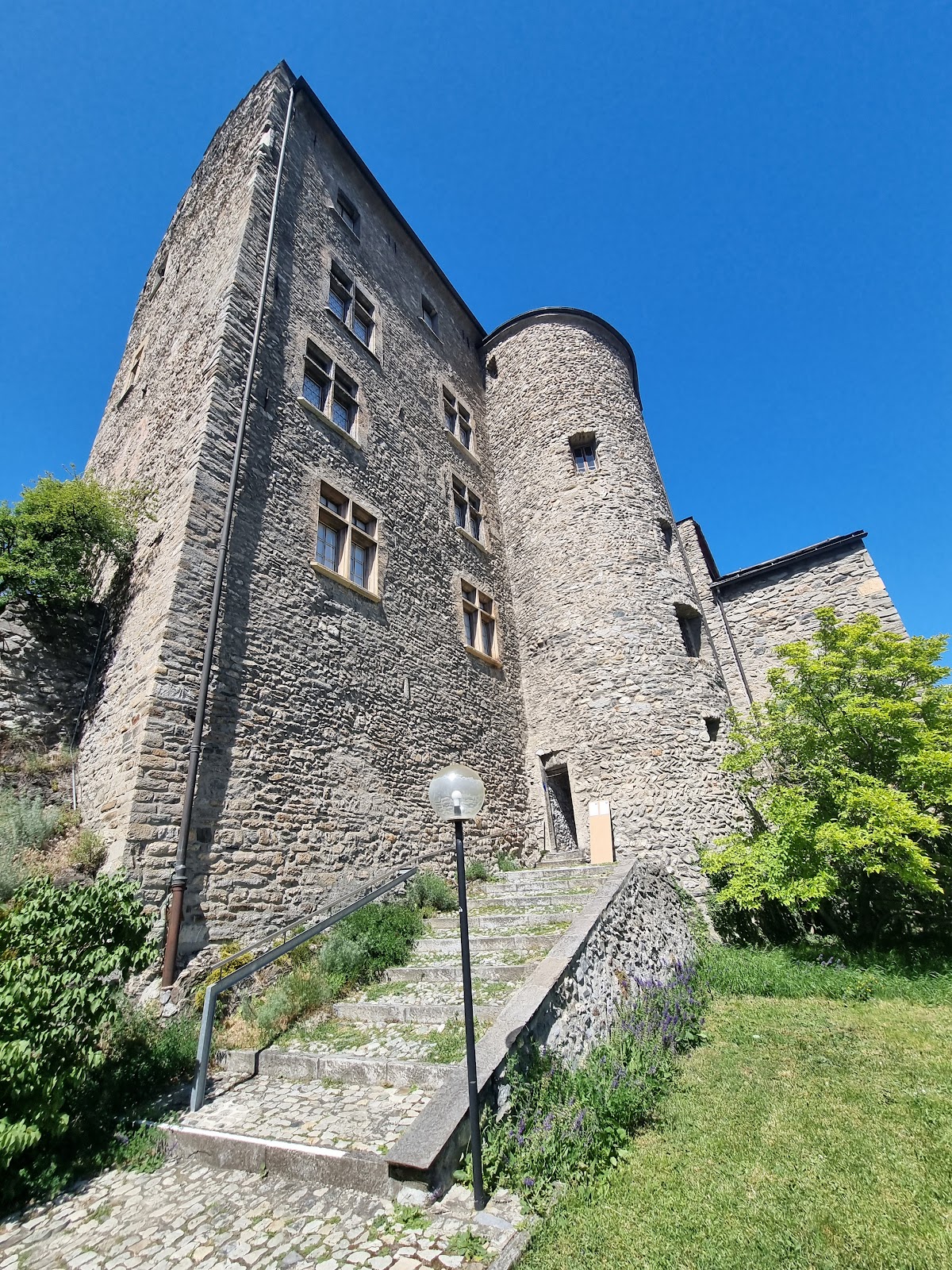
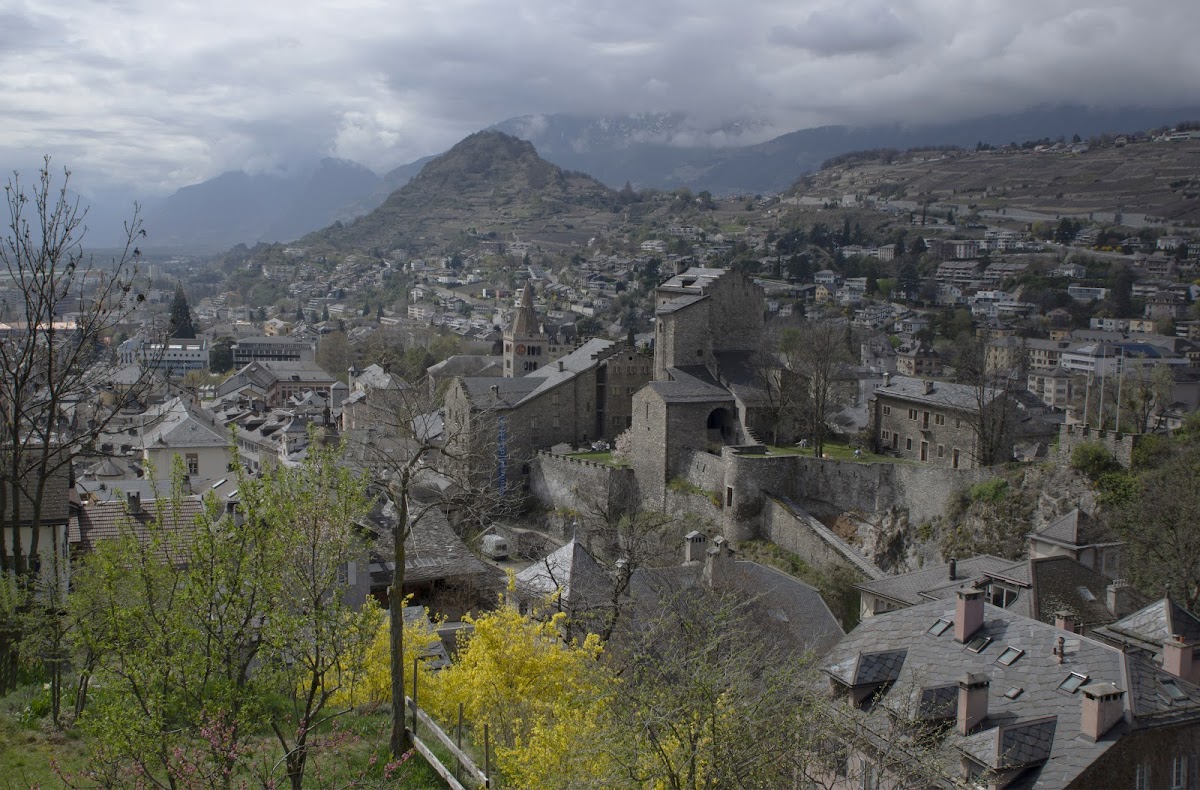
The Majorie is a high tower that dominates the episcopal complex and is protected by substantial terraced walls. It probably contained reception rooms for the bishops. Saint Michael’s Chapel is associated with the tower and was first recorded there in 1221.
Vidomnat
Below and west of the Majorie tower stands the Vidomnat. It consists of two square towers, each three storeys high. The towers were probably joined after they were first built, forming the second principal part of the episcopal complex.
Former Bishop’s Barn
Grange-à-l’Évêque
The Grange-à-l’Évêque, formerly used as the castle’s stables or Bishop’s Barn, forms another part of the complex. Since 2013, it has housed the Valais Nature Museum.