Château Mercier: A Medieval-Style Manor in Sierre, Switzerland
Site at a Glance
- Rating
- 4.7
- Popularity
- Low
- Country
- Switzerland
- Primary era
- Modern
- External website
- Open
- Eras represented
- Modern
- Civilizations
- Swiss
- Site type
- Domestic
- Remains
- Castle
On this page6 sections
History
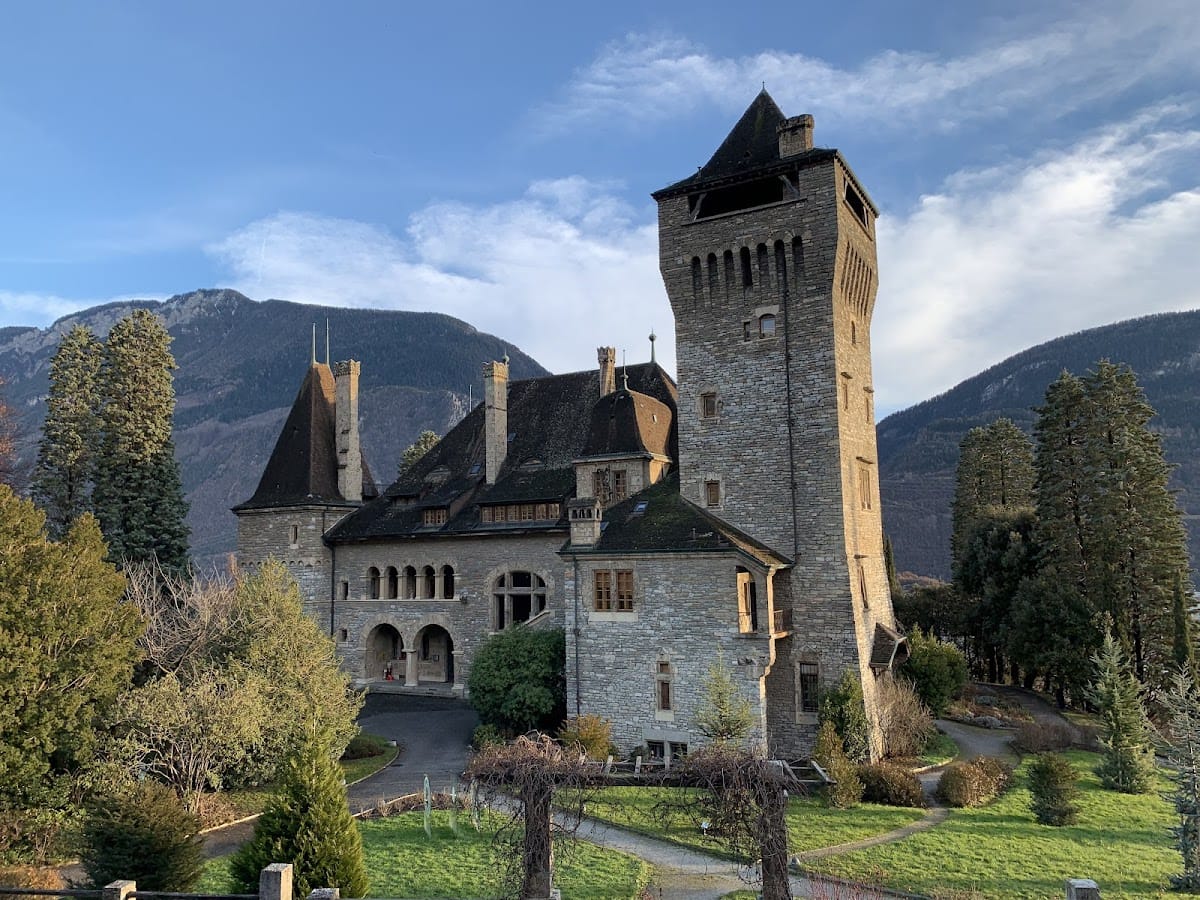
Château Mercier is a medieval-style manor in Sierre, Switzerland, built between 1906 and 1908 as a summer residence for the entrepreneur and philanthropist Jean-Jacques Mercier-de Molin and his wife, Marie Mercier-de Molin. Originally called Château de Pradegg after the hill where it stands, the building combines Renaissance Revival, a modern reinterpretation of Renaissance forms, with Neo-Baroque decoration inspired by the elaborate Baroque period.
Construction and family residence
Construction began in 1906 and was completed in 1908. The château formed part of the couple’s 37,126-square-metre estate, which already included three houses and agricultural buildings such as barns, stables, and sheds. These earlier buildings did not provide the comfort the couple sought for their residence.
Four generations of Jean-Jacques Mercier’s descendants lived in the château for much of the year and moved to Nice during the winter. The family belonged to a Protestant bourgeois lineage from Aveyron in France. In 1743, members of the family moved to Lausanne while fleeing religious persecution. They later established a prosperous tannery and took part in the construction of the Lausanne–Ouchy funicular, a cable railway on a steep incline, as well as the creation of the Compagnie générale de navigation, a Swiss lake-navigation company. The family also purchased the Lausanne newspaper and publishing enterprise Gazette de Lausanne.
Transfer to public ownership
On 27 January 1971, the Mercier family foundation promised to donate the estate and all its buildings to the Canton of Valais, one of Switzerland’s federated states. The donation took effect on 1 January 1991. The château was then fully restored, and its administration was entrusted to a dedicated foundation.
Château Mercier is publicly owned and classified as a Class B Swiss cultural property of regional significance. Its foundation manages the estate and operates the château as a venue for cultural activities and seminars.
Remains
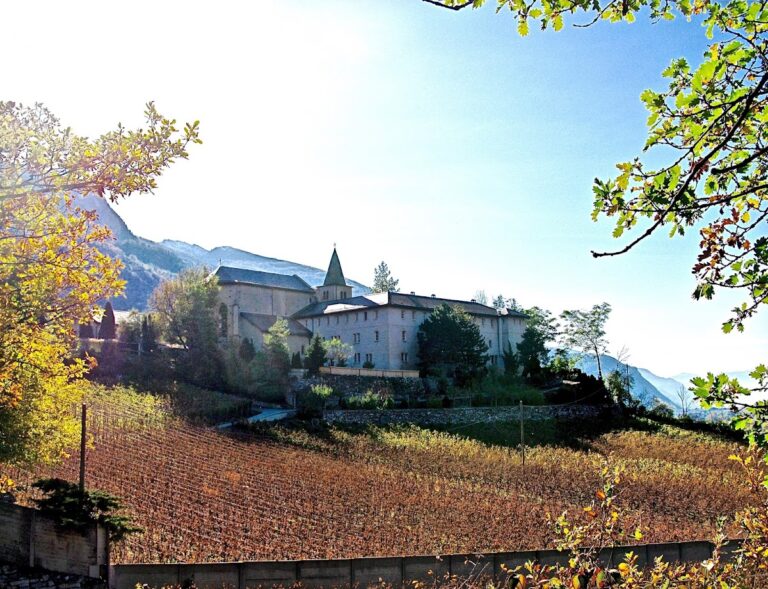
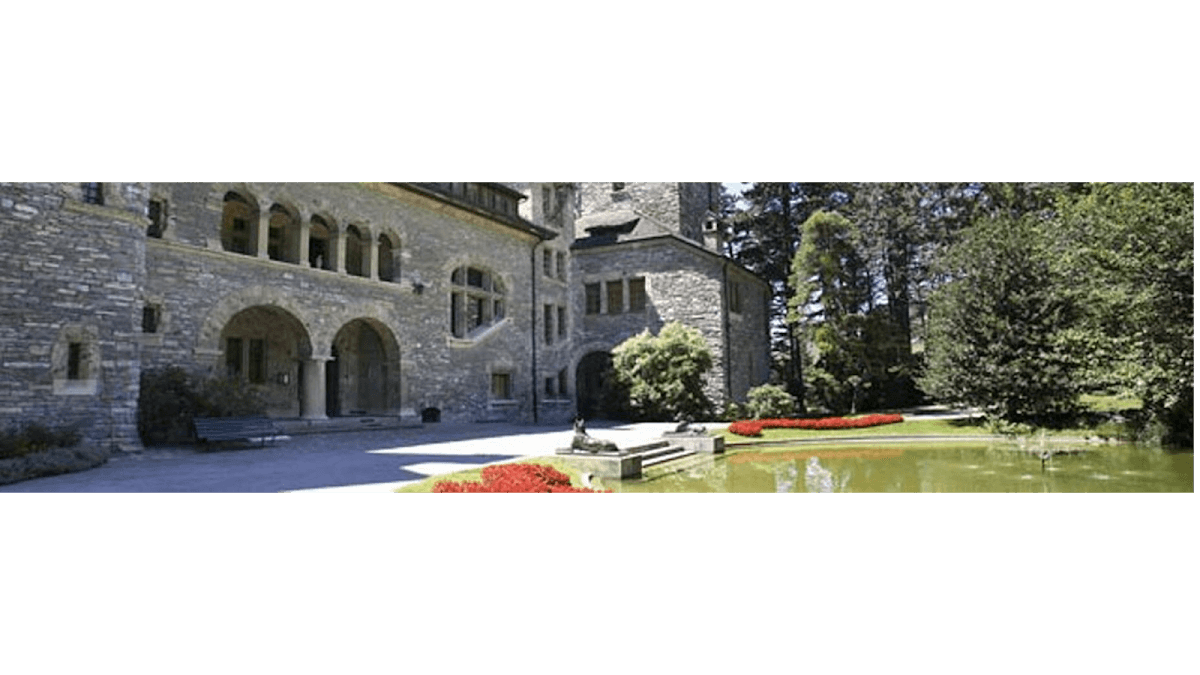
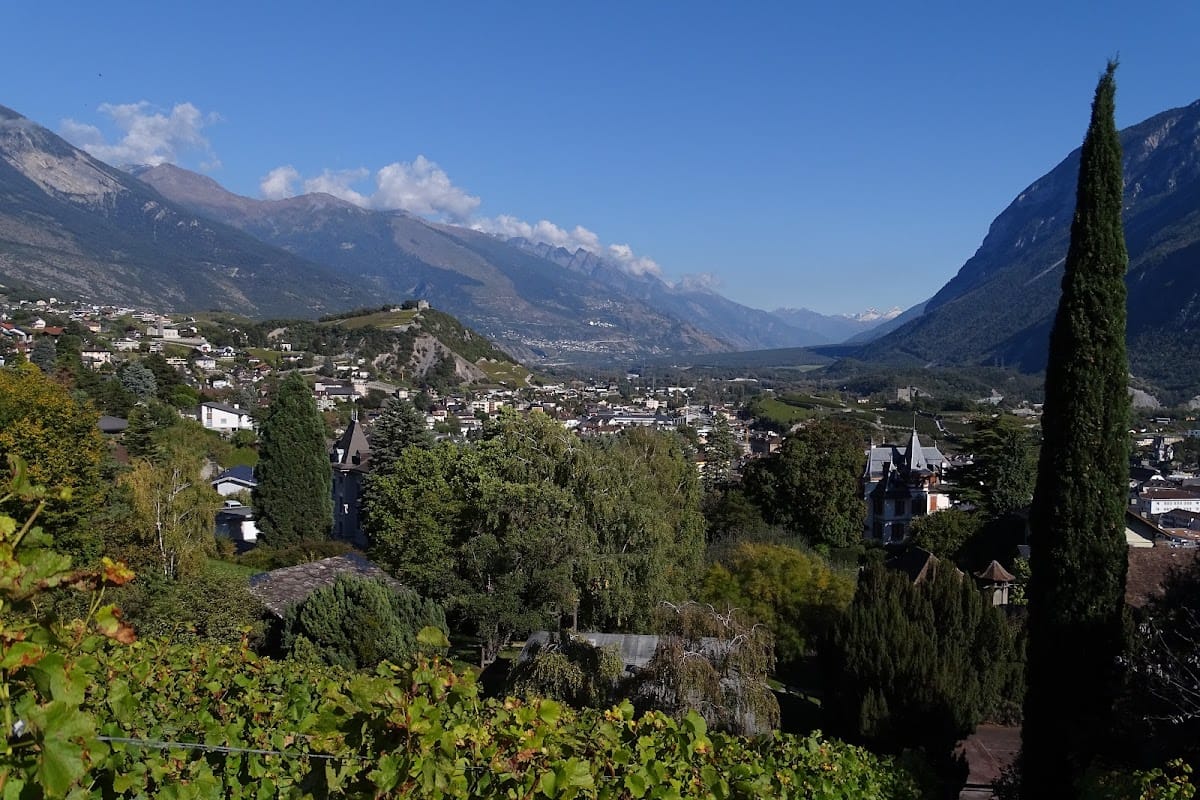
Château Mercier stands on Pradegg Hill within a 37,126-square-metre estate. The building is surrounded by a landscaped park, while extensive vineyards extend around the park. The surviving property therefore combines the manor, designed in the form of a medieval castle, with formal grounds and a wider agricultural landscape.
Manor and interiors
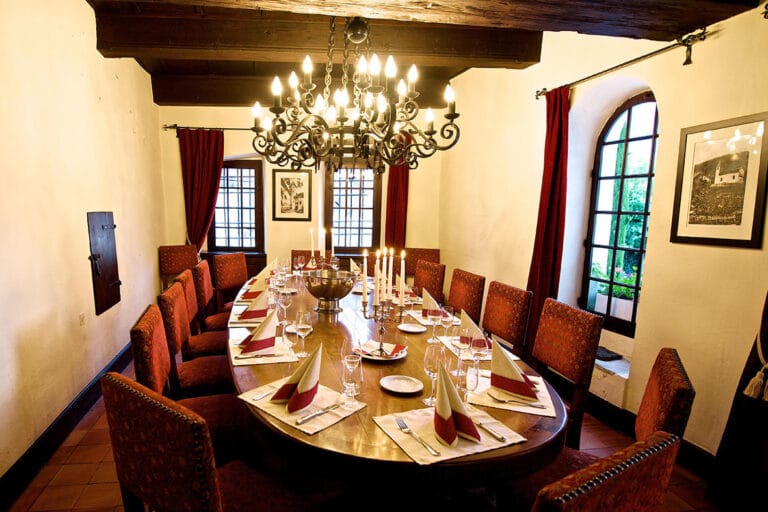
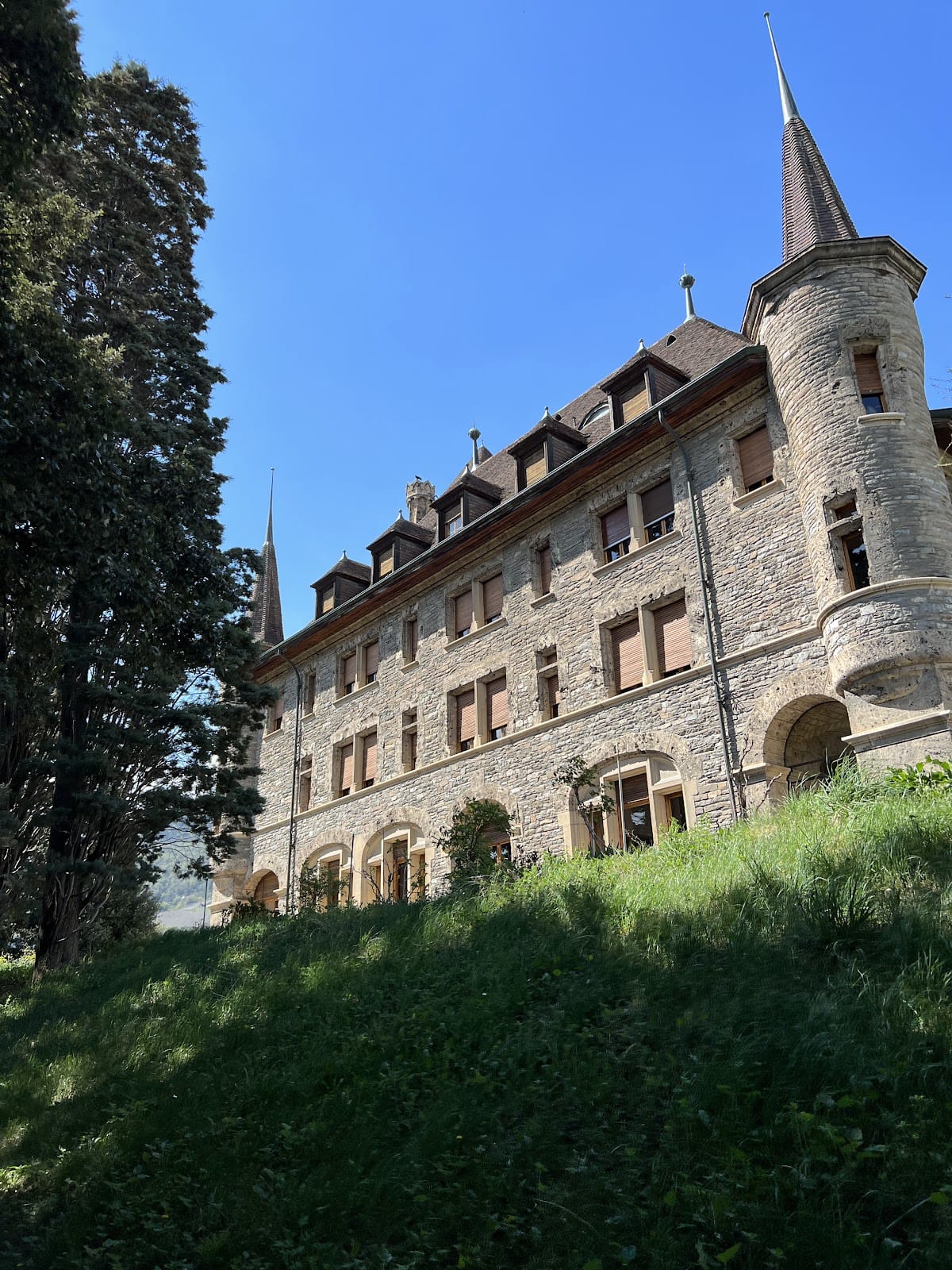
The château was constructed from stone and brick. Its architectural design brings together Renaissance Revival and Neo-Baroque elements, creating a historicist residence rather than a surviving medieval fortress. The interior decoration was produced by Otto Alfred Briffod, a painter-decorator responsible for ornamental treatments and painted architectural effects. The building has been fully restored.
Estate buildings and grounds
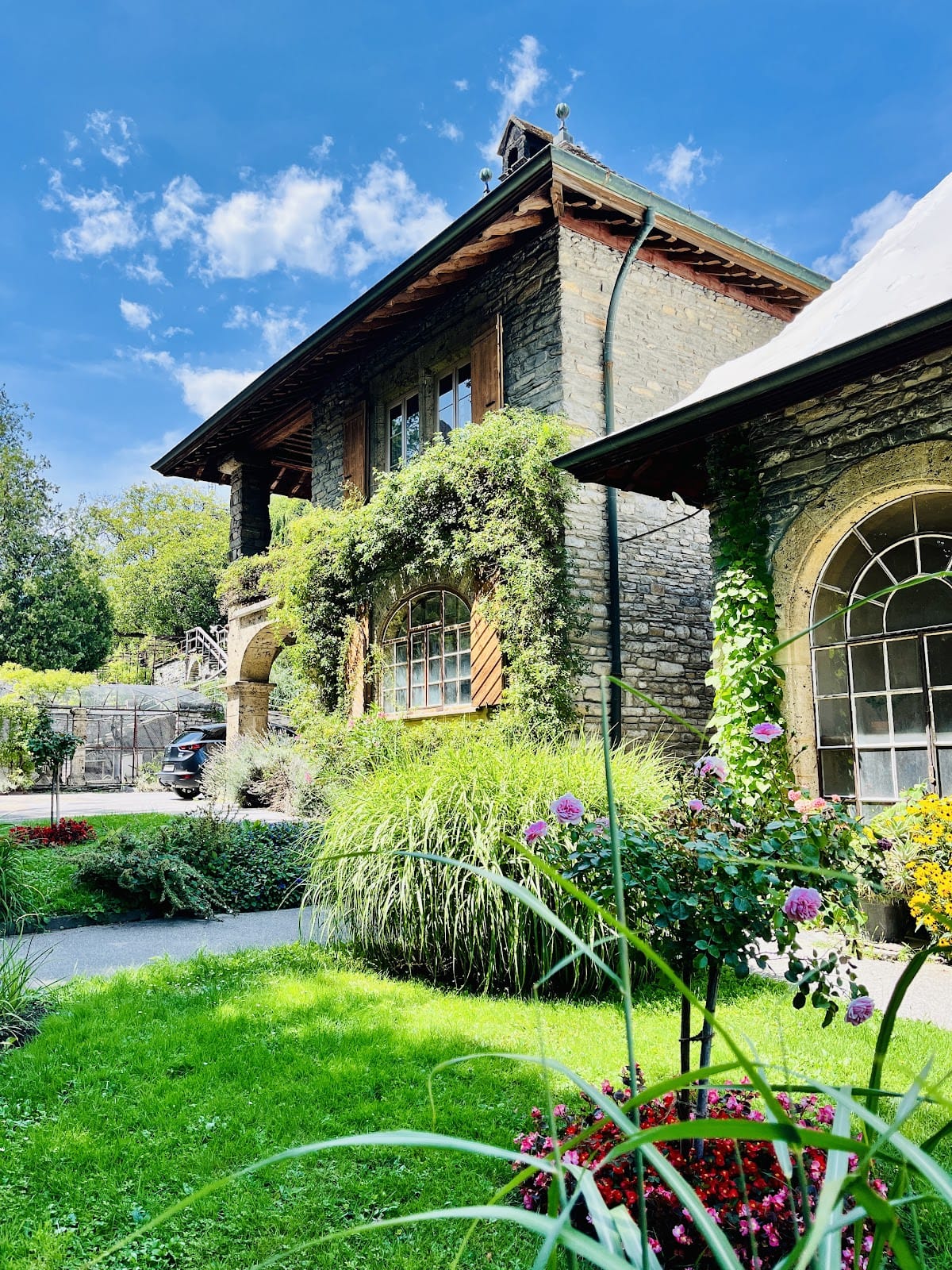
The original estate included three residential houses and several agricultural dependencies, including barns, stables, and sheds. Villa Ruffieux forms part of the château property. These buildings belong to the wider estate surrounding the restored manor and reflect the mixture of residential and agricultural uses established before and during the Mercier family’s ownership.