Lihula Castle: A Medieval Bishopric and Livonian Order Fortress in Estonia
Site at a Glance
- Rating
- 4.6
- Popularity
- Low
- Country
- Estonia
- Primary era
- Medieval
- Eras represented
- Medieval, Early Modern
- Civilizations
- Crusader, Livonian Order
- Site type
- Military
- Remains
- Castle
On this page13 sections
History
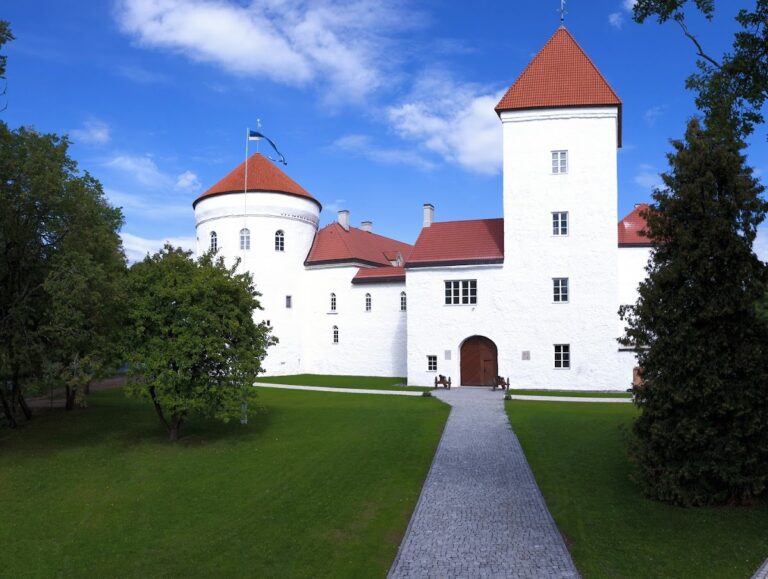
Lihula Castle, also known as Leal Castle, was a medieval fortress in Lihula, Estonia, built in stone between 1238 and 1242 by the Saare-Lääne Bishopric and the Livonian Order. It stood at one of the principal centers of western Estonia, protecting an important harbor and later serving as the residence and administrative center of the bishopric.
Before the stone castle
The castle hill had earlier Estonian settlement. Its cultural layer contains material dated to the second half of the first millennium, and by the early thirteenth century Lihula was regarded as a major center in western Estonia. Its position was partly explained by the harbor it protected.
The area became involved in the German-led conquest and Christianization of Livonia under Albert of Riga, the bishop who organized the Riga-based campaign. In 1211, Albert appointed Theoderic, formerly abbot of Dünamünde Monastery, as bishop of Lihula and Estonia. Lihula was intended to become the center of a future bishopric after the region had been conquered.
Following a raid into Läänemaa in 1218, local parish elders agreed to accept baptism, pay an annual tribute, and provide hostages. In 1219 Albert appointed his brother Hermann as the new bishop of Lihula and Estonia. These arrangements formed part of the changing political and religious authority around the settlement before the permanent stone fortress was built.
Swedish occupation and the bishopric
In 1220, forces of King John I of Sweden occupied the Estonian stronghold at Lihula. The Swedish forces promoted conversion and church construction, but in August an army from Saaremaa besieged and burned the stronghold. Swedish troops attempting to break out were defeated, and nearly 500 were killed. Only a few escaped to the Danes in Tallinn, while local inhabitants of Läänemaa probably also took part in the battle.
After mainland Estonia came under the authority of Riga and Denmark in 1224, Läänemaa and Lihula passed to the Bishop of Riga. Hermann continued for some time to use the title Bishop of Lihula and Estonia, but in 1235 his title became Bishop of Tartu.
From 1234 to 1251, Lihula was the residence of the Bishop of the Saare-Lääne Bishopric, a medieval Catholic diocese whose territory included western Estonia and the islands of Saaremaa and Hiiumaa. During this period it served as the bishopric’s center. The stone castle was built jointly by the bishopric and the Livonian Order, a Catholic military order that controlled territory and operated fortresses in medieval Livonia, including parts of present-day Estonia and Latvia.
Shared control and conflict
From 1238, the bishop shared the castle with the Livonian Order. The bishop’s soldiers controlled the gate and gate tower, while the order was required not to build a tower on its own side of the fortress. Despite this division, Lihula served as the center of a Livonian Order commandery from 1241 to 1247 and remained a residence of the bishop until 1251.
The arrangement did not prevent later conflict. In 1298, during a civil war between the Livonian Order and the Saare-Lääne Bishopric, the order captured Lihula Castle while Bishop Konrad I was staying there. The bishop was taken prisoner, and Lihula’s St. Elizabeth’s Church was destroyed. The bishopric recovered its lands only after renewed intervention by a papal representative in 1302.
Destruction during the Livonian War
In the sixteenth century, Lihula became involved in the Northern Seven Years’ War and the Livonian War, the conflict of 1558 to 1583 in which Russia, Sweden, Denmark, and the Polish-Lithuanian Commonwealth contested control of Livonia and the eastern Baltic territories. Swedish forces captured Lihula and other parts of western Estonia in 1563. In 1567, the castle was administered by Field Colonel Klaus Kursell, commander of Swedish forces in the Baltic provinces and leader of the military retainers. He was executed in 1570.
Swedish forces captured Lihula again in June 1570. During the Livonian War, Russian forces seized Lihula, Koluvere, Vigala, and Haapsalu in raids between 1575 and 1576. In 1581, Karl Henriksson Horn recaptured these places for Sweden.
The castle was destroyed during the Livonian War and was never rebuilt. Its fate was addressed in the Treaty of Tyavzino, a peace agreement between Sweden and Russia signed on 18 May 1595. Under the treaty, the Grand Duchy of Moscow renounced its claims to several Estonian castles and their associated lands, including Lihula.
Swedish administration and archaeological investigation
Under Swedish administration, Lihula formed one of the seven castle fiefs of the Duchy of Estonia and was governed by deputy administrators. Gerhard Dönhoff served as bailiff of Lihula from 1586 to 1589 and later became the Swedish king’s administrator in Haapsalu and castellan of Lihula. Nils Thomasson is recorded as castle commander in 1595 and 1596, Ewolt von Patkul in 1629, and Blasius Smetana from 1632 to 1645.
Archaeological excavations associated with archaeologist M. Mandel have investigated the castle remains from 1990 onward. Conservation has been carried out on surviving foundations, and Lihula Castle was entered in Estonia’s State Register of Cultural Monuments as an architectural monument in 1998. An inspection on 6 September 2024 assessed the surviving remains as being in poor condition.
Remains
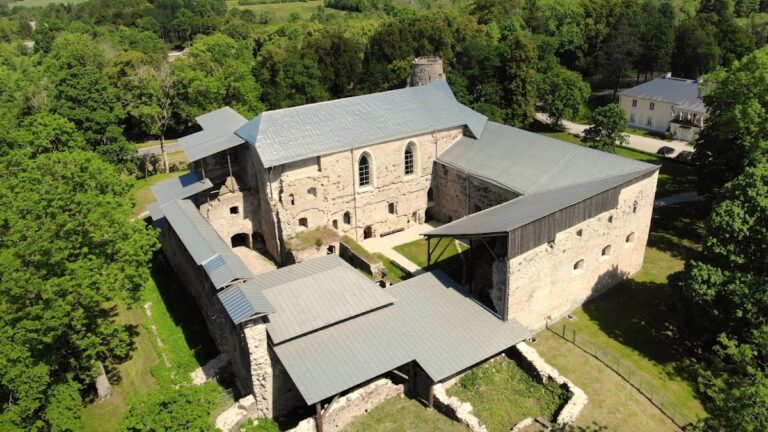
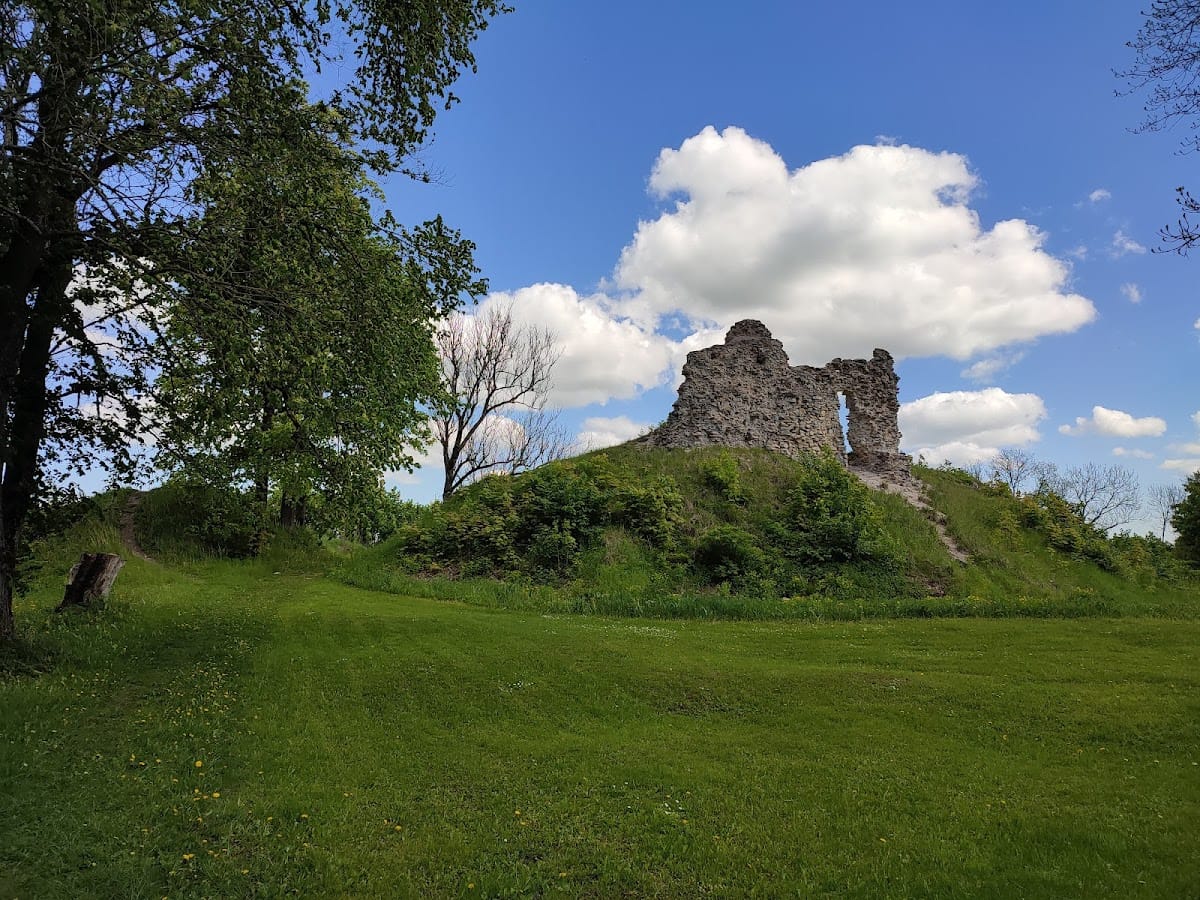
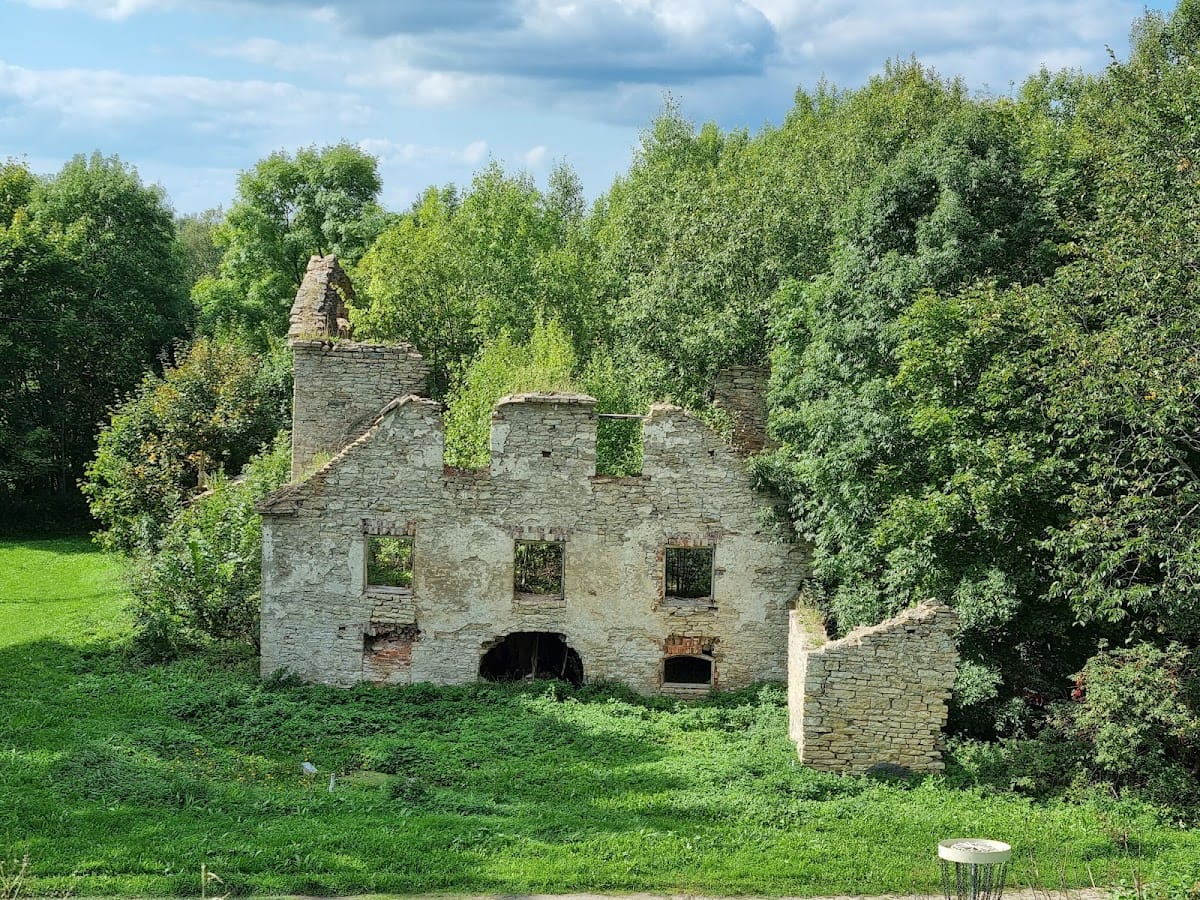
The ruins occupy a limestone rise and promontory on Lihula Castle Hill. The castle stood on the hilltop, which was separated from the rest of the ridge by a semicircular moat. Its main enclosure formed an oval area between the northern escarpment and the southern moat. A high encircling wall divided the enclosure into two approximately equal sections, one assigned to the bishopric and the other to the Livonian Order.
Main enclosure and internal divisions
Bishopric enclosure and gate
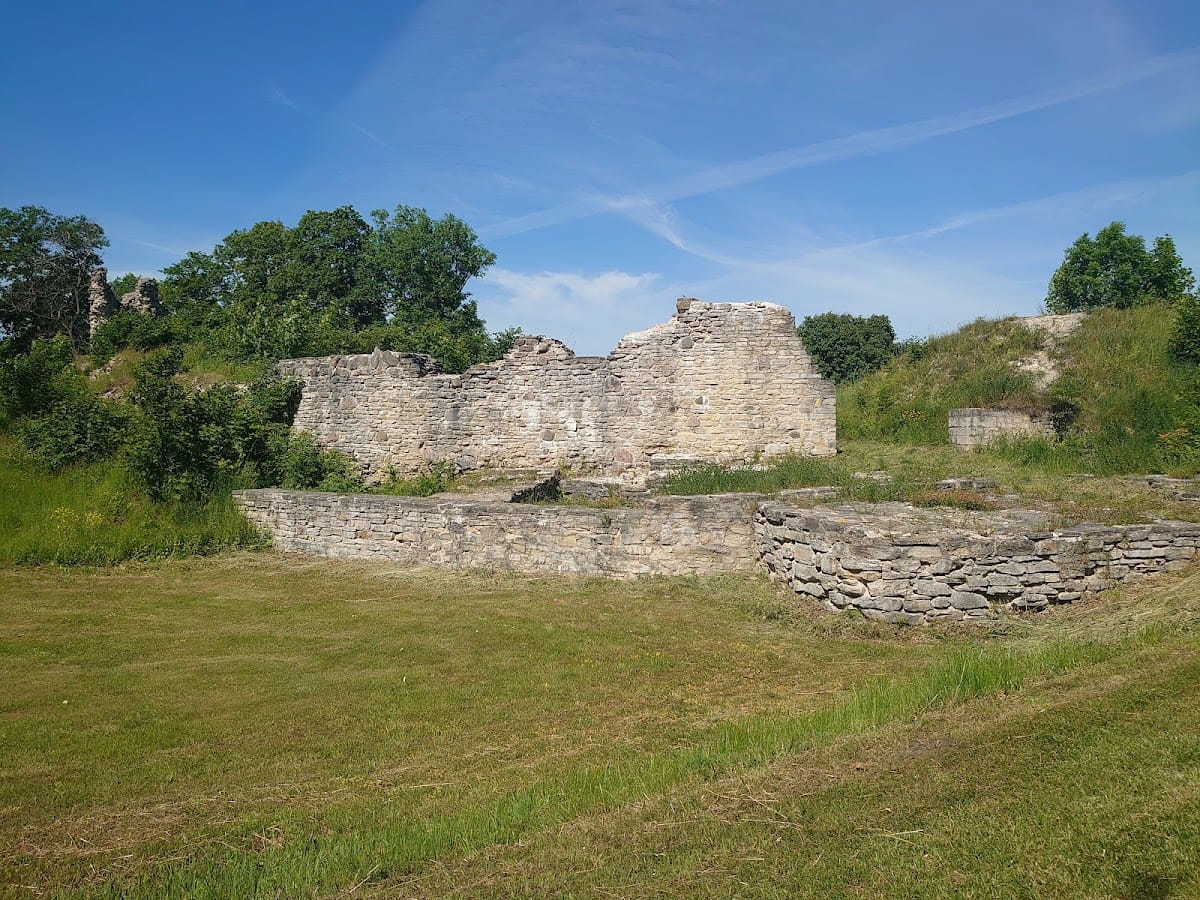
The bishopric’s section included the gate and gate tower, which were controlled by the bishop’s soldiers. This arrangement reflected the political division established when the bishop and the Livonian Order shared the fortress. Archaeological work has partially exposed masonry belonging to the gate, as well as the area of secondary gate fortifications.
Livonian Order enclosure
The Livonian Order occupied the other section of the oval enclosure. Its side formed part of the same stone-built complex but had no tower, following the agreement made with the bishop. The surviving foundations preserve part of the medieval division of the castle, although the complex remains in ruins.
Outer fortifications
Concentric defenses
The southern approach was protected by two later concentric outer fortifications, each accompanied by its own moat. The southern side was the most vulnerable part of the position and was reinforced by an outer fortification of uncertain date. In the sixteenth century, this defensive area received two additional earth bastions, projecting gun platforms, together with further moats.
Excavated masonry and surviving foundations
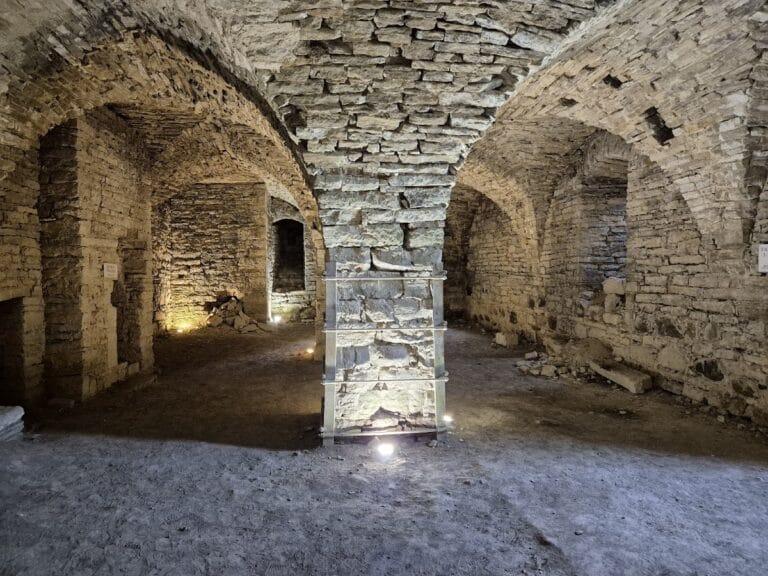
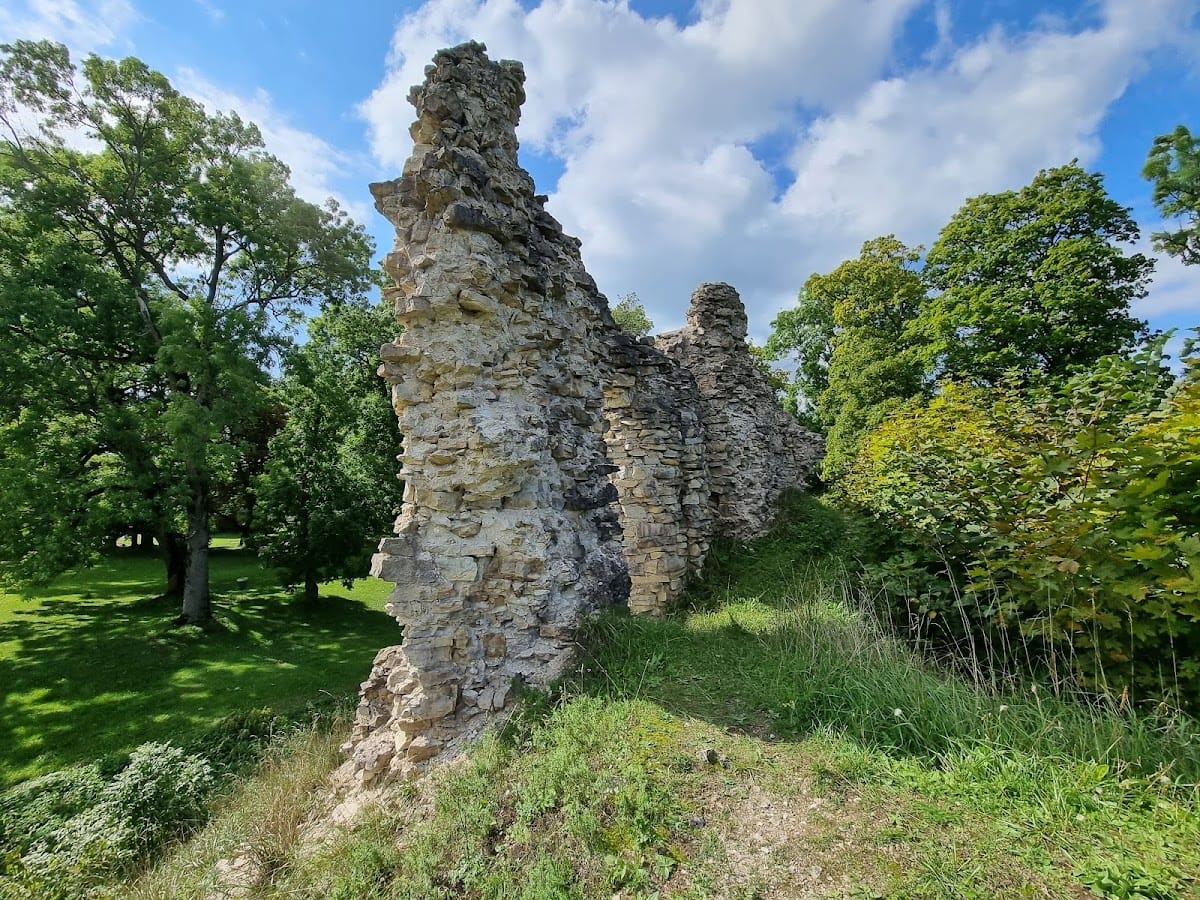
Archaeological excavation has partially revealed masonry from the gate and a chapel, along with the area of the secondary gate defenses. Part of the castle’s foundations has been excavated and conserved. These surviving elements belong to a medieval stone complex that was later altered by additional southern defenses. The remains survive as a ruin, and their condition was assessed as poor in 2024.