Alcázar Genil: An Almohad and Nasrid Palace Estate in Granada
Site at a Glance
- Rating
- 4.6
- Popularity
- Low
- Country
- Spain
- Primary era
- Medieval
- External website
- Open
- Eras represented
- Medieval, Modern
- Civilizations
- Almohad, Nasrid
- Site type
- Domestic
- Remains
- Palace
On this page14 sections
History
Alcázar Genil is a Muslim-era palace in Granada, Spain, built under the Almohad dynasty in 1218 or 1219. It stood outside the city walls beside the River Genil, about one kilometre from the medina, within the fertile agricultural plain east of Granada. The palace formed an almunia, a rural estate combining an elite residence with gardens, farmland, and productive agriculture. It is one of only two surviving royal Nasrid residential buildings outside Granada’s medina, together with the Almunia of Darabenaz.
Almohad foundation
Sayyid Ishaq ibn Yusuf, the Almohad governor of Granada, founded the palace during the rule of the Almohad caliph al-Muntasir. The Almohads were a North African Muslim dynasty that controlled parts of the Iberian Peninsula during the twelfth and early thirteenth centuries. Alcázar Genil served both as a courtly retreat and as a place for receptions, while its agricultural estate supported cultivation. A large pool formed part of the estate’s irrigation system and may also have provided a setting for royal receptions and aquatic games. Tradition associates it with naval competitions staged on a realistic scale, including simulated attacks on Christian ships, although that particular use is not securely established.
A small ribat, a religious retreat or lodge, was built near the palace during the Almohad period. After the site entered Christian use, the building became a hermitage dedicated to Saint Sebastian. It is known as the Ermita de San Sebastián or the Rábita.
Nasrid royal residence
When Muhammad I took control of Granada in 1237, the first ruler of the Nasrid dynasty brought Alcázar Genil into the Nasrid sphere. Muhammad III, his grandson, stayed at the palace for a time after being deposed in 1309, before moving to Almuñécar. The Nasrids ruled the Emirate of Granada from the thirteenth century until the conquest of Granada in 1492.
The palace’s ornamental program was added during the reign of Isma’il I or Yusuf I, and the existing structure may also have been rebuilt under one of these sultans. It later functioned as a guest residence for North African sultans as well as Castilian nobles and kings during periods of political harmony. Princess Aixa, the mother of Boabdil, the commonly used name of Muhammad XII, is identified as its last resident. After the conquest of Granada in 1492, she left the estate when it was included among properties sold to the Castilian monarchs.
Private ownership and conservation
The estate subsequently passed into private hands. During the 1950s, the Dukes of Gor sold the palace and estate to the Spanish state. Its gardens were destroyed during the Second Spanish Republic, and the extensive orchard was divided by the construction of the urban road called Camino de Ronda. New development followed on both sides of the road at the beginning of the 1980s, while the remains of the pool and an adjoining basin were incorporated into an underground parking facility.
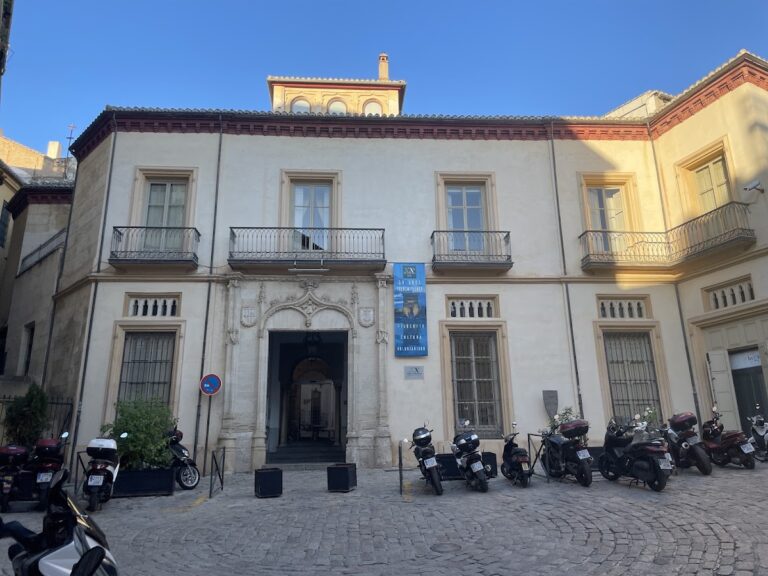
In 1974, the Andalusi art specialist Basilio Pavón Maldonado drew attention to the building’s deterioration. Architectural recovery followed, with restoration carried out during the 1980s and completed in 1994. The palace received Spanish historic-heritage protection in 1922, when it was declared an architectural-artistic monument on July 12 and recorded as a property of cultural interest on December 7. Since 2006, the palace’s lateral buildings have housed the Francisco Ayala Foundation, while paintings and objects associated with the Spanish writer are displayed there. The surviving complex consequently serves both as a historic monument and as the foundation’s headquarters.
Remains
The surviving complex is organized around a central pavilion that once stood beside a large rectangular pool within an irrigated rural estate. Its architecture combines a compact, inward-facing plan with carved stucco, painted woodwork, geometric decoration, and calligraphic inscriptions. The nearby former religious retreat and archaeological remains connected with the earlier estate add further elements to the site’s surviving physical record.
Estate and water features
Rectangular pool and basin
The original estate included a rectangular pool measuring approximately 121 by 28 metres. It occupied the front of the palace site and formed part of an extensive water-supply and irrigation system. An adjoining basin was also associated with the complex. The remains of these water features were incorporated into an underground parking facility during the urban development of the area.
Earlier staged-spectacle building
Archaeological remains of an attached building from the twelfth century, predating the Nasrid phase, are preserved in a thematic space at the Alcázar Genil station of the Granada Metro. The structure has been interpreted as a naumachia, a facility for staged naval spectacles.
Central pavilion
Exterior form and entrance
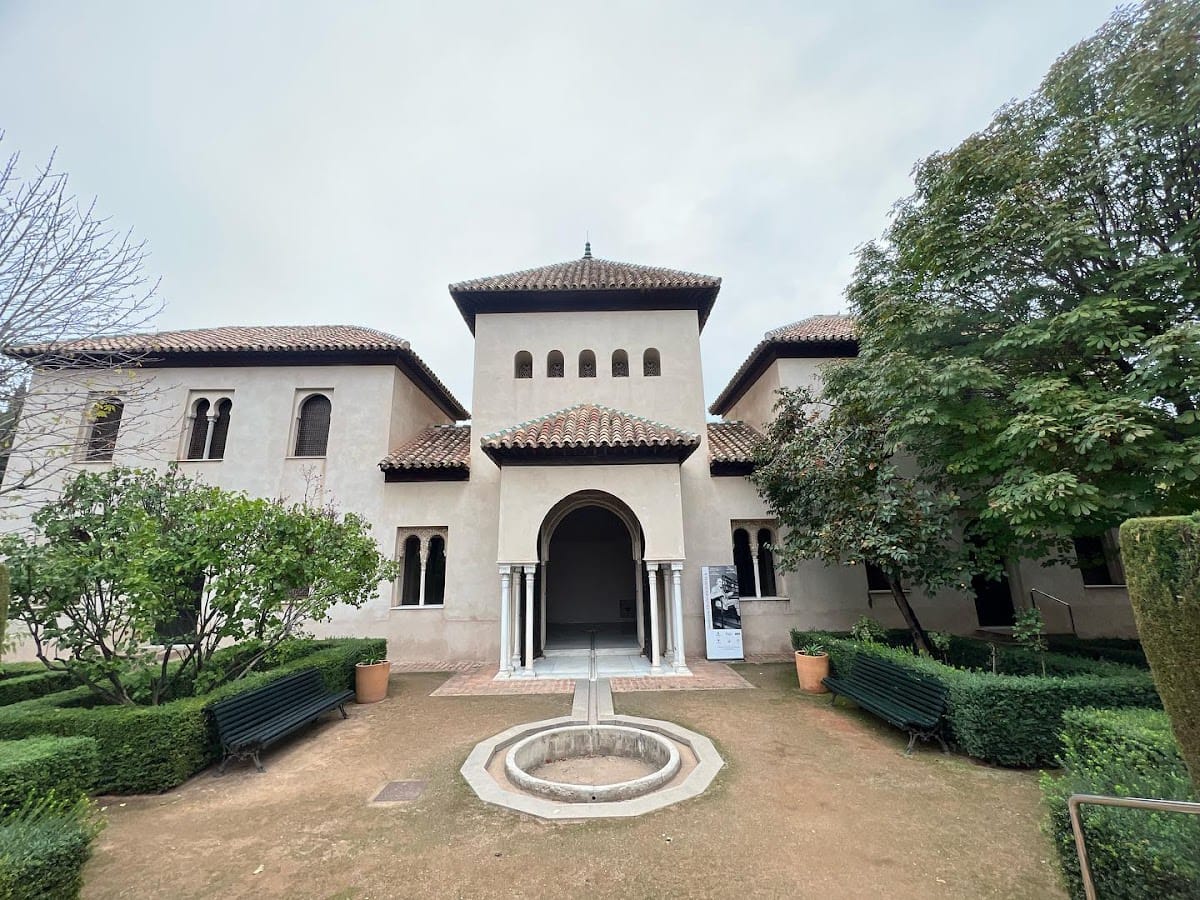
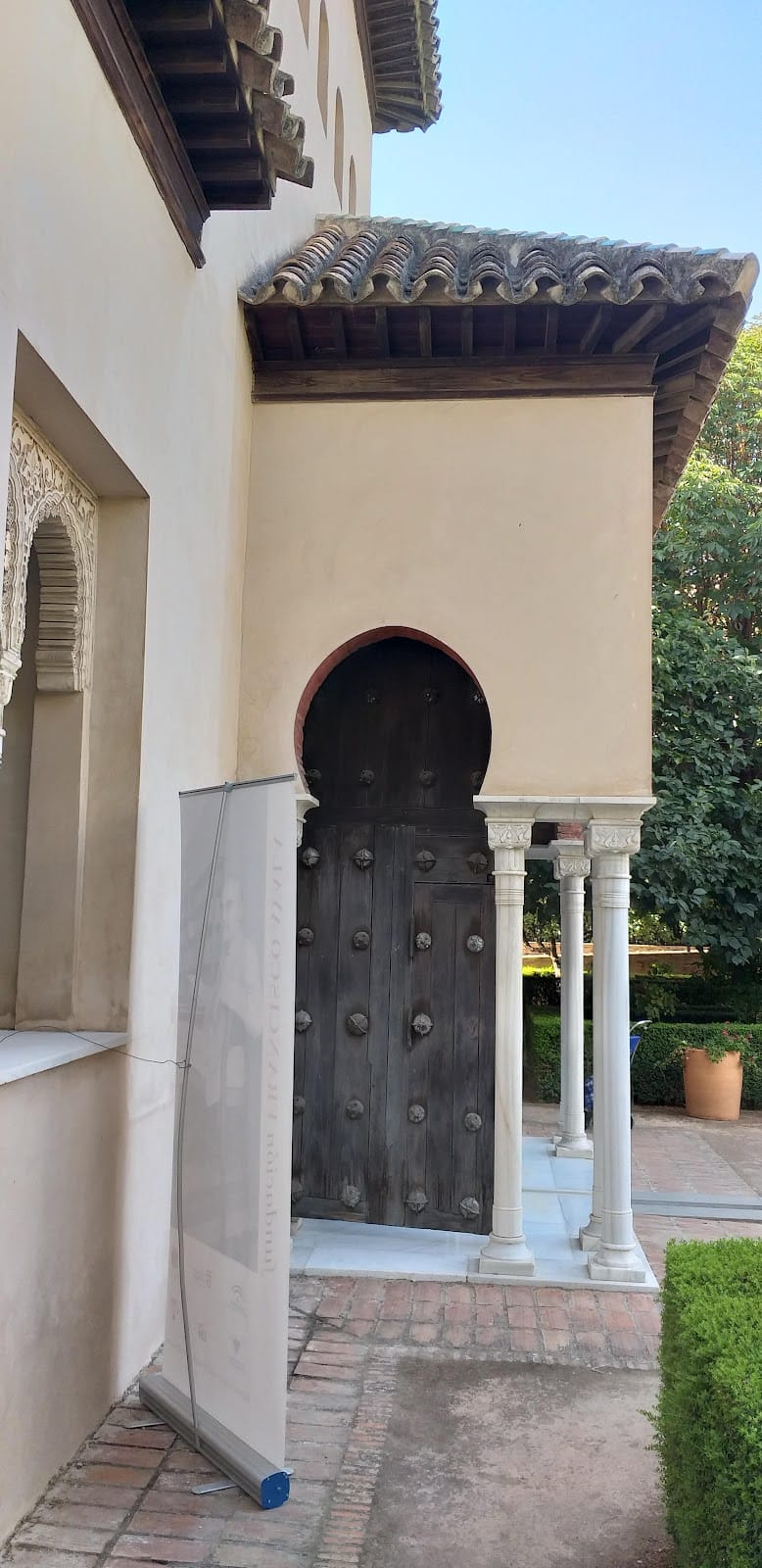
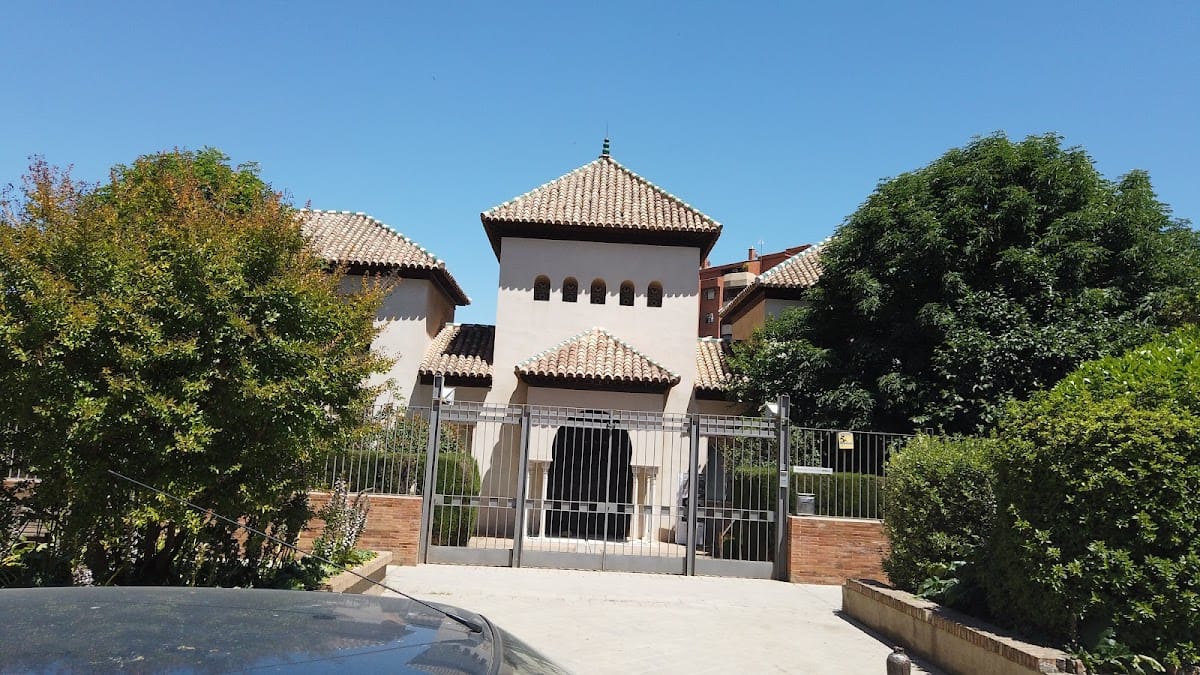
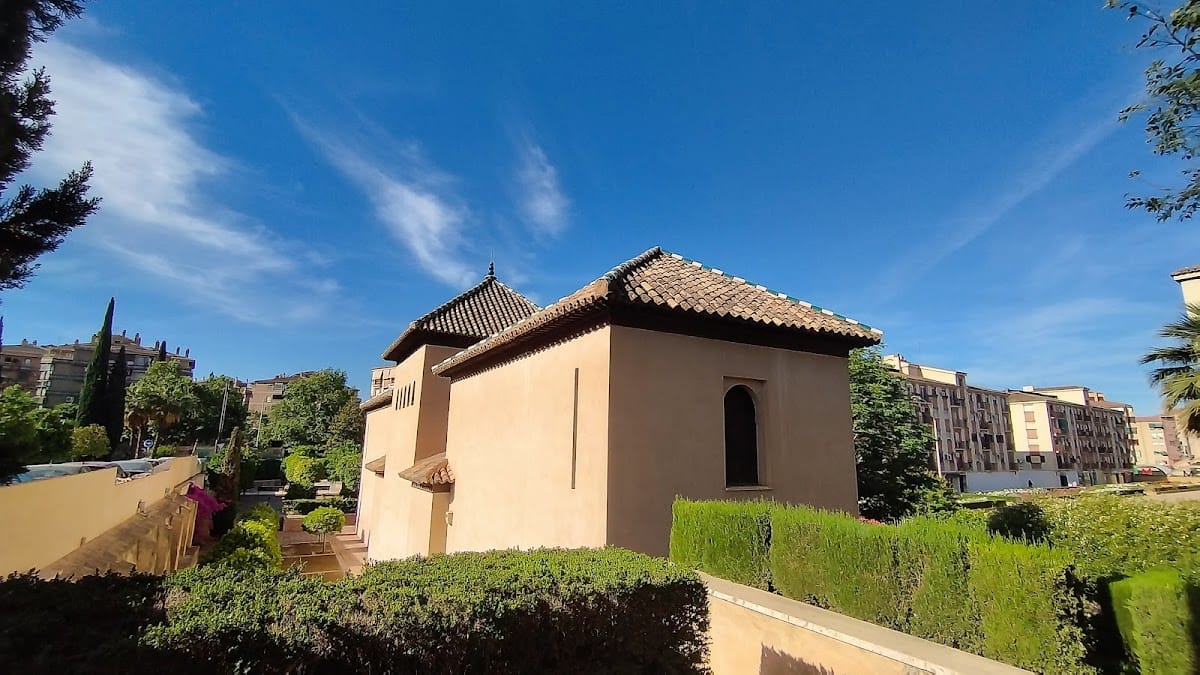
The central pavilion is approximately 5 metres wide and 10 metres high. It has a tower-like form, a hipped roof, and a wooden vault or cupola decorated with interlaced latticework. Entry is through a pointed horseshoe arch, above which runs a band of lattice windows. The pavilion was conceived in the manner of Persian kiosk-palaces set among gardens, fountains, and pools, an arrangement associated with an image of the Sufi paradise.
Interior chamber and decoration
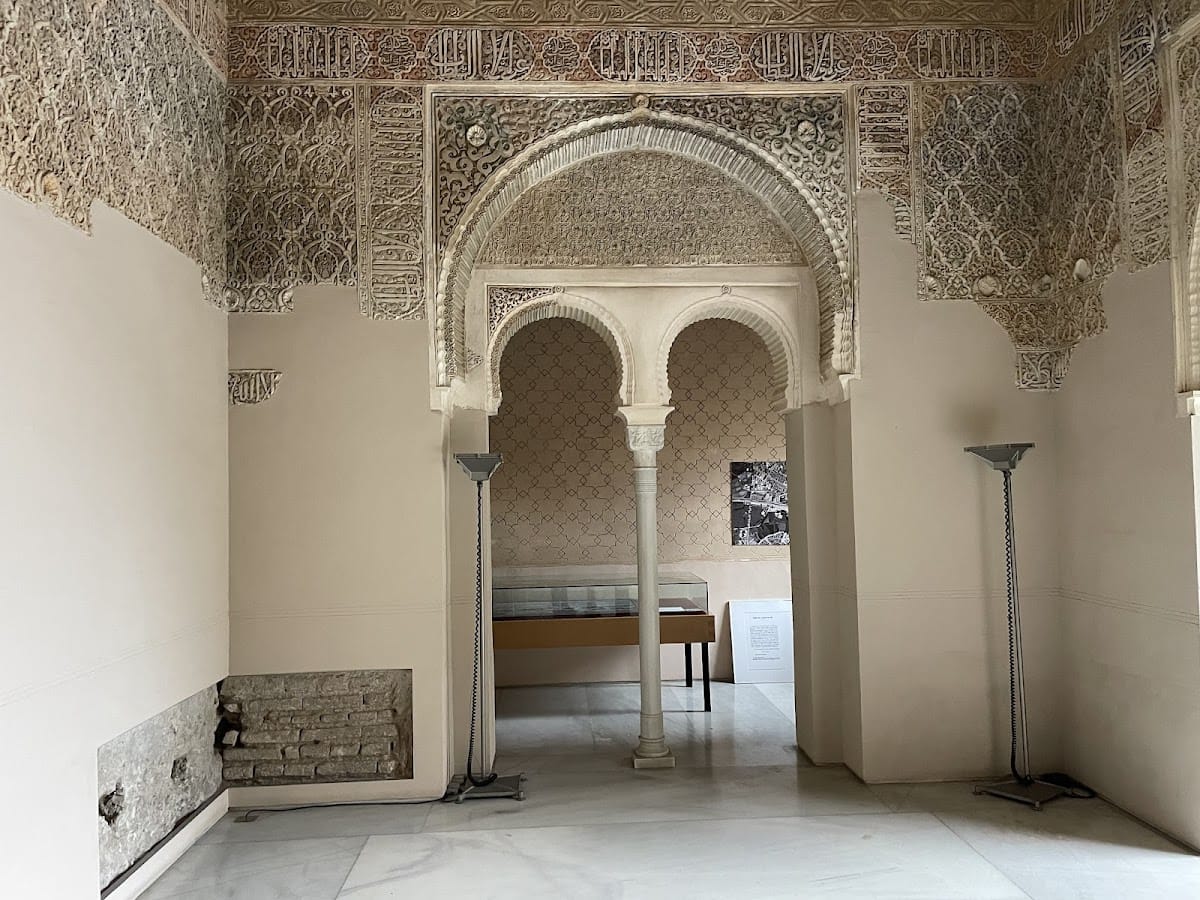
Inside, a central square chamber forms a qubba, a square domed room used in Islamic palace and religious architecture. Two rectangular side chambers open onto it through paired arches, and each has a flat wooden ceiling. The central chamber alone has an exterior entrance, creating an introverted plan. It contains a fountain and planted bed and was originally connected to the pool, about 150 metres away.
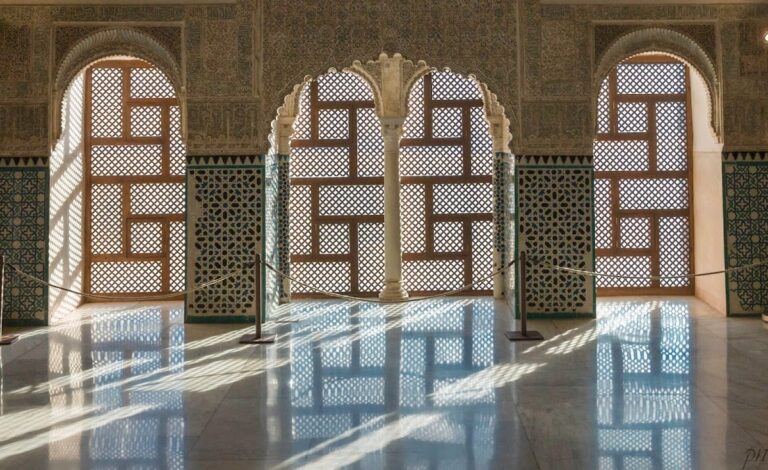
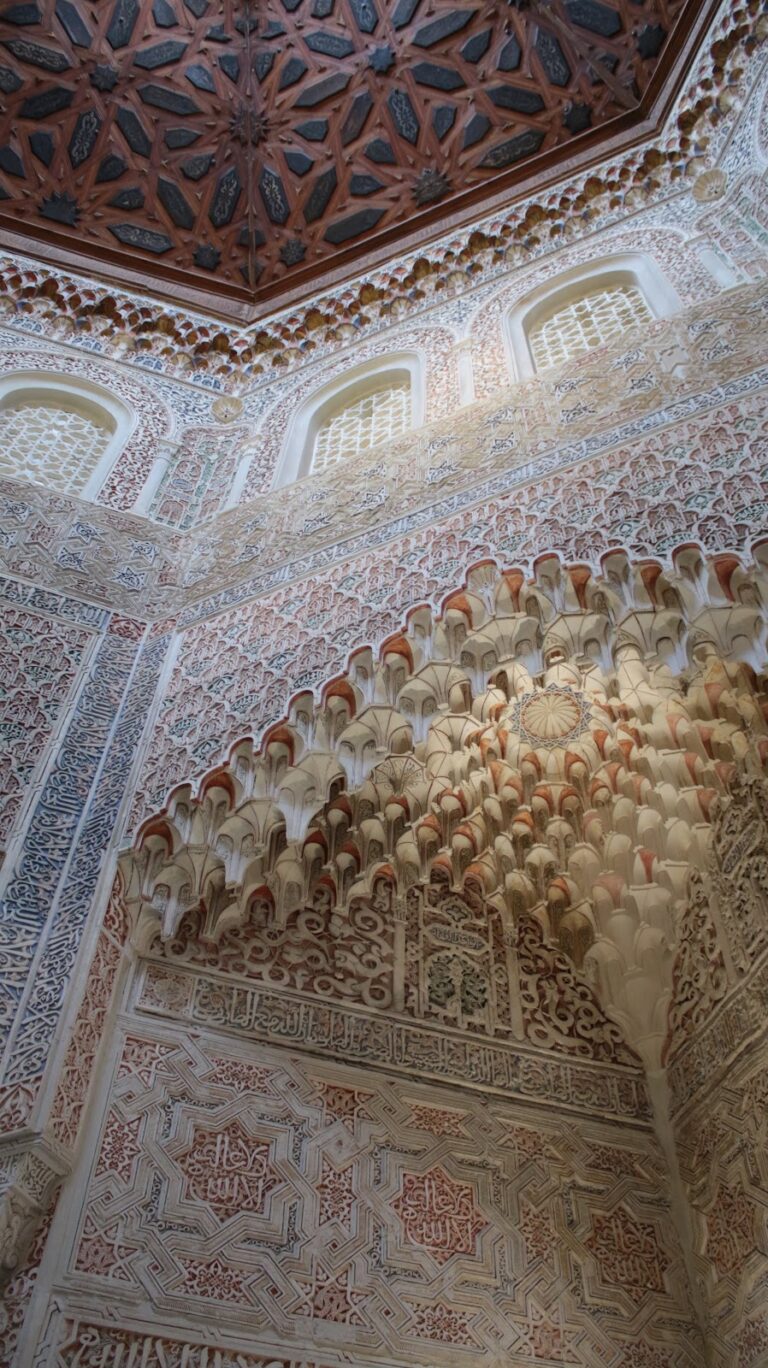
Carved stucco covers the interior walls, including ataurique, a stylized form of vegetal ornament. The decoration rises to a muqarnas cornice, made of tiered three-dimensional forms, above which is a square wooden cupola or ceiling painted with interlacing geometric designs. Inscriptions in Kufic, an angular style of Arabic calligraphy, appear above the doors and around the walls. They praise Allah and the ruler who commissioned the palace and include fragments of the Quran. Polychrome geometric designs appear above the inscriptions. The original floor used brick and blue-and-white glazed ceramic.
Ribat and later wings
Former ribat and hermitage
The nearby ribat, later known as the Ermita de San Sebastián or the Rábita, is a simple square hall covered by a sixteen-sided cupola. Its structure includes groin-vault squinches, which support the transition from the square room to the domed form, and a sloping external roof.
Nineteenth-century additions
During the nineteenth century, Rafael Contreras added two two-storey lateral wings and a small entrance portico. He also restored ornamental and structural elements. The lateral wings now house the Francisco Ayala Foundation, while the central pavilion preserves the original palace’s principal surviving structure.