Arolsen Castle: Baroque Residence of the Princes of Waldeck and Pyrmont
Site at a Glance
- Rating
- 4.6
- Popularity
- Low
- Country
- Germany
- Primary era
- Early Modern
- External website
- Open
- Eras represented
- Early Modern, Modern
- Civilizations
- Holy Roman Empire
- Site type
- Domestic
- Remains
- Palace
On this page14 sections
History
Arolsen Castle is a Baroque palace in Bad Arolsen, Germany, built by the House of Waldeck and Pyrmont between 1710 and 1728 as the dynasty’s principal residence. Its creation transformed an earlier religious complex into a princely court whose planned magnificence was intended to rival Versailles.
From convent to residence
Arolsen was first mentioned in 1131, when it was associated with the foundation of the Augustinian convent of Aroldessen. During the Reformation, Count Philipp III of Waldeck-Eisenberg secularized the convent’s holdings between 1526 and 1530. He converted the former monastic complex into a castle, but that building and the remaining convent structures were demolished in 1710 to clear the site for a new residence.
Count Friedrich Anton Ulrich of Waldeck and Pyrmont had planned the residence and an accompanying expansion of Arolsen by 1706. Hermann Korb prepared an early design, and Julius Ludwig Rothweil later developed the plans and directed the main construction. The project grew in scale after Friedrich Anton Ulrich was raised to hereditary princely rank on 6 January 1712. The main building campaign ran from 1713 to 1722, while work across the complex continued until 1728 and interior decoration proceeded for decades afterward.
The court-facing elevation was finished in 1719, followed by the garden front in 1720. Friedrich Anton Ulrich and his wife, Louise of Zweibrücken-Birkenfeld, moved into the new residence on 13 September 1720. The court wings, enclosing walls, and guardhouses were completed in 1725, and the main palace reached completion in 1728.
Expansion of the princely court
When Karl of Waldeck and Pyrmont became the ruling prince in 1728, the princely apartments were remodeled. The west wing housed the Arolsen mint, and its rooms received Baroque furnishings in 1740. After 1746, the princess’s audience chamber was redesigned in the Rococo style, a lighter and more delicate form of eighteenth-century ornament. The music room was altered in 1751, and further changes enlarged and refined the residence.
The princely stables were rebuilt between 1749 and 1758, while a government building was constructed from 1755 to 1761. The nearby New Palace was completed between 1763 and 1778 for the widowed princess. At the main palace, the Great Hall was fitted out between 1809 and 1811 under the court architect Theodor Escher. He later built a riding hall between 1819 and 1824.
Arolsen became one of the main residences of the counts and princes of Waldeck and Pyrmont. The House of Waldeck was the ruling dynasty of the territories of Waldeck and Pyrmont, whose heads first held comital and later princely rank. Members and descendants of the family have continued to live at the palace.
Dynastic change and financial pressure
The scale of the building program placed heavy pressure on the finances of the small principality of Waldeck. After the German Confederation was created in 1815 as an association of German states whose members were required to make financial contributions, Waldeck could no longer meet its federal obligations. In 1867, the state parliament was forced to accept an agreement with Prussia, and Waldeck lost much of its political independence.
The last reigning prince, Friedrich of Waldeck and Pyrmont, was deposed on 13 November 1918 after receiving an ultimatum from a workers’ and soldiers’ council that had come from Kassel. Negotiations concerning the family’s property and its right to remain at Arolsen continued until 1929.
The settlement of 1929 transferred most of the forests and princely castles to the Waldeck-Frankenberg district through the Waldeckische Domanialverwaltung, a public administrative authority. The princely family retained usufruct rights, meaning the legal right to use property and receive its benefits without full ownership, over Arolsen Castle, its subsidiary buildings, and some agricultural land. A forestry office also remained with the family. A charitable family foundation was created to preserve the palace inventory, library, and art collections.
Collections and modern use
The Fürstlich Waldecksche Hofbibliothek was founded in the palace in 1840. Its holdings included 400 works, manuscripts, and prints transferred to the House of Waldeck in 1576 from a dissolved Augustinian monastery. The collection developed particular strengths in geography, history, literature, general knowledge, and military affairs, alongside historically important books and graphic works.
Restoration and renovation carried out from 1987 to 2009 were completed in 2009. The palace now includes a museum belonging to the Princely Foundation, exhibitions on Waldeck’s military history, a city museum with changing exhibitions, and a registry office. The Christian Daniel Rauch Museum was established in the Marstall in 2002, and part of the west wing contains the culturally important Adolf Brehm Library.
The castle remains partly a residence of the Waldeck-Pyrmont family while also functioning as a museum and cultural venue. The Arolsen Baroque Festival has been held around the palace annually since 1986, and the Arolsen Palace Concerts have taken place in summer since 1951.
Several members of the family connected Arolsen to European dynastic history. Caroline Louise of Waldeck-Pyrmont, later the wife of Peter von Biron, Duke of Courland, was born at the palace in 1740. Emma of Waldeck and Pyrmont, later Queen-Regent of the Netherlands, was born there on 2 August 1858 and married King William III of the Netherlands in the palace chapel on 7 January 1879.
Remains
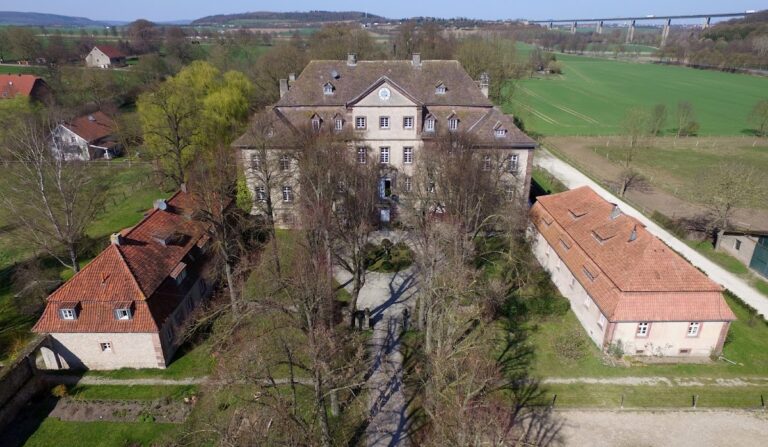
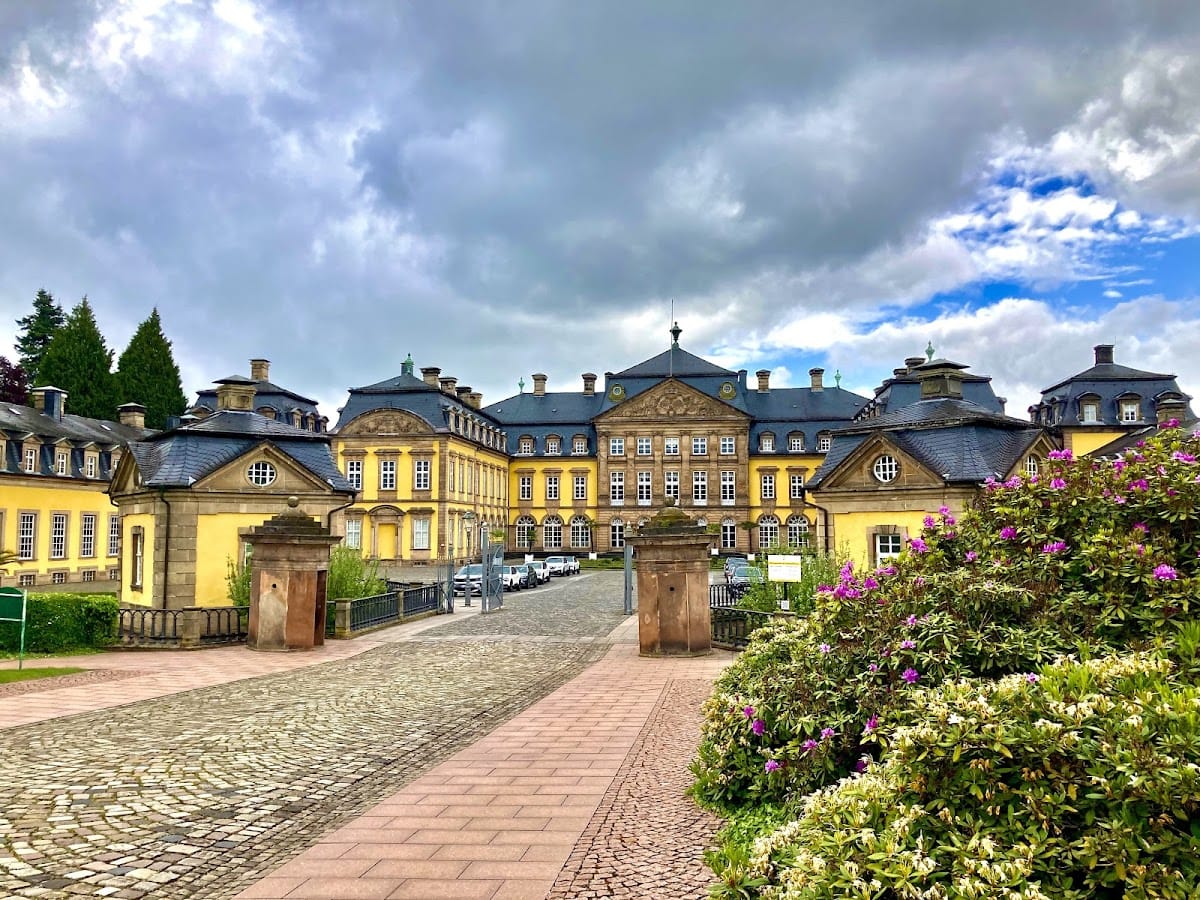
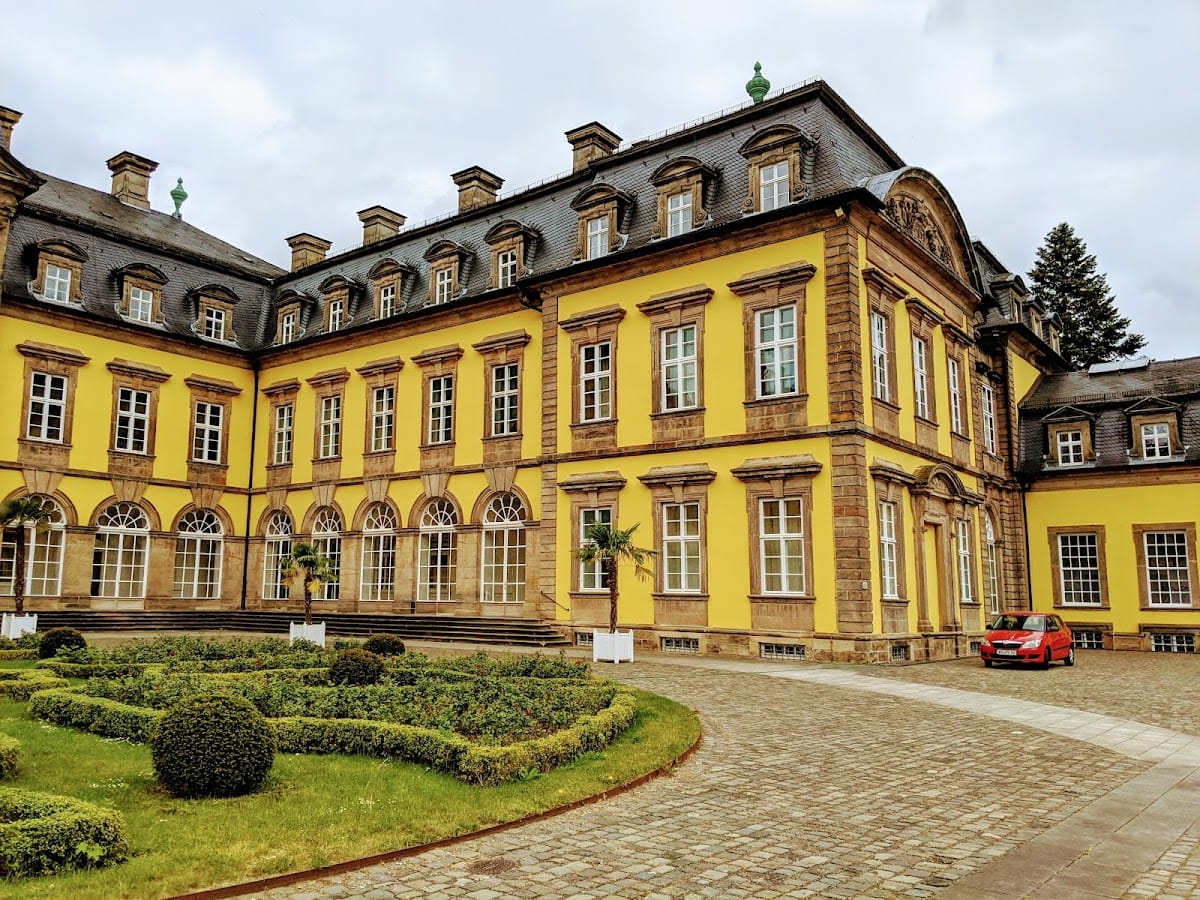
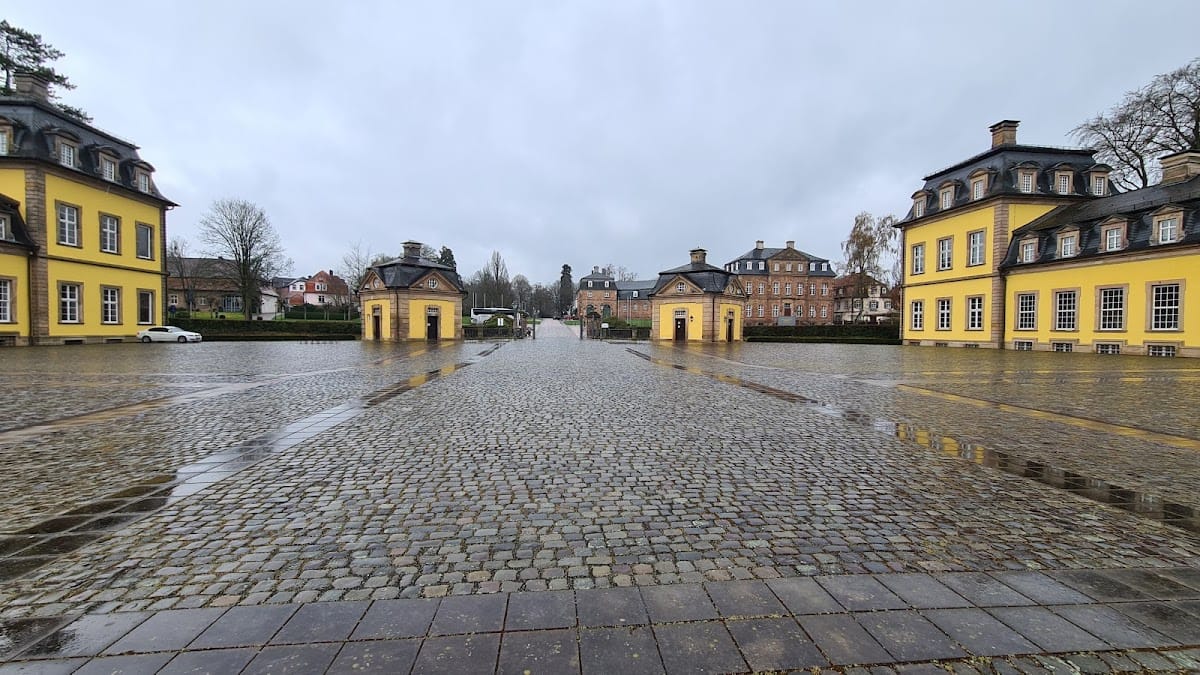
Arolsen Castle is a large three-wing, U-shaped brick palace arranged around an outer court and connected with an English landscape garden. The surviving complex includes the principal residence, court wings, enclosure walls, guardhouses, service buildings, and associated garden and park features. Its construction replaced the earlier castle and convent complex, and the palace is described as fully preserved and restored.
Palace and court complex
Main palace
The principal building presents two gables toward the court, completed in 1719, and two toward the garden, completed in 1720. The outer court is framed by wings, enclosure walls, and guardhouses finished in 1725. The arrangement expresses the palace’s original role as a princely residence and courtly complex, while the brick construction reflects the material used throughout the main building campaign from 1710 to 1728.
Chapel and service buildings
The palace chapel occupies the eastern outer pavilion. The west wing contains the former mint and part of the Adolf Brehm Library. Other surviving elements of the wider complex include the princely stables, the government building, an economic courtyard with an orangery for protecting citrus and other tender plants, a nursery, and a riding hall built by Theodor Escher between 1819 and 1824. The nearby New Palace was built as a residence for the widowed princess.
Representative interiors and collections
Decorated state rooms
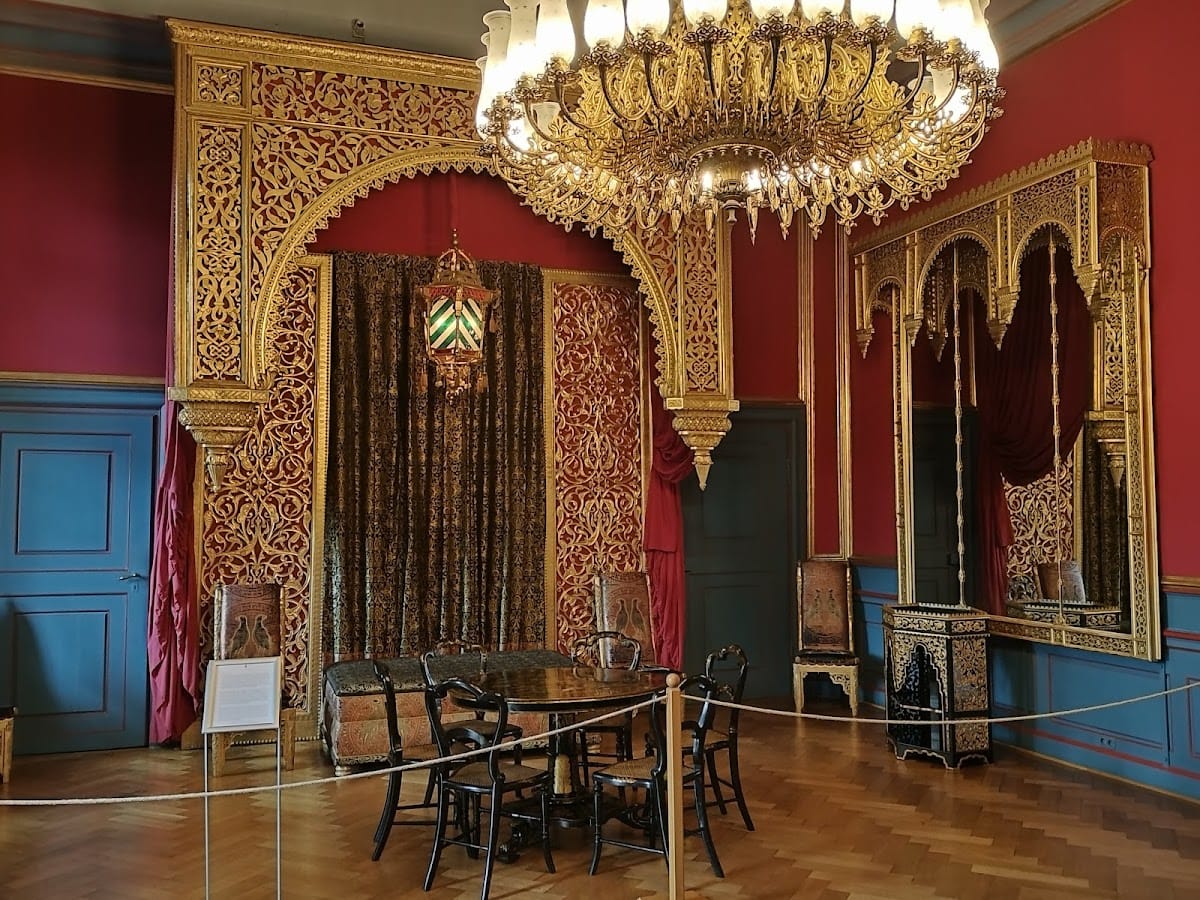
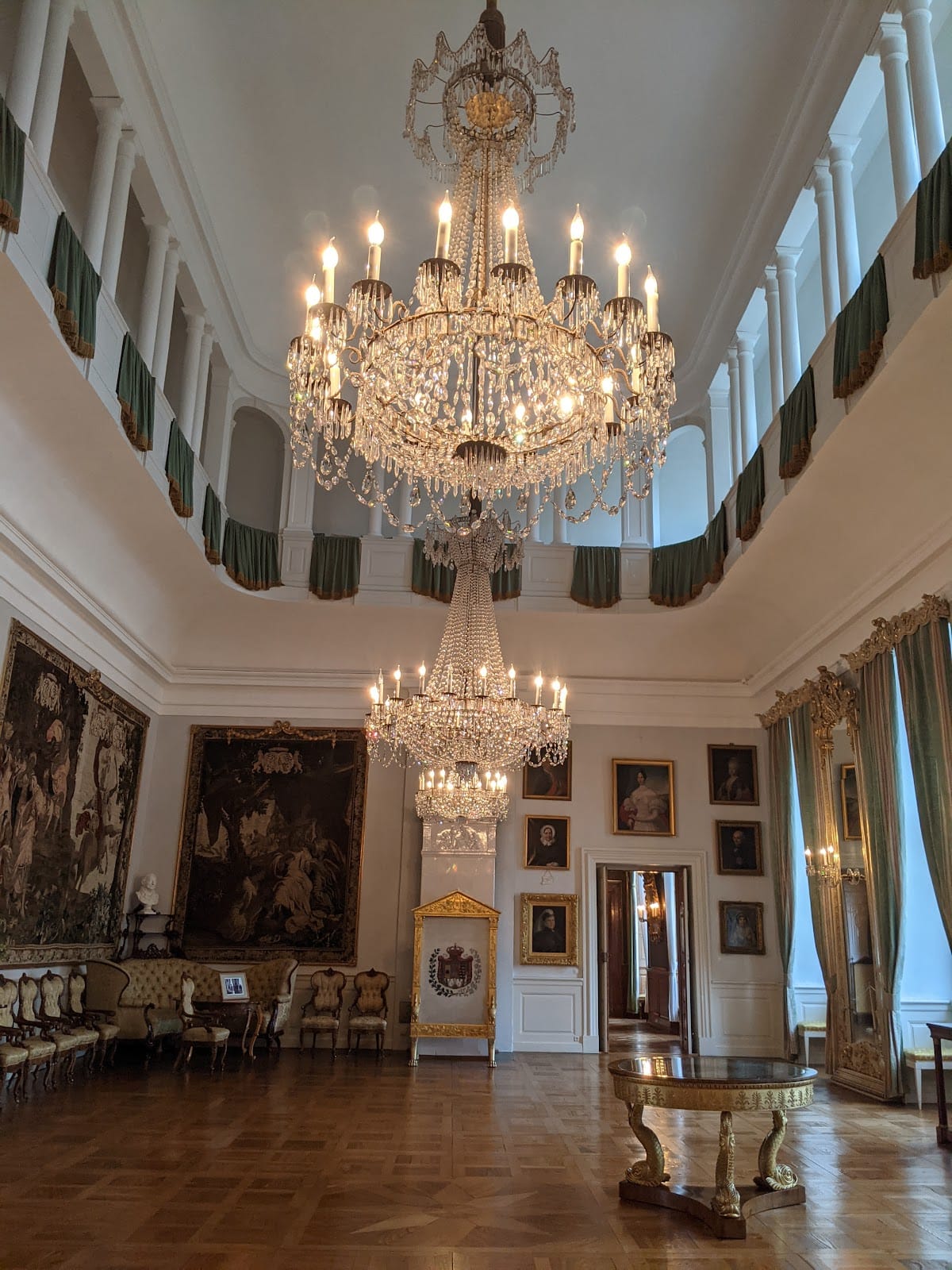
The principal representative interiors are the Baroque staircase, the Garden Hall, and the White Hall. The White Hall is positioned above the Garden Hall and is surrounded by a gallery. Andrea Gallasini, an associate of Julius Ludwig Rothweil, created the elaborate Baroque stucco ceilings. Carlo Lodovico Castelli painted the ceiling scenes in 1721 and 1722, while Magnus de Quitter produced the overdoor paintings for the Palatine Room and Crown Prince’s Room in 1721.
Artistic furnishings
The interiors contain sculptures by Christian Daniel Rauch, Ernst Rietschel, and Alexander Trippel, together with eighteenth-century Dutch tapestries, furniture, and paintings. Works by Heinrich Aldegrever, Martin van Meytens, Ziessen, Heinrich Tischbein, and Friedrich August Tischbein are also represented. Among the paintings, Wilhelm Tischbein’s Iphigenia Recognizes Orestes is identified as the collection’s most important work. The palace also displays an extensive collection of cast-iron art.
Historic library
A library in one of the side wings occupies five rooms and holds approximately 35,000 volumes. Its contents also include 300 maps, 500 large engravings, and several thousand individual old prints and drawings. The library and its historical graphic collection remain housed within the palace.
Gardens and park
The original French garden has largely disappeared, but a small circular boxwood rondel survives in front of the main portal. A rondel is a ring-shaped element in a formal garden plan. During the eighteenth century, the park was redesigned as an English landscape garden with a pond, and an old avenue along the palace pond remains almost completely preserved.
In 1992, Jeff Koons presented Puppy in the park as part of the exhibition made for Arolsen. The floral sculpture stood approximately 13 metres high and was composed of 20,000 flowers.
Nearby sites