Großer Gudenberg Castle Ruins: A Medieval Double Hilltop Castle in Germany


Site at a Glance
- Rating
- 3.8
- Popularity
- Very Low
- Country
- Germany
- Primary era
- Medieval
- Eras represented
- Medieval
- Civilizations
- Holy Roman Empire
- Site type
- Military
- Remains
- Castle
On this page8 sections
History
Foundation and Feudal Lordship
Großer Gudenberg Castle Ruins are the remains of a medieval double hilltop castle in Germany, near Zierenberg. The castle was probably built by Werner IV, a Hessian gau-count, before it was first documented in 1209. A gau-count was a medieval official responsible for governing a territorial district. The site belonged to the Electorate of Mainz, the territorial and ecclesiastical principality ruled by the Archbishop of Mainz, and was held as a fief, meaning fortified property granted by a superior in return for loyalty and service.
The castle was associated with the noble families Groppe von Gudenberg and Wolff von Gudenberg. It is uncertain whether the two families were related to each other and to the Lords of Gudenberg, who held the castle on the nearby Kleiner Gudenberg. They may instead have been separate castle-holding families whose names were similar.
Capture and Destruction
Between 1269 and 1272, troops commanded by Heinrich I, the Landgrave of Hesse, captured the castle during his conflict with Werner von Eppstein, Archbishop of Mainz. A landgrave was a territorial ruler, and Heinrich’s forces were involved in the events surrounding the castle’s destruction. The castle was probably destroyed during this capture, although another possibility is that it was damaged in connection with robber-knight activity after Heinrich had withdrawn.
The Groppe von Gudenberg family died out in 1398, while the Wolff von Gudenberg family continues to exist. The castle itself remained a ruined medieval stronghold, divided into two fortified areas on the summit of the Großer Gudenberg.
Remains
Summit Setting and Castle Enclosures
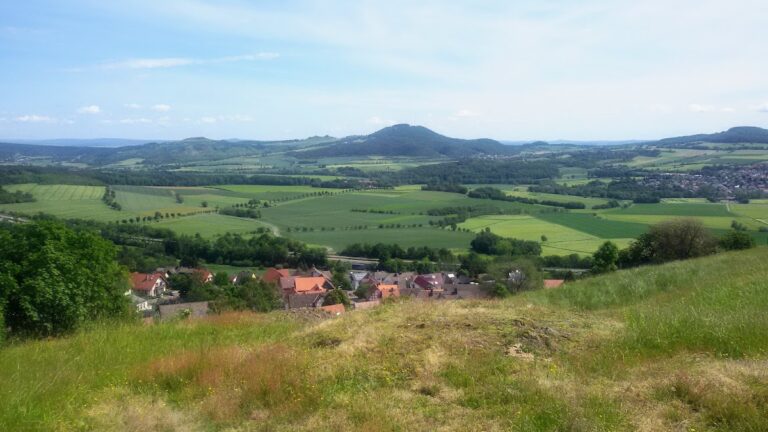
The ruins stand at 568.7 metres above sea level on the Großer Gudenberg, a densely wooded basalt cone near Zierenberg in the northern part of the Habichtswald Nature Park. The ground descends eastward toward the valley of the Warme River. The castle occupied the summit area and consisted of two separate fortified enclosures protected within a shared oval rampart.
Northeastern Enclosure
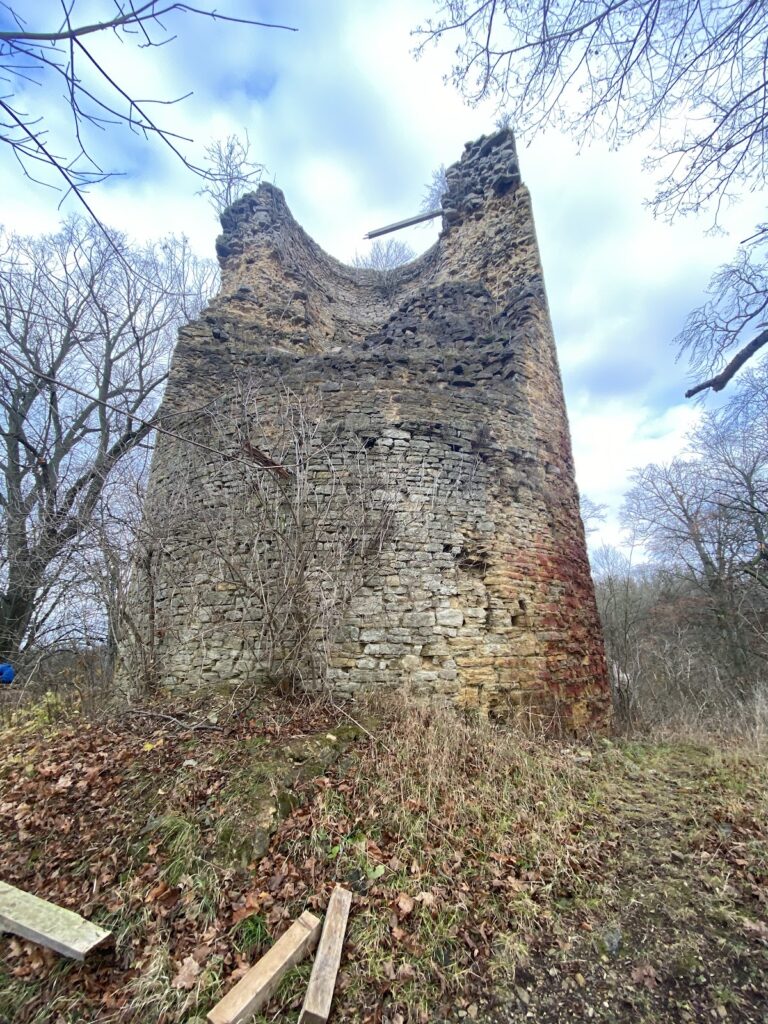
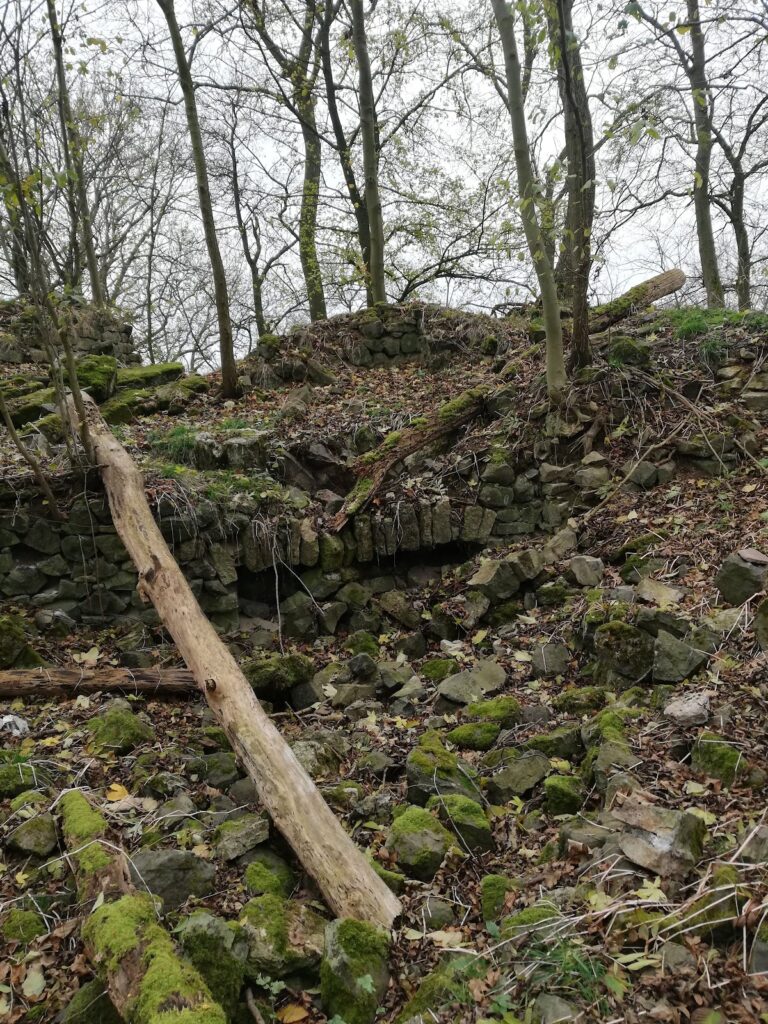
The larger enclosure was almost rectangular and lay on the northeastern side of the site. It contained the probable remains of a bergfried, the principal defensive tower of a medieval German castle, together with wall remains belonging to a palas, the main residential and representative building. Sections of walls, ditch, and rampart survive in the ruin field.
Southeastern Enclosure
A second fortified area lay to the southeast. This enclosure was almost circular and was separated from the larger castle by a neck ditch, a defensive trench cut across the narrow approach or connecting ridge of a hilltop site. The shared oval rampart surrounded both castle areas, running farther from the double castle along its northeastern side. The southeastern enclosure survives in the ground plan and defensive earthworks, while its above-ground structures are no longer visible.
Defensive Earthworks and Nearby Castle Site
The surviving physical remains include sections of the separating ditch, the surrounding rampart, and fragments of the castle walls. The lower Kleiner Gudenberg, about 470 to 500 metres northwest, contains the ruins of a similarly named castle. This second site helps distinguish the Großer Gudenberg complex from the nearby castle on the lower hill, while the surviving earthworks preserve the arrangement of the double stronghold.