Porta Romana, Florence: Southern Gate of the Medieval City Walls
Site at a Glance
- Popularity
- Medium
- Country
- Italy
- Primary era
- Medieval
- Eras represented
- Medieval, Early Modern, Modern
- Civilizations
- Grand Duchy of Tuscany, Italian, Republic of Florence
- Site type
- Military
- Remains
- Gate
On this page14 sections
History
Medieval foundations
Porta Romana is the southernmost gate of Florence’s medieval walls, in Italy’s Oltrarno, the district beyond the Arno on its south bank. Built in the 1320s as part of the city’s final circuit of defenses, it is traditionally attributed to Andrea Orcagna, a Florentine artist and architect of the fourteenth century. The gate stood on the road from Florence toward Siena and Rome, which gave it the name Porta Romana. It was once known as Porta San Pier Gattolino.
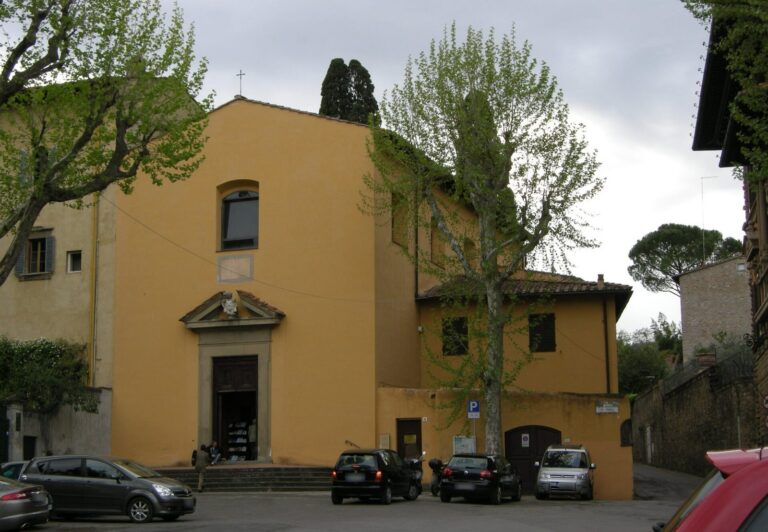
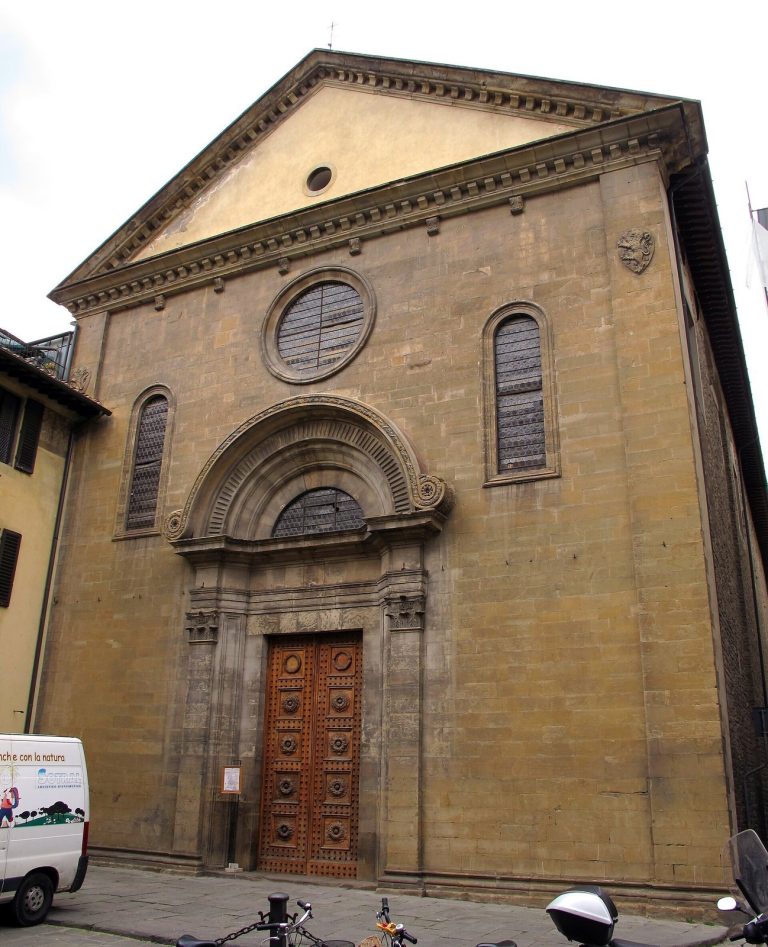
A church dedicated to San Pier Gattolino stood at the site by 1068. Cosimo I de’ Medici had it demolished when he extended Florence’s walls. A later church was rebuilt and restored in 1808, with frescoes by Giuseppe Castagnoli and Domenico Del Podestà, as well as decoration by Giusto Mariani and Romanelli. Known as the parish church of Serumido, it took that name from Ser Umido di Domenico Grazzini, who helped pay for its rebuilding. The origin of Gattolino is uncertain; suggested explanations connect it to Gattuario, Catelina, or a word for white poplar. Outside the walls stood the fourteenth-century church and convent of San Giusto della Calza, associated with the Knights of Jerusalem, a medieval religious-military order.
Sixteenth-century defenses and ceremonial entries
During the sixteenth century, the gate was lowered and strengthened against cannon and other gunpowder weapons. It was not fitted with openings for heavy artillery. After Siena was captured, an attack from this direction appeared less likely. The outer defensive entrance, or antiport, comprised a lower wall and a small courtyard before the main gate.
The gate also served as a ceremonial entrance to Florence. Pope Leo X, a Medici pope, entered on 30 November 1515 while travelling to Bologna to meet King Francis I of France. Part of the wall and the gate’s original statue niches were removed to widen the passage. An inscription describes the city’s welcome as lavish. On 15 May 1536, Charles V, Holy Roman Emperor, entered through the gate. A commemorative inscription recounts his journey from Rome after he drove a powerful pirate leader from Tunis and secured his kingdoms in Sicily and Naples. It describes a joyful welcome and his reception at the Medici residence by Alessandro de’ Medici, Duke of Florence. Charles had arranged for his daughter Margaret to marry Alessandro. Cosimo I, who later became Grand Duke of Tuscany, ordered the inscription in 1569.
Urban transformation and conservation
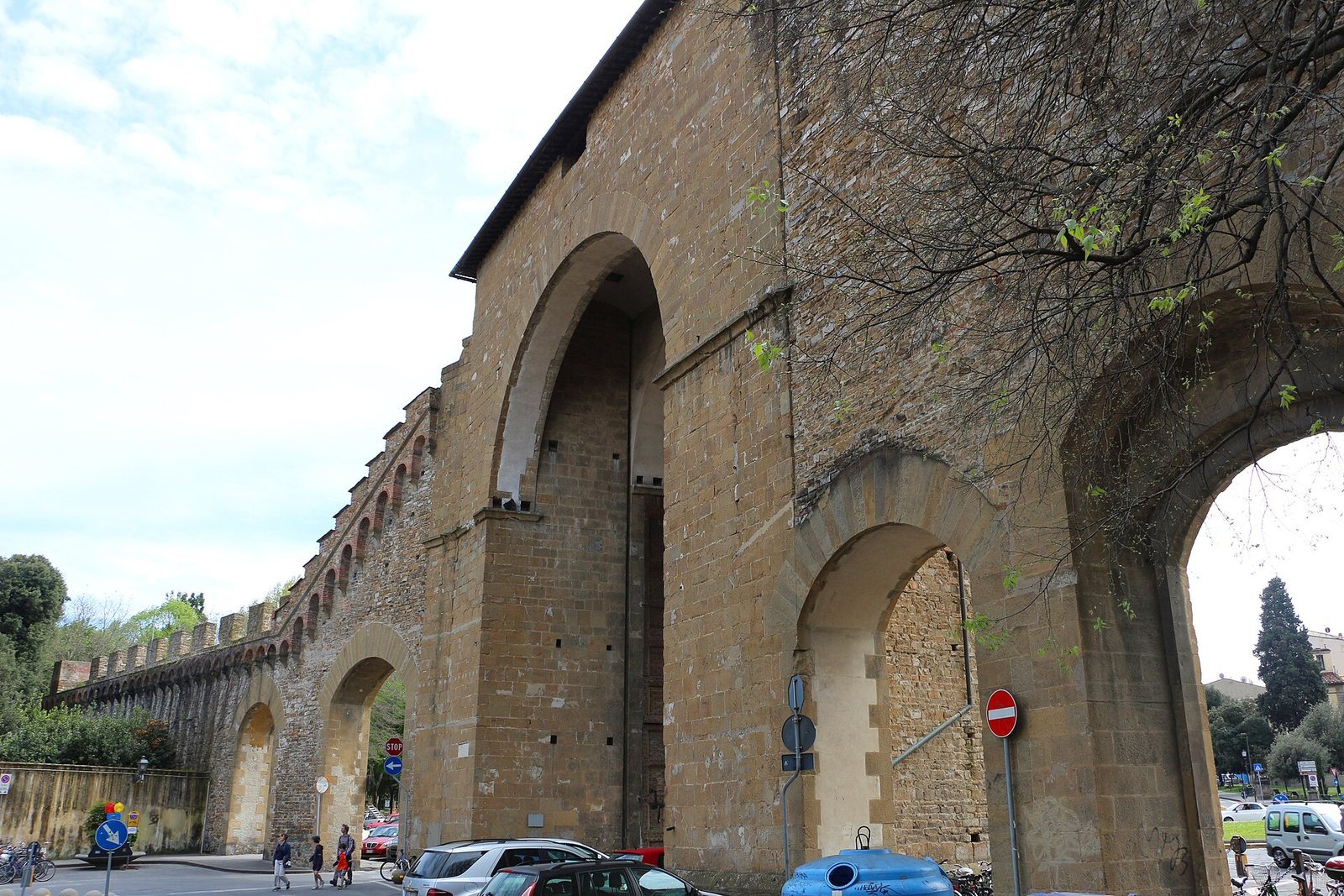
The antiport was demolished in the eighteenth century. During Florence’s replanning under Grand Duke Leopold I, two openings were made in the wall beside the gate to ease movement of people and vehicles. A city ring road was laid out here in the mid-nineteenth century. Although much of Florence’s defensive wall was demolished during that century, the gate and parts of its adjoining wall remained. The square outside the gate had earlier served as a place for fairs and meetings.
One terminus of the Chianti Tramway stood beside the gate. Operating from 1891 to 1935, the line connected Florence with San Casciano in Val di Pesa and Greve in Chianti. A municipal redevelopment directed by Ezio Zalaffi, then head of Florence’s Fine Arts Office, was completed in 1938. It separated the gate and wall from attached buildings, including a small municipal-police guardhouse, opened four arches through the wall to improve traffic flow, and enlarged Piazza della Calza. In 1901, the gate was included in Italy’s national list of monumental buildings considered part of the country’s artistic heritage. The municipal Fine Arts Office also carried out work on the wooden doors in the late 1990s.
Remains
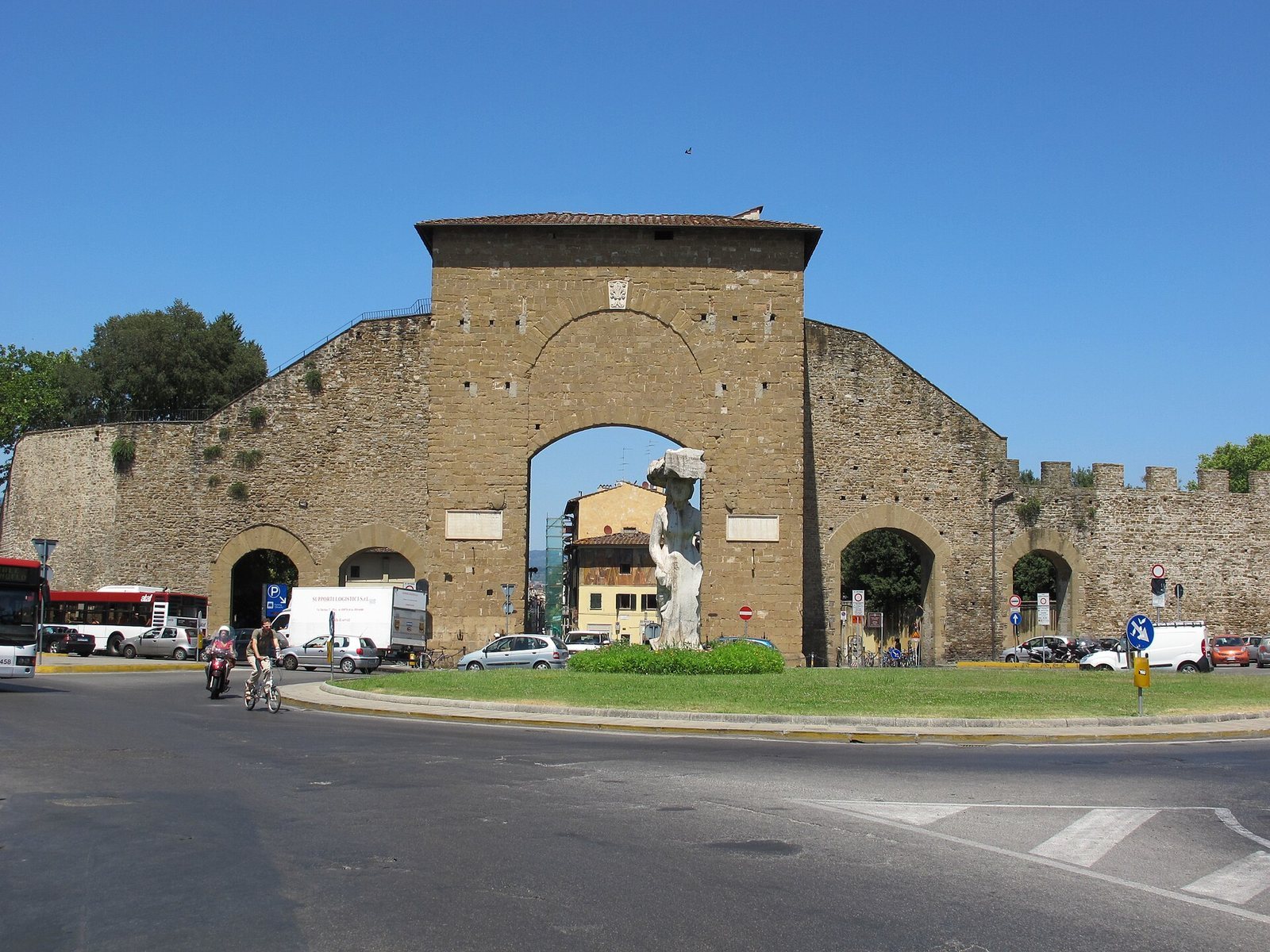
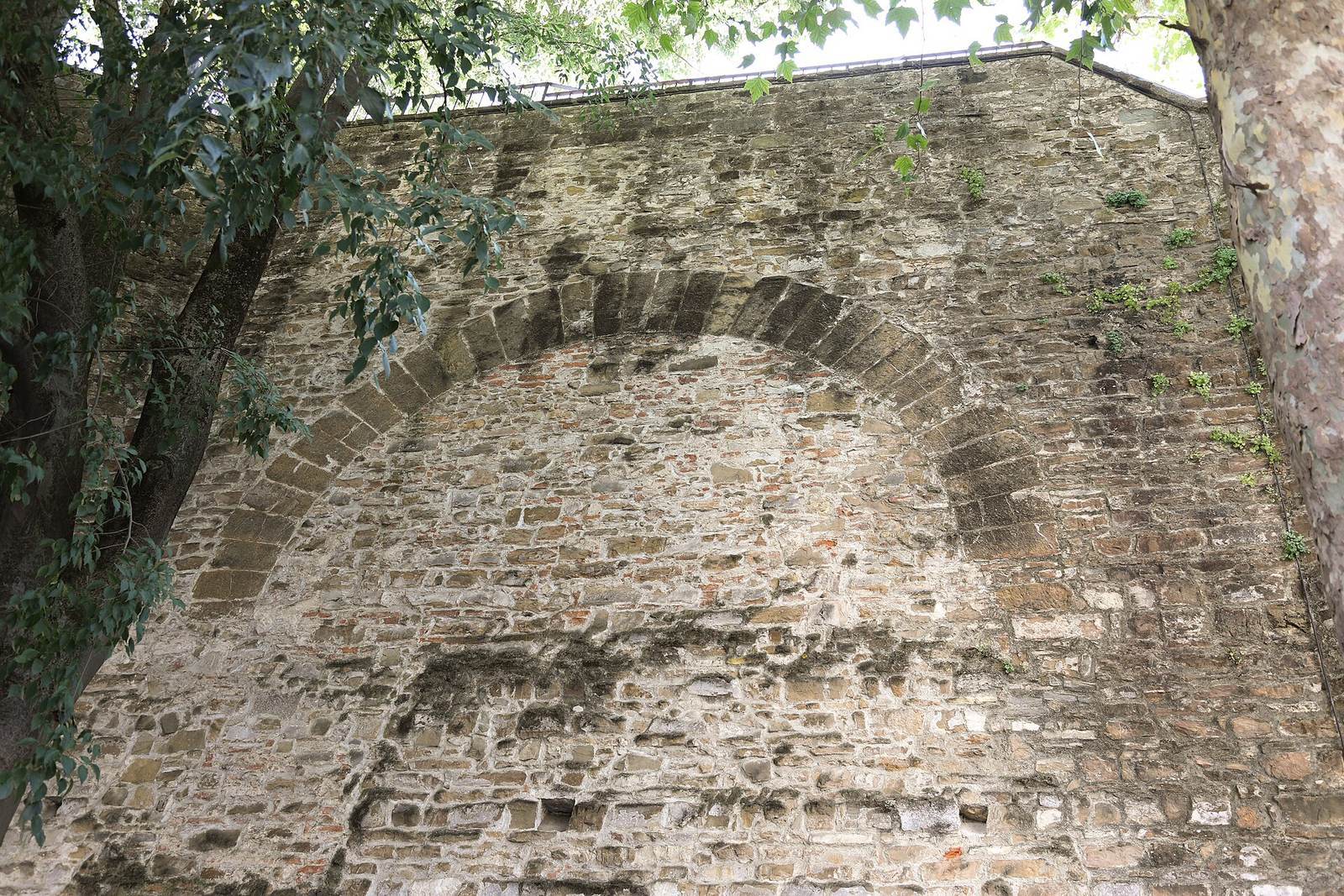
Porta Romana stands at Piazza della Calza, where Via Romana and Via de’ Serragli meet. Via Senese leads south toward Siena and Rome, while Via del Poggio Imperiale continues beyond the gate. A road beside the Boboli Gardens begins nearby and gave residents of Pitti Palace a way in and out of Florence with less travel through the city streets. The gate is attached to two long surviving stretches of wall, with a separate fragment of crenellated wall also preserved.
Gate and adjoining walls
Passage and defensive fabric
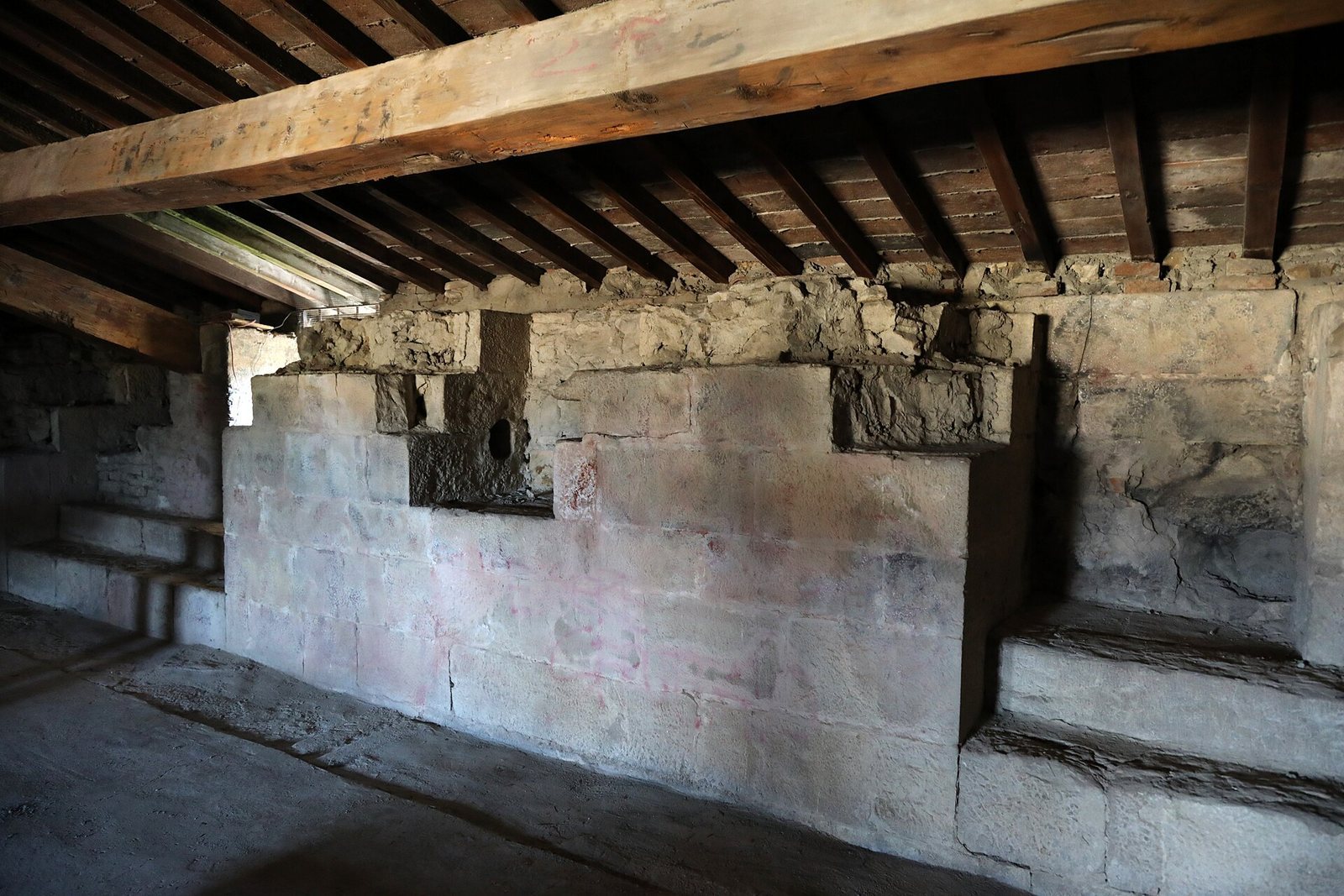
Porta Romana is the second widest of Florence’s gates, after Porta San Frediano. Its passage was originally arranged with a large central opening for carriages and smaller side entrances for pedestrians. Massive oak door leaves remain, probably retaining their original underlying structure. They have dense studs, iron cladding and old locks. A large room on the first floor served as accommodation for guards. The present layout also includes two openings beside the gate and four arches through the adjoining wall.
Various fittings for horses and flags, some possibly ancient, are associated with the gate. Inside the arch, an eighteenth-century rod once held a chain.
Inscriptions and measurements
Two long Latin inscriptions are set symmetrically beside the main arch on the countryside-facing side. They were transferred from the former outer entrance in the eighteenth century; one originally had bronze lettering. Two shields above them are now difficult to read, and the shield on the right is fragmentary.
On the inner side, a plaque dated 1327 bears the Florentine lily and the cross of the Popolo. Its measurements defined the public road, wall and ditches to prevent private encroachment. It gives the road within the walls as 16 Florentine braccia, a historic unit of length, or about 9 metres; the wall as 3 braccia, about 1.75 metres thick; the entrance ditch as 30 braccia, about 17.5 metres wide; and the outer road beside it as 12 braccia, about 7 metres wide. The plaque gives the combined width as 66 braccia, approximately 38 to 39 metres. The plaque at the gate is a faithful copy. A modern marker low on the left inside the passage gives the distance to Piazza della Signoria as 1.570 kilometres.
Painted and sculpted features
Frescoes
The curved wall area, or lunette, on the inner side contains an early-sixteenth-century fresco by Franciabigio. It depicts Mary and the infant Jesus with Saints John the Baptist, Zenobius, Peter and Nicholas of Tolentino, adapting a composition developed in the fourteenth century. The fresco was detached in the 1970s, restored and returned to its place in 1992; a plaque inside the passage commemorates the work. On the outer arch, a weather-worn thirteenth-century fresco shows Mary enthroned with saints.
Medieval statues
Three sandstone statues with gilding, depicting Saint Peter, Mary and the infant Jesus, and Saint Paul, are attributed to Paolo di Giovanni and dated to 1328–1329. They probably came from niches in the gate’s original lunette. In the eighteenth century they were kept in a small chapel near the gate; they are now at the Bargello.
Sculpture at the forecourt
Dietrofront
Michelangelo Pistoletto’s large marble sculpture Dietrofront, made between 1981 and 1984, stands in the grassy central roundabout before the gate. It was installed permanently after appearing in an exhibition by the artist at Forte Belvedere, and its presence has been controversial. The sculpture shows a woman facing south with a second, horizontal figure resting on her head and looking back toward the city. Its reversed L-shaped form relates to a series of Pistoletto installations, including the sets for Anno I. The unfinished treatment was influenced by Medardo Rosso, and the composition connects the city’s past and present.
Florentine lion and Sienese she-wolf
A sculptural group of a Florentine lion and a Sienese she-wolf stands at the entrance to Viale Niccolò Machiavelli. The figures previously stood at the entrance to Viale del Poggio Imperiale, where they were replaced by two neoclassical lions taken from iron bridges demolished over the Arno. From 1689, statues of Homer, Virgil, Dante and Petrarch had stood at that entrance. They had originally adorned a façade begun in front of Santa Maria del Fiore and were later damaged by stone-throwing.