Petrus: A Medieval Serbian Frontier Fortress
Site at a Glance
- Popularity
- Medium
- Country
- Serbia
- Primary era
- Medieval
- Eras represented
- Medieval
- Civilizations
- Byzantine, Serbian
- Site type
- Military
- Remains
- Fort
On this page10 sections
History
Petrus is a medieval fortress near Zabrege in Serbia, about 11 kilometres northeast of present-day Paraćin. Its surviving stronghold is thought to have been built by Vukoslav in the fourteenth century, when Petrus served as a frontier center controlling the connection between the Pomoravlje region along the Great Morava and the Timok Valley.
Roman, Byzantine, and early Serbian fortifications
A Roman-period fortification may have occupied the site. A Byzantine stronghold stood there in the sixth century, possibly built as part of Emperor Justinian I’s effort to secure Byzantine authority. Hermit monks settled in the surrounding area during the tenth century. In the time of Stefan Nemanja, a medieval Serbian ruler and founder of the Nemanjić dynasty, a new fortress was built at Petrus. The surrounding district became a frontier of the Nemanjić state and was the only area on the right bank of the Great Morava to remain continuously under its control.
Vukoslav, Crep, and the frontier district
In the mid-fourteenth century, Emperor Dušan granted the territory around Petrus to Vukoslav, a regional lord. The district then became known as Pustoš Petrus. Vukoslav is thought to have built the fortress whose remains survive today. After his death around 1371, authority over the fortress and its surrounding lands passed to his son Crep, a military commander and noble. Vukoslav’s other son, Držman, entered monastic life and took the name Dionisije.
In the early 1380s, Crep and his neighbor Vitomir defeated Ottoman forces at the Dubravica River near Paraćin. Crep probably died soon afterward, and he appears to have been succeeded by a son known by the monastic name Venedikt. Petrus’s position was closely tied to its role as a frontier stronghold during this period.
Capture, abandonment, and local traditions
In 1413, Musa, an Ottoman prince and son of Sultan Bayezid I, captured Petrus along with the fortresses of Koprijan, Kruševac, Markovo Kale, Sokolnica, and Stalać. The fortress was abandoned either after Musa destroyed it that year or after medieval Serbia fell in 1459. Its strategic importance had declined rapidly.
Local tradition describes Petrus as a frontier fortress in the state of Prince Lazar, a Serbian ruler in the later fourteenth century. Fires at Petrus were said to warn of Ottoman raiding parties. A signal could be seen at the monastery of the Most Holy Mother of God at Lesje, where Dionisije was a monk; a fire lit at fortified Stalać then passed the warning toward Kruševac from a tower associated with Todor of Stalać, a figure in Serbian folk tradition.
Other legends link Petrus with the Battle of Kosovo in 1389. One says the legendary Pavle Orlović ruled the fortress and departed from it for the battle. Another tells how the commander, after the battle, had his cavalry’s horseshoes reversed before leading the inhabitants away. The tracks supposedly misled Ottoman forces into believing reinforcements were approaching, prompting them to withdraw.
The ruins are protected by Serbia as a Cultural Monument of Great Importance within the protected monumental complex of the Petrus Area. Archaeological investigations took place in 1978, 1980–1981, and 2004–2005.
Remains
Plan and defenses
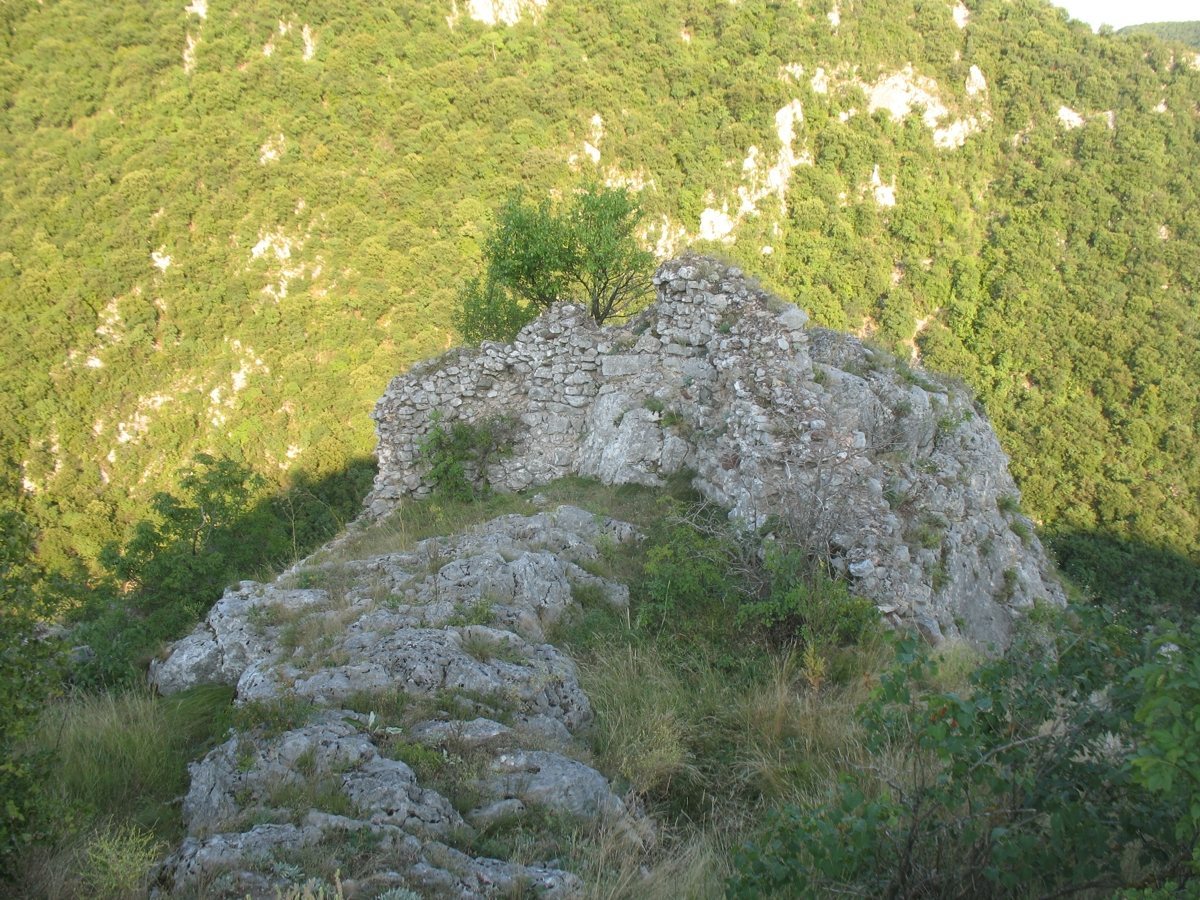
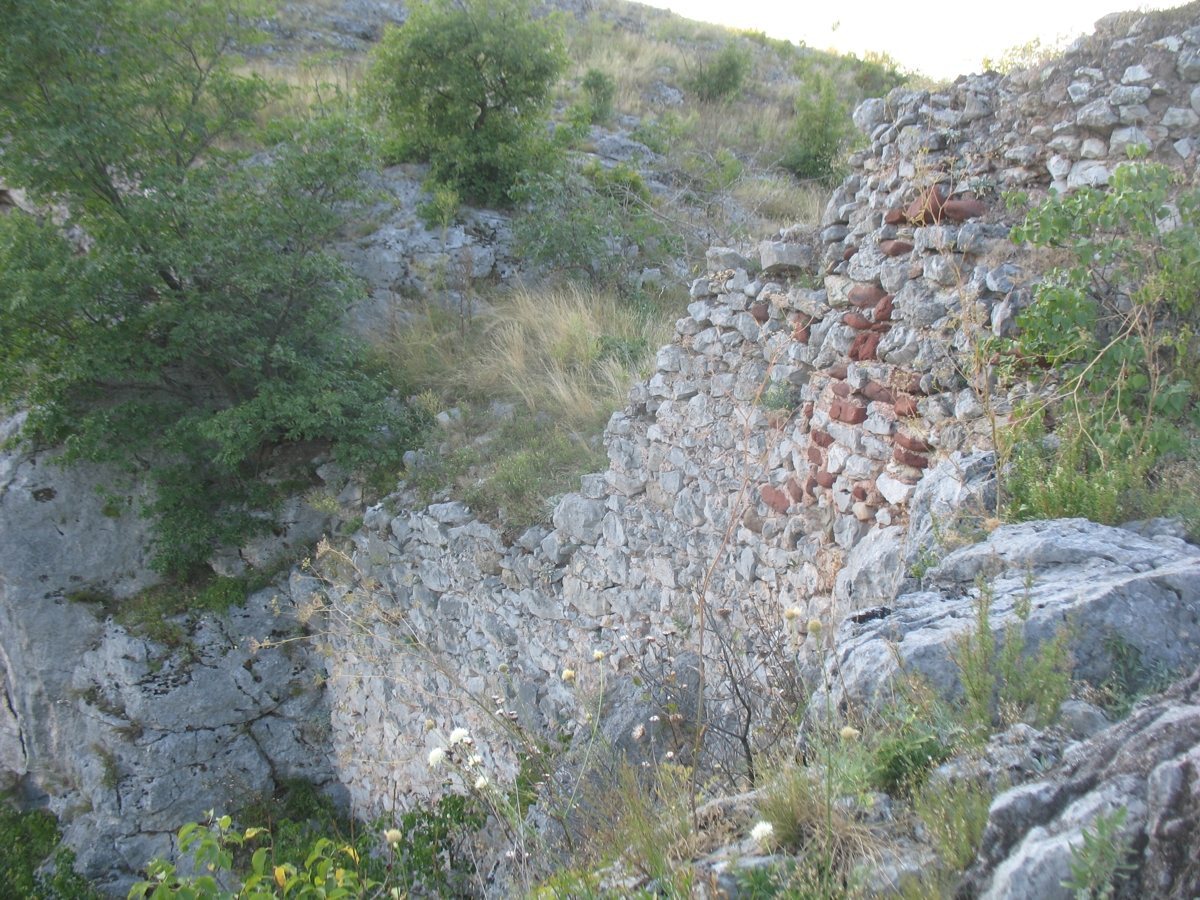
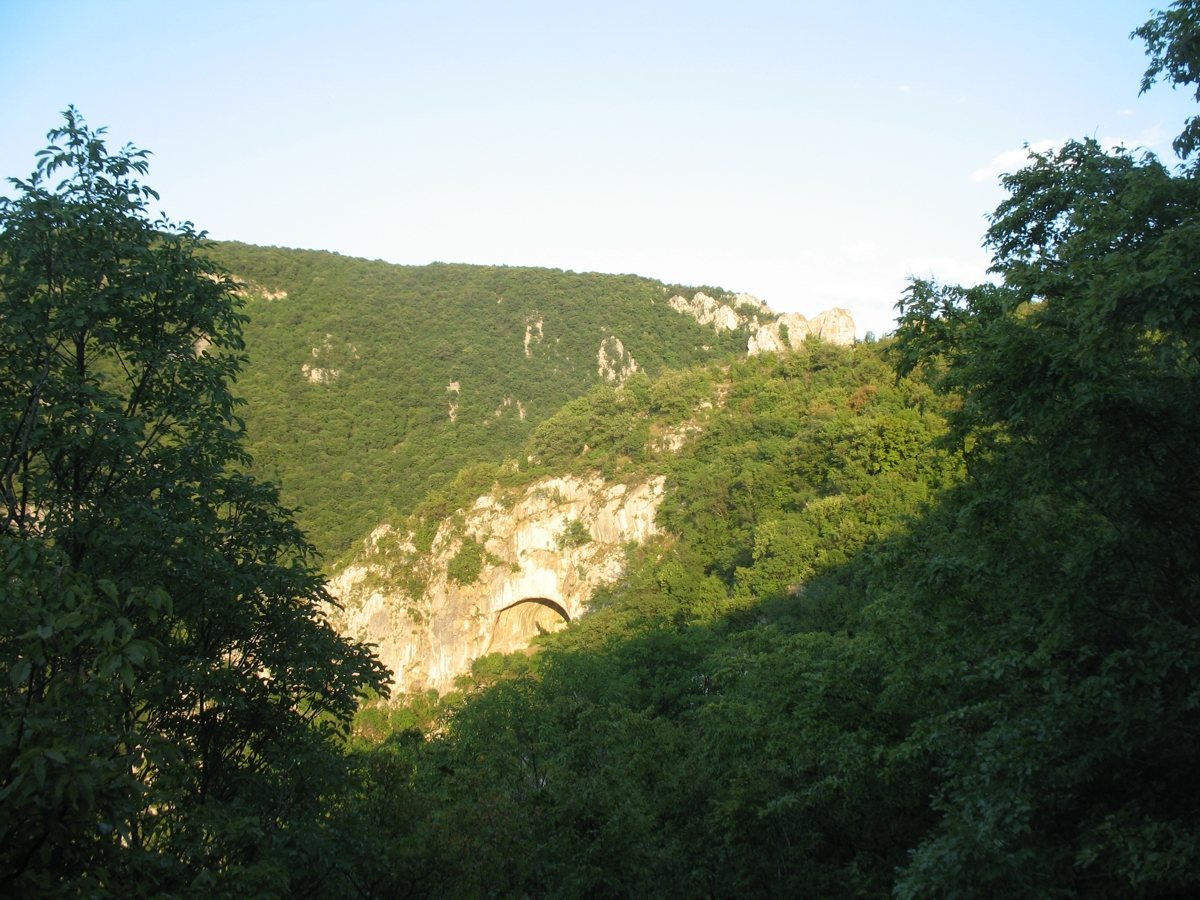
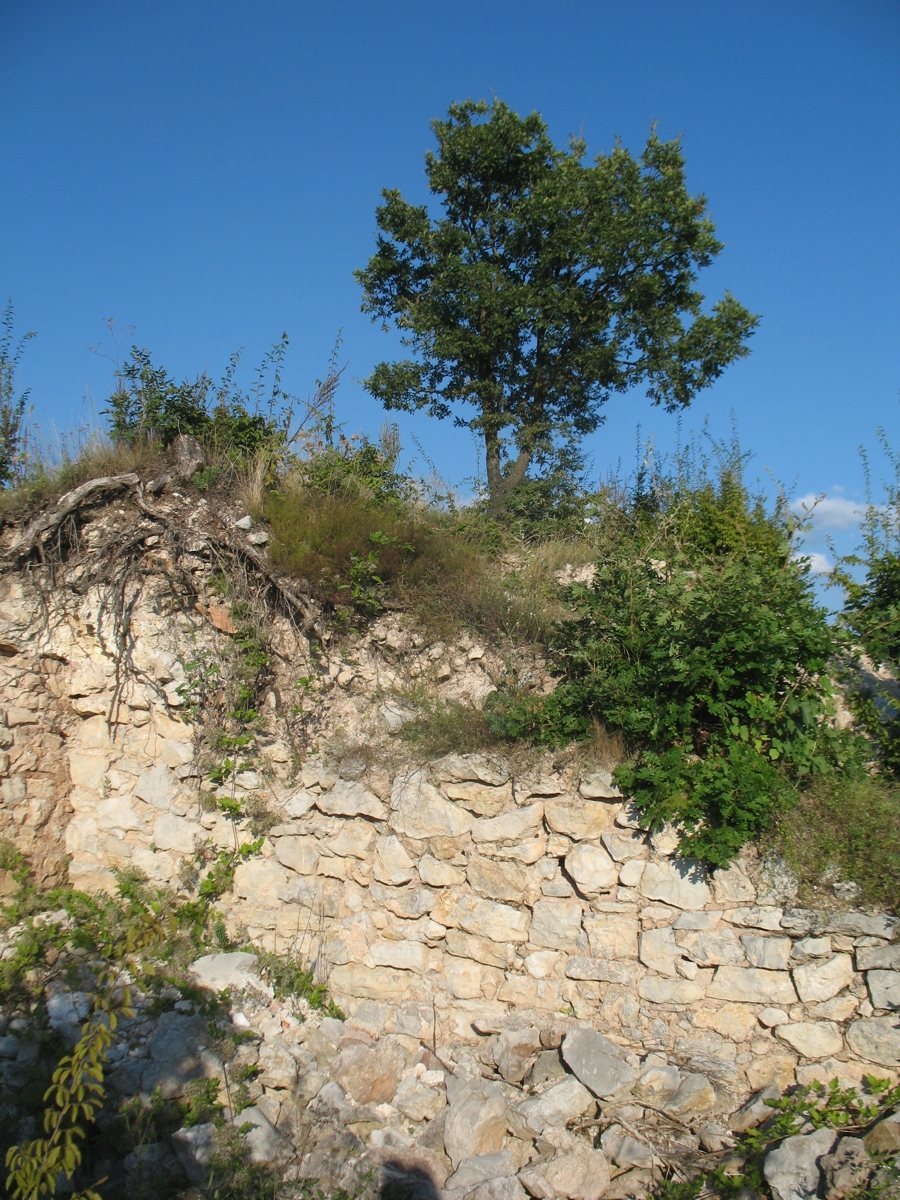
The fortress follows a rise enclosed by the Crnica River on three sides, with an artificial dry ditch defending the western side, where approach was easiest. Its irregular, elongated hexagonal plan follows the terrain. At the western end, a small inner stronghold occupies the highest point, about 320 metres above sea level, and includes a principal defensive tower. From there, the ramparts descend steeply to the north and south, then continue east along the slope. Near the Crnica gorge they turn uphill to meet at a four-sided tower on steep rocks above the river. The fortress extends for 290 metres and is now mostly in ruins.
Archaeological and nearby features
Earlier fortifications and finds
Remains of the sixth-century Byzantine fortification lie within the foundations of the later Serbian stronghold. Roman copper coins found at Petrus are held by the Paraćin Local Heritage Museum.
Cross Rock and the cave
A large rock among the ruins is known locally as Cross Rock. It measures about 8 metres long and 6 metres high. A cave with a large entrance lies near the fortress.
Monastic complexes
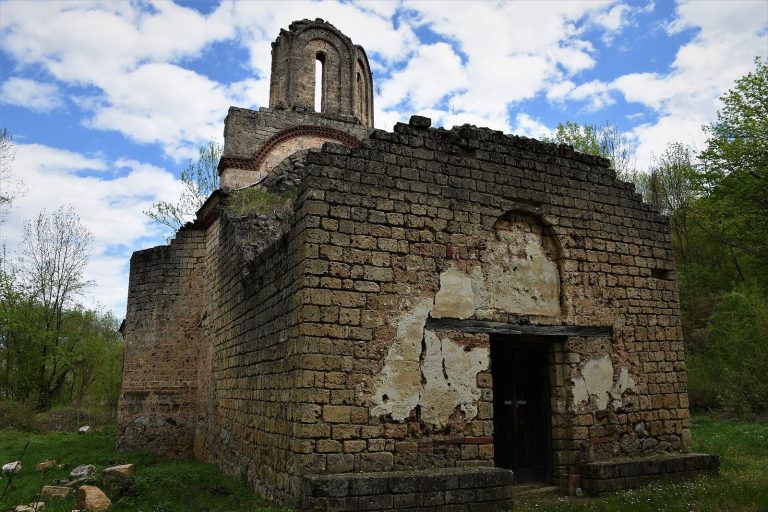
Remains of two monastic complexes lie near Petrus. They were dedicated to Saint John the Beheaded, a title referring to John the Baptist, and Saint Mary the Gentle, a title for the Virgin Mary.