Iwaseoyama Kofun Cluster: A Japanese Burial-Mound Complex
Site at a Glance
- Popularity
- Medium
- Country
- Japan
- Primary era
- Classical
- Eras represented
- Classical, Medieval
- Civilizations
- Unclassified
- Site type
- Burial
- Remains
- Necropolis
On this page9 sections
History
The Iwaseoyama Kofun Cluster is a group of Japanese burial mounds on the Iwaseoyama highland in Takamatsu, Kagawa Prefecture, Japan. Its history of mound building extends from the third century to the early seventh century, through distinct phases of stone and earthen construction.
Construction and burial phases
Stone-built mounds were raised from the third through the fifth centuries. Construction then ceased for about a century, beginning in the late fifth century. It resumed from the late sixth to the early seventh century, when earthen mounds with stone burial chambers entered from the side were built.
Archaeological discoveries and protection
Nekozuka was extensively robbed in antiquity, but its central area still yielded numerous burial objects. The Tokyo Museum purchased most of these finds in 1912. A mirror fragment from Tsuruo Shrine No. 4 was identified by archaeologist Sueji Umehara as the missing part of a mirror found in another mound in the cluster. This link led Tsuruo Shrine No. 4 to be regarded as the group’s earliest-style mound.
Ishifunezuka received Japan’s National Historic Site designation in 1934, a government recognition for places of historical importance. In 1985, the protected area was enlarged, its name changed to Iwaseoyama Kofun Cluster, and ten mounds were added. Tsuruo Shrine No. 4 joined the designation in 1989 after a 1981 survey. Four mounds in the Inariyama area were added in 2018. The designation now covers 16 mounds, 14 stone-built and two earthen.
Remains
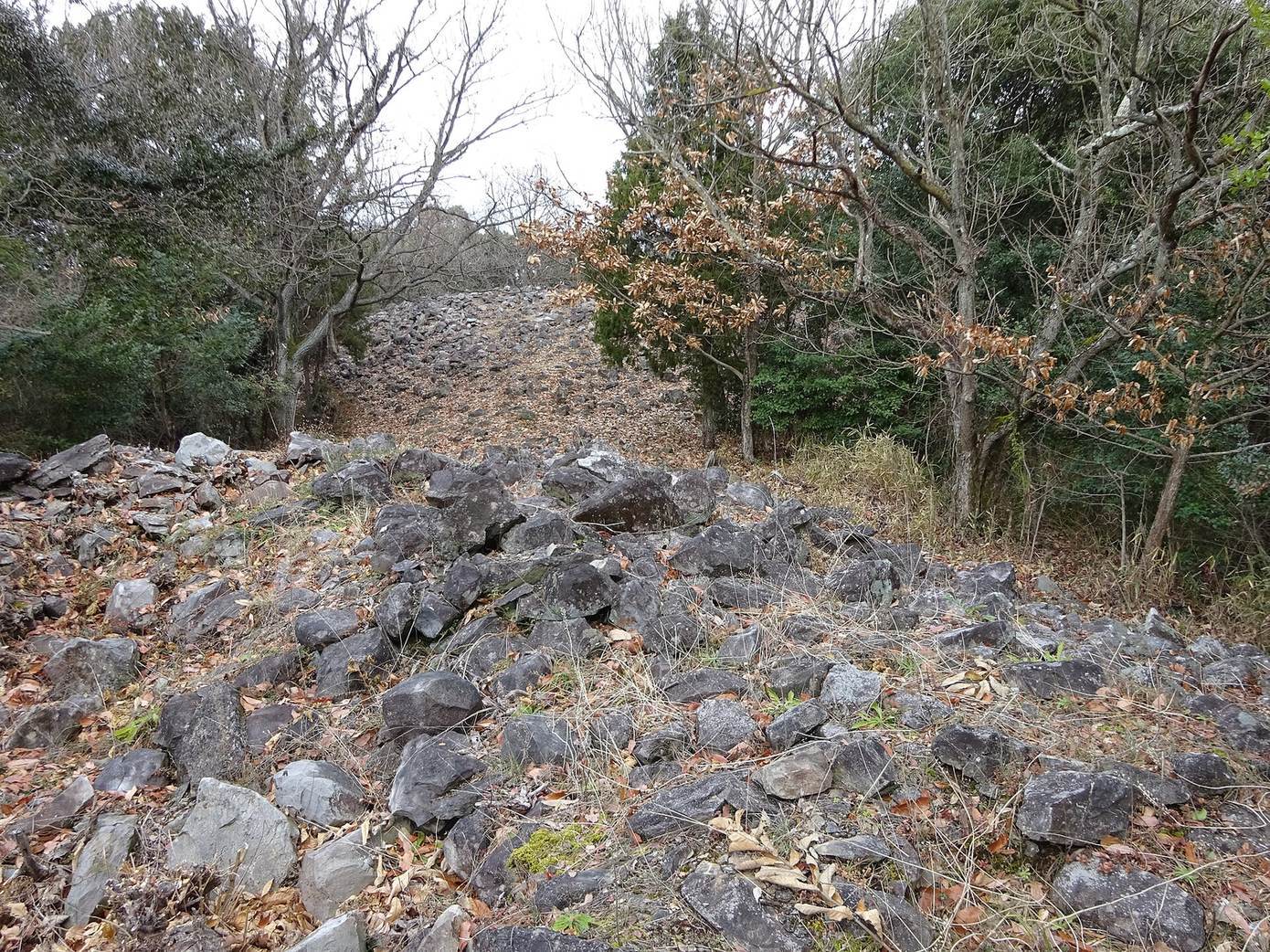
The cluster extends along a ridge on the Iwaseoyama highland, at about 230 metres above sea level, across the Mineyama, Muromachi, Miyawaki, Nishikasuga, Tsuruichi, and Nishitakara neighborhoods of Takamatsu. It contains more than 200 stone-built and earthen mounds. The stone-built examples use stacked andesite from the summit area.
Mound forms
The stone mounds include keyhole-shaped, square, round, and double-lobed forms, with a circular section at the center of the last type. Nekozuka, Kagamizuka, and Inariyama-hokutan Kofun are double-lobed; Kita Otsuka East is square, while Inariyama Minamitsuka North Kofun is round. The remaining stone-built mounds are keyhole-shaped. Named mounds include Ishifunezuka; Kita Otsuka, Kita Otsuka East, and Kita Otsuka West; Kagamizuka, Kozuka, Himetsuka, Nekozuka, Iwaseoyama Nos. 9, 2, and 13; and Tsuruo Shrine No. 4. The four mounds in the Inariyama area are Inariyama Princess Mound, Inariyama-hokutan Kofun, Inariyama South Mound, and Inariyama Minamitsuka North Kofun.
Burial chambers and finds
Nekozuka
Nekozuka is 96 metres long and five metres high, making it the cluster’s largest mound. Its central section contains nine burial chambers entered from above. Finds from the chambers include five bronze mirrors, one with an inward-facing floral pattern; 17 bronze swords; eight bronze arrowheads; a jasper armlet; three cylindrical bronze objects; four iron swords; three iron arrowheads; and four other iron objects, including a sword and an axe. A jar of Haji ware, an unglazed Japanese earthenware, was also recovered.
Ishifunezuka
A stone coffin carved from one block was found at Ishifunezuka during Japan’s Edo period, which ended in the nineteenth century. A separate stone burial chamber lies about 3.5 metres to its southwest. The chamber measures 1.78 metres long and 44 centimetres wide and contained a modified mirror decorated with divine beasts.
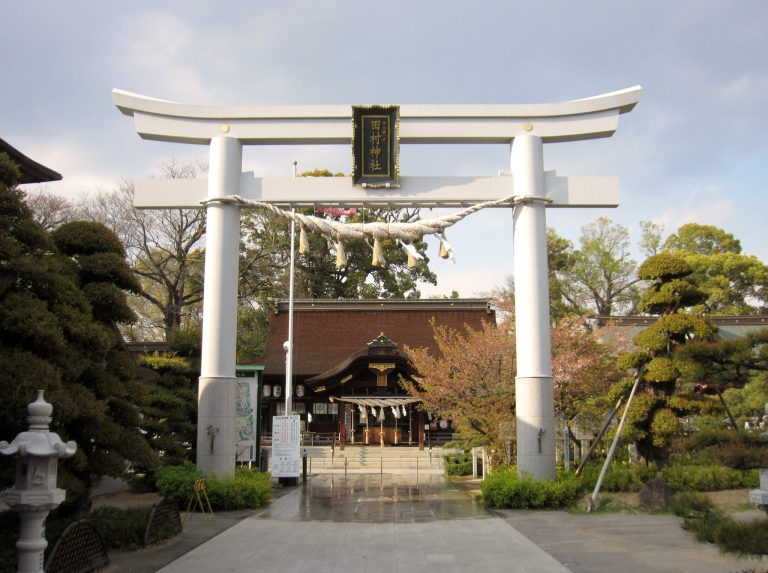
Tsuruo Shrine No. 4
The mirror fragment from this mound came from a bronze mirror decorated with an animal band, a square-grid pattern, compass-and-square motifs, and four deities.