Ichinomiya-ji Temple: A Shingon Buddhist Pilgrimage Temple in Japan


Site at a Glance
- Rating
- 4.1
- Popularity
- Low
- Country
- Japan
- Primary era
- Early Modern
- External website
- Open
- Eras represented
- Early Modern, Modern
- Civilizations
- Tokugawa
- Site type
- Religious
- Remains
- Temple
On this page17 sections
History
Ichinomiya-ji Temple is a Shingon Buddhist temple in Takamatsu, Japan, founded during the Taihō era around 701–704 and now belonging to the Omuro School, a major branch of Shingon Buddhism. Its formal name is Shingōzan Daihōin Ichinomiya-ji, and its principal image is Shō Kannon, the Japanese form of the bodhisattva Avalokiteśvara. The temple is the 83rd stop on the Shikoku Pilgrimage, a circuit of 88 Buddhist temples traditionally associated with Kūkai.
Foundation and association with Tamura Shrine
Temple tradition credits the foundation to Gien, a Buddhist priest associated with the Hossō school who lived from 643 to 728. The institution was first called Daihō-in and followed Hossō teachings, a Buddhist school centered on consciousness-only philosophy. Its name was linked to the Taihō era of its foundation.
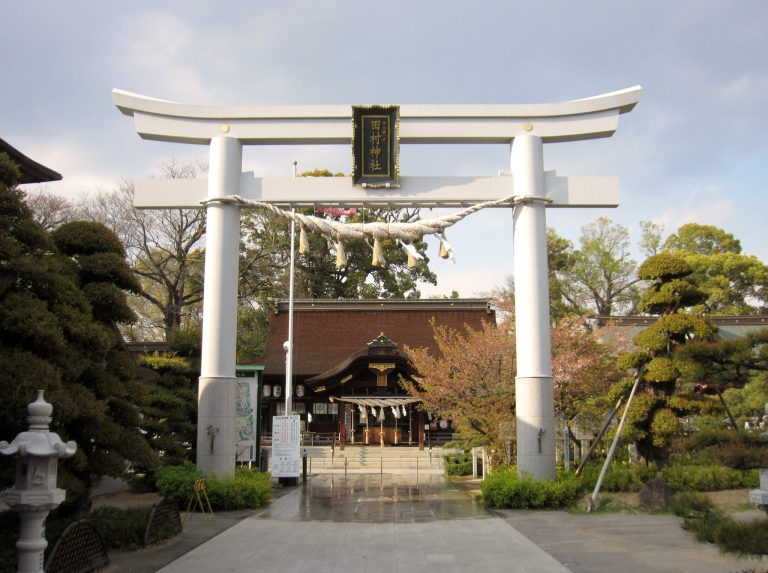
During the Wadō era, around 708–715, the priest Gyōki reportedly renovated the buildings and renamed the temple Ichinomiya-ji. Gyōki was a prominent Buddhist priest known for organizing religious institutions and public works during the Nara and early Heian periods. At this time, provincial Ichinomiya shrines were being established. An Ichinomiya was the highest-ranking shrine in a historical Japanese province, and Ichinomiya-ji stood beside Tamura Shrine, the Ichinomiya of the former Sanuki Province. Gyōki served as the first administrator-priest of the shrine.
Conversion to Shingon Buddhism
During the Daidō era, around 806–810, Kūkai reorganized the complex, carved and enshrined a 106-centimeter image of Shō Kannon, and converted the temple to Shingon Buddhism, Japan’s esoteric Buddhist tradition. The image later became the honji-butsu, or Buddhist counterpart, of Tamura Shrine’s deity within the medieval system that linked Buddhist and Shintō worship.
The temple’s religious identity remains expressed through the mantra of Shō Kannon, “Om Arorikya Sowaka,” and through a pilgrimage verse referring to reverence before the Ichinomiya of Sanuki and the unknowable heart of the divine. Its pilgrimage-stamp system includes stamps for the principal image and for the “Cauldron of Hell.”
Fire, restoration, and historical correction
Ichinomiya-ji was destroyed by fire in 1574 during hostilities between the Miyoshi forces of Awa Province and the Kōzai clan. The eminent priest Yūsei Daitoku subsequently restored the temple. A later tradition attributed the destruction to the army of Chōsokabe Motochika, but the Sanuki Ichinomiya Seisuiki states that the temple lands remained secure under Chōsokabe rule and were confiscated only later under Hideyoshi. The account of burning by Chōsokabe forces belongs to a broader pattern of later fabricated traditions concerning temples in Shikoku.
Separation from the shrine
Until 1679, Ichinomiya-ji and Tamura Shrine occupied the same grounds as an integrated religious institution. That year, at the direction of Matsudaira Yoritsune, lord of the Takamatsu Domain, Tamura Shrine changed from Ryōbu Shintō, a medieval practice combining Shintō worship with Buddhist concepts, to Yuiitsu Shintō, a tradition emphasizing Shintō’s independence from Buddhist institutions.
Twelve shrine-temples associated with Tamura Shrine were abolished, while Ichinomiya-ji was permitted to continue. The temple then moved to its present site, its role as an administrator-temple was ended, and the Shō Kannon image became its principal object of worship. Ichinomiya-ji also inherited the pilgrimage designation now numbered 83 on the Shikoku 88-Temple Pilgrimage, which had previously been associated with the provincial Ichinomiya shrine. This separation occurred approximately two centuries before the official early Meiji policy separating Buddhist and Shintō institutions, creating the arrangement that continues today.
Continuing religious practices
The annual Thousand-Day Service takes place on August 10, when the Maedachi Honzon, or stand-in principal image, is shown publicly. The annual Cucumber Prayer Ritual is held on the Doyō no Ushi day in July, and fire rituals take place on the 28th of each month.
Remains
The precinct contains a main gate that also functions as a Niōmon, a Buddhist gate guarded by two protective deva figures, together with a West Gate on the rear side of the grounds. The West Gate opens from the parking area, opposite the Niōmon, while the main gate provides another entrance. From the main gate, the Hondō stands directly ahead, with the Bell Tower to the left and the Founder’s Hall to the right. The Fire Ritual Hall stands beside the Founder’s Hall.
Principal halls
Main Hall
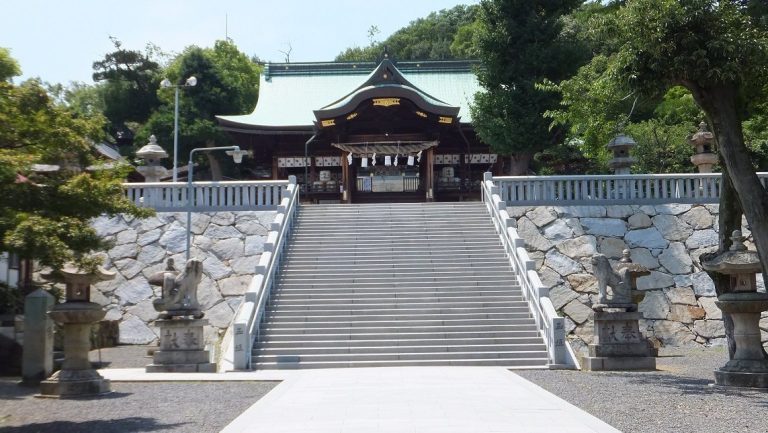
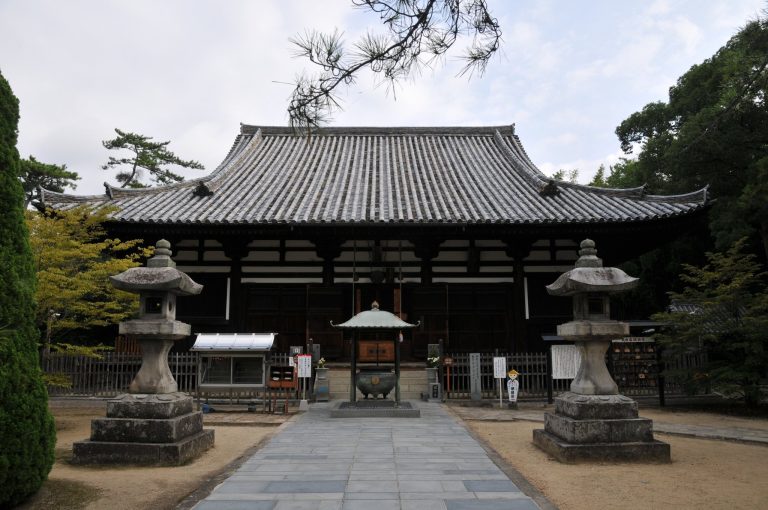
The Hondō, or Main Hall, is the principal worship hall. The present building dates from 1701 and is constructed of camphor wood. Its Maedachi Honzon, the stand-in principal image used for public display, is shown during the annual Thousand-Day Service.
Founder’s Hall
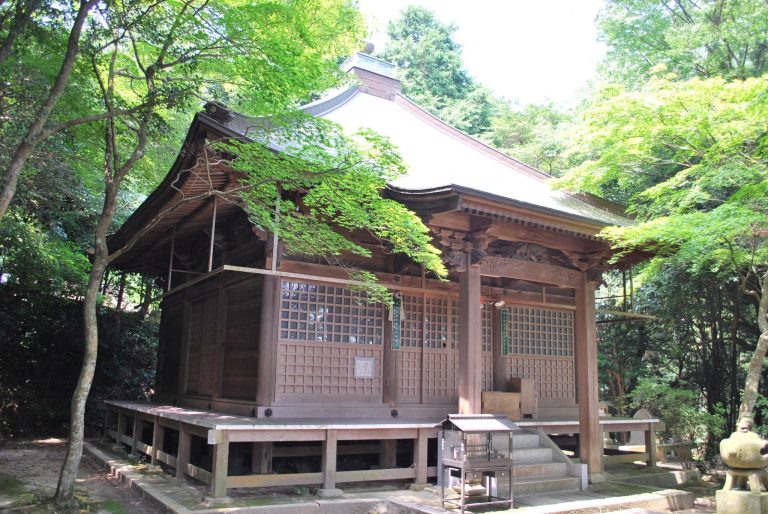
The Daishidō, or Founder’s Hall, stands to the right of the Hondō when viewed from the main gate. A statue of Kūkai is enshrined at the rear. The hall’s large double doors carry a carving of the character “Dai,” representing the sub-temple name Daihō-in.
Fire Ritual Hall
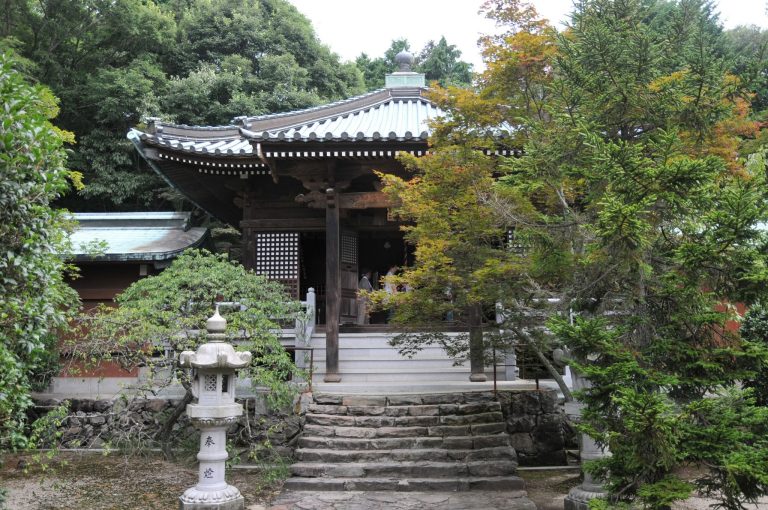
The Gomadō, or Fire Ritual Hall, stands beside the Daishidō and to its left when viewed from the Main Hall. Newly built in recent years, it has a pyramidal roof and houses an image of Fudō Myōō. A gomadō is a hall used for goma fire rituals, in which offerings are placed into a consecrated fire.
Bodhisattva Hall
The Bosatsudō, or Bodhisattva Hall, enshrines Amida Nyorai and the Twenty-Five Bodhisattvas. The Nōkotsudō Sharira ossuary, completed in December 2020, is constructed of reinforced concrete.
Gates, bell tower, and precinct arrangement
From the Hondō toward the Niōmon, the sutra-stamping office lies on the left and the Bell Tower on the right. Entry through the West Gate leads to the area left of the Hondō, with the Daishidō on the Hondō’s right and the Gomadō on the Daishidō’s left. These relationships define the present arrangement of the principal buildings and entrances.
Shrines, memorials, and ritual features
Yakushi Nyorai shrine
A small shrine to Yakushi Nyorai is associated with a tradition concerning a boiling cauldron. According to the legend, a person who has committed misdeeds cannot withdraw their head after placing it inside the shrine.
Ichinomiya Goryō
Behind the purification pavilion, the Ichinomiya Goryō consists of three stone towers. Tradition identifies them as the tombs of Emperor Kōrei, Momosohime-no-Mikoto, and Isaserihiko-no-Mikoto.
Haiku monument
A haiku monument behind the Ichinomiya Goryō bears a poem by Tadashi about incense smoke, twilight, and a pilgrim walking at dusk.