Iwaseo Hachimangū: Takamatsu’s Principal Guardian Shrine


Site at a Glance
- Rating
- 4.3
- Popularity
- Low
- Country
- Japan
- Primary era
- Early Modern
- External website
- Open
- Eras represented
- Medieval, Early Modern, Modern
- Civilizations
- Ashikaga shogunate, Japanese, Tokugawa
- Site type
- Religious
- Remains
- Sanctuary
On this page13 sections
History
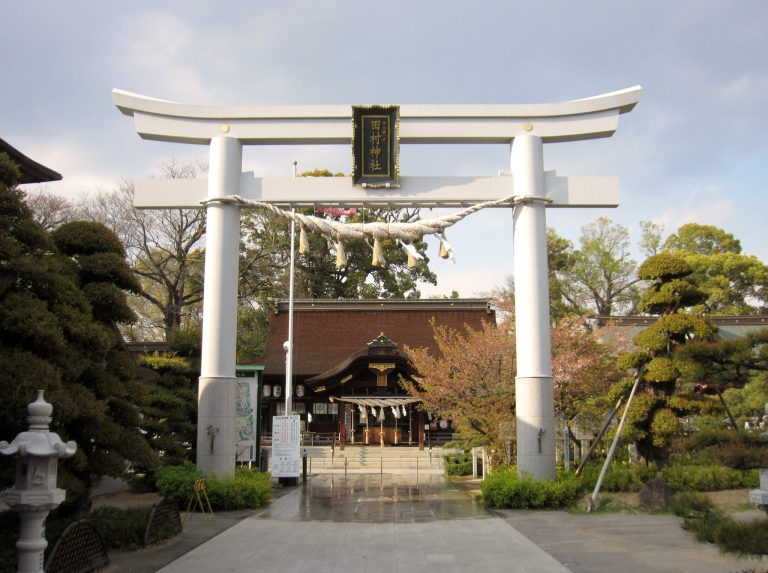
Iwaseo Hachimangū is a Shinto shrine in Takamatsu, Japan, at the foot of Mount Iwaseo. Traditionally founded in 918, it is regarded as the city’s tutelary and principal guardian shrine. Its principal deities are Emperor Chūai, Emperor Ōjin, and Empress Jingū, figures of Japan’s early imperial tradition. Hachiman, the major Shinto-Buddhist deity associated especially with Emperor Ōjin, was widely venerated as a protector of communities and a martial guardian.
Foundation and Estate Guardianship
The shrine’s traditional origin is preserved in two related traditions. One says that the Hachiman deity appeared at Akatoyama, the mountain now called Mount Iwaseo, and was enshrined there. Another says that the provincial governor enshrined a divided spirit of Iwashimizu Hachimangū on Mount Kamenoo. The name Iwaseo Hachimangū is traditionally understood as combining the names Iwashimizu and Kamenoo.
The Iwaseo Burial Mounds, a group of numerous ancient tombs on Mount Iwaseo, indicate that the surrounding area had flourished from an early period. In 1309, the Great Perfection of Wisdom Sutra and the Five-Part Mahayana Sutras were deposited at the shrine. The association of the Great Perfection of Wisdom Sutra with estate guardian shrines indicates that Iwaseo Hachimangū had long been revered as the guardian shrine of the Nohara estate.
Samurai Patronage and the Takamatsu Domain
During the Nanboku-chō period, the fourteenth-century era of rival Northern and Southern imperial courts, Hosokawa Yoriyuki sent retainers to pray at the shrine before fighting Hosokawa Kiyouji. Yoriyuki was a chief administrator of the Muromachi shogunate, the military government that ruled much of Japan during that period. After winning the conflict in April 1363, he held a thanksgiving ceremony, rebuilt shrine buildings, and dedicated weapons.
A market held during the victory observances became known as the Umanokami Market, taking its name from Yoriyuki’s title. It formed the origin of the continuing Ichidate Festival. The festival retains observances on May 2 and 3, while the annual grand festival takes place in October.
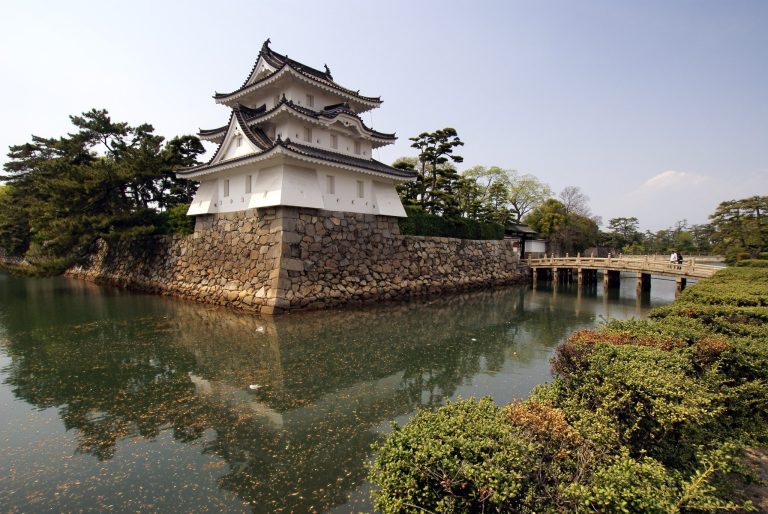
In 1588, Ikoma Chikamasa, who had become lord of all Sanuki Province under the Toyotomi regime, established Nohara as his base, renamed it Takamatsu, and built Takamatsu Castle, also called Tamamo Castle. He designated Iwaseo Hachimangū as guardian of the castle town and granted it an estate producing 24 koku of rice. A koku was a historical measure of rice yield used to express the income of an estate or domain.
After the Ikoma family left Sanuki following the Ikoma Disturbance, Matsudaira Yorishige became lord of the Takamatsu domain after transferring from the Mito Tokugawa family. He undertook major shrine construction in 1642 and 1666. One tradition says that the buildings were moved from the mountaintop to the present site, while another says that structures already stood there and were rebuilt.
Yorishige later designated the shrine as a major shrine and as the tutelary shrine of the Takamatsu Castle town. He granted it an estate producing 202 koku, donated numerous treasures, and provided regulations for the Hōjōe, a Buddhist-influenced ritual in which living creatures are released to express reverence for life and gain religious merit. The precinct arrangement and the elaborate mikoshi procession were largely established during his period. Later lords of the Takamatsu domain continued to venerate the shrine and donated treasures and stone lanterns.
Modern Changes and Continuing Observances
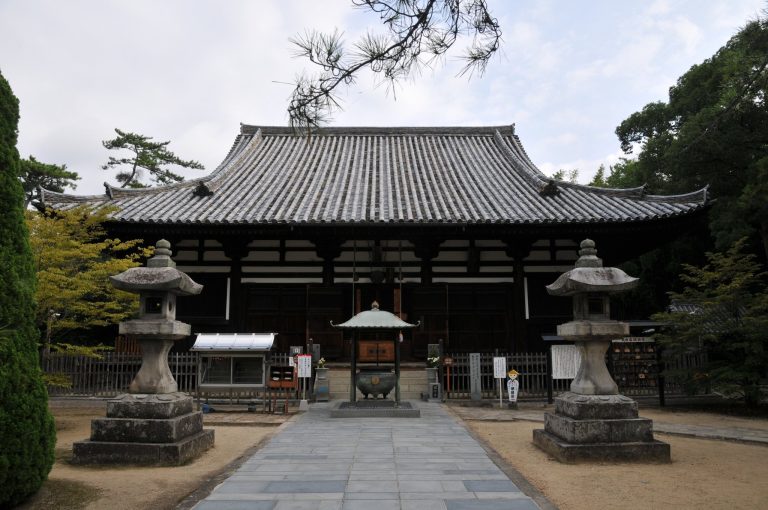
The shrine was classified as a prefectural shrine in 1872. A fire destroyed the main sanctuary and upper worship hall in 1986. Both were rebuilt in 1989, and the lower worship hall and other facilities were repaired at the same time.
Renovation of the precincts began in 2006 and was completed in 2007. The work reduced the steepness of the steps before the worship hall and replaced the stone paving of the approach. In 2018, the shrine held ceremonies marking 1,100 years since its traditional foundation. The observances included a children’s procession, celebratory and thanksgiving events, court music and dance, and rice-cake throwing.
The Ichidate Festival and the annual grand festival use the approach road and extend ceremonially to the temporary festival site. The shrine is popularly called “O-Hachiman-san” and “Iwaseo-san.”
Remains
Iwaseo Hachimangū occupies the foot of Mount Iwaseo in southwestern central Takamatsu. Its precincts contain the principal sanctuary and worship halls, subsidiary shrines, administrative and storage buildings, and a processional approach leading toward the temporary festival site in Kameoka. The approach developed as a pilgrimage road, branching west from Tamachi along the former Konpira Highway and running directly toward the shrine. The section west of its intersection with Route 11 is called Hachiman Street.
Principal Buildings
Main Sanctuary and Worship Halls
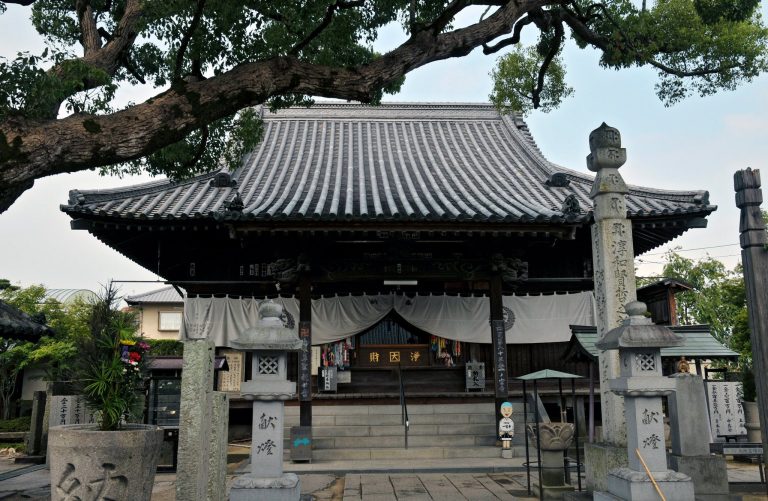
The main sanctuary and upper worship hall were rebuilt in 1989 after the 1986 fire. The lower worship hall dates from 1881. Together, these buildings form the central worship area of the shrine, reached by steps whose steepness was reduced during the precinct renovation completed in 2007.
Guardian Gate and Precinct Facilities
The guardian gate was built in 1665. Other buildings include the votive-picture hall, built in 1893, a mikoshi storehouse, and a purification pavilion. The shrine office was completed in 1978. Ondorai Hall, completed in 1917 as the former shrine office, was moved to its present location before the current office was built.
Subsidiary Shrines and Sacred Features
Shrines beside the Main Sanctuary
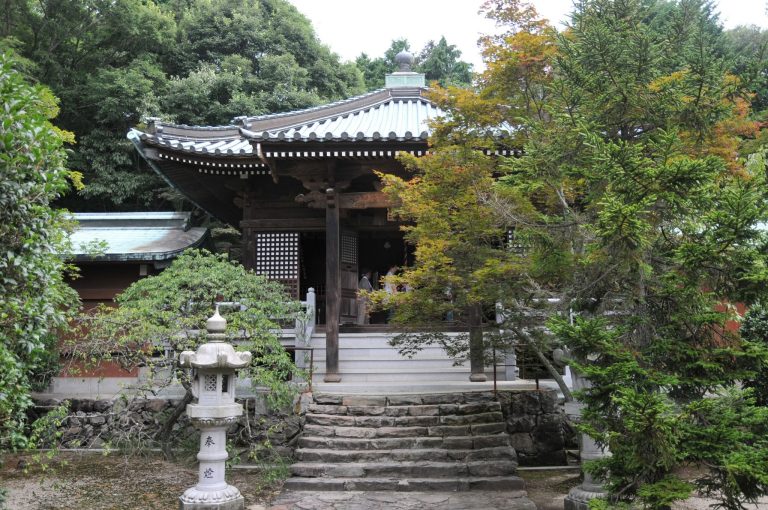
Several subsidiary shrines stand near the main sanctuary. Shimmei Shrine is dedicated to Amaterasu, the three Sumiyoshi deities, and Fujiwara Kamatari, the seventh-century court noble associated with the founding of the Fujiwara lineage. Wakamiya Shrine is dedicated to Emperor Nintoku. Kōra Shrine is dedicated to Takeuchi no Sukune, a legendary minister and military figure in early Japanese tradition. Onzaki Shrine is dedicated to Ame-no-Uzume and Sarutahiko, kami associated respectively with dance and renewal, and with guidance and crossroads.
Additional Shrine Groups
The Hirose-Tatsuta Five Shrines are dedicated to the two forms of Shinatatsu-hime, Waka-Ukano-me, Sukuna-bikona, and Ōtoshi. Kitaguchi Mitama Shrine is dedicated to the spirits of Tomoyasu Gyōbu and Tomoyasu Jibu. The Bee-Hole Shrine and the Hair-Giving Shrine stand on the northern side of Mount Iwaseo.
Roadside Deity Shrine
The Roadside Deity Shrine has locations at the temporary festival site in Kameoka and near the west gate of Eimei High School. It was destroyed in the Takamatsu air raid and rebuilt in 1996.
Approach and Festival Space
The approach from the shrine toward the temporary festival site is approximately 670 metres long. During the Ichidate Festival and the annual grand festival, vehicles are excluded from this route and stalls line the approach. The temporary festival site lies along Hachiman Street in Kameoka, extending the shrine’s ceremonial space beyond the central precincts.