Palazzo Bonacolsi: A Medieval Family Palace in Mantua
Site at a Glance
- Popularity
- Medium
- Country
- Italy
- Primary era
- Medieval
- Eras represented
- Medieval
- Civilizations
- Holy Roman Empire
- Site type
- Domestic
- Remains
- Palace
On this page8 sections
History
Bonacolsi rule
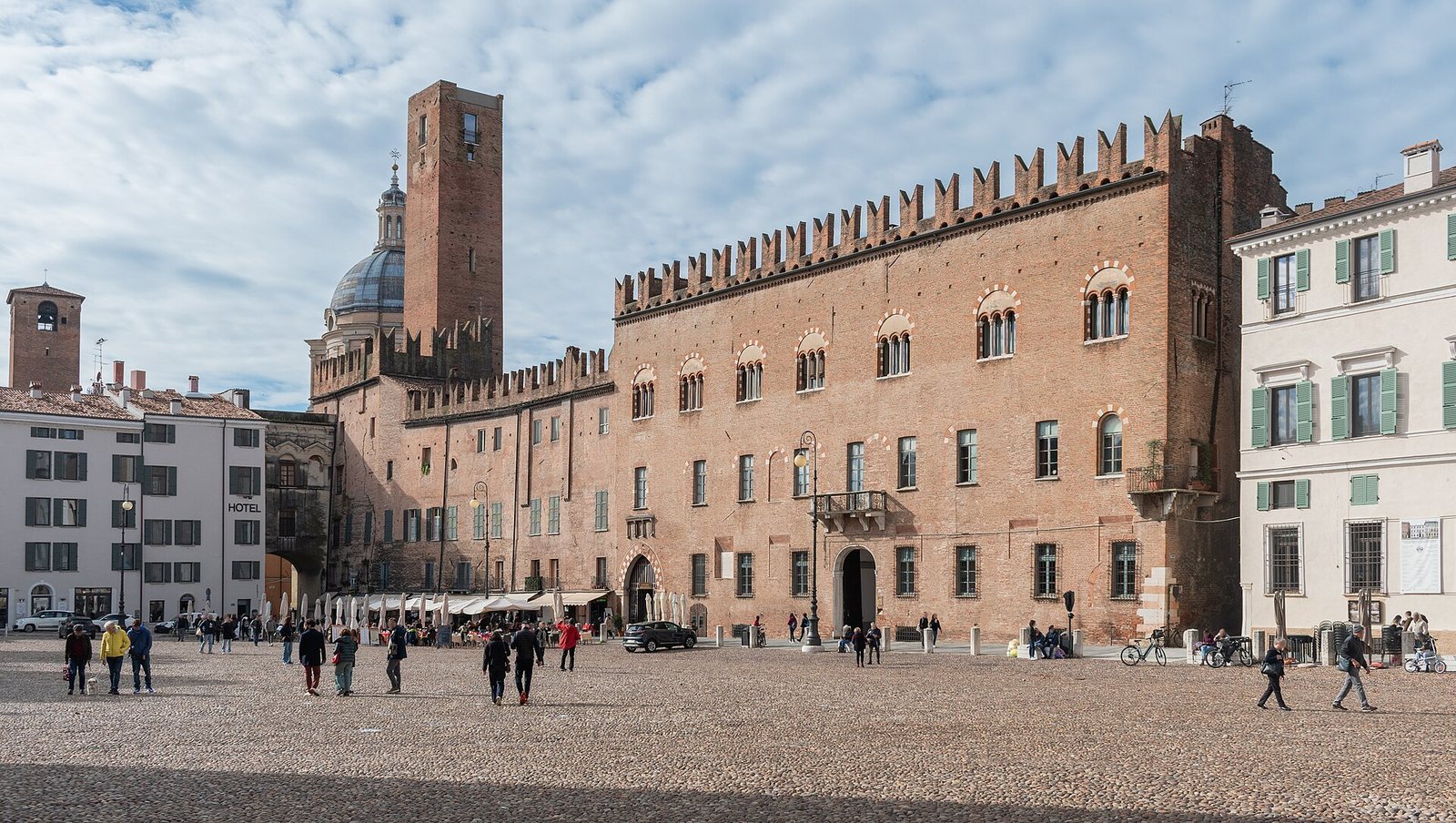
Palazzo Bonacolsi is a Gothic palace on Piazza Sordello in Mantua, Italy, built in the late 13th century by Pinamonte dei Bonacolsi as the residence of his powerful family. The Bonacolsi ruled Mantua during the 13th century. Pinamonte established the palace on land he had bought from Rolandino de Pacis and acquired other buildings in the old city.
Pinamonte left the family’s most prestigious palace to his second son, Bardellone, who succeeded him in governing Mantua. Bonacolsi rule ended on 16 August 1328, when a revolt toppled Rinaldo dei Bonacolsi. Ludovico I Gonzaga supported the uprising and took power.
Gonzaga ownership
After the revolt, the palace passed to Ludovico I, who held the civic office of captain of the people, a leadership post in a medieval commune. It later belonged to Gianfrancesco I Gonzaga, who granted it to his son Alessandro. When Alessandro died without children, he left the property to his brother Ludovico III.
From 1479 to 1487, the palace served as the Mantuan residence of Antonia del Balzo, Countess of Rodigo and wife of Gianfrancesco Gonzaga. He founded the Gonzaga branch associated with Sabbioneta and Bozzolo.
Castiglioni ownership
In 1804, Baldassarre Castiglione, a descendant of the Castiglioni family, bought the palace from the counts Bevilacqua. The family’s Mantuan branch dated to 1440 and was founded by Baldassarre Castiglione the elder, grandfather of the writer of the same name. The building is now known as Palazzo Castiglioni and is used as a residence.
Remains
Palace and associated towers
Palazzo Bonacolsi
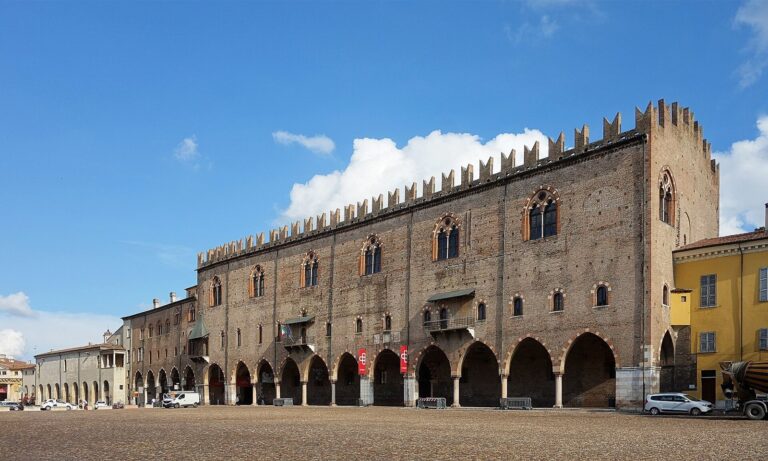
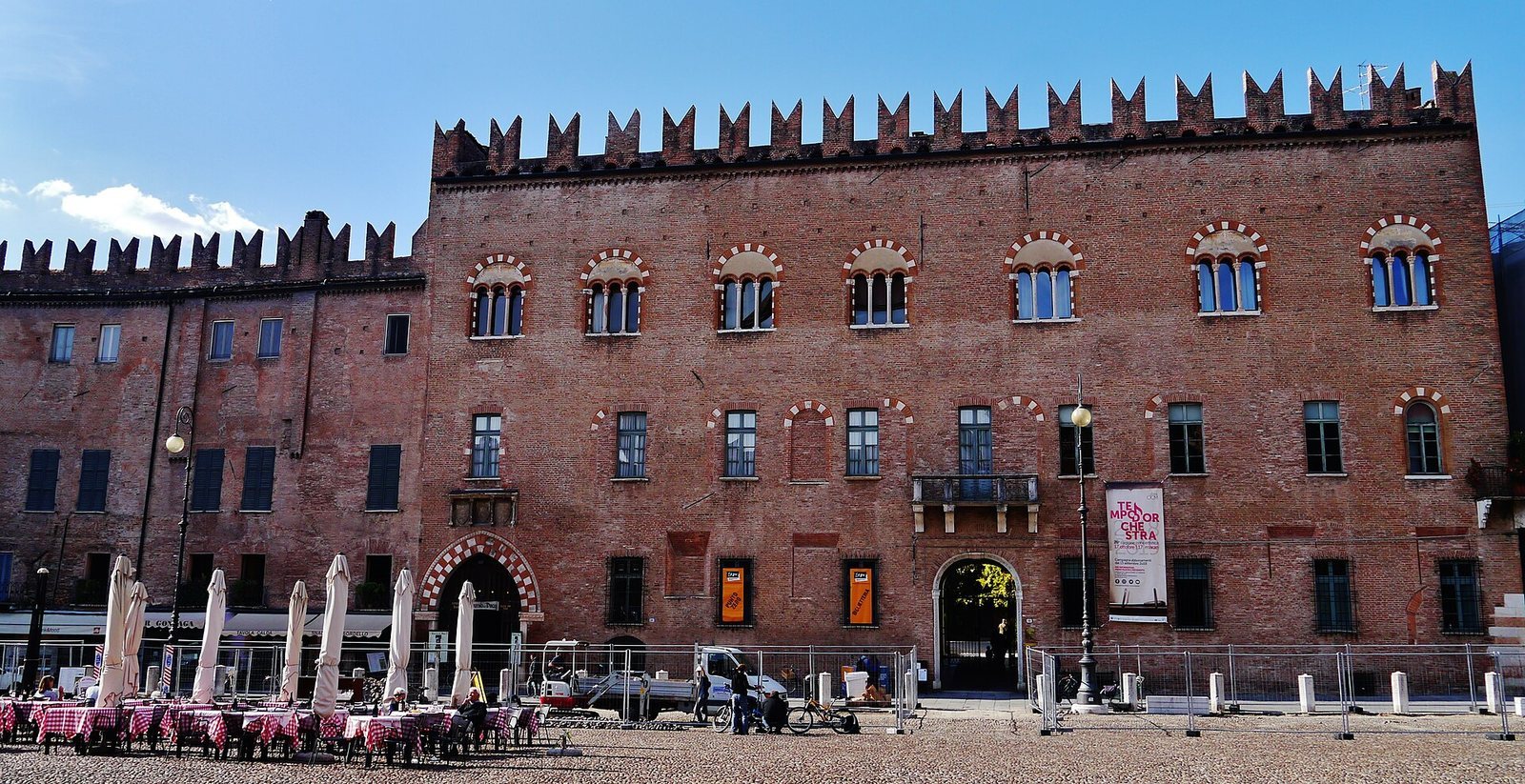
The palace stands opposite the Ducal Palace on Piazza Sordello. Built entirely of brick in the Gothic style, it has swallowtail-shaped battlements along the roofline, a form associated with the Ghibelline faction in medieval Italian politics. The upper storey has mullioned windows, divided into sections by vertical supports. At ground level, the original entrance is framed by a large, two-colour pointed arch bearing Bonacolsi shields. A triforium, a band of openings in an upper wall, also carries the family’s coats of arms.
Associated towers
The Torre dei Bonacolsi is a substantial tower house in a lane adjoining the palace. Pinamonte commissioned it around 1280 to protect the family’s palaces in Piazza San Pietro. The Tower of the Cage, or Torre della Gabbia, is another building associated with the palace.