Joyeuse Garde Castle: A Medieval Fortress in Brittany
Site at a Glance
- Popularity
- Medium
- Country
- France
- Primary era
- Medieval
- Eras represented
- Medieval
- Civilizations
- Duchy of Brittany
- Site type
- Military
- Remains
- Castle
On this page6 sections
History
Early castle and destruction
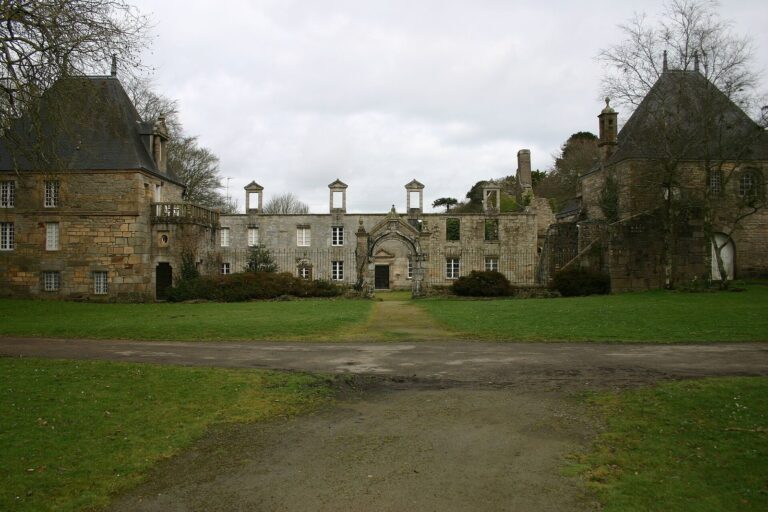
Joyeuse Garde Castle is a medieval fortress at Goelforest, in La Forest-Landerneau, Finistère, France. A predecessor fortification on the site is believed to date to the sixth century, while the castle itself was built in the twelfth century.
In 1342, during the Breton War of Succession, troops of Charles of Blois captured the castle from the garrison of Jean de Montfort. The two men were rival claimants to the Duchy of Brittany. After taking the fortress, Charles ordered it dismantled, leaving it in ruins.
Arthurian legend and later memory
From the fifteenth century, the castle was identified with Joyous Gard in Arthurian legend, the medieval stories of King Arthur and his knights. In the tale, the place was once Dolorous Guard, where violent giants committed atrocities. Lancelot of the Lake freed it, and it became Joyous Guard. The antiquarian Chevalier de Fréminville described the ruins in 1844. The castle also inspired Algernon Charles Swinburne’s 1859 poem Joyeuse Garde. It received French historic-monument protection on 6 October 1975.
Remains
Plan and surviving fabric
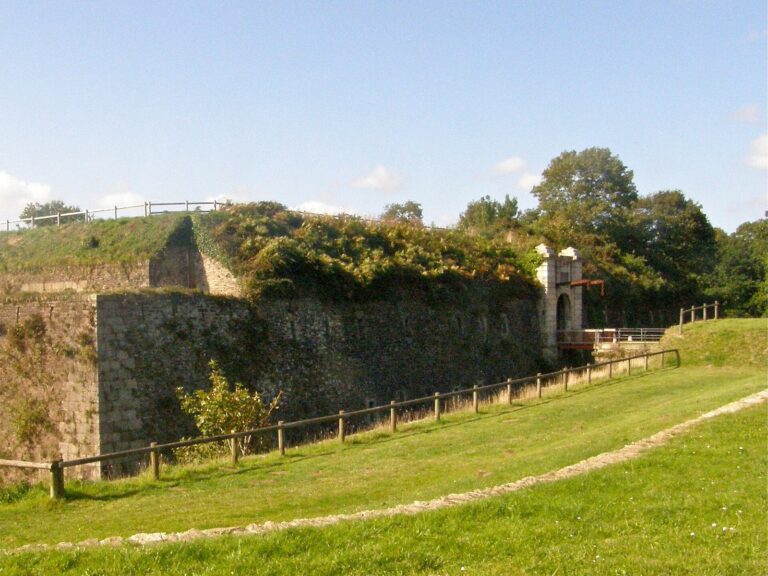
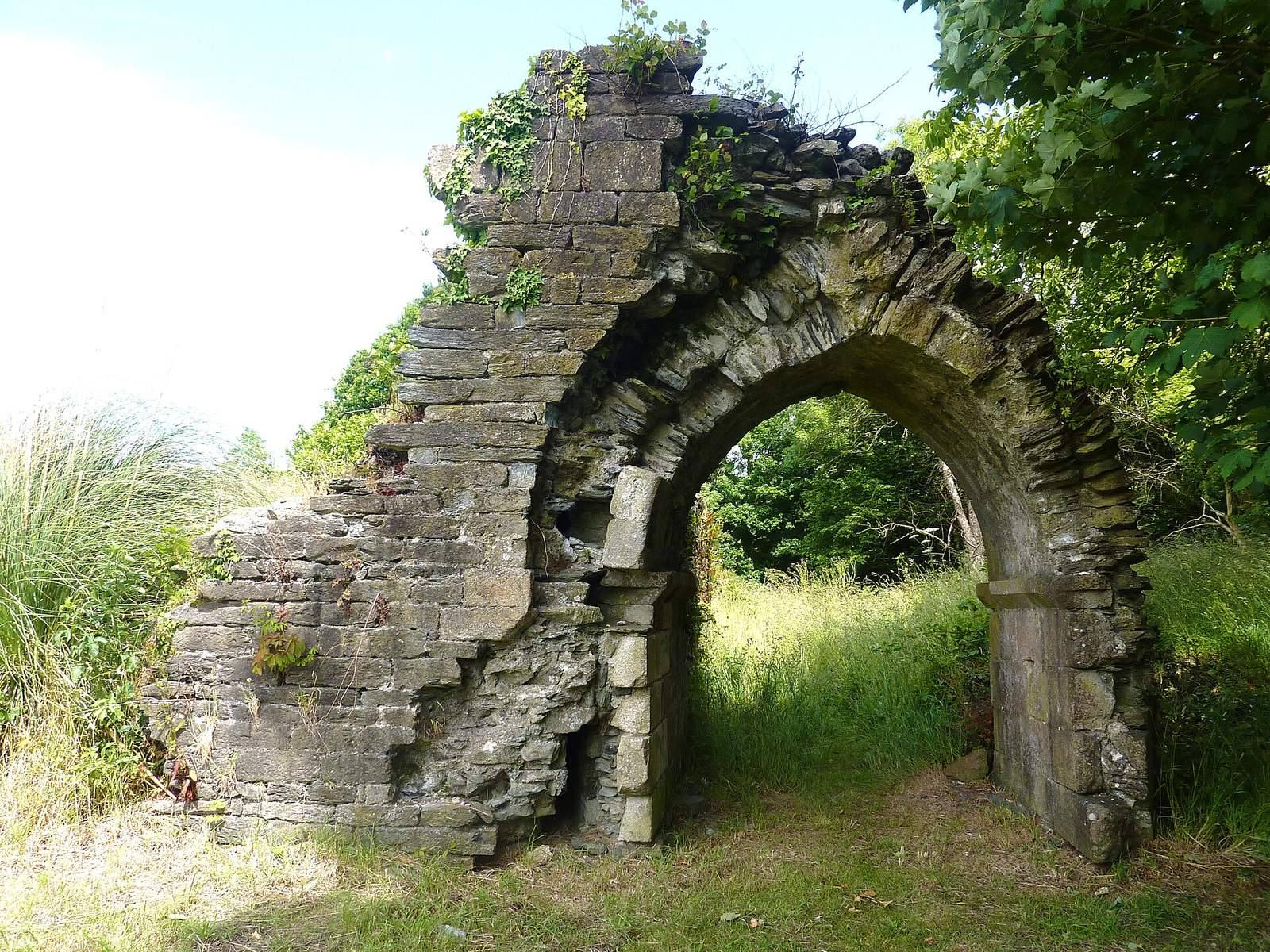
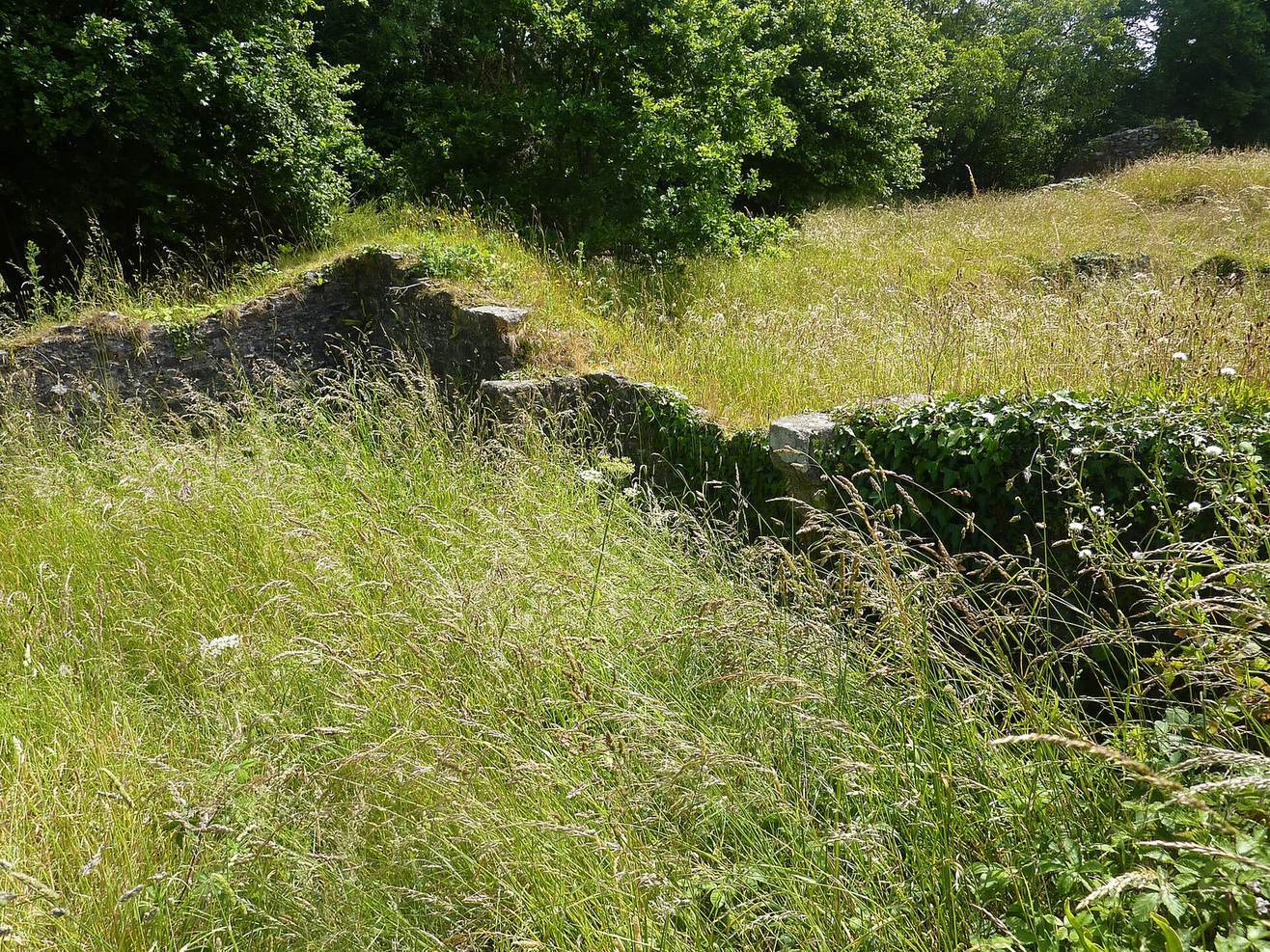
The castle’s elongated rectangular plan had five towers, one at each corner and another midway along one side. Today, the ruins barely rise above the grass. Sections of wall, foundations close to ground level, and the bases of the towers mark the former layout. A circuit of ditches surrounds the site, and the entrance retains a pointed arch.
Underground passage
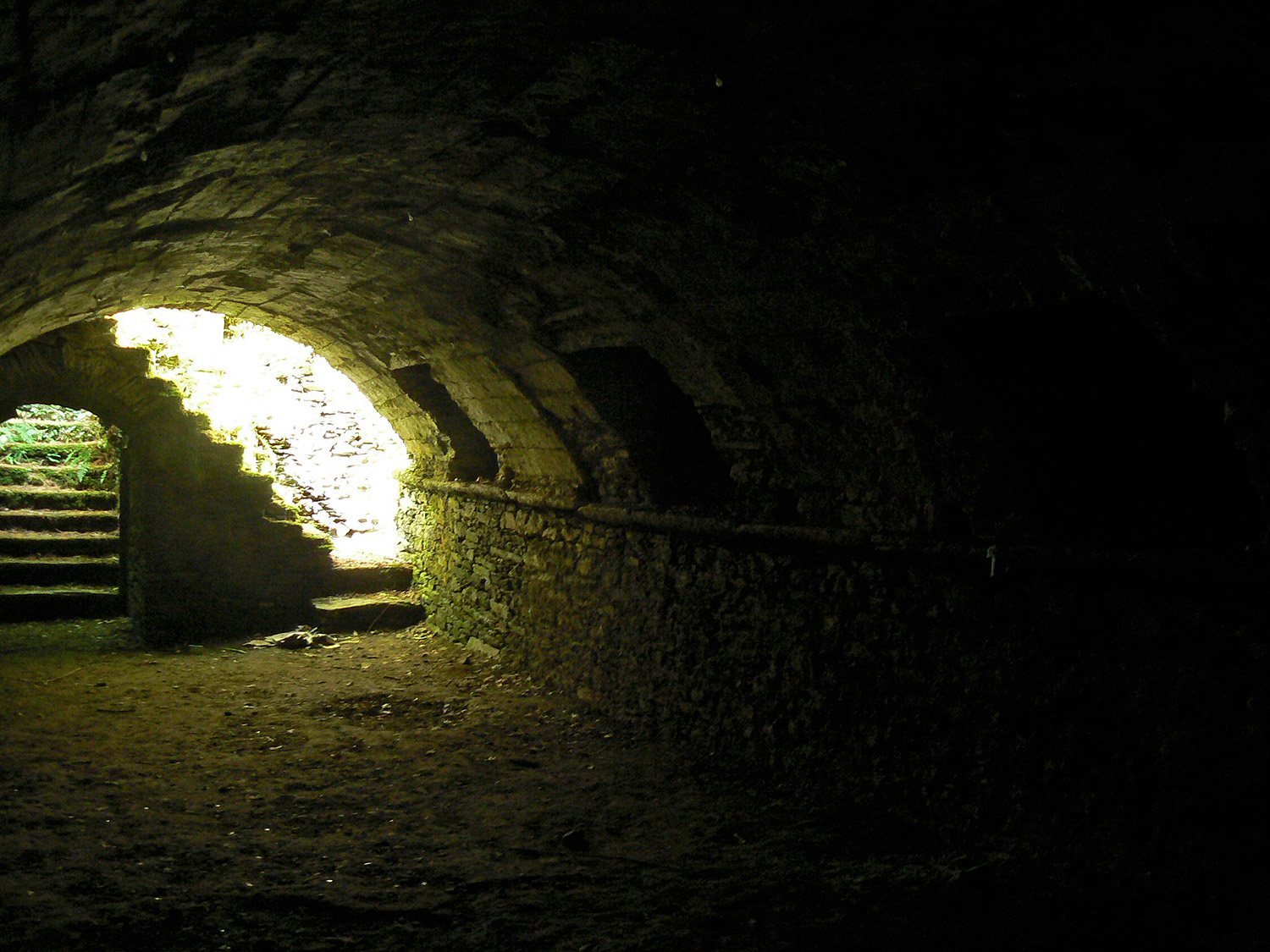
An underground passage lies among the ruins. Its entrance was almost entirely blocked by 1844; remains of the passage, its entrance, walls, and gate survive at the site.