Palatine Basilica of Santa Barbara: Gonzaga Court Chapel and Mausoleum
Site at a Glance
- Popularity
- Medium
- Country
- Italy
- Primary era
- Early Modern
- Eras represented
- Early Modern, Modern
- Civilizations
- Holy Roman Empire, Italian
- Site type
- Religious
- Remains
- Basilica
On this page9 sections
History
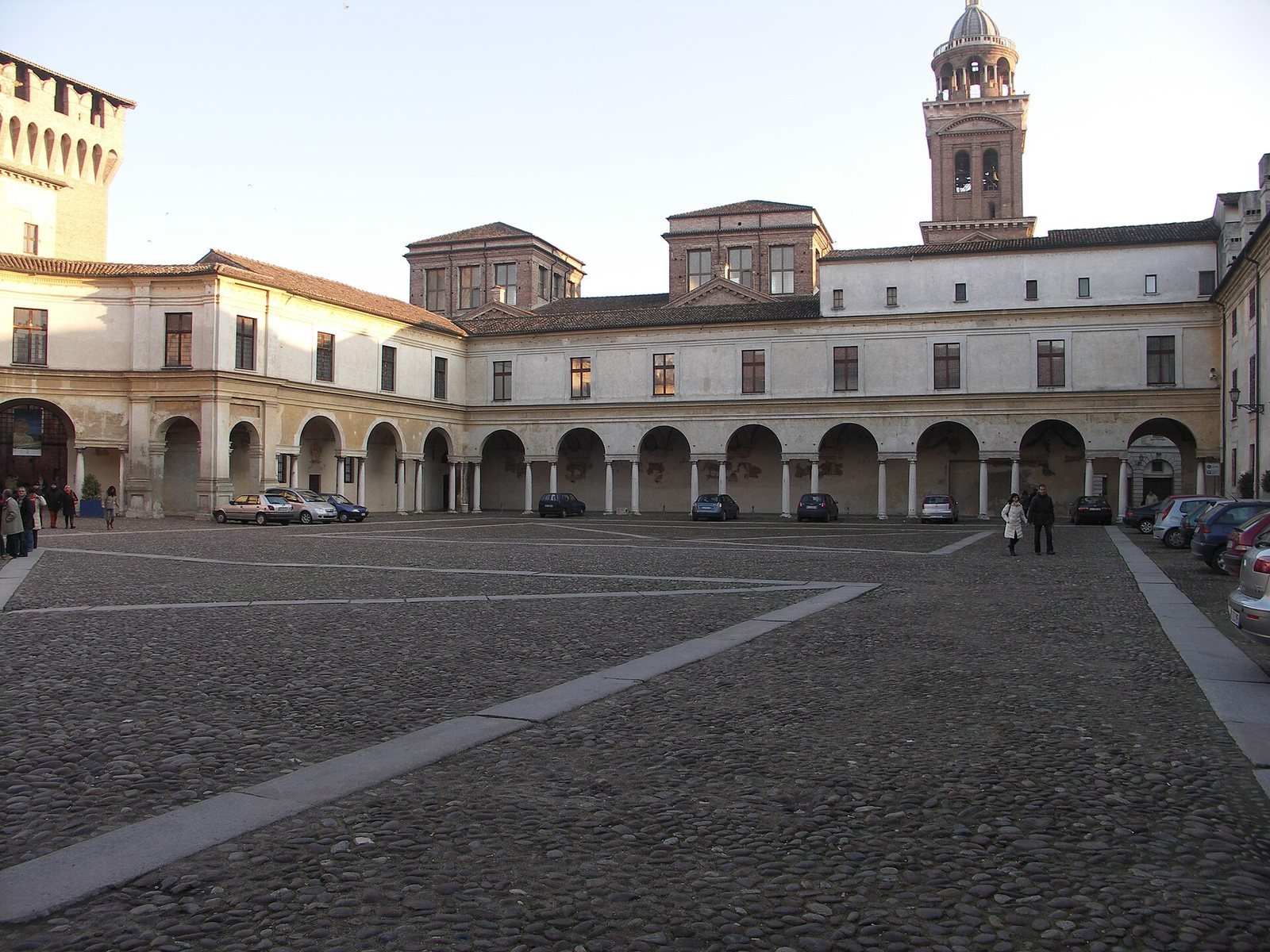
The Palatine Basilica of Santa Barbara is a Catholic court church in Mantua, Italy, built for the Gonzaga dynasty as both a palace chapel and a family mausoleum. Commissioned by Duke Guglielmo Gonzaga, it was designed by court architect Giovan Battista Bertani and constructed in two campaigns, from 1562 to 1567 and from 1569 to 1572. Its position within the Ducal Palace grounds allowed it to connect existing buildings, while its Renaissance-era design served the court’s religious and dynastic purposes.
Foundation and court worship
Court ceremonies began in the basilica in 1565 and were led by abbots. Guglielmo granted it privileges intended to place it beyond episcopal control and allow a liturgical rite distinct from the Roman Rite, the Catholic Church’s liturgical tradition. The church was designed for elaborate ceremonies accompanied by accomplished sacred music, an interest of the duke. Relics brought from Rome were associated with generous indulgences, which in Catholic practice concern remission of temporal punishment for sin.
Giovanni Giacomo Gastoldi served as chapel master, or choirmaster, from 1588 until his death in 1609. The church’s foundation also belongs to a period of religious tension at the Mantuan court. The Inquisition, a church institution that investigated suspected heresy, was especially active in Mantua in 1567 and 1568, and Bertani was among those affected. The basilica has been interpreted in relation to the Counter-Reformation, the Catholic renewal and reform that responded to the Protestant Reformation.
Dynastic burials and later history
The basilica’s role as a Gonzaga mausoleum encompassed several generations of the ruling family. Those buried there included Federico II, the first Duke of Mantua; Francesco III, the second duke; Guglielmo, the third duke; Francesco IV, the fifth duke; Carlo I, the eighth duke; and Ferdinando Carlo, the tenth duke. Guglielmo Domenico, a son of Vincenzo I Gonzaga, and numerous Gonzaga women were also buried there. Carlo I and Ferdinando Carlo belonged to the Gonzaga-Nevers branch of the family.
The basilica retained its Palatine privileges after Gonzaga rule ended. From 1866 to 1929, the title of Abbot of Santa Barbara of Mantua was held by the Chief Chaplain of the King of Italy. The chaplain was based in Florence and, from 1871, in Rome. In the late nineteenth century, a passage connecting the Ducal Palace and the church was closed to separate state property from church property. This followed the end of the pope’s temporal power, meaning his territorial rule, in 1870.
Restoration work in 2007 brought human remains to light. In 2008, the basilica was included in the UNESCO World Heritage property of Mantua and Sabbioneta. It is a Catholic church in the Diocese of Mantua, and its current rite is Roman Catholic.
Remains
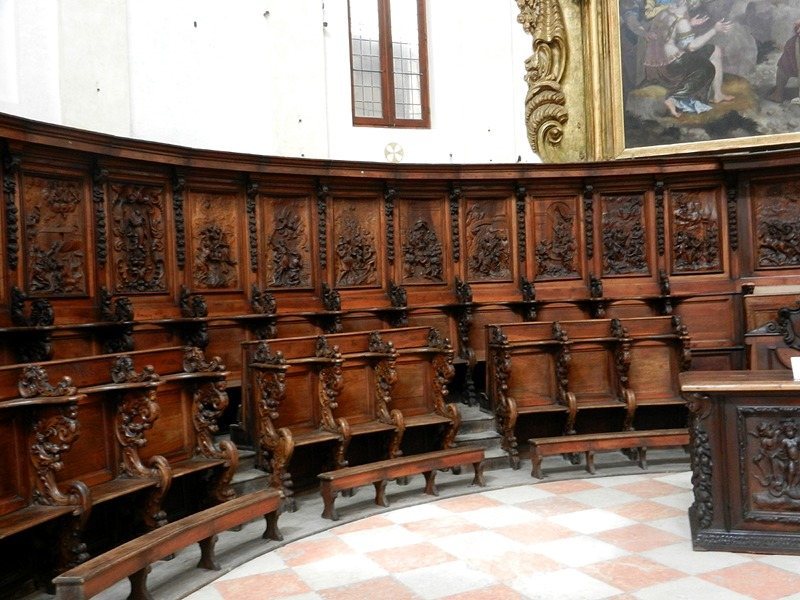
The basilica’s interior links two centrally organized, domed spaces along a lengthwise axis. The first has a square enclosure, followed by a raised area around the altar under a similar enclosure and an apse, the curved sanctuary end, whose ceiling is divided into intersecting recessed panels. A single main hall with side chapels meets a semicircular raised altar area. Beside the main altar, stairs descend to a deep crypt formed by a rectangular room and an oval shrine.
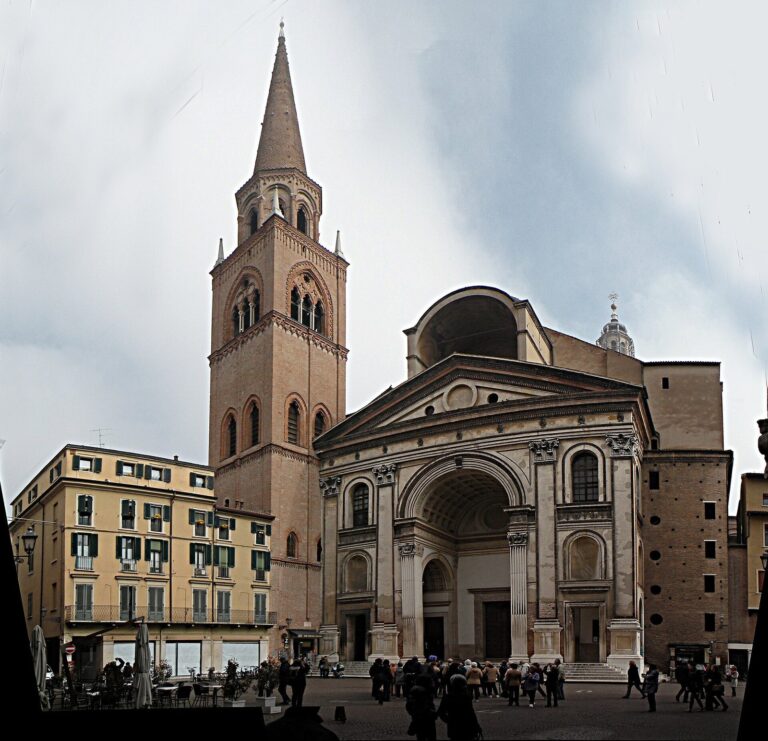
Façade and bell tower
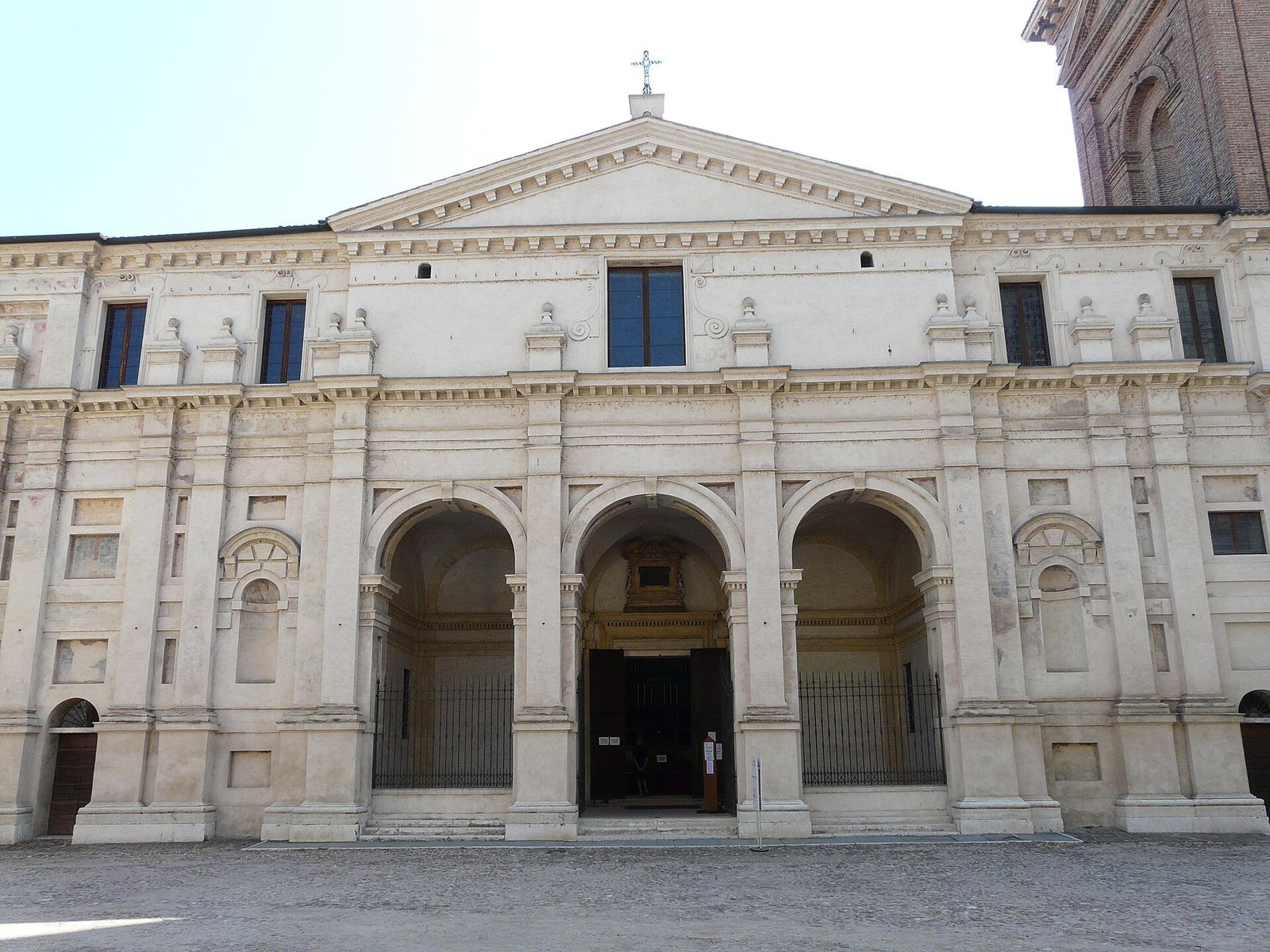
The restrained façade uses classical decoration, with pilasters shaped as simple bands. The brick bell tower rises to a small circular temple and forms a distinctive element of Mantua’s urban landscape. Bertani based its design on Donato Bramante’s circular shrine at San Pietro in Montorio, adapting the upper structure with an opening formed by a central arch between two lower openings. This arrangement drew on ideas associated with Sebastiano Serlio and Andrea Palladio. An earthquake in Emilia on 29 May 2012 damaged the tower’s dome.
Art and music
Paintings and organ doors
The side altars designed by Bertani hold two large paintings by Lorenzo Costa the Younger, The Baptism of Constantine and The Martyrdom of Saint Adrian. The altar painting in the raised sanctuary area is Domenico Brusasorci’s The Martyrdom of Saint Barbara, dated 1564. Organ doors attributed to Fermo Ghisoni, from around 1566, show the Annunciation on their inner faces and Saints Barbara and Peter on their outer faces.
Organ
Graziadio Antegnati built the organ in 1565. Giorgio Carli of Pescantina restored and reconstructed it between 1995 and 2006; 312 pipes from Antegnati’s workshop survive. The instrument has one hand keyboard and a 17-note foot-operated keyboard permanently linked to it. Seven split upper keys provide separate pitches for notes that otherwise share a key. The organ sits above the choir, on the side used for reading the Epistle during Mass, inside a richly carved and gilded Renaissance case.
Crypt and relics
The crypt beneath the basilica contains the Gonzaga burial remains. Ferdinando Carlo Gonzaga-Nevers is represented among them by his skull alone; his other remains are at San Francesco Grande in Padua. Relics brought from Rome were kept in caskets decorated with precious stones and Venetian crystal.