Schloss Aham: A Moated Castle and Estate in Bavaria
Site at a Glance
- Popularity
- Medium
- Country
- Germany
- Primary era
- Medieval
- Eras represented
- Medieval, Early Modern
- Civilizations
- Electorate of Bavaria, Holy Roman Empire
- Site type
- Military
- Remains
- Castle
On this page9 sections
History
Schloss Aham is a castle estate in the municipality of Aham, Bavaria, Germany, first built as a moated stronghold on the Vils around 900. It was intended to defend against raids by Hungarian forces into central Europe during the period around the turn of the tenth century.
Early castle and noble households
The Ahamer, also known as the Achaimer, first appear in 1144 as lords of the castle and estate. The Laiming family succeeded them and established one of its ancestral seats at Aham, where it was based from 1420 to 1598.
Lerchenfeld and Bavarian lordship
On 17 February 1587, Duke Wilhelm granted Caspar Baron von Lerchenfeld lower jurisdiction, a limited level of judicial authority, over the Hofmark, a Bavarian territorial lordship with local rights. The Maxlrain and Thannberg families later resided at Aham. Maria Anna Josepha Susanna von Maxlrain, a member of the Maxlrain noble family, was born there in 1708 and died there on 22 December 1756. Her marriage to Ferdinand Baron von Lerchenfeld brought Aham to the Lerchenfeld barons, who established a branch of their family there during the seventeenth and eighteenth centuries. Ferdinand died in Munich on 13 July 1776.
Ownership in the nineteenth century
On 8 October 1817, Josef Baron von Lerchenfeld sold the Hofmark of Aham to Maria Leopoldine of Austria-Este, an Austrian archduchess and Electress of Bavaria. The estate later passed to the knight von Mayer. In 1833, Count Maximilian Joseph von Montgelas, a Bavarian statesman and reformer, acquired it together with the Hofmarks of Egglkofen and Gerzen. At his own request, he was buried in the castle chapel in 1838.
Later ownership and changes
Countess Amia von der Heydte-Montgelas and her husband, Baron Hans von der Heydte, later lived at Aham. Hans died there in December 1996 and left the castle to his second wife. She died at Aham in August 2022 and left it to her family.
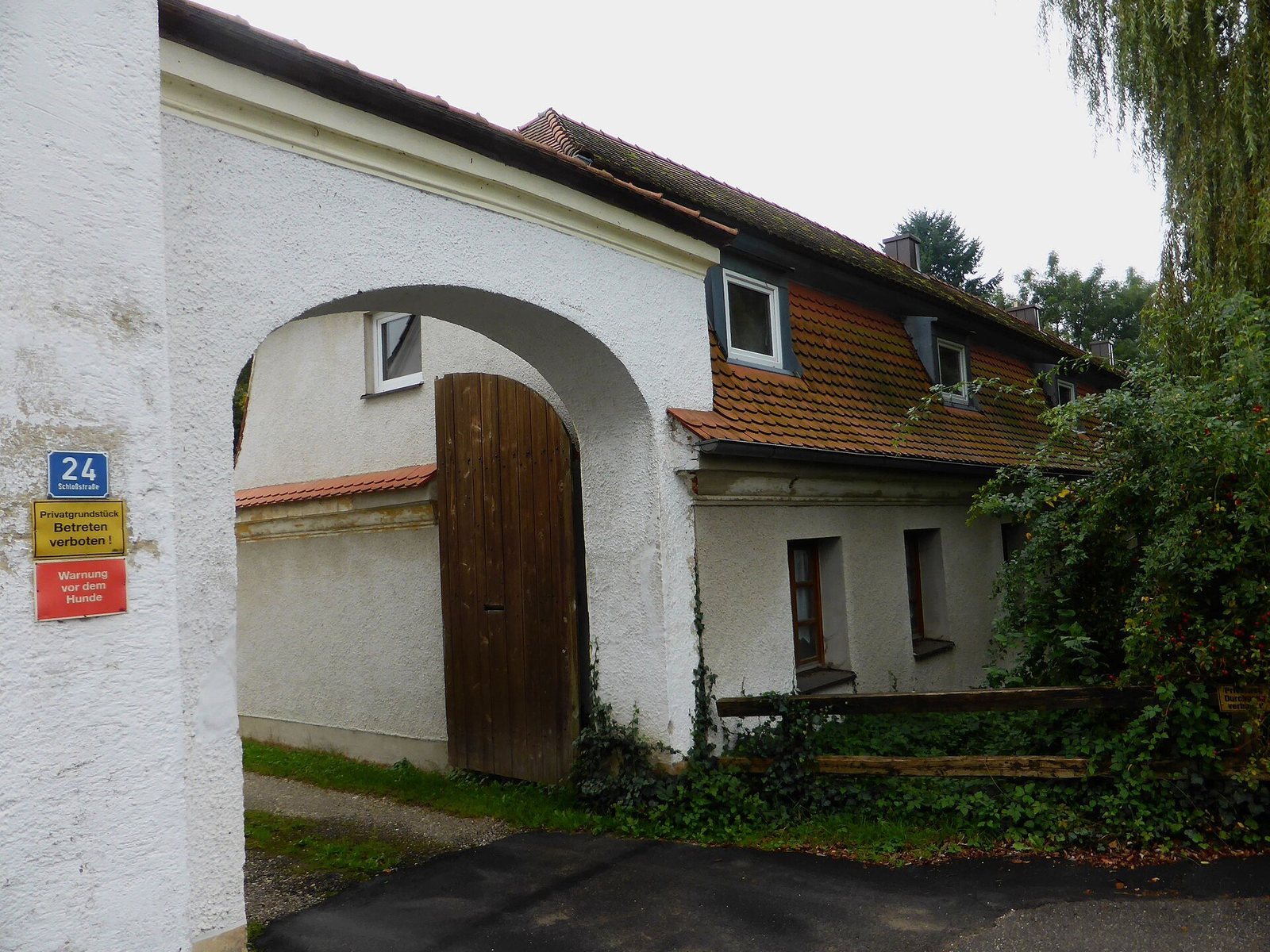
Until 1955, traffic between Vilsbiburg and Frontenhausen travelled through the village and castle along Schlossstraße. A new road and bridge over the Vils redirected it. Schloss Aham is listed as a historic monument, and medieval and early-modern archaeological remains around the former Hofmark castle are designated as an archaeological monument.
Remains
Castle layout and water defenses
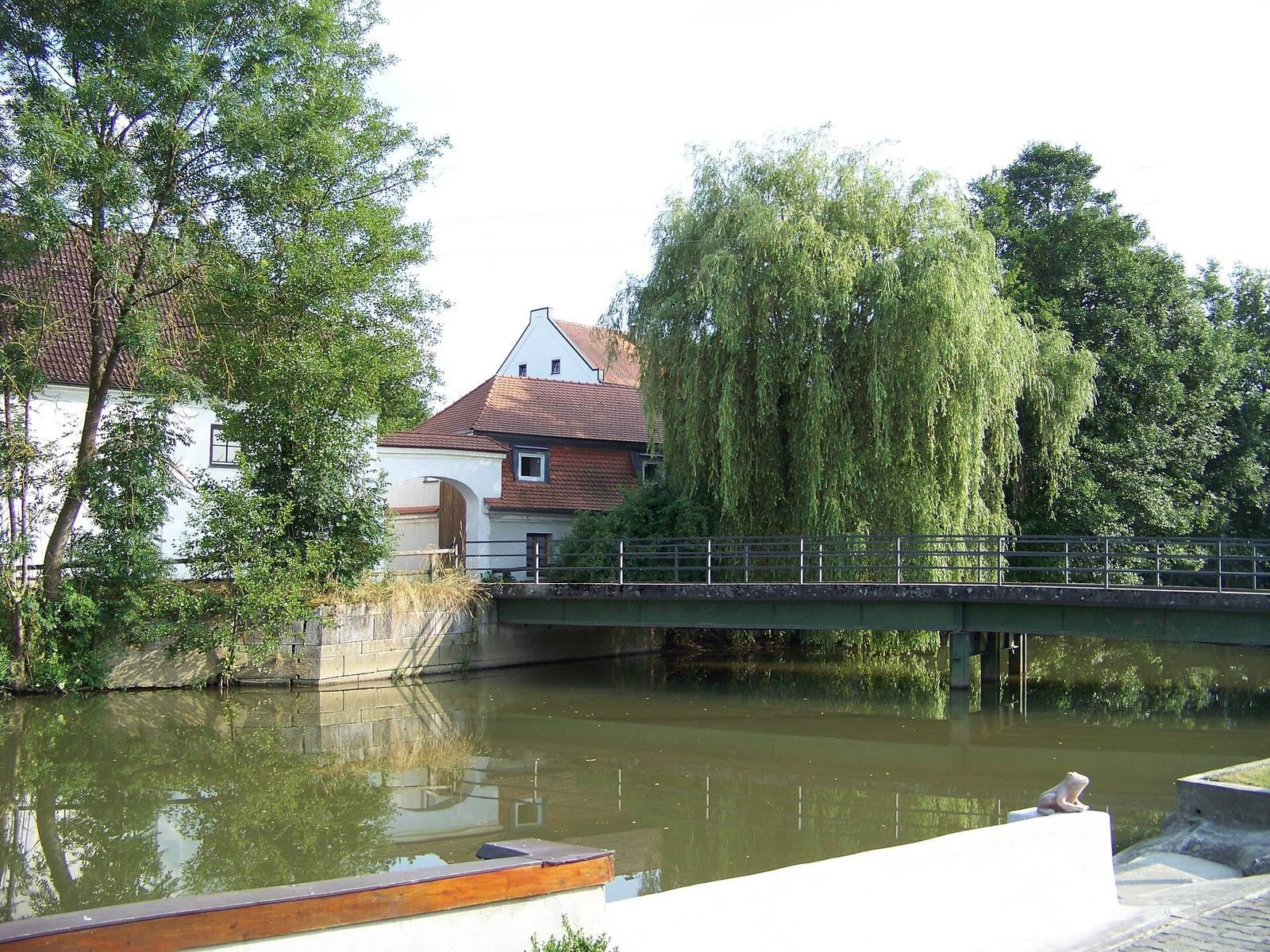
Schloss Aham lies in the Vils valley, and its former defenses were closely associated with the river and surrounding water. In 1579, a small lake beside the castle received a stream, while ditches around the complex carried water from the Vils. A 1721 engraving by Bavarian artist Michael Wening shows the castle enclosed by the river and a water-filled moat. A masonry bridge leads to the first building, which has a stepped gable; further buildings and a tower with a tent-shaped roof appear behind it. Part of a round tower survives, as does a pond from the former moat. A road frames the complex.
Estate buildings and chapel
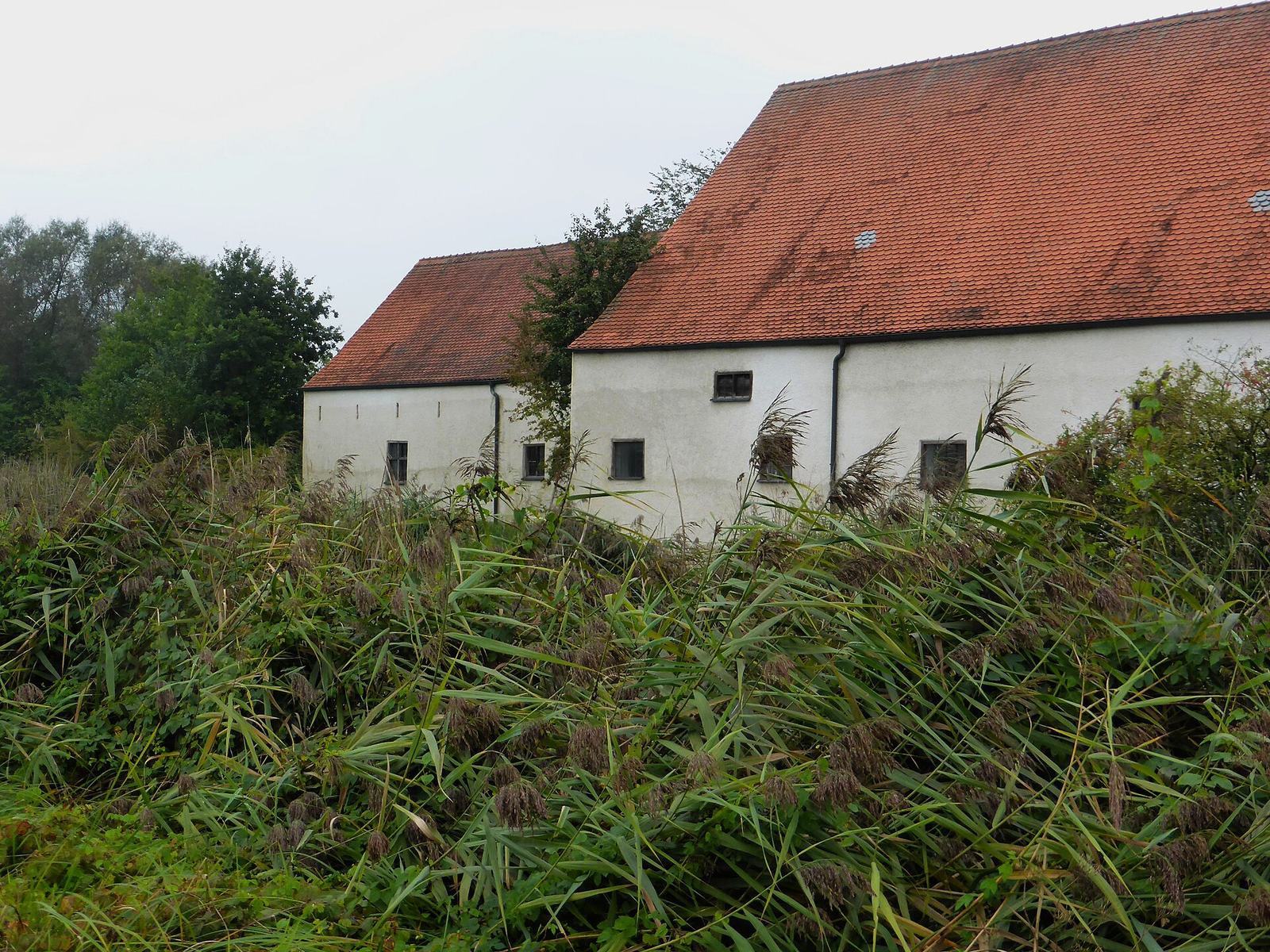
Ferdinand Carl von Lerchenfeld built the surviving estate outbuildings in 1749. They stand around the main castle. The castle chapel is dedicated to Saint George, an early Christian martyr venerated as a saint, and contains a crypt.
Subsurface remains
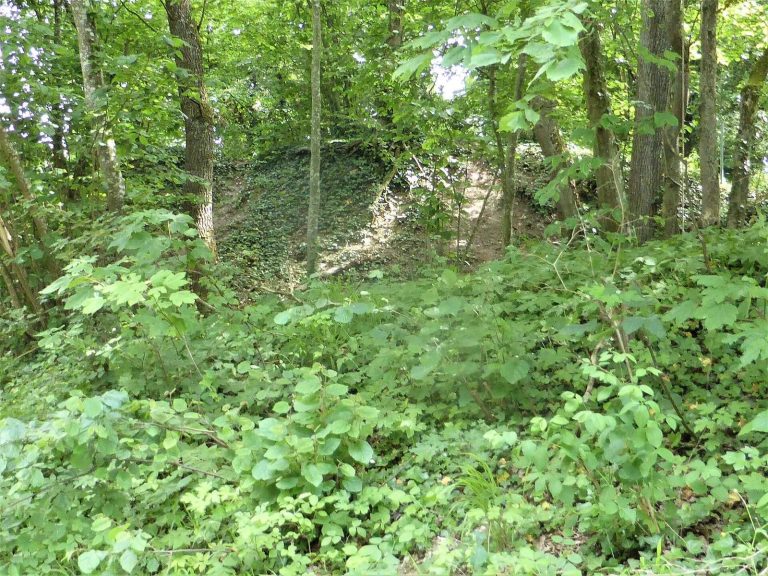
Below ground, the area of the former Hofmark castle contains medieval and early-modern remains, including traces of predecessor buildings and earlier construction phases.