Mariä Heimsuchung (Landshut-Frauenberg): A Late Gothic Pilgrimage Church in Germany


Site at a Glance
- Rating
- 4.7
- Popularity
- Very Low
- Country
- Germany
- Primary era
- Medieval
- External website
- Open
- Eras represented
- Medieval, Early Modern, Modern
- Civilizations
- Duchy of Bavaria, German, Holy Roman Empire
- Site type
- Religious
- Remains
- Church
On this page15 sections
History
Origins and late medieval construction
Mariä Heimsuchung is a Roman Catholic filial and pilgrimage church in Frauenberg, Germany, built by the late medieval Christian community in the second half of the fifteenth century. The present late Gothic hall church probably dates from about 1470 to 1480 and stands on the site of a Romanesque predecessor. The lower storeys of the earlier tower were incorporated into the later building. As a filial church, it remains a branch church subordinate to a parish church. Since 2001, Mariä Heimsuchung has belonged to the parish of St. Vincent de Paul in Auloh.
The religious history of Frauenberg is traditionally connected with Saint Erhard, an early medieval bishop associated with Regensburg and missionary activity in Bavaria. Around AD 700, he is said to have worked in the area as an itinerant bishop, a religious leader who travelled between communities rather than serving only one fixed church. According to local legend, Erhard crossed the Isar near Frauenberg while fleeing, helped by a large, flat stone. The stone, known as the Erhard Stone, is now set into a corner pier on the church’s exterior.
Furnishing, pilgrimage, and changing forms
The church became a pilgrimage destination during the seventeenth century. Its patronal feast, the Visitation of Mary, is celebrated on July 2. This Christian feast commemorates Mary’s visit to Elizabeth, as described in the Gospel of Luke. Pilgrims also come in processions of supplication from surrounding parishes.
After a cholera outbreak in Landshut in 1854, the Association of Landshut Pilgrim Women vowed to make an annual pilgrimage to Frauenberg for protection against infectious disease. The annual practice continues, and a votive painting inside the church recalls the outbreak and the vow. A votive painting is an image made in fulfillment or remembrance of a religious vow or request.
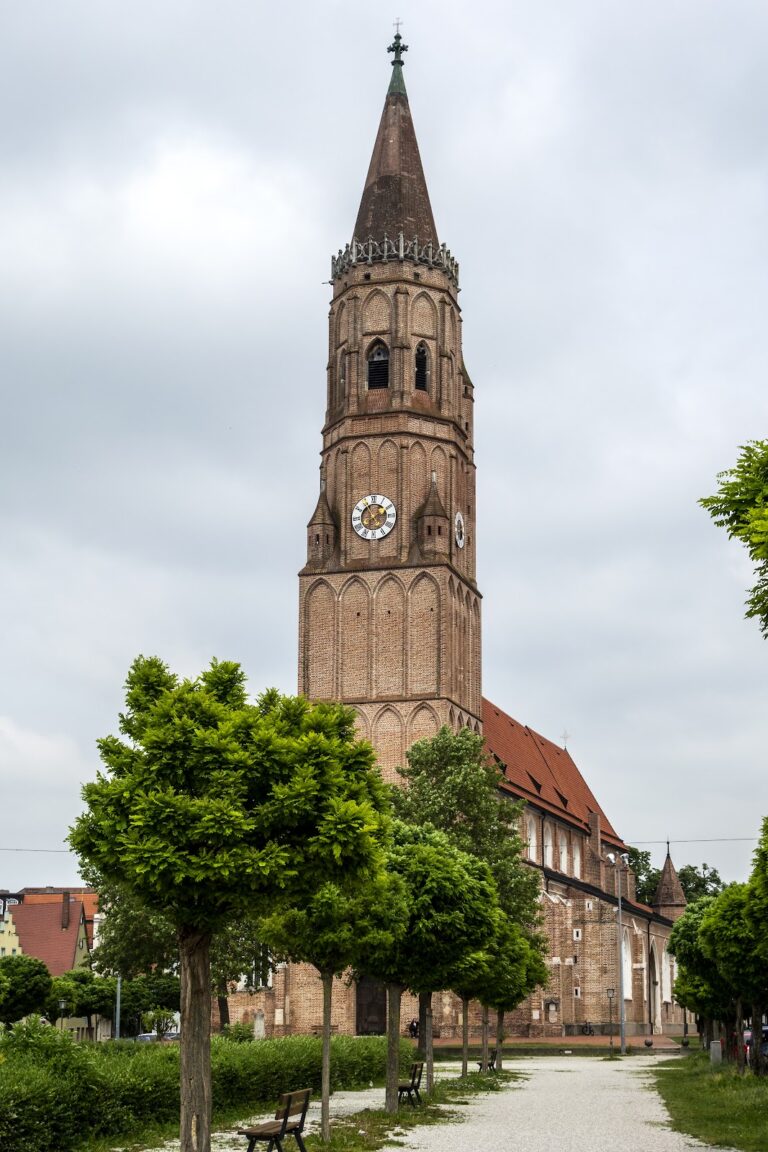
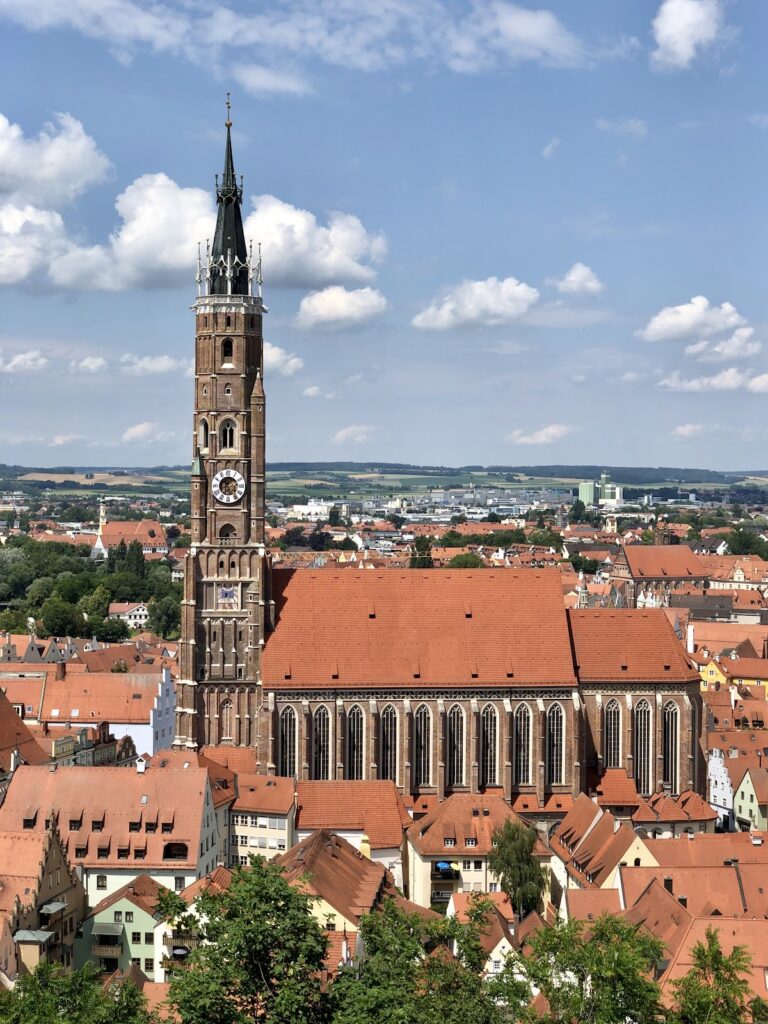
The church’s appearance changed over several centuries. Its interior was probably first decorated with Renaissance frescoes between about 1580 and 1600, while later furnishings were adapted to Baroque and Rococo tastes. The tower originally received a Baroque onion dome, probably at the time recorded for the tower crown of St. Thomas in Adlkofen. A church account from 1712 records this form. In 1866, Historicist taste led to its replacement by a pointed helmet. The storm Wiebke tore off the tower top on March 1, 1990. After discussion and a secret vote, the pointed form was reconstructed rather than the earlier onion dome.
Rediscovery and conservation
The Renaissance frescoes came to light again during the interior renovation of 1975. They were restored and conserved during another renovation around 1996. From 1998 to 2000, further work repaired the roof structure, restored the vault, and stabilized the gallery. These interventions preserved elements from the church’s medieval construction and its later decorative phases.
Remains
Setting and architectural layout
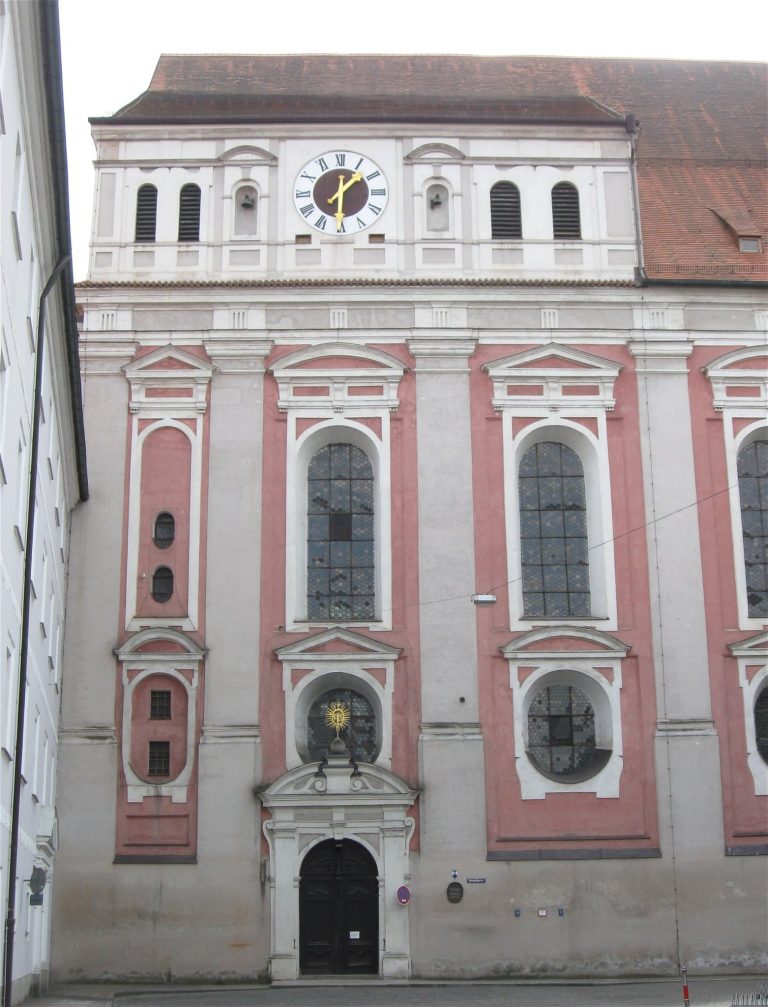
Mariä Heimsuchung stands above the southern escarpment of the Isar and is surrounded by a cemetery. The east-facing building consists of a four-bay nave and a slightly narrower, two-bay choir ending in three sides of an octagon. Its tower projects into the nave at the northeastern end, producing an asymmetrical interior. A two-storey sacristy was added in the nineteenth century between the tower and the north wall of the choir, while a west porch from the same century provides the entrance.
The exterior is largely plain in its treatment. Baroque alterations changed the window openings to round-headed forms, and nineteenth-century work added buttresses to the choir. Inside, the nave and choir are covered by a Springraut vault, a late Gothic net-rib vault whose intersecting ribs form a network. Pear-shaped ribs rise from semicircular, moulded corbels on shallow chamfered wall piers. Pointed wall arches divide the bays, and small round bosses appear at the vault crowns and at several other rib intersections. Some choir bosses carry heraldic shields associated with noble families from the surrounding area and wealthy citizens of Landshut connected with Frauenberg.
Galleries, altar, and late Gothic altarpiece
Western gallery
A wooden double gallery occupies the western bay of the nave, which has no windows. Its coloured balustrades bear floral decoration. The upper level contains an organ built in 1912 by Ludwig Edenhofer junior, an organ builder from Deggendorf. The instrument has six stops distributed across two manuals and a pedal.
Rococo high altar
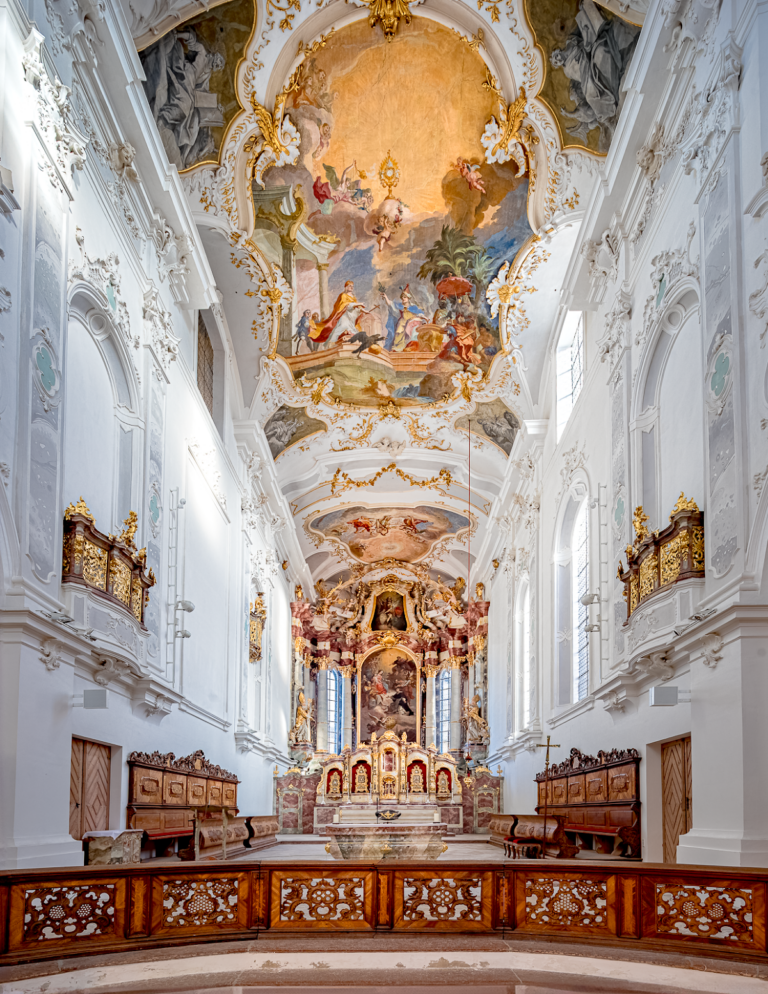
The Rococo high altar was made in 1758 by Veit Braunberger, a cabinetmaker from Vilsbiburg. Its tall, concave lower section contains the tabernacle and supports four round columns framed by carved foliage. The upper section is also concave. In place of an altarpiece, it holds a late Gothic Madonna and Child from the period of the church’s construction. The figure had already belonged to the former high altar and was probably crowned when it was transferred to the 1758 altar. The crescent moon beneath Mary’s feet and the twelve-star wreath around her head identify her as the Apocalyptic Woman, the symbolic woman of the Book of Revelation. Above her, a gilded Marian monogram and crown present Mary as Queen of Heaven. A seemingly floating putto and two further putti on the side volutes complete the upper composition.
Former high altarpiece
The former high altar is a late Gothic winged altarpiece from about 1480 to 1490. A winged altarpiece has hinged sections that can be opened or closed to display different reliefs and paintings. The work now stands against the section of the tower that projects into the nave. Its reliefs and paintings belong to the Landshut School, a late medieval artistic tradition associated with sculptors and painters working in and around Landshut.
Each inner wing contains three vertically arranged reliefs. The left wing presents the Annunciation, the Visitation, and the Nativity, while the right wing shows the Adoration of the Magi, the Presentation in the Temple, and the Flight into Egypt. Several reliefs were altered later, especially the Annunciation, whose details do not fully correspond to its original period. Paintings on the outer sides of the wings show the Birth of Mary, the Nativity, and the Massacre of the Innocents at Bethlehem on the left, and Mary’s Entry into the Temple, the Circumcision of Christ, and the Flight into Egypt on the right. Their elaborate execution and good preservation have led to an assessment of even greater artistic value than that of the reliefs.
The predella, the lower section of an altarpiece, contains a painted wooden relief of the Death of Mary surrounded by the Twelve Apostles, dating from about 1485. The crescent-moon Madonna originally stood inside the altarpiece shrine. From 1864 to 1968, a group representing the Coronation of Mary occupied that space; it is now mounted above the sacristy entrance. In 1968, figures of Mary, Saint Erhard, and Saint Barbara were installed in the shrine, with Mary in the center, Erhard on the left, and Barbara on the right.
Paintings and sculpture
Renaissance frescoes
Renaissance frescoes from about 1580 to 1590 survive on the nave side walls and in the choir. The north wall bears a scene of the Israelites receiving manna during their journey through the wilderness after the Exodus from Egypt. Three other large frescoes depict Saints Matthias, Mary Magdalene, and Peter. The painters may have included artists involved in the redecoration of Trausnitz Castle between 1569 and 1578.
Medieval and Baroque images
The oldest sculpture in the church is an Early Gothic Madonna and Child from around 1300. It stands in a wall niche beside the projecting tower wall in the nave and came from the furnishings of the Romanesque predecessor. Above the niche is a Baroque oil painting of the Veil of Veronica. Other Baroque works include figures of Mary, Wendelin, and George, painted Stations of the Cross, and a series of scenes from Mary’s life on the gallery balustrade.
South side altar
The south side altar, to the right of the chancel arch, was made around 1680 in the Baroque style. Two twisted columns entwined with grapevines support its structure. Volutes with angels frame the upper section, which also contains two additional twisted columns. The principal painting depicts the beheading of Saint Barbara, a Christian martyr.
Porch and commemorative features
The west porch contains a local feature known as a death oriel. It displays three skulls and three long bones beneath a painting of the Poor Souls in Purgatory. Outside the church, the Erhard Stone is built into a corner pier. Its association with Saint Erhard’s legendary crossing of the Isar links a surviving physical feature of the building with Frauenberg’s traditional ecclesiastical history.