Castell de Gardeny: A Templar Commandery and Fortress in Lleida, Spain
Site at a Glance
- Rating
- 4.4
- Popularity
- Low
- Country
- Spain
- Primary era
- Medieval
- External website
- Open
- Eras represented
- Medieval, Early Modern
- Civilizations
- Crown of Aragon, Crusader, Knights Hospitaller, Knights Templar, Spanish
- Site type
- Military
- Remains
- Fort
On this page11 sections
History
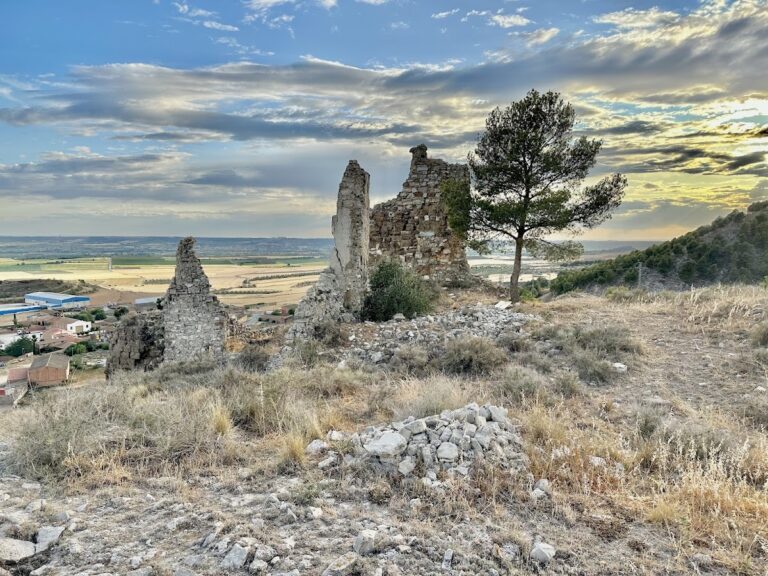
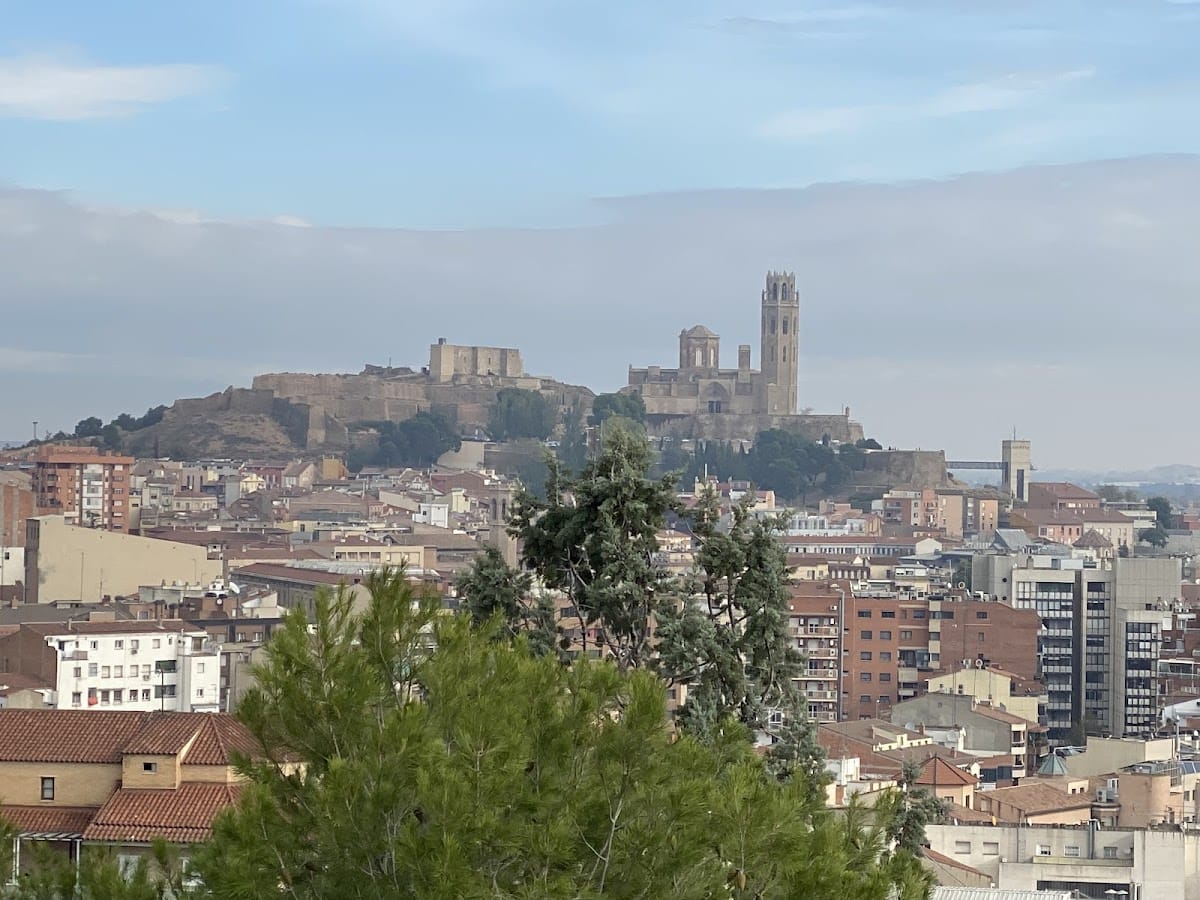
Castell de Gardeny is a former Knights Templar commandery and fortress in Lleida, Spain, built on Gardeny Hill during the twelfth century in the transitional Romanesque tradition. Its elevated position, one of the three hills of Lleida, gave military forces control over the surrounding territory and made the site valuable during campaigns for the city.
Roman and Aragonese military activity
Gardeny Hill was used by Julius Caesar in 49 BCE during the Roman civil war against Pompey. Caesar confronted Pompeian forces commanded by Lucius Afranius and Marcus Petreius, who were based at Ilerda. Their capitulation in August brought the campaign at Lleida to a close, linking the hill with one of the major military episodes of Caesar’s civil war.
In 1123, Alfonso the Battler of Aragon fortified the hill during his campaign against Lleida. He established a camp there during an unsuccessful siege, but later abandoned the position. A castle was constructed in March 1123 within the camp occupied by Alfonso. The siege was lifted in June after the opposing forces, including Ramon Berenguer III and William IX of Poitiers, failed to overcome him. The fortification associated with Alfonso’s campaign did not survive.
The Templar commandery
Ramon Berenguer IV, Count of Barcelona, began the successful siege and conquest of Lleida in 1149, when the city was under Muslim rule. The campaign received substantial military assistance from the Knights Templar, a medieval military-religious order that supported Christian powers and protected pilgrims in the eastern Mediterranean and Iberian campaigns. After the conquest, carried out within agreements made at Girona in 1143, Ramon Berenguer IV granted Gardeny Hill and other properties to the Templars.
The Templars established Gardeny as the seat of one of the principal commanderies of the Crown of Aragon. A commandery was a regional administrative and economic centre of the order. The Templar presence at Gardeny dates from 1152, and Pere de Cartellà became its first commander in 1156. He had been one of the principal figures in the conquest of Lleida.
The commandery initially operated jointly with Corbins and later became highly prosperous. Its administration was developed through the organization of additional commanderies at Barbens and Corbins. Barbens was founded in 1166, became independent in 1168, and was first commanded by Ramon de Barrufell. The residential and religious buildings at Gardeny were probably raised during the 1150s and 1160s, soon after the commandery was established.
In 1294, Gardeny Castle hosted Jacques de Molay, the final Grand Master of the Knights Templar. The order was suppressed in 1312 during the Council of Vienne through the papal bull Vox in excelso, issued by Pope Clement V. In 1317, Gardeny and the other Templar properties passed to the Order of the Hospital of Saint John of Jerusalem, later known as the Hospitallers, another medieval military-religious order that inherited former Templar possessions.
Transformation into an artillery fort
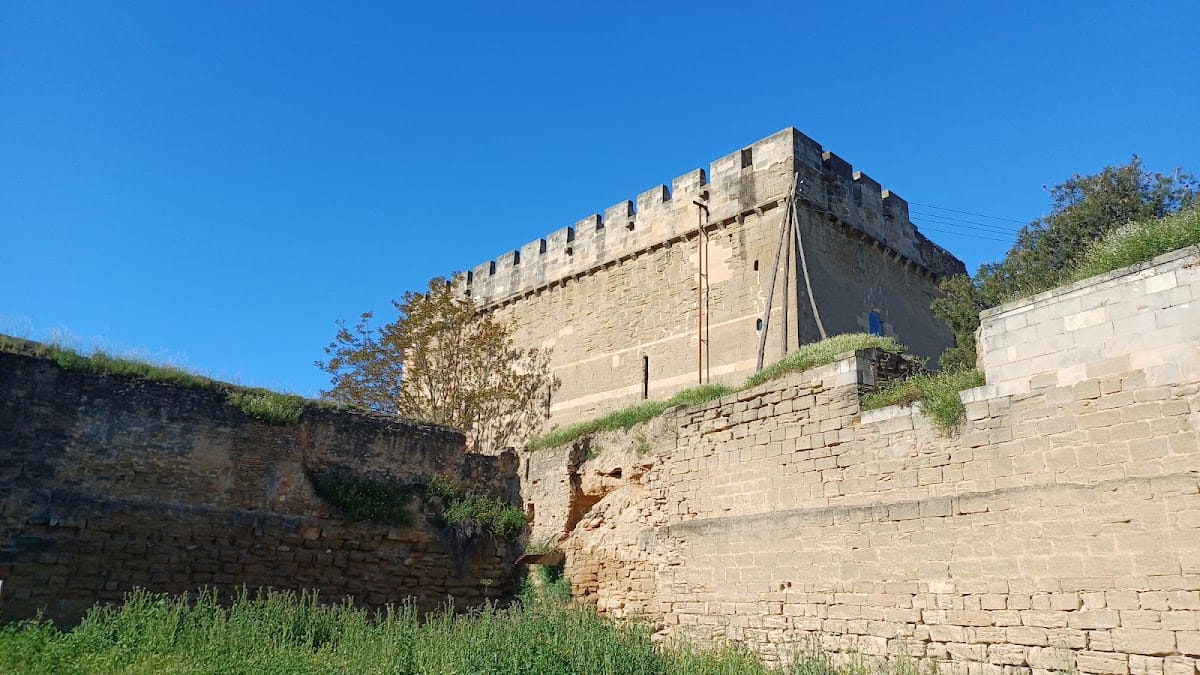
The hill and castle continued to serve military purposes during the Reapers’ War from 1641 to 1647, a conflict involving Catalonia and the Spanish monarchy, and during the War of the Spanish Succession from 1700 to 1714, an early eighteenth-century European dynastic conflict that affected fortifications across the Iberian Peninsula. The medieval complex was remodeled for artillery, with bastions, ditches, retaining walls, and other defensive works.
During the seventeenth and eighteenth centuries, Templar and Hospitaller buildings were demolished or altered as the former medieval enclosure was expanded into a modern fortification. The resulting military complex included bastioned walls, two successive defensive enclosures, ditches, retaining walls, and an outer defensive work protecting an entrance, known as a barbican. Gardeny largely retained this military form thereafter.
In the nineteenth century, Gardeny formed part of the defenses involved in Marshal Suchet’s siege of Lleida and its two castles, Gardeny and La Suda. The wider fortified area also contained the strongholds of San Fernando and Pilar. In the twentieth century, the hill accommodated the Gaspar de Portola military base, whose Sanjurjo and Templars barracks remained in use until 1996. The base was then dismantled, and its installations were sold to the Municipality of Lleida, while the castle itself was preserved.
After a long period of abandonment, the Municipality of Lleida established an interpretation centre and began a rehabilitation project for the complex. In October 2023, work was under way in buildings of the Templars barracks to adapt them for the Lleida Agro-Food Science and Technology Park. Castell de Gardeny is protected as a nationally important cultural asset designated as a historic monument.
Remains
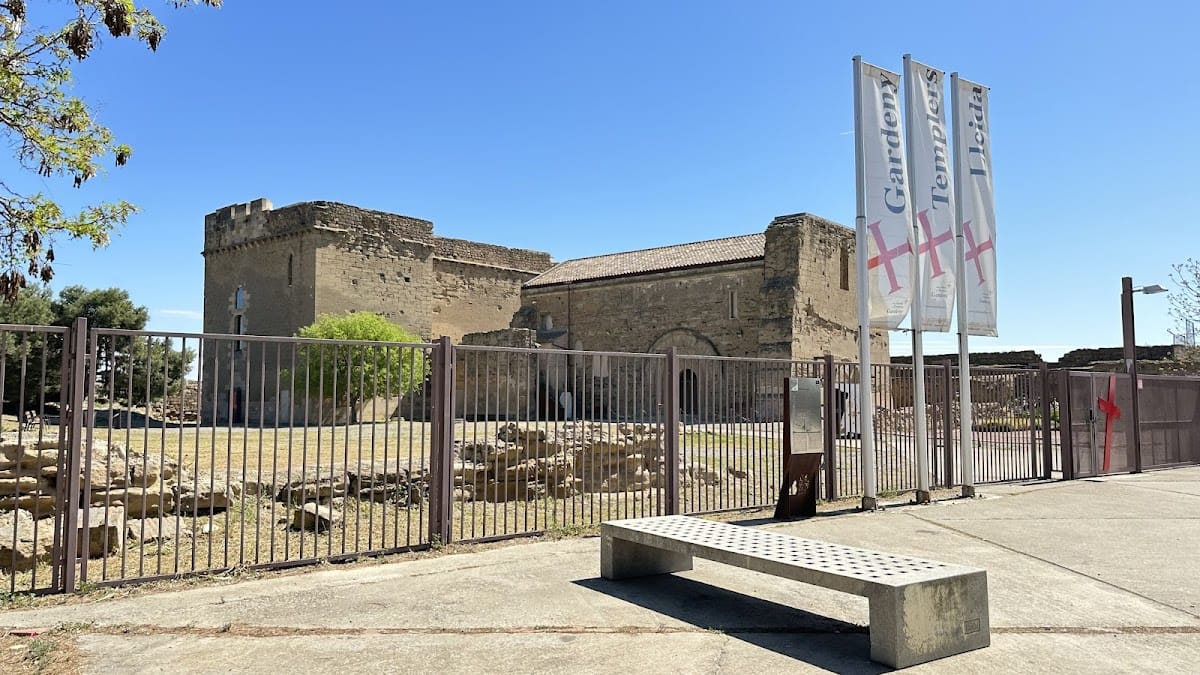
Castell de Gardeny combines two principal medieval buildings, a residential tower or palace and the conventual chapel of Santa Maria, within a fortified enclosure whose bastions mainly belong to the seventeenth and eighteenth centuries. The palace and chapel stand at right angles to one another and were later linked by a corridor building. Archaeological studies carried out in 2005 indicate that they began as separate structures. The medieval complex was organized into an upper enclosure containing the residential, religious, and service buildings, and a lower enclosure protected by a wall with towers. The lower enclosure was extensively remodeled when the site became a royal artillery fort, while part of its northern wall survives.
Medieval residential buildings
Residential tower and palace
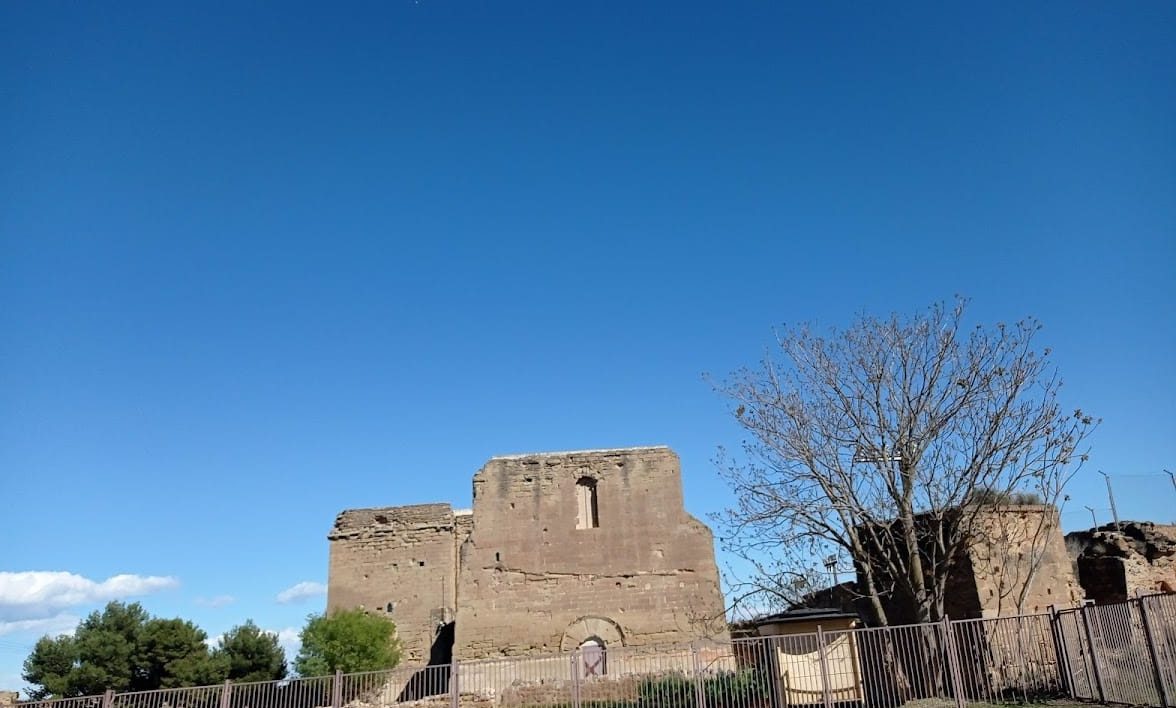
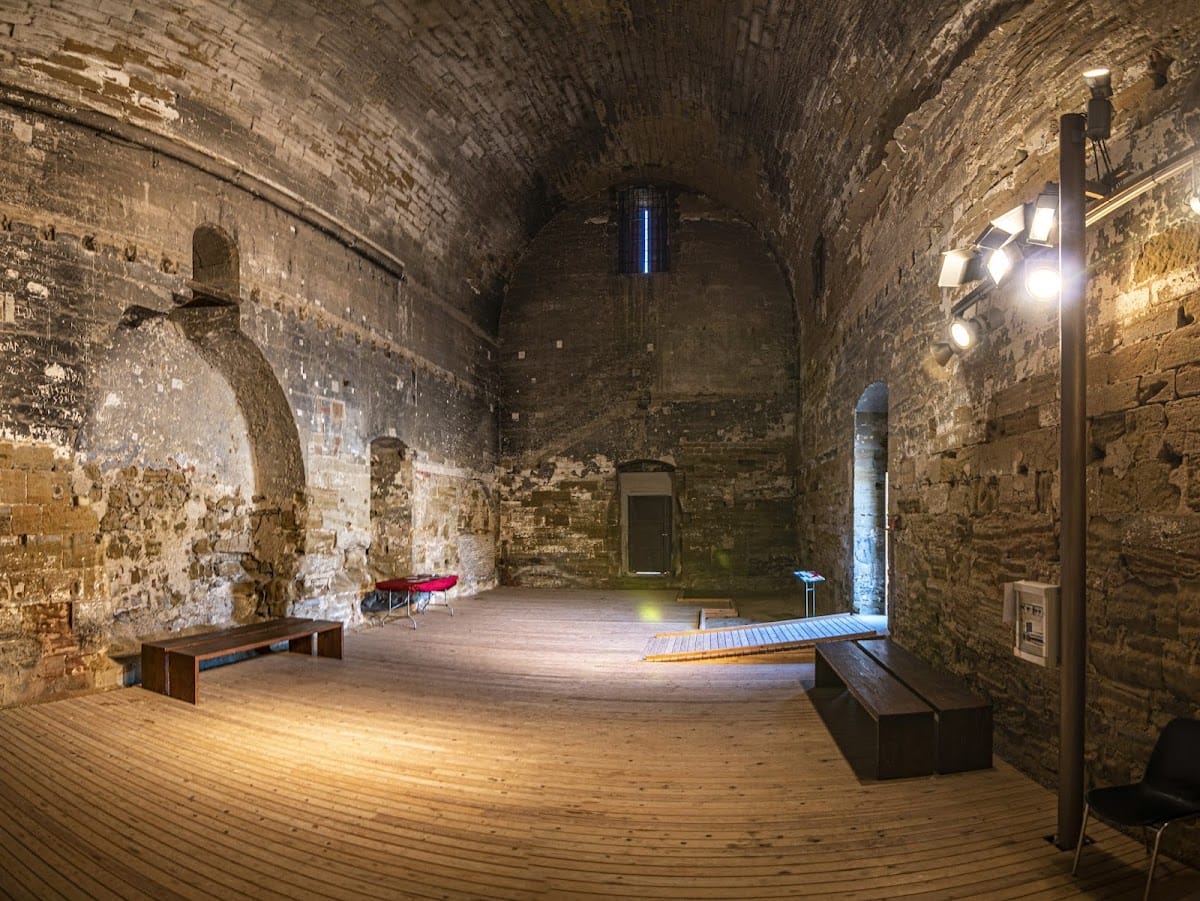
The residential tower is formed by a large rectangular hall measuring 23.25 metres by 7.5 metres and a smaller rectangular tower attached to its northwestern corner. The smaller tower measures 6.5 metres by 3.5 metres and connects with the eastern end of the chapel through a corridor building. Both structures have two storeys and a terrace. Pointed barrel vaults, which are tunnel-like vaults with pointed cross-sections, cover the lower and upper levels of the large hall. The lower, semi-subterranean level is 7.5 metres high, while the upper level reaches 8.8 metres. The lower level of the attached tower has a quarter-barrel vault, and its upper level has a pointed barrel vault.
The main entrances to the residential tower were placed at the level of the upper storey, about four metres above the exterior ground. Removable wooden ladders provided access from outside, and the semi-subterranean level could be entered only from the first floor. This lower space may have served as a provisions store, servants’ quarters, or prison. The first floor contained the armoury and the chambers of the commander and other brothers. Two spiral staircases cut through the thickness of the northern wall, one in the main hall and one in the attached tower.
Five inward-splayed arrow-slit windows pierce the first floor of the large hall, with three facing east, one north, and one south. The interior decoration is restrained. A simple projecting moulding, known as an impost, marks the point where the vault begins and continues around the arches of the windows. The accessible terrace functioned as a lookout and defensive platform. During the Hospitaller period it was roofed and converted into an attic. A small tower was later built at its eastern end, while a viewing structure was added at the western end toward the ditch.
Chapel of Santa Maria
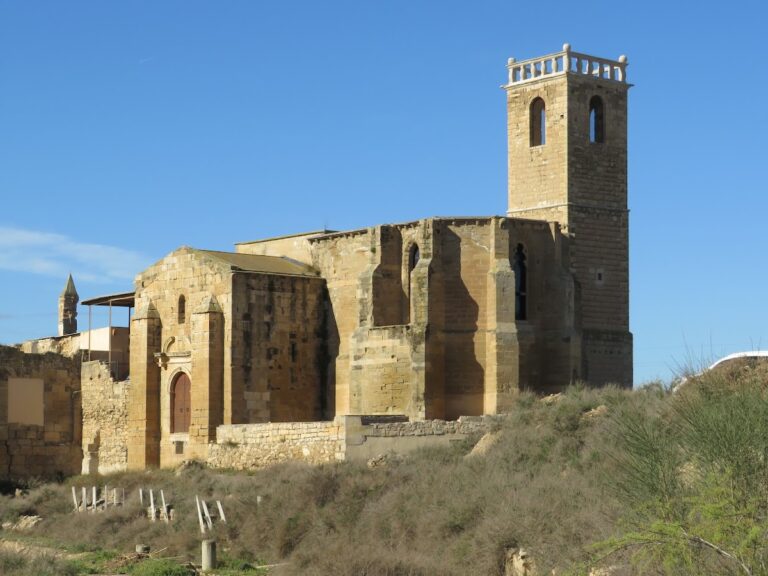
The chapel of Santa Maria is a Romanesque transitional building from the second half of the twelfth century. The church was built no later than the beginning of the thirteenth century, and its medieval construction belongs to the period when the Templar commandery was taking shape. It is a single-nave rectangular structure measuring 25.5 metres long, 7.5 metres wide, and 10 metres high, with an apse facing east. Its stone walls are 1.5 metres thick, and robust buttresses counter the pressure of the vaulted roof.
The nave is covered by a pointed barrel vault that springs from a simple moulded impost. Near the apse, a transverse arch forms a formal arrangement with an attached column, a projecting counterpilaster, and a double arch. This feature may have reinforced the vault when the southern chapel was opened in the early thirteenth century, or it may have helped create a presbytery with the side chapels. The chapel’s structural forms, including its vault, windows, stepped buttresses, and arched doorway, anticipate elements later associated with the Lleida school and early Cistercian churches.
The polygonal apse is built of stone up to the cornice and has a comparatively low brick vault, with the bricks arranged edgewise. Archaeological soundings carried out before restoration established that the apse was contemporary with the nave, was completed, and originally had windows on each face. In the eighteenth century, a separating wall was built between the apse and the nave so that the apse could serve as a gunpowder store.
Side chapels and decoration
Two side chapels of unequal depth flank the presbytery. Their pointed barrel vaults run perpendicular to the vault of the nave. In the mid-thirteenth century, the northern chapel was dedicated to Saint Anne and the southern chapel to Saint Saviour. The southern chapel belongs to a later phase because its external masonry overlies a buttress of the church. Mural paintings discovered there date from the mid-thirteenth century. The date of the northern chapel is less certain because of later alterations, although it may have been connected with a benefice founded by the counts of Urgell in 1161.
The church has sparse sculptural decoration. Capitals on the transverse arch simplify forms derived from the Corinthian order, while twelve incised cross pattées within circles mark the side walls. These crosses represent the church’s consecration rather than the distinctive emblem of the Templar order. The chapel also contains geometric mural decoration, and one side chapel depicts the twelve apostles. The nave vault has been described as star-patterned.
Openings, facade, and former galilee
The chapel’s round-headed windows are set within inward-splayed openings. One tall window is centered high in the western frontispiece, another lights the southern side chapel, and a northern window has been blocked. Archaeological and restoration work indicates that the nave may originally have had four windows and the apse five of the same type. The church originally had two doors: a western entrance opening toward a cemetery or galilee, a porch or enclosed entrance area sometimes used for burials, and a northern principal entrance opening toward the gallery and courtyard.
The northern doorway has concentric, moulded, recessed arches, with concave lobes decorating the innermost arch. The western facade is a broad, plain rectangular screen whose main ornament is concentrated in the doorway and the wedge-shaped stones, or voussoirs, around the window arches. A two-opening bell gable once crowned the facade. Seven corbels about two metres above the western doorway indicate the former galilee or portico, where five burials of people described as prominent and illustrious were placed.
Fortified enclosure and cemetery
The surrounding defenses preserve the successive military adaptations of Gardeny. The upper medieval enclosure held the palace, chapel, and service buildings, while the lower enclosure was protected by a wall with towers before being reshaped for royal artillery. Bastions, projecting sections of fortified wall designed to permit defensive fire along the wall faces, formed part of the later system. Ditches, retaining walls, a double enclosure, and a barbican expanded the defenses beyond the medieval arrangement.
The cemetery lay west of the castle. Human burial remains were found near the complex during twentieth-century works in the parking area of the former military barracks, apparently associated with Gardeny’s common cemetery. The chapel, palace, and enclosure use comparable stone materials and construction methods. Their regularly cut ashlar blocks bear masons’ marks, while the chapel’s heavy masonry, pointed vault, polygonal apse, buttresses, and restrained decoration reflect Romanesque architecture shaped by Occitan and French influences.