Necropolis of Soderstorf: A Prehistoric Burial Ground in Germany
Site at a Glance
- Popularity
- Low
- Country
- Germany
- Primary era
- Stone Age
- Eras represented
- Stone Age, Bronze Age, Iron Age
- Civilizations
- Unclassified
- Site type
- Burial
- Remains
- Necropolis
On this page10 sections
History
The Necropolis of Soderstorf is a prehistoric burial ground near Soderstorf in Lower Saxony, Germany, used from the Neolithic into the Iron Age. Its successive burial practices reflect more than 2,000 years of use by communities associated with the Funnelbeaker, Corded Ware, Tumulus and Urnfield cultures.
Neolithic burials
Funnelbeaker communities, named for their distinctive funnel-shaped pottery, built the megalithic tomb between 3500 and 2800 BC, with an approximate date of 3150 BC also given. Finds from a later Funnelbeaker phase are scarce. More material associated with the Corded Ware culture, whose pottery bears cord impressions, points to the tomb’s reuse between about 2800 and 2500 BC.
Bronze Age burials
During the Bronze Age, the mound was altered and further burials were made there. Cremated remains in its fill reflect the burial customs of the period. A separate mound burial belongs to the Tumulus culture, named for its use of burial mounds. The Tumulus culture was followed at the site by the Urnfield culture, associated with cemeteries for cremated remains buried in urns.
Iron Age use and investigation
The urn cemetery dates to the early pre-Roman Iron Age, although the number of graves is uncertain. A Funnelbeaker flat grave was also found in a less densely occupied part of the cemetery. Excavation in 1883 probably destroyed an early Bronze Age grave without recognizing it; a bronze arm ring found during that work is thought to have come from the burial. A further investigation in 1970 established that the megalithic tomb had been used in several phases.
Remains
Layout and burial features
The necropolis lies south of Wohlenbütteler Straße, at the edge of the Luhe valley. Its burial features include an east–west megalithic tomb, a Bronze Age mound to its south, an urn cemetery between them, and a flat grave in a less densely occupied part of the cemetery.
Megalithic tomb and mound
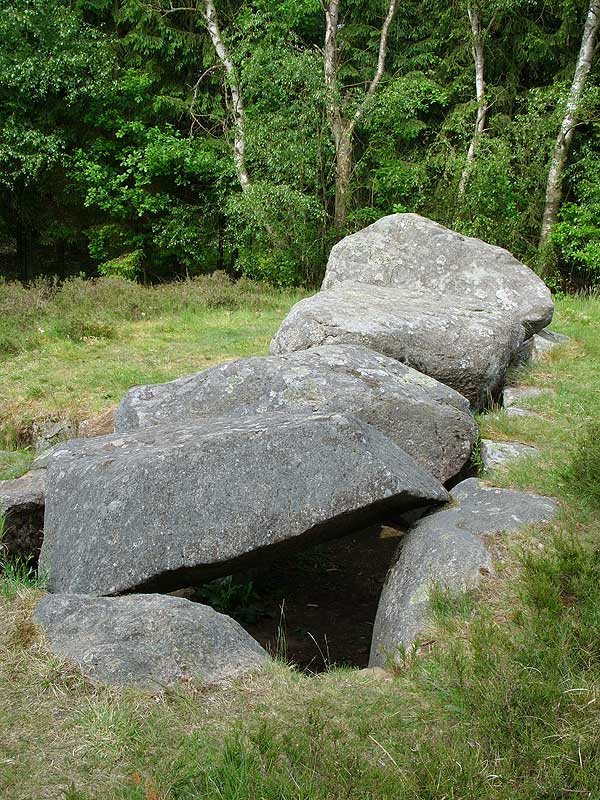
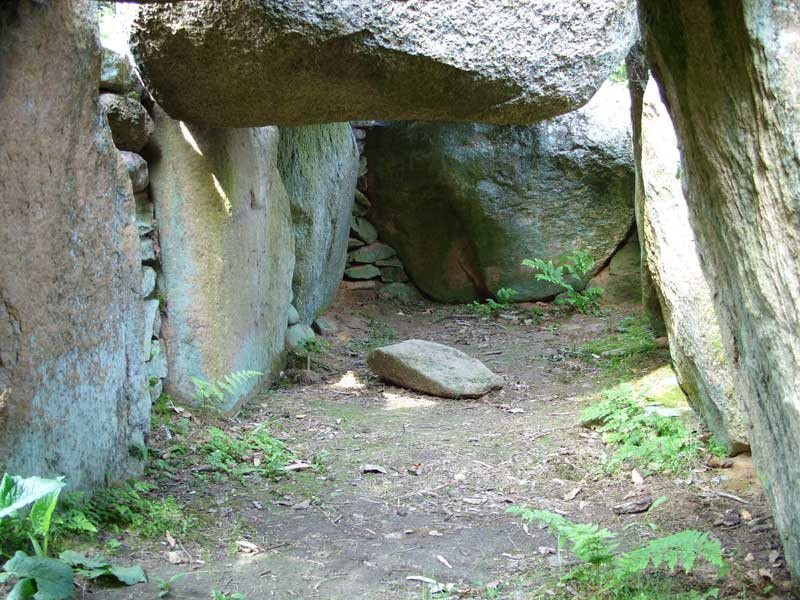
The tomb measures 10 by 3 metres. Eleven supporting stones carry four capstones around a chamber measuring 6.2 by 1.65 metres, whose entrance is set off-centre in the southern long side. An earth mound originally covered the chamber to about the height of its supporting stones. Rounded stones formed the chamber floor, with granite grit laid over them. The tomb stands on a round mound raised during the Bronze Age for further burials. One stone ring encircles the mound, while a narrower second ring runs around it halfway up. Cremated remains were found within the mound fill.
Bronze Age tumulus
South of the megalithic tomb, a Bronze Age burial mound has a stone ring around its base. Changes in soil colour indicate two burials in tree-trunk coffins. A palstave, a type of Bronze Age axe, and a bronze needle were found as grave goods.
Urn cemetery
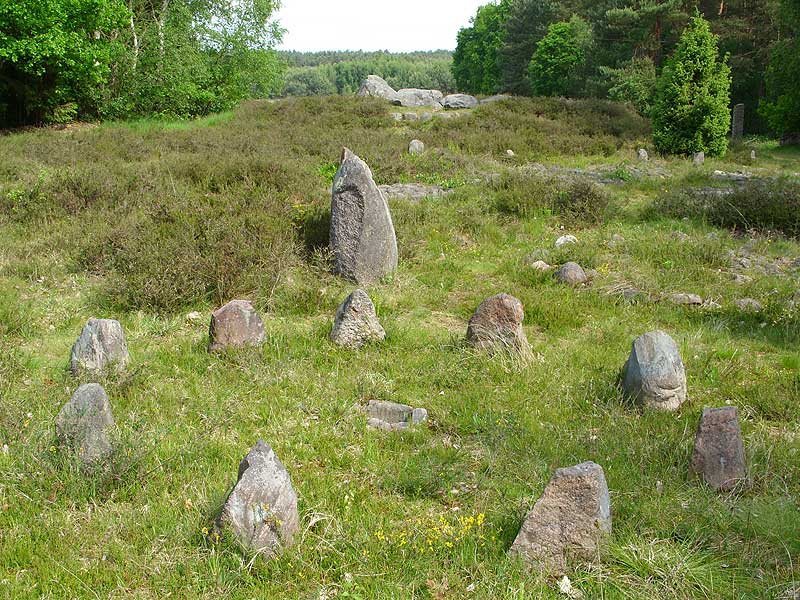
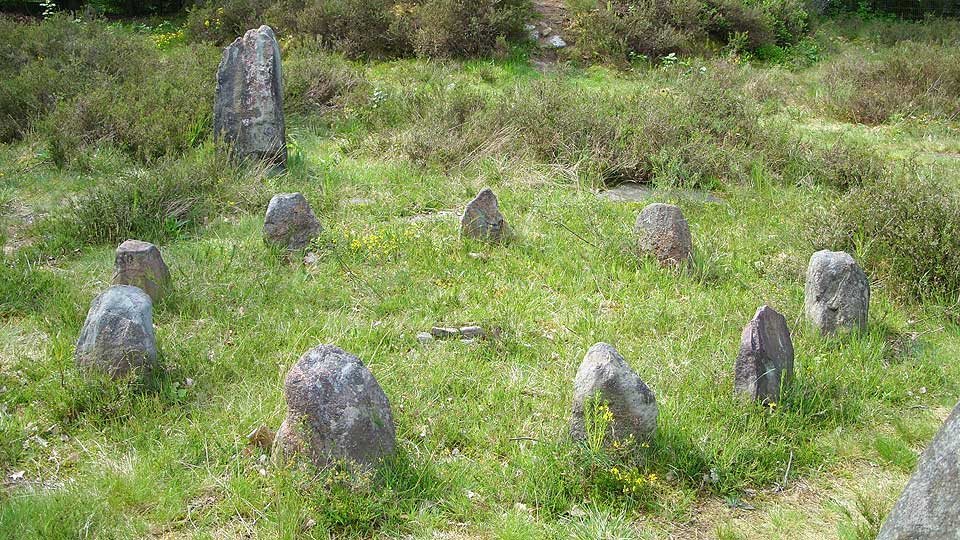
Graves in the cemetery are marked by varied stone pavements or settings, some as much as four metres across, with small standing stones nearby. Circles of small upright stones probably marked the graves and protected the pottery urns. In some burials, cremated remains were placed in a small stone box. Most of the buried people were adults, and most urns laid beneath the paving belonged to women.
Flat grave
The Funnelbeaker flat grave lies in a less densely occupied part of the urn cemetery. A stone axe was found with the burial.