Lüneburg City Hall: A Medieval and Early Modern Civic Complex
Site at a Glance
- Popularity
- High
- Country
- Germany
- Primary era
- Medieval
- Eras represented
- Medieval, Early Modern
- Civilizations
- Holy Roman Empire
- Site type
- Civic
- Remains
- Town Hall
On this page15 sections
History
Medieval and early modern development
Lüneburg City Hall in Lüneburg, Germany, began around 1230 and expanded over the following centuries. It has remained the seat of the city council and municipal administration, serving as a civic centre through the medieval and early modern periods.
Rather than replacing older parts whenever styles changed, Lüneburg’s citizens added to and adapted the complex. The result is an important example of secular architecture from these periods in northern Germany. It is described as the region’s largest medieval town hall.
Storm damage and later history
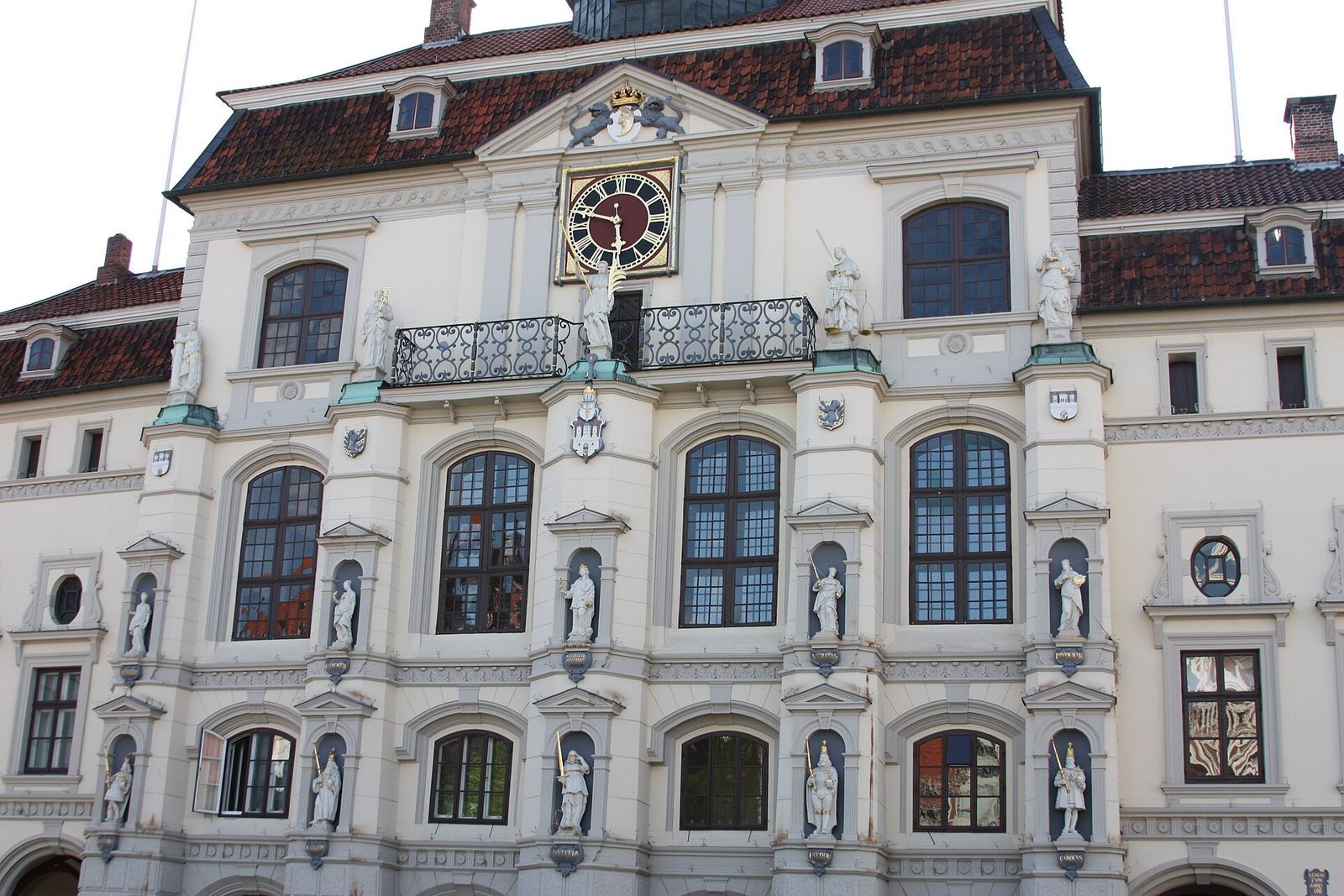
A storm in 1703 severely damaged the Gothic façade, leaving it at risk of collapse. The damaged front was demolished and replaced with a Baroque façade, completed in 1720.
The town hall escaped damage from combat and bombing during the Second World War, helping preserve its artistic fittings. The city council’s silver collection was housed there until 1874. From 1984 to 1993, the building appeared on UNESCO’s Tentative List, a register of places that a country may consider nominating for World Heritage status. A major restoration programme began in the 21st century and included archaeological and architectural research.
Remains
Layout and exterior
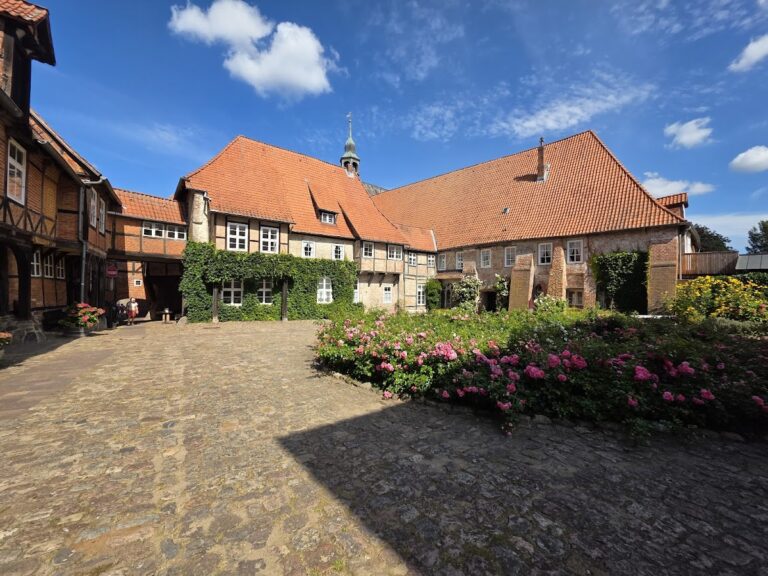
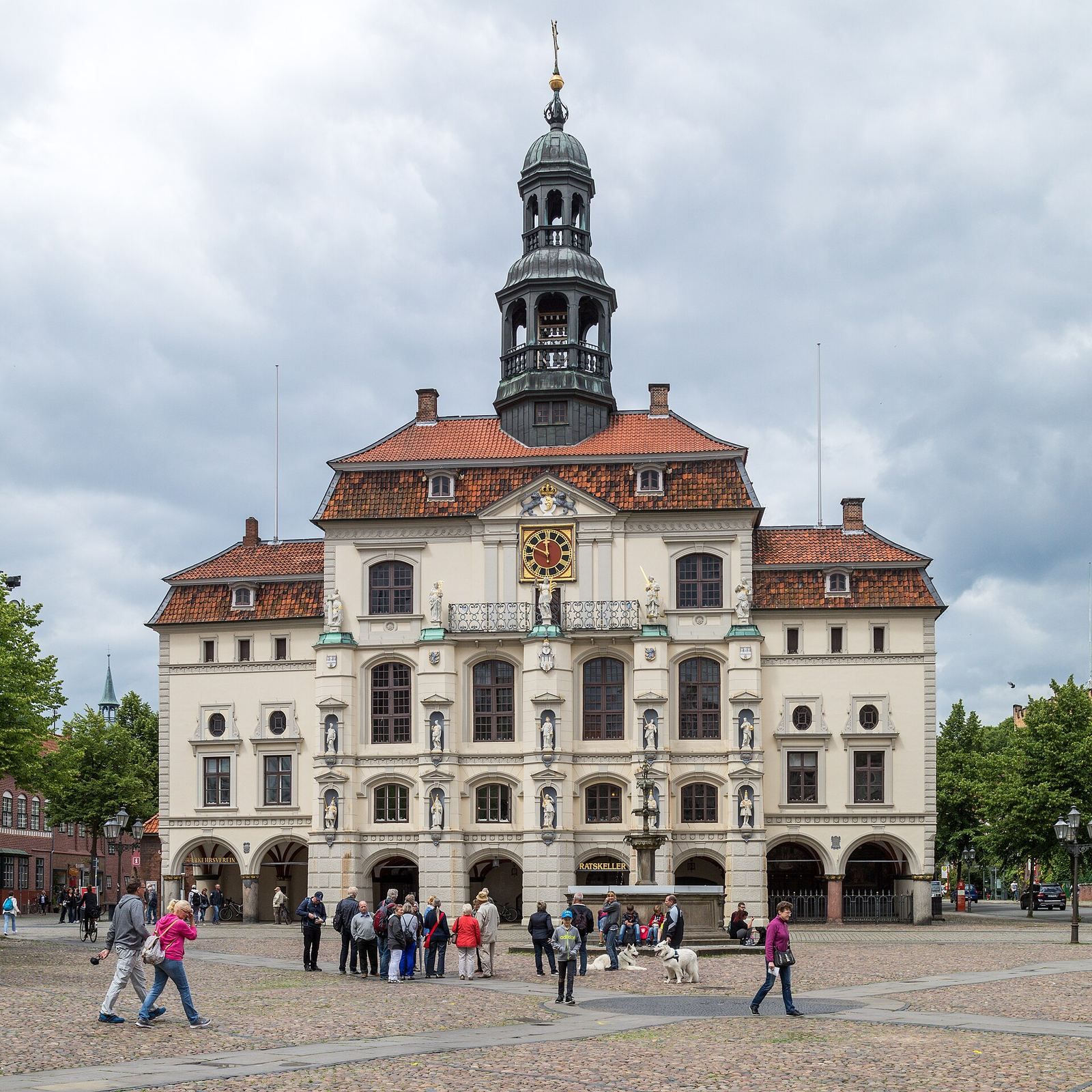
The complex covers about 5,000 square metres and contains 259 rooms. Am Markt borders it to the east, Waagestraße to the south, Am Marienplatz to the west, and Am Ochsenmarkt to the north; its main façade faces the market square. Most parts use North German Brick Gothic, a regional Gothic style in which brick is a principal building material. The ensemble also includes late Gothic and Renaissance work, with a Baroque main façade.
Main façade
Completed in 1720, the Baroque façade has projecting masonry decorated with ten sandstone figures, some partly gilded. Their labels include Severitas (Severity), Veritas (Truth), Clementia (Clemency), Gloriatur Adversus Iudicium, Prudencia (Prudence), Justinian I, Charlemagne, Charles V, Fredericus Z, and Fridericus Rex (King Frederick). The last two labels do not securely identify particular rulers.
Bell tower
An octagonal tower rises above the complex, with open arches for its bells. Its carillon comprises 41 bells made of Meissen porcelain, a European hard-paste porcelain associated with the Meissen manufactory in Saxony. The bells play music by the German composer Johann Abraham Peter Schulz, including the “Harvest Song” at about 8 a.m. and the “Harvest Dance” from Das Erntefest around noon. At about 6 p.m. they play Matthias Claudius’s “Evening Song,” also known as “The Moon Has Risen.”
Interior rooms and painted glass
Courtroom
The courtroom dates to 1330. Its wooden ceiling was made in 1530, while the floor retains its 14th-century condition. Ceiling and wall paintings decorate the room, including a late-15th-century Last Judgment attributed to the unidentified artist known as the Master of the Last Judgment.
Painted glass
Glass in the courtroom’s south-facing windows depicts the Nine Heroes, a traditional group of exemplary figures from pagan, Jewish, and Christian history. The work dates to around 1410. Glazing in the Mayor’s Chamber dates to 1491; both sets of glass survive.
Prince’s Hall
Dating to the 15th century, the Prince’s Hall takes its name from late-medieval wall paintings showing the princes of Lüneburg. It is one of the largest column-free halls of its period. The room has served as a dance and reception hall and continues to host receptions, lectures, and chamber concerts.
Great Council Chamber
The council wing was built between 1466 and 1484. The Great Council Chamber contains carved oak work by the German Renaissance woodcarver Albert von Soest and wall paintings by the German painter Daniel Frese (1540–1611).
Other parts of the complex
Chancery, storehouse, and civic collections
The Old Chancery dates to 1433, and a cloth storehouse was built around 1450. The storehouse now contains a museum displaying copies of Lüneburg’s silverware. Electrotyping, the process of forming a metal replica on a mould, was used to make copies displayed in the town hall. The civic oath crystal, made by Hans von Laffert, is now in Berlin’s Museum of Decorative Arts. Other parts of the complex include the Old Archive, the treasury wing, and a staircase.
Town-hall garden
A walled garden belonging to the town hall runs along Waagestraße.