Valère Castle: A Fortified Basilica and Cathedral Chapter Complex in Sion
Site at a Glance
- Rating
- 4.6
- Popularity
- Low
- Country
- Switzerland
- Primary era
- Medieval
- External website
- Open
- Eras represented
- Medieval, Early Modern, Modern
- Civilizations
- Holy Roman Empire
- Site type
- Military
- Remains
- Castle
On this page10 sections
History
Valère Castle is a fortified Roman Catholic church complex in Sion, Switzerland, built and developed during the medieval period by the Christian institutions of the Diocese of Sion. Its principal building, the Basilica of Our Lady of Valère, became the residence of the cathedral chapter, a body of clergy known as canons that supported the cathedral’s religious and administrative life. The complex formed part of the medieval political and religious center of the diocese and later became a pilgrimage destination.
Early occupation and medieval foundation
Valère Hill was occupied temporarily during the fifth millennium BC. Pottery fragments, bracelet fragments, and hearth remains indicate this prehistoric activity. Roman-period use is considered probable, and proposals have included a Roman military camp, watchtower, or temple. The name Valère has an uncertain origin. A traditional explanation connects it with Valérie, or Valeriana, the mother of the Roman consul Titus Campanius Priscus Maximianus, who was said to have erected a monument at Sion after his son’s death. The hill may also have served religious ceremonies for Celtic communities during the early medieval period.
A Christian church on the hill is first mentioned in 1049. Building work began in several stages toward the end of the eleventh century and continued until about the middle of the thirteenth century. The oldest surviving stone elements date from approximately 1100 to 1130. Valère developed alongside Sion’s growing political and religious importance. The cathedral and the seat of the Diocese of Sion stood in the town below, while the prince-bishop’s residence was at Tourbillon Castle on the opposite hill. A prince-bishop combined ecclesiastical authority with secular rule, so the Diocese of Sion exercised both religious and regional political power. Valère formed one part of this administrative center.
Expansion of the complex
During the thirteenth century, the church was enlarged and its architecture shifted from Romanesque, a medieval style characterized here by heavy masonry and rounded forms, toward Gothic construction. Between 1235 and 1267, the nave was extended and flanked by two aisles, creating a cross-shaped plan inspired by Lausanne Cathedral. The surrounding settlement, enclosure walls, and four corner towers were completed by the end of the century. Stone dwellings appeared at the beginning of the thirteenth century, while a building north of the castle was added around 1300. Chapter assemblies continued to take place at Valère until the eighteenth century.
The church’s religious role expanded as it became a pilgrimage center. A marble Madonna and Child was installed in the early fifteenth century, and murals showing apostles, prophets, and locally venerated saints were produced around 1435. The church also acquired an organ generally dated to 1435, although indirect evidence has led to a possible fourteenth-century date. Its maker is unknown.
Decline and conservation
The French invasion of the region in 1798 weakened Valère’s institutional and religious role. Most services moved to Notre-Dame de Sion, religious ceremonies became less frequent, and pilgrimage declined sharply. The complex continued to be used, but its buildings deteriorated substantially by the middle of the twentieth century.
A comprehensive restoration campaign began in 1987 and proceeded through several stages, including a final phase begun in 2016. The restoration was declared complete in 2016 and covered both the basilica and the wider complex. The former canons’ rooms now house the Valais History Museum, which was established there in 1883 and extensively renewed from 2008. Pope John Paul II granted the church the rank of minor basilica in 1987. This is a special honorary status for a Roman Catholic church and does not make Valère the seat of the diocese. Valère is also listed as a Swiss Cultural Property of National Significance and has been included since 1977 in the Federal Inventory of Sites and Monuments of National Importance.
Since 1969, the basilica has hosted the International Festival of Early Organ and Early Music each summer, continuing its association with the historic instrument. The organ had fallen silent during the nineteenth century and was restored in 1954 by Kuhn, a German-speaking Swiss organ-building firm. Its painted panels and related works were restored by the Kunstmuseum Basel, while the instrument received a complete restoration by the Sion firm Füglister in 2004.
Remains
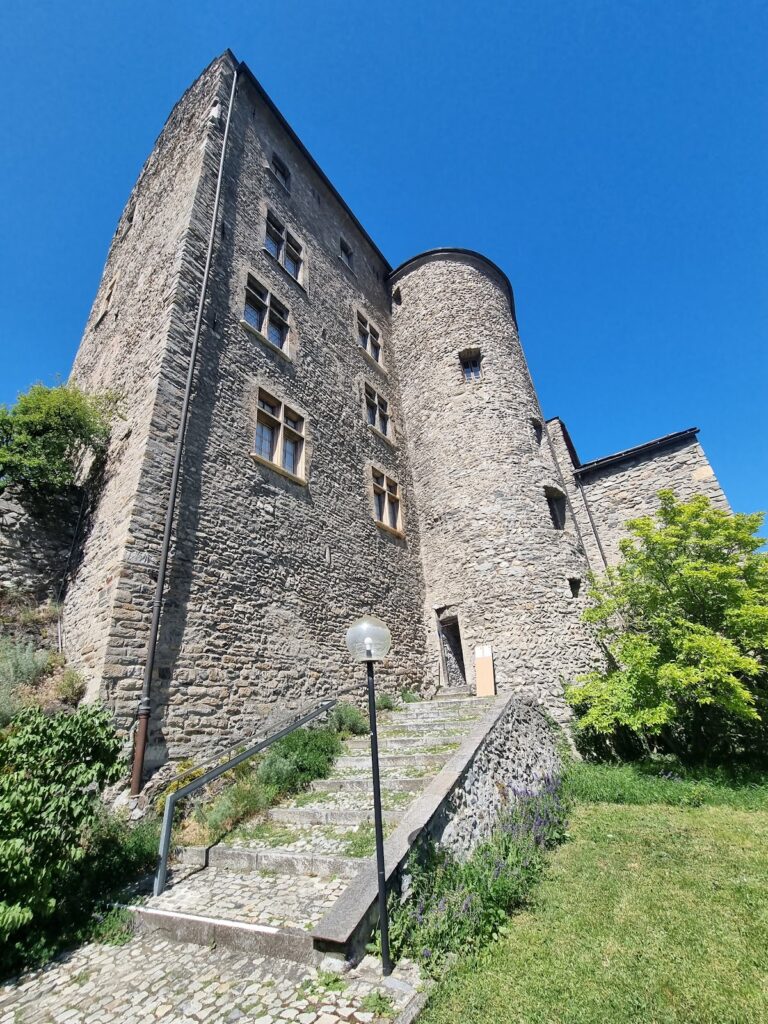
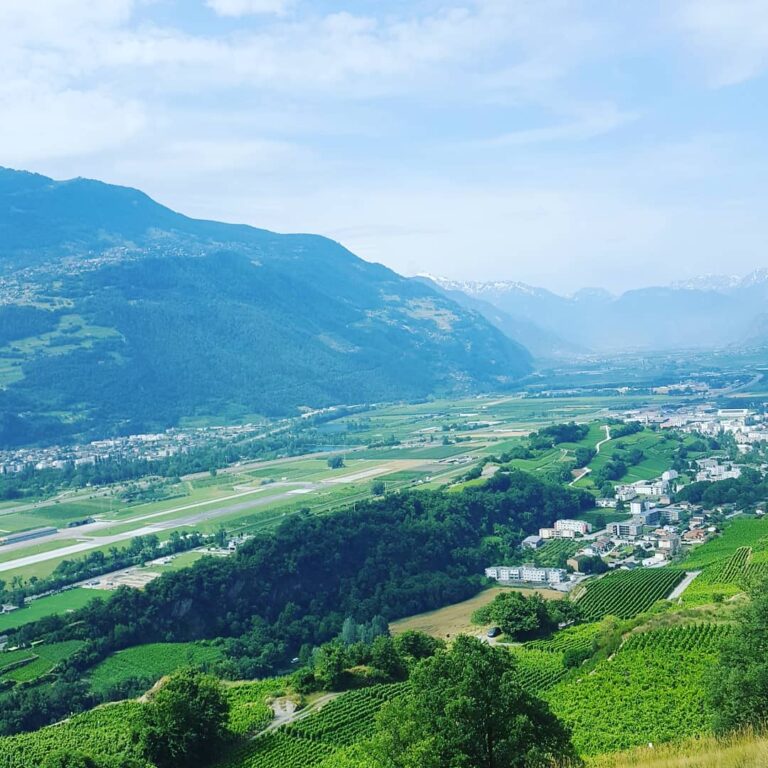
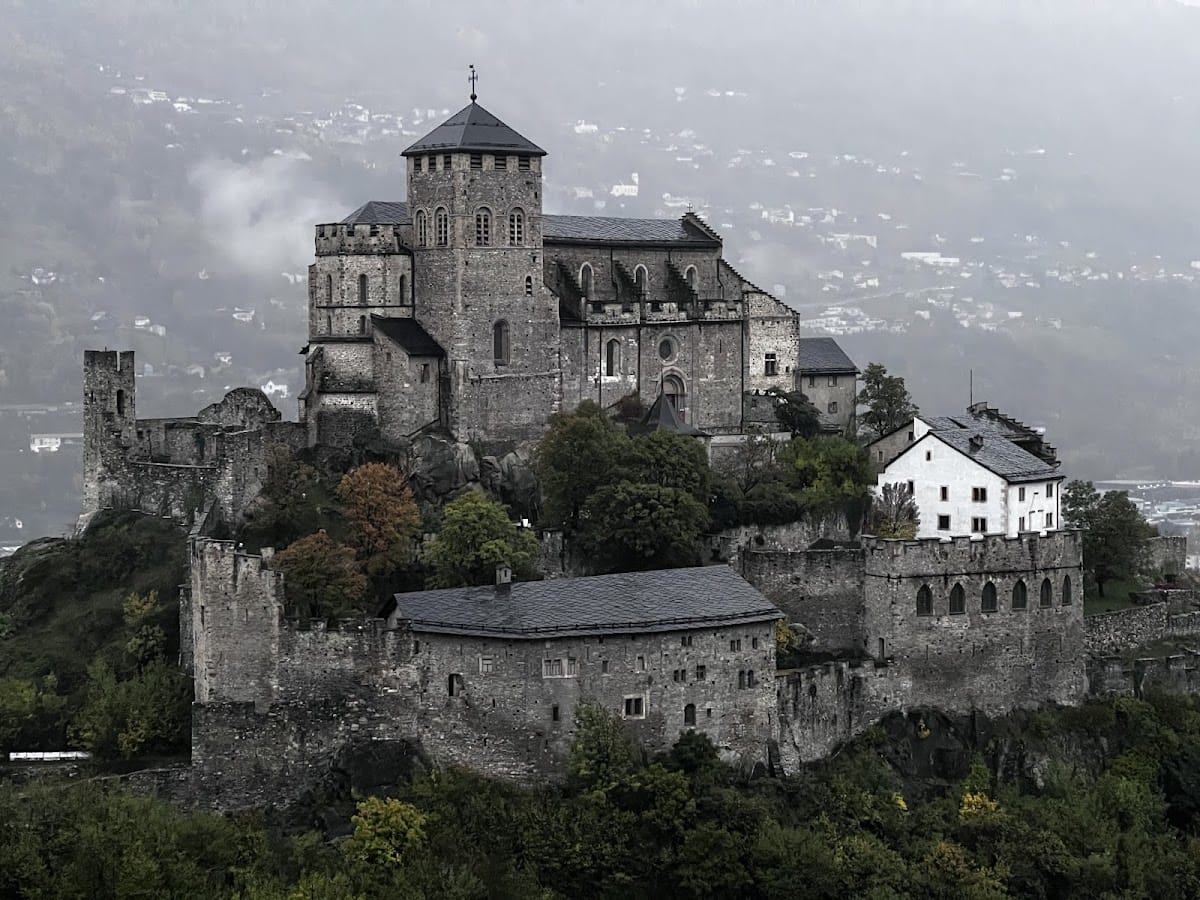
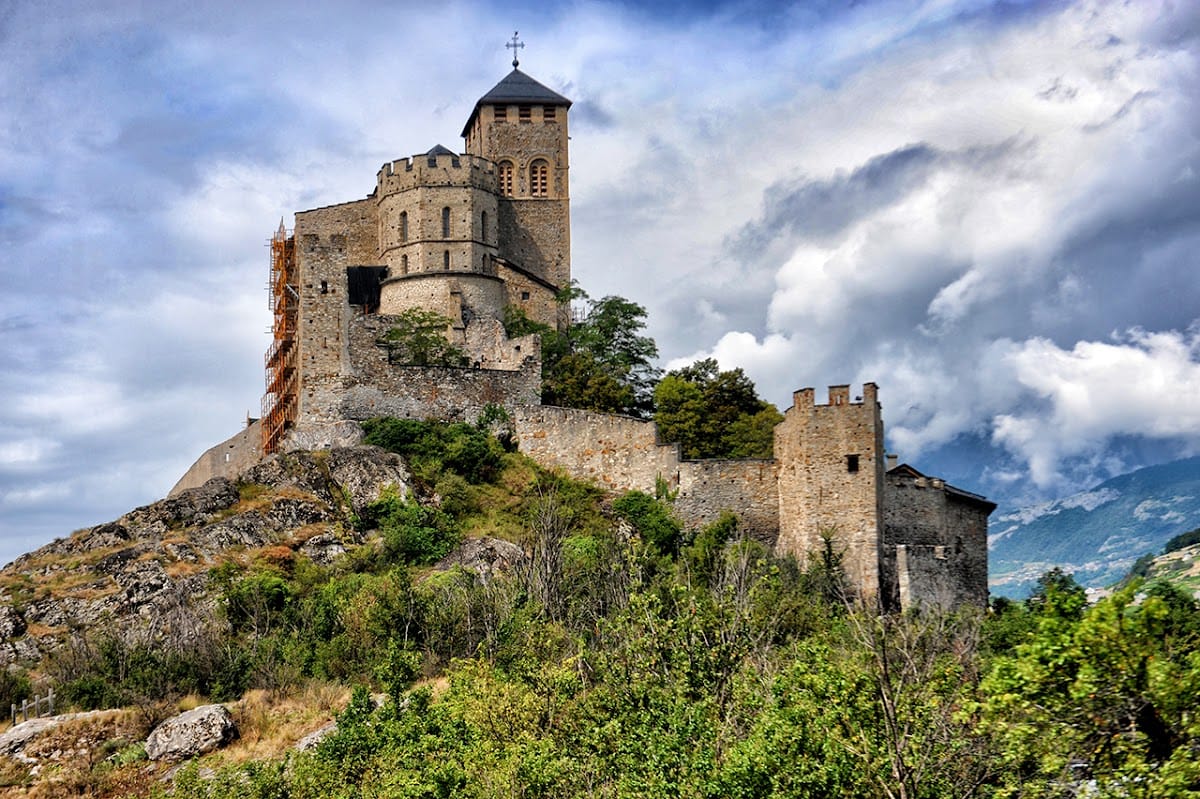
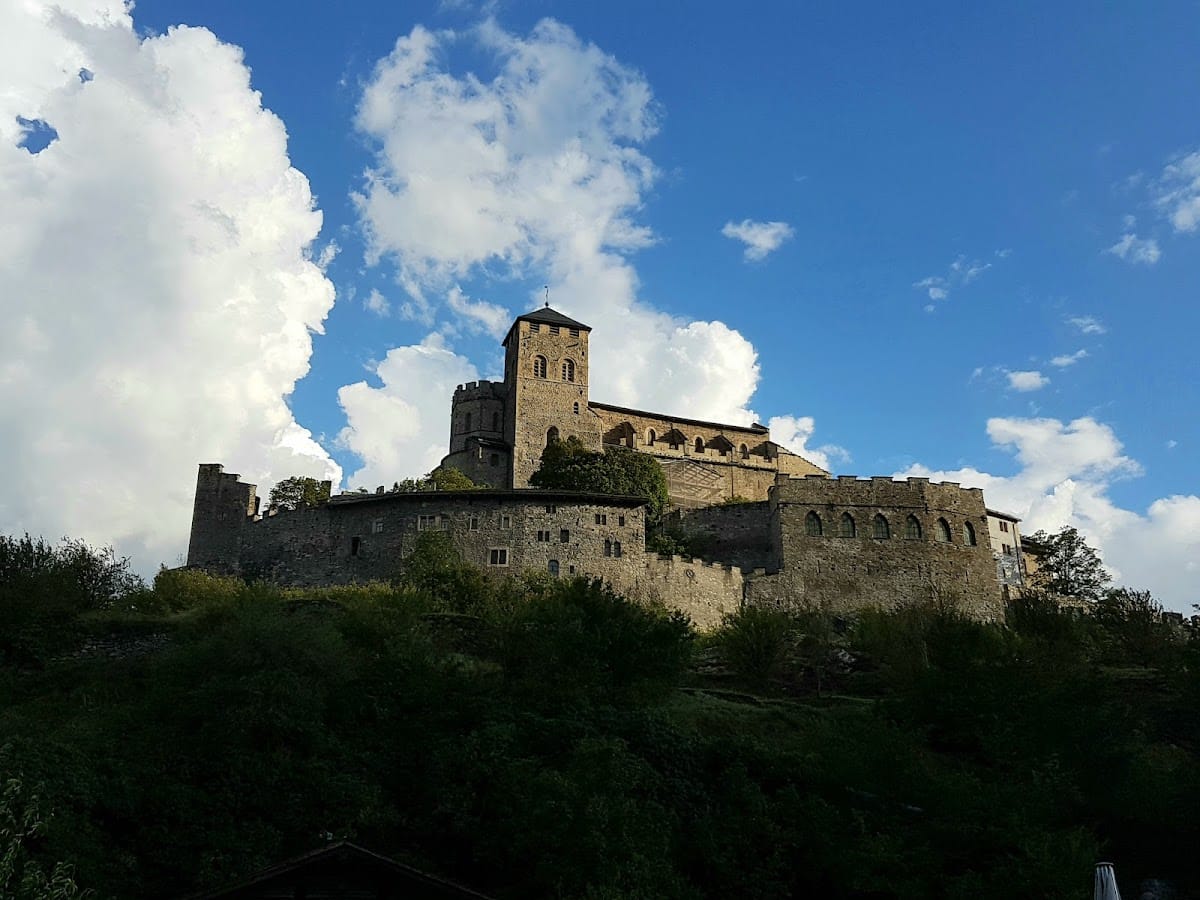
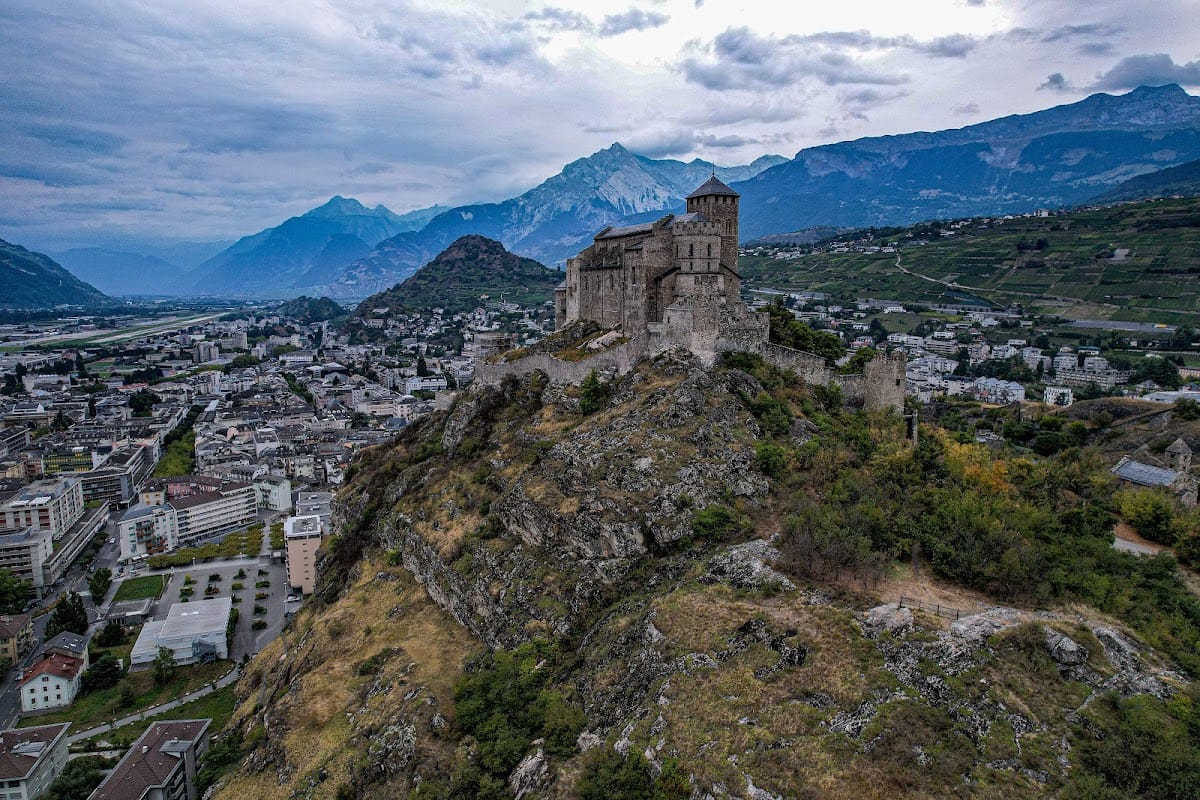
Valère Castle occupies the summit of Valère Hill at approximately 615 metres above sea level, above the old part of Sion. The church stands at the top within a fortified settlement enclosed by external stone walls and other defensive structures. The ground is steep and uneven, and the approach to the complex is possible from the north-east. Tourbillon Castle occupies the opposite hill. The surviving buildings combine a medieval church, residential structures, enclosure walls, and corner towers into a compact hilltop complex.
Fortified settlement
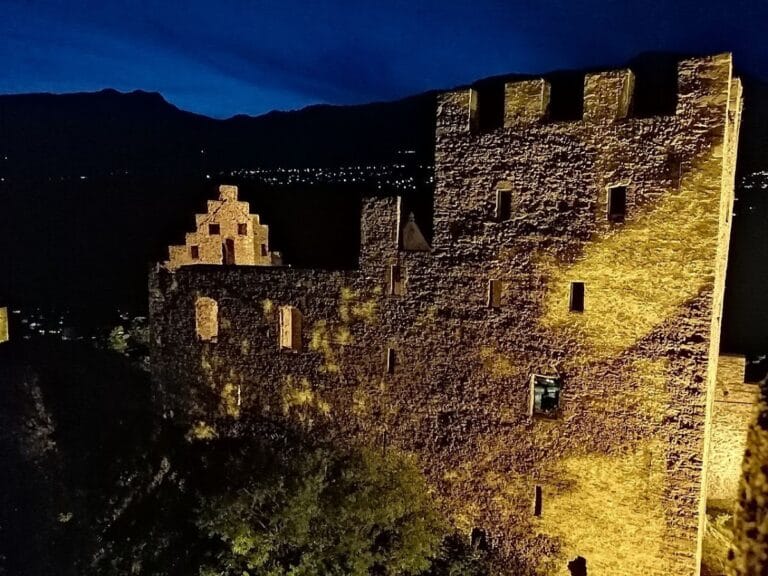
The settlement is surrounded by stone walls with crenellations, or raised defensive sections along the parapet. Four corner towers, completed by the end of the thirteenth century, reinforce the enclosure. The earliest dwellings were probably wooden, while the surviving stone houses belong to the beginning of the thirteenth century. A further building was added north of the castle around 1300. Together, these structures preserve the physical setting in which the cathedral chapter lived and conducted its institutional affairs.
Basilica architecture
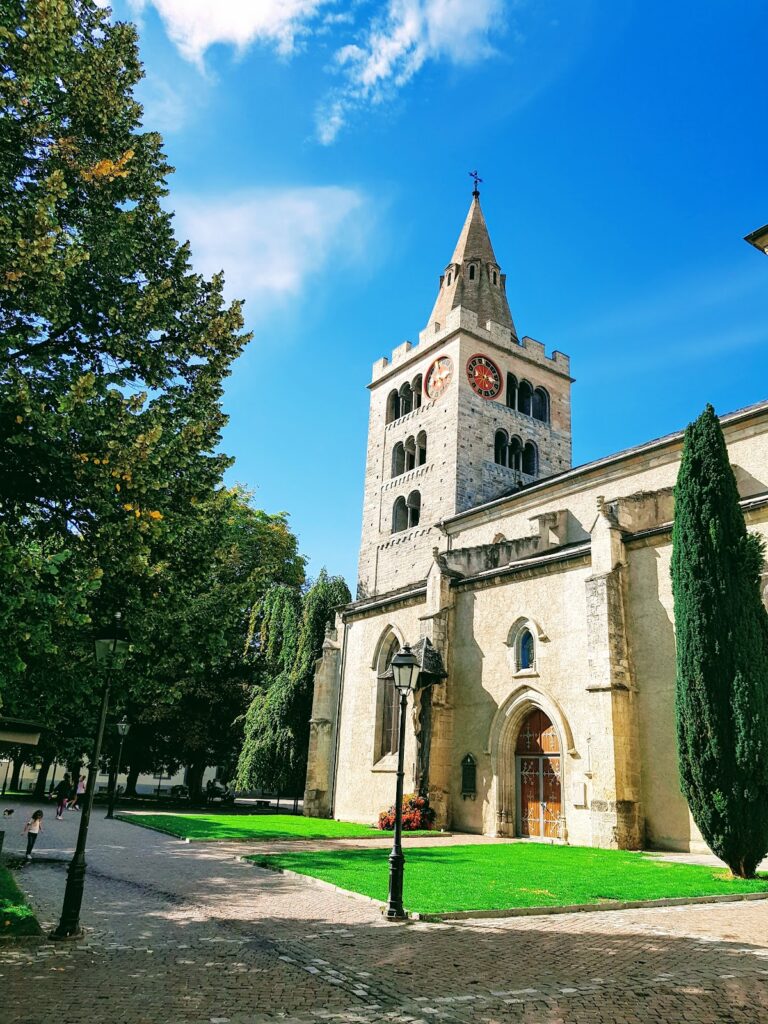
The Basilica of Our Lady of Valère is a three-nave church whose original Romanesque structure was expanded in the Gothic period. Its nave was enlarged between 1235 and 1267 and given two aisles, producing a cross-like ground plan influenced by Lausanne Cathedral. A later construction phase after approximately 1130 included the semicircular apse, the main walls, windows, and roof. A tower over the northern side chapel and polygonal window structures above the apse were added later. The northern side chapel represents the principal alteration to the church’s otherwise largely unchanged form after the thirteenth century.
The choir received a Gothic ribbed vault during the thirteenth century. A rood screen, a partition separating the choir from the nave and traditionally associated with a cross, marked the division between the chancel and the main body of the church. The present choir stalls date from the middle of the seventeenth century. The choir walls carry images of apostles, prophets, and locally venerated saints, while a Gothic marble statue of the Madonna with the infant Jesus stands high above the high altar.
Windows and painted decoration
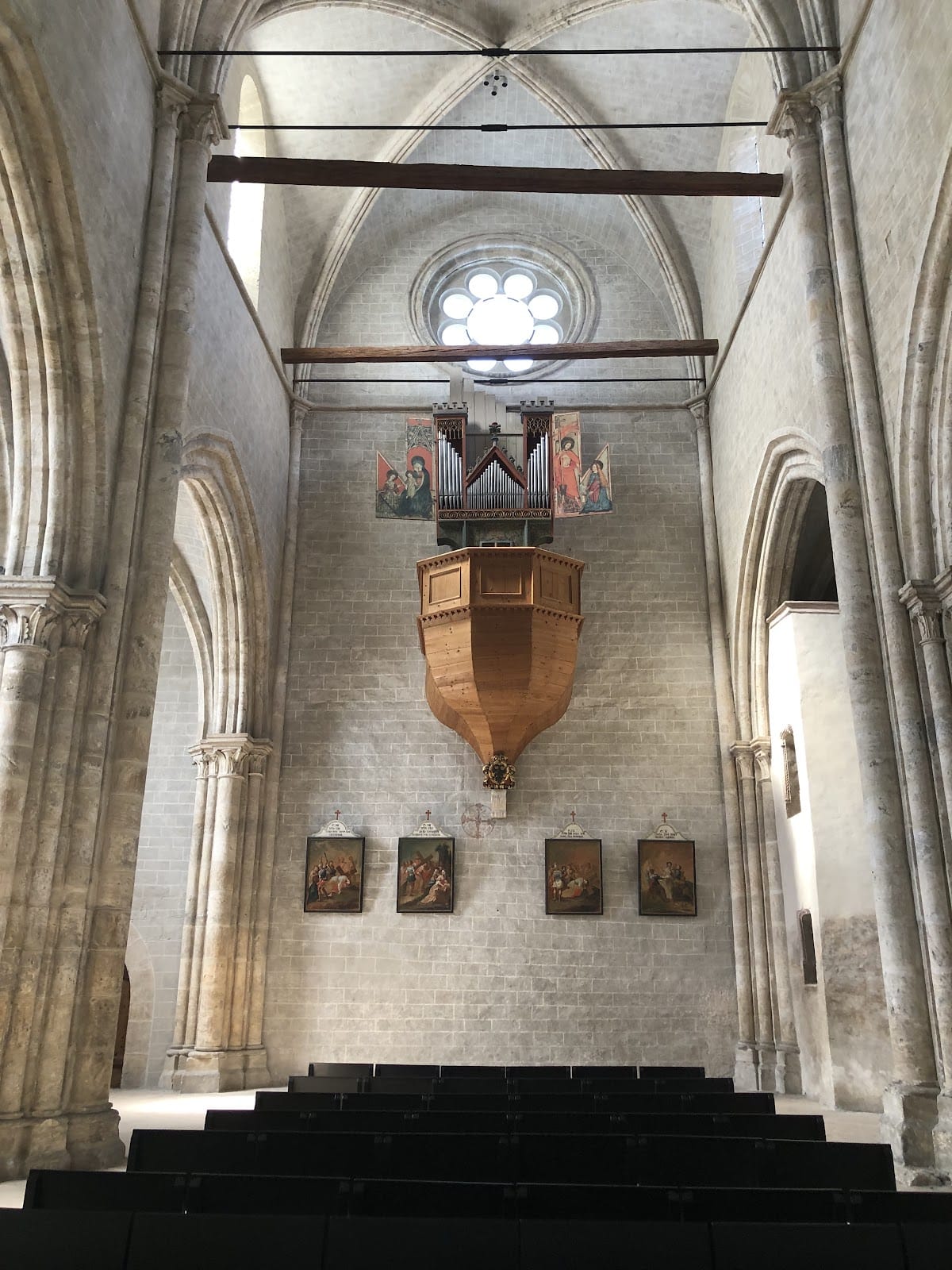
A rose window above the organ was probably walled up in the fifteenth century and reopened around 2003 to 2004. A rose window is a large circular window often filled with radiating tracery and stained glass. The reopened window was fitted with stained glass by Michel Delanoë and an artistic intervention by Marie Antoinette Gorret. The historic stained-glass windows were extensively restored. Painted panels on the organ case, made around 1435 by the Fribourg painter Peter Maggenberg, show the mystical marriage of Saint Catherine on the left and Christ appearing to Mary Magdalene, who mistakes him for a gardener, on the right.
Historic organ
The pipe organ stands against the western wall of the main church. It is generally dated to 1435, though a possible fourteenth-century date has also been proposed. The instrument is described as the world’s oldest playable organ and as one of the oldest functioning organs in the world. It has eight stops, meaning controls that select sets of pipes, one four-octave manual with 45 keys, and a one-octave pedalboard operated by the feet. Both keyboards use short low octaves that lack the notes C-sharp, D, F-sharp, and G-sharp. The organ can be powered by a motor or by manually operated bellows.
Following the 2004 restoration, the organ’s pitch was set at approximately 450 hertz, about a quarter-tone above modern concert pitch. Its oldest surviving stops include the Montre 8-foot stop, Superoctave 2-foot, Quinte mineure 1⅓-foot, the first rank of the Mixture 1-foot, and the 4-foot wooden Copel flute. Made of walnut, the Copel is described as the instrument’s oldest stop. In 1687, Christopher Aebi of Solothurn divided the stops and added an Octave 4-foot, a Quinte Majeure 2⅔-foot, and a second Mixture rank. Félix Carlen constructed two wedge bellows and the wind trunks in 1786, and his son Jean-Baptiste Carlen added the large pedal pipes in 1812.
Hill environment
Valère Hill retains a protected natural environment alongside its architectural remains. Recorded animal life includes European green lizards, European mantises, scarce swallowtails, green-underside blues, blue-winged grasshoppers, rock buntings, common redstarts, common ravens, and common kestrels. The plant life includes feather grass, Ephedra distachya, Indian fig, hoary berteroa, early star-of-Bethlehem, cotton thistle, motherwort, and patience dock.