Santi Simone e Giuda: A Historic Church in Mantua
Site at a Glance
- Popularity
- Low
- Country
- Italy
- Primary era
- Early Modern
- Eras represented
- Medieval, Early Modern, Modern
- Civilizations
- Habsburg, Holy Roman Empire, Italian, Lombard
- Site type
- Religious
- Remains
- Church
On this page13 sections
History
Santi Simone e Giuda is a church in Mantua, Italy, and is among the city’s oldest churches. Its origins reach back to the early Middle Ages, and its present appearance is principally Baroque, although the building is also described as Renaissance architecture.
Early church and medieval parish
The church began as a small oratory built in the 7th or 8th century. It is associated with the Lombards, whose kingdom was established in Italy in the early Middle Ages, or possibly with the Carolingian period, when a Frankish dynasty ruled much of western Europe. The church existed before AD 1000, and its early structure was enlarged in the 11th and 12th centuries.
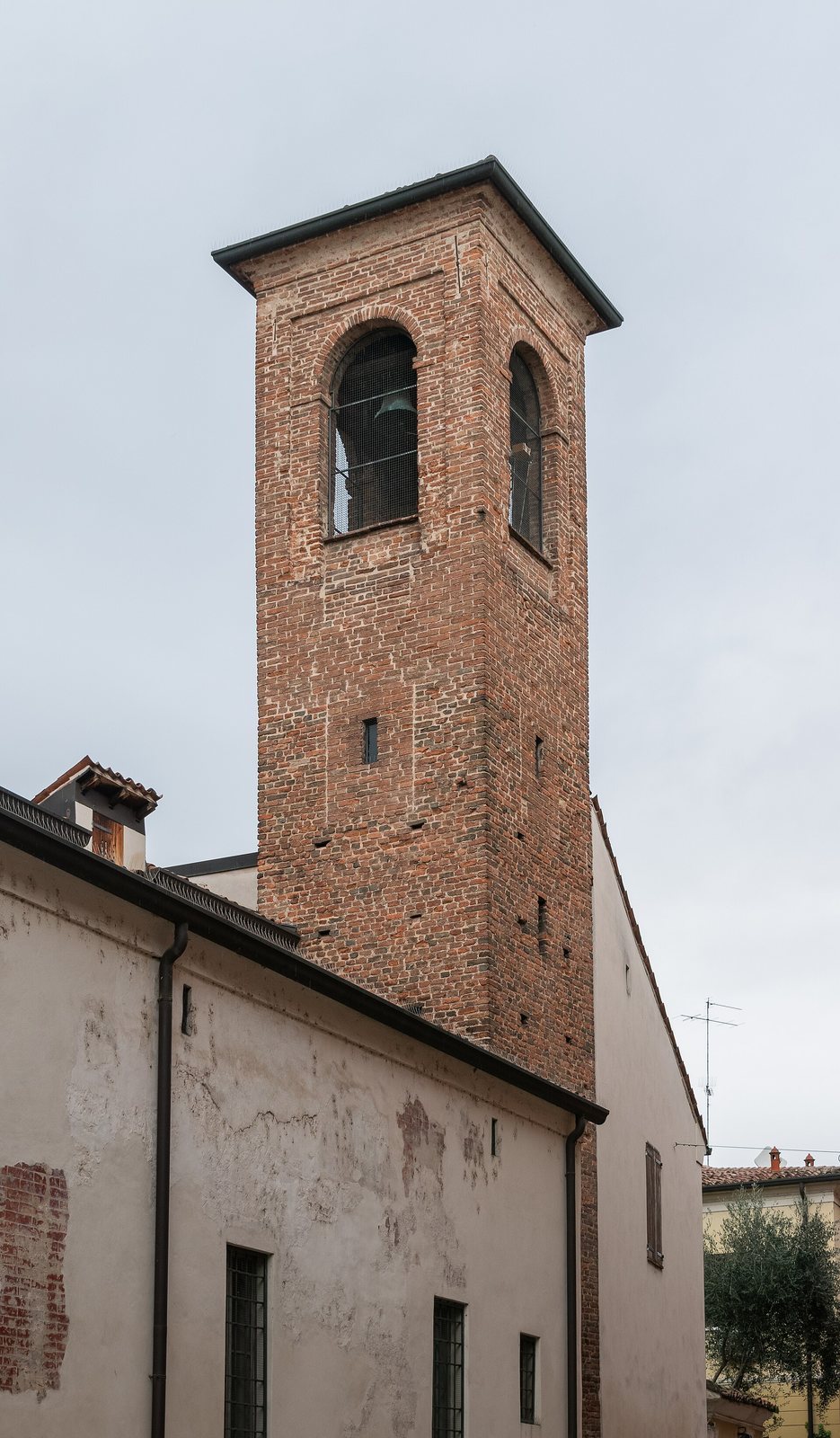
A bell tower was added in the early 15th century. From the middle of that century, the parish declined.
Rebuilding and court associations
In 1593, at Bishop Francesco Gonzaga’s urging and in response to the church’s poor condition, the building was almost completely rebuilt and enlarged from its original single-nave plan. Gonzaga belonged to Mantua’s ruling dynasty.
On 20 May 1599, court composer Claudio Monteverdi married Claudia Cattaneo, a singer at the Gonzaga court, in the church. Their firstborn son was baptized there in 1601.
Architect Antonio Maria Viani, appointed by Duke Vincenzo I in 1591 to oversee the ducal building works, was a friend of the parish priest. At his own request, Viani was buried in the church in 1638.
Baroque transformations and later use
The church took on its Baroque character during the 17th century. In 1775, its interior was extensively remodelled and the apse, the projecting end of the church, was lengthened.
During the War of the Second Coalition, a conflict between revolutionary France and European powers in the late 18th and early 19th centuries, French troops requisitioned the church for use as a camp. A decree dated 22 June 1805 suppressed the parish and joined it to the parish of Sant’Andrea, leaving Santi Simone e Giuda as a subsidiary church.
The church was restored in 1827 and again in 1911, when work was limited to the façade. After it closed in the early 2000s, the church and its bell tower underwent further restoration. Since 2008, Mass has been celebrated there in the Tridentine form of Roman Catholic worship, associated with the Roman Missal standardized after the Council of Trent.
Remains
Exterior
Church and façade
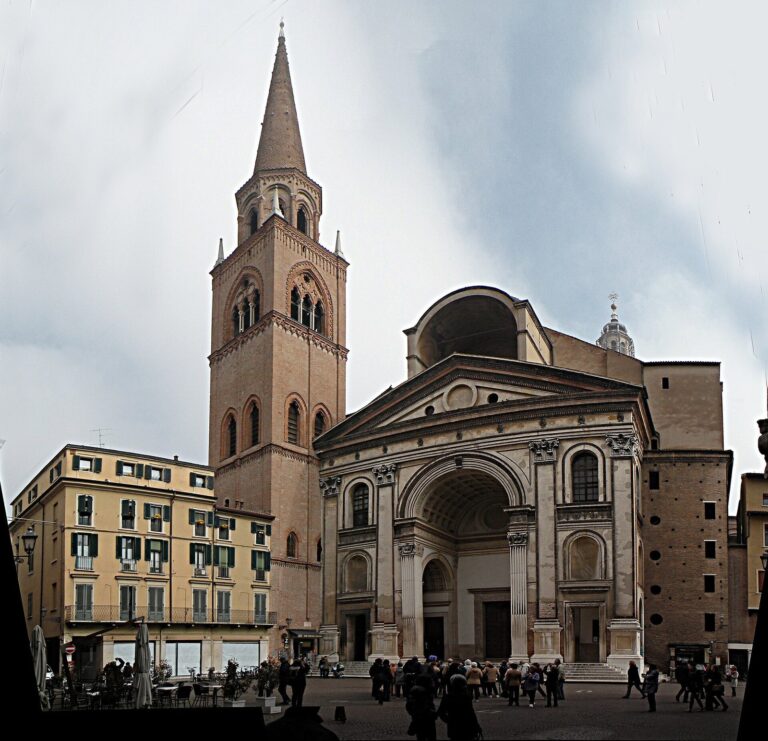
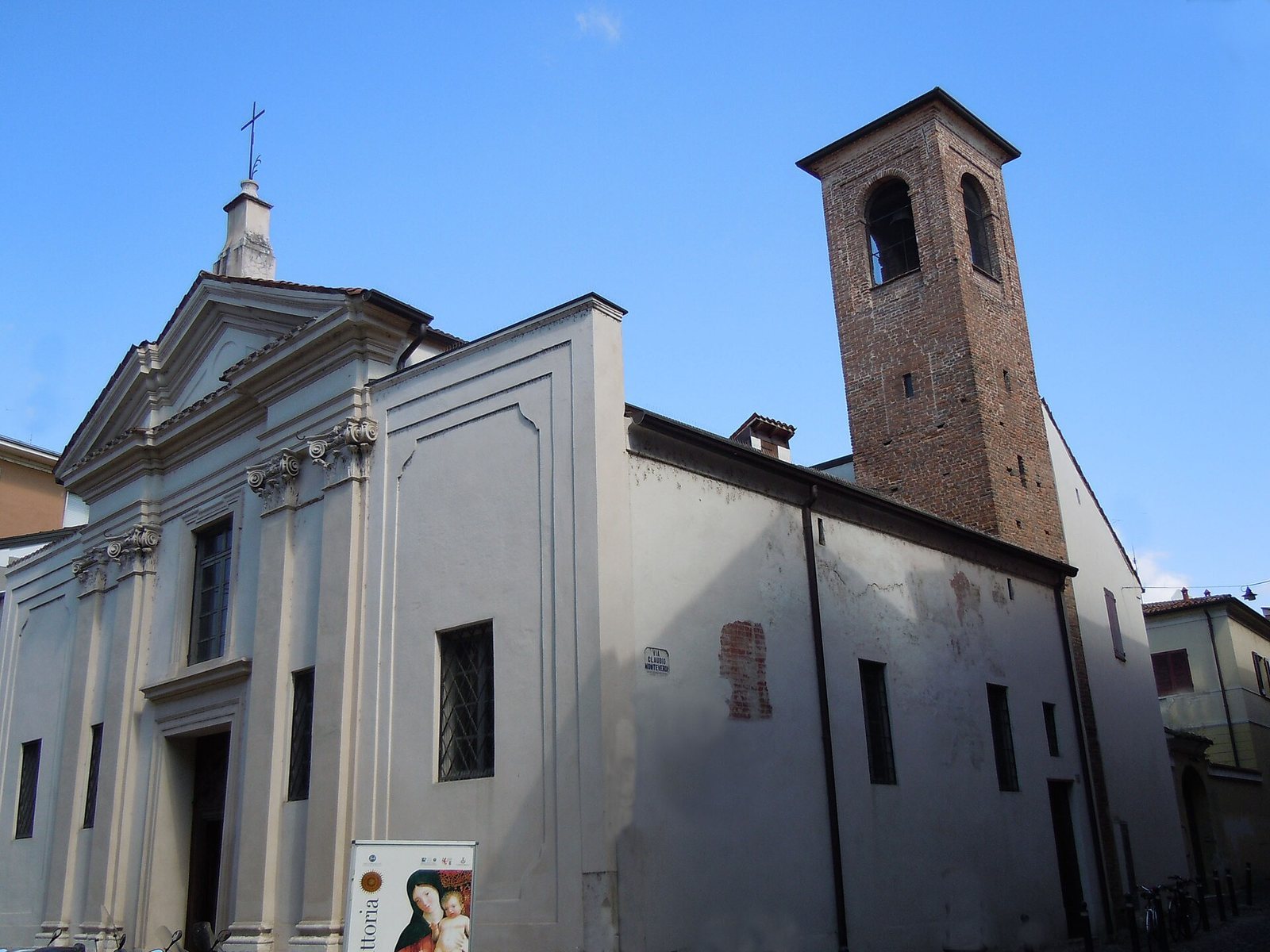
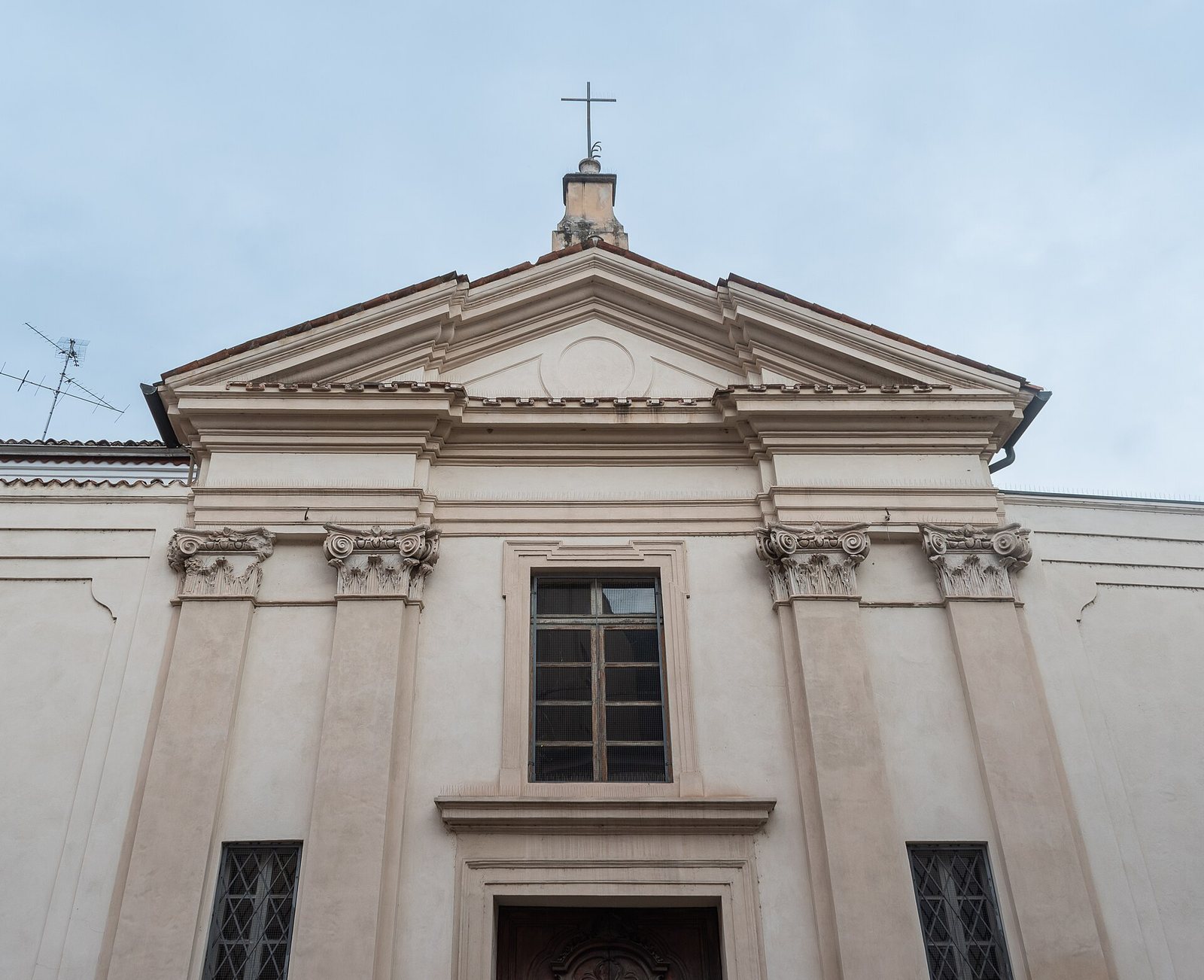
The church stands in Mantua’s former port district beside the Mincio. Its long, three-aisled plan is built of brick. The three-part main façade follows the asymmetrical arrangement of the interior and has a classical Baroque design. Two pairs of shallow attached columns flank the entrance; their capitals combine Ionic and Corinthian features, and they support a pediment enclosing a central field.
Bell tower
The bell tower is built of brick, like the church.
Interior and furnishings
Ceiling and wall decoration
The interior has stucco work and wall paintings, as well as a continuous, tunnel-shaped ceiling. Its ceiling paintings date from the 18th century and are by Giorgio Anselmi.
Chapels and altars
Each side aisle contains two small chapels. Their four altars look like marble but are made of plaster and wood. Three are dedicated to the Virgin Mary and have different Marian images; the fourth is dedicated to Saint Anselm of Lucca, an 11th-century bishop and saint. Francesco Borgani painted the Saint Anselm altarpiece. A guide published in 1833 described a Borgani painting of the saint blessing the church of St Paul in Due Castelli. An altarpiece showing the Madonna and Child is by Anselmi.
Choir fittings
Two choir galleries and two wooden booths for confession were installed in 1694.
James Crichton memorial
A bilingual Italian-and-English plaque is set inside the church to the right of the entrance. It commemorates James Crichton, a Scottish scholar who briefly visited the court of Guglielmo Gonzaga. In 1582, Crichton was killed during a clash involving a sword and dagger with Guglielmo’s son, the future Duke Vincenzo I. He is said to have received his final absolution in this church. His descendant Douglas Crichton placed the plaque in 1914 to commemorate James’s time in Mantua.