San Cesario Church: Romanesque Parish Church in San Cesario sul Panaro, Italy
Site at a Glance
- Popularity
- Low
- Country
- Italy
- Primary era
- Medieval
- Eras represented
- Classical, Medieval, Early Modern
- Civilizations
- Holy Roman Empire, Roman
- Site type
- Religious
- Remains
- Church
On this page10 sections
History
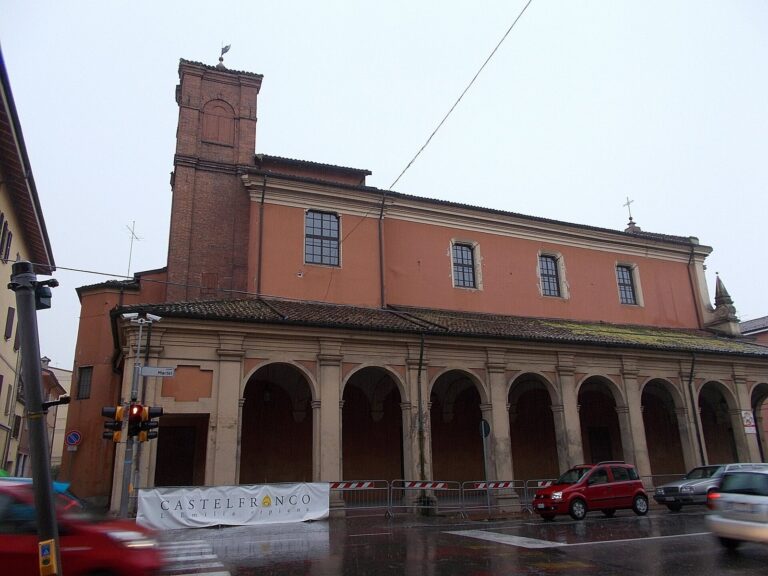
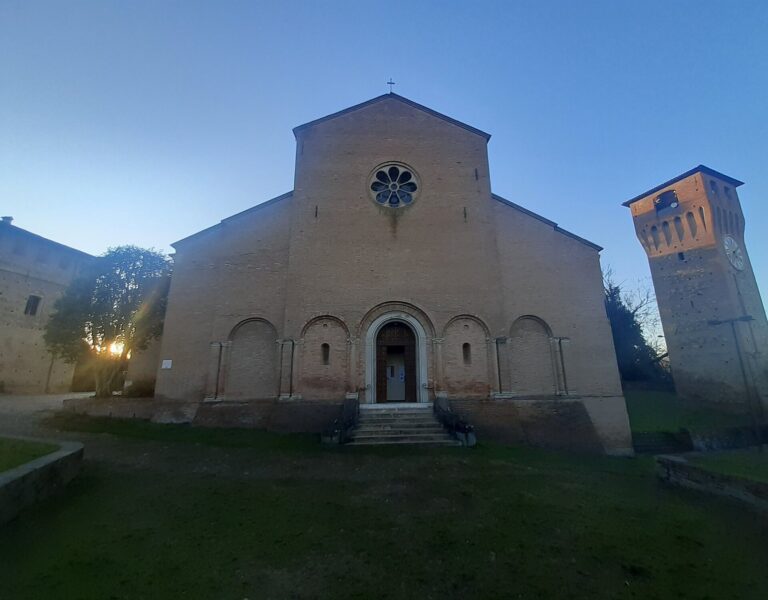
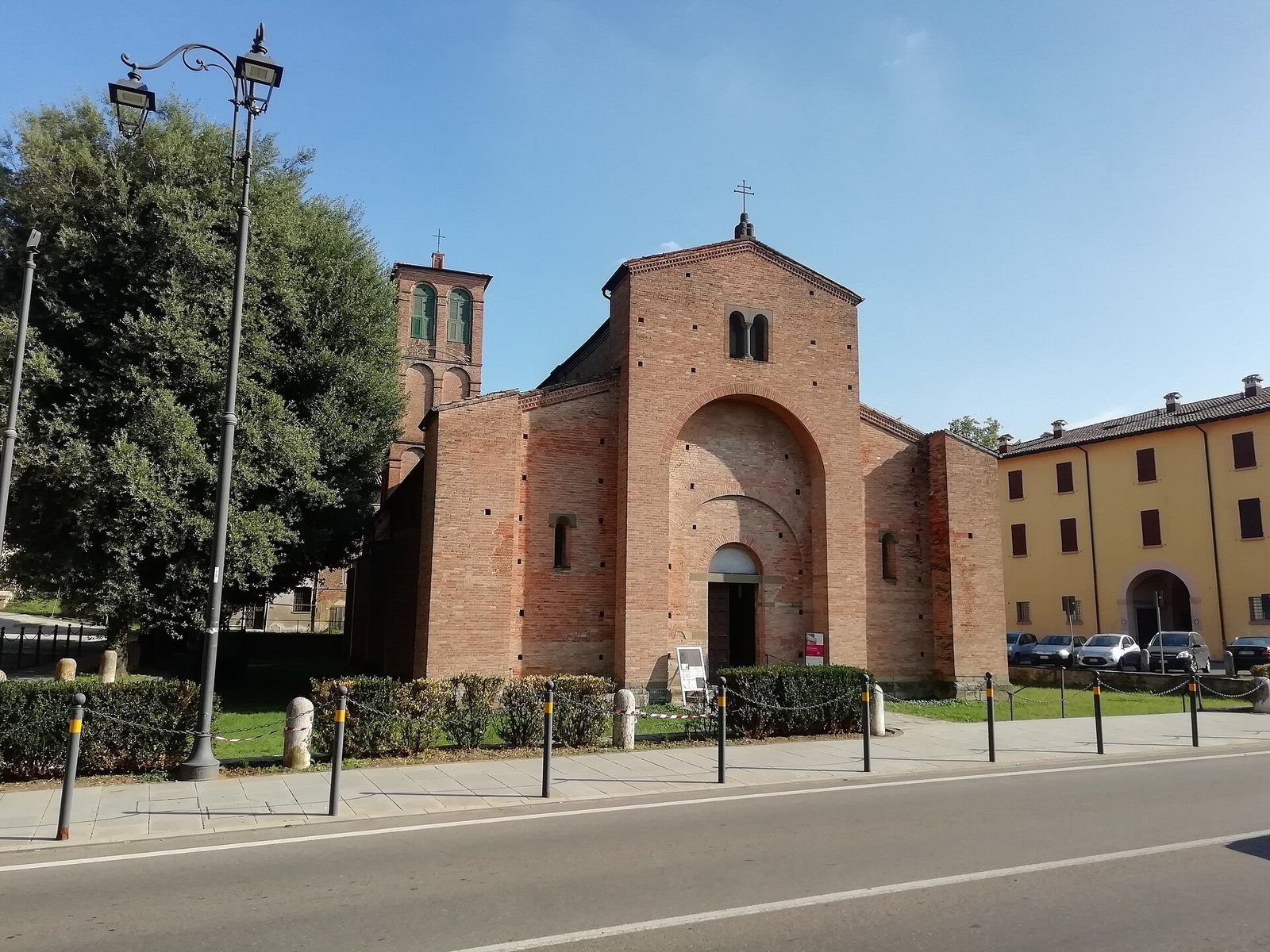
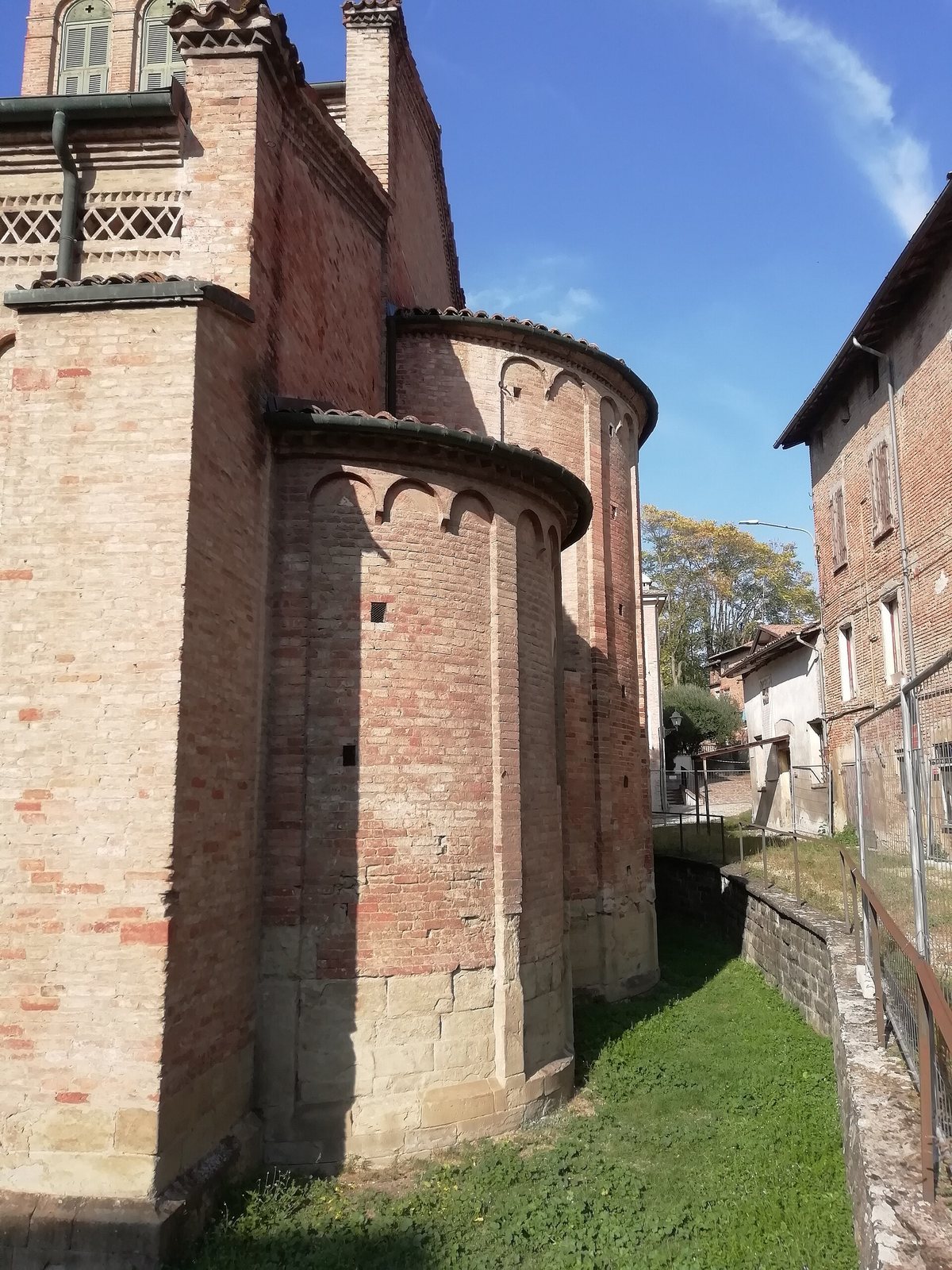
San Cesario Church is the Roman Catholic parish church of San Cesario sul Panaro, Italy. Its architecture is described as Romanesque, a medieval style, and Neo-Romanesque, a later revival of that style. The church belongs to the Archdiocese of Modena-Nonantola, an ecclesiastical district led by an archbishop, and the Pedemontana Est vicariate, a smaller church administrative district.
Early church and medieval phases
The settlement’s first church may have been built in the fifth century, and its portico was altered in the seventh or eighth century. In the early ninth century, the area then known as Vilzacara was given to the Abbey of San Silvestro of Nonantola. The church was probably rebuilt in the tenth century.
In 1112, Matilda of Canossa, a powerful medieval ruler and landholder to whom the settlement belonged, ended the Nonantola abbey’s influence there and introduced regular canons, clergy who lived according to a shared religious rule. In 1135, responsibility for the church’s pastoral care passed to monks from the Abbey of San Benedetto in Polirone. The church was rebuilt in the twelfth century.
Patronage, fire, and later changes
The Boschetti family received the right of patronage over the church in 1367, a legal right to exercise patronage over it. A fire almost entirely destroyed the building in 1438, leading to extensive restoration. In 1544, Susanna Pico della Mirandola, a noblewoman and widow of Roberto Boschetti, provided funds for the bell tower.
In 1639, the church received a relic, a physical object associated with a revered religious figure: the jawbone of San Cesario of Terracina, a Christian deacon and martyr. A restoration in 1666 gave the church a Baroque appearance. Further changes followed in 1772, and the sacristy was renovated in 1777. Four bells were added to the two already in the tower in 1833.
Modern restoration
The Boschetti family’s patronage ended on 23 January 1903. On 6 June 1944, work began to restore the church to its Romanesque style, with support from the parish priest then in office. The project was interrupted and restarted several times before reaching completion around the mid-1960s. The roof was renovated in 2009.
Remains
Interior layout and furnishings
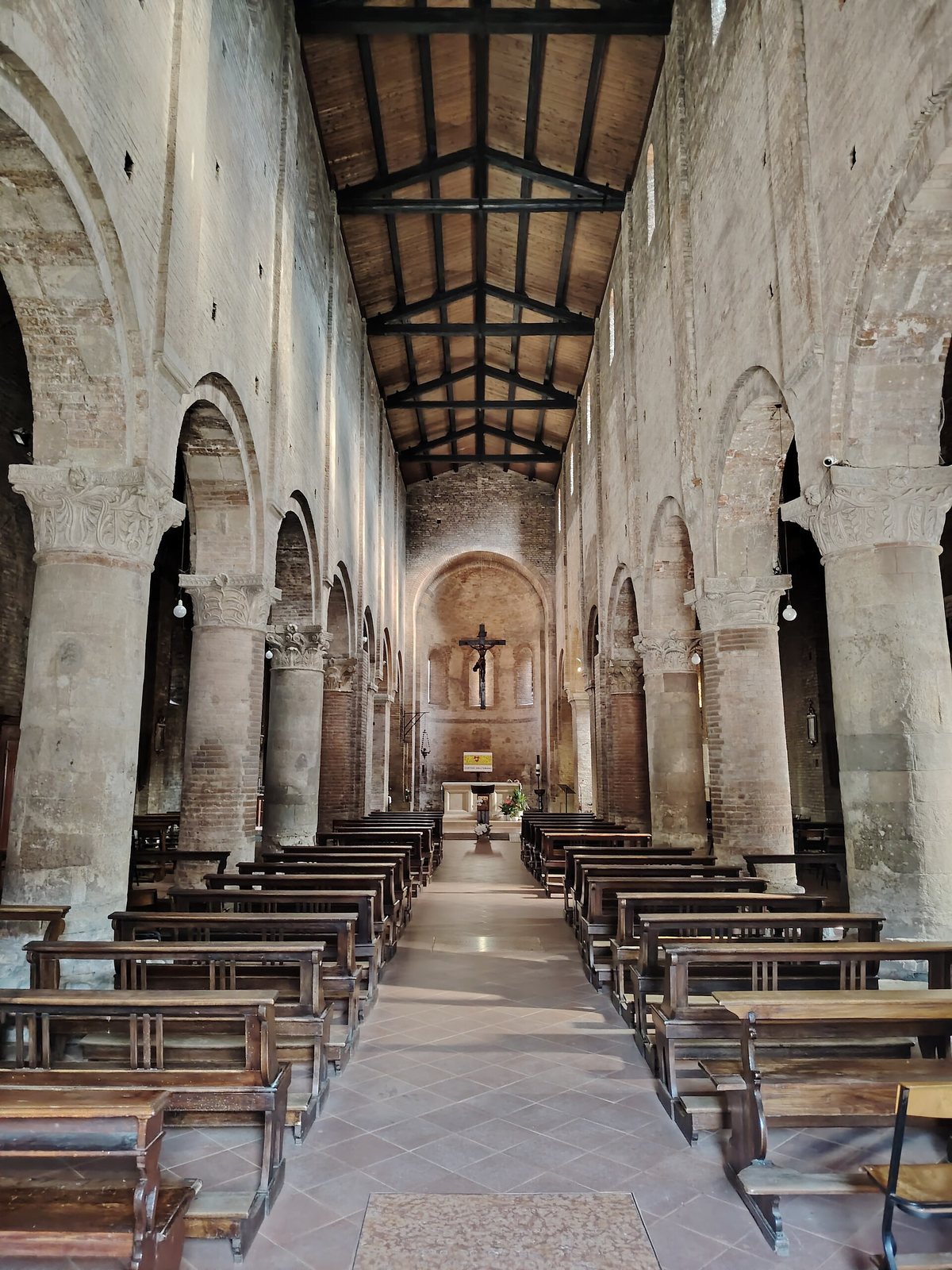
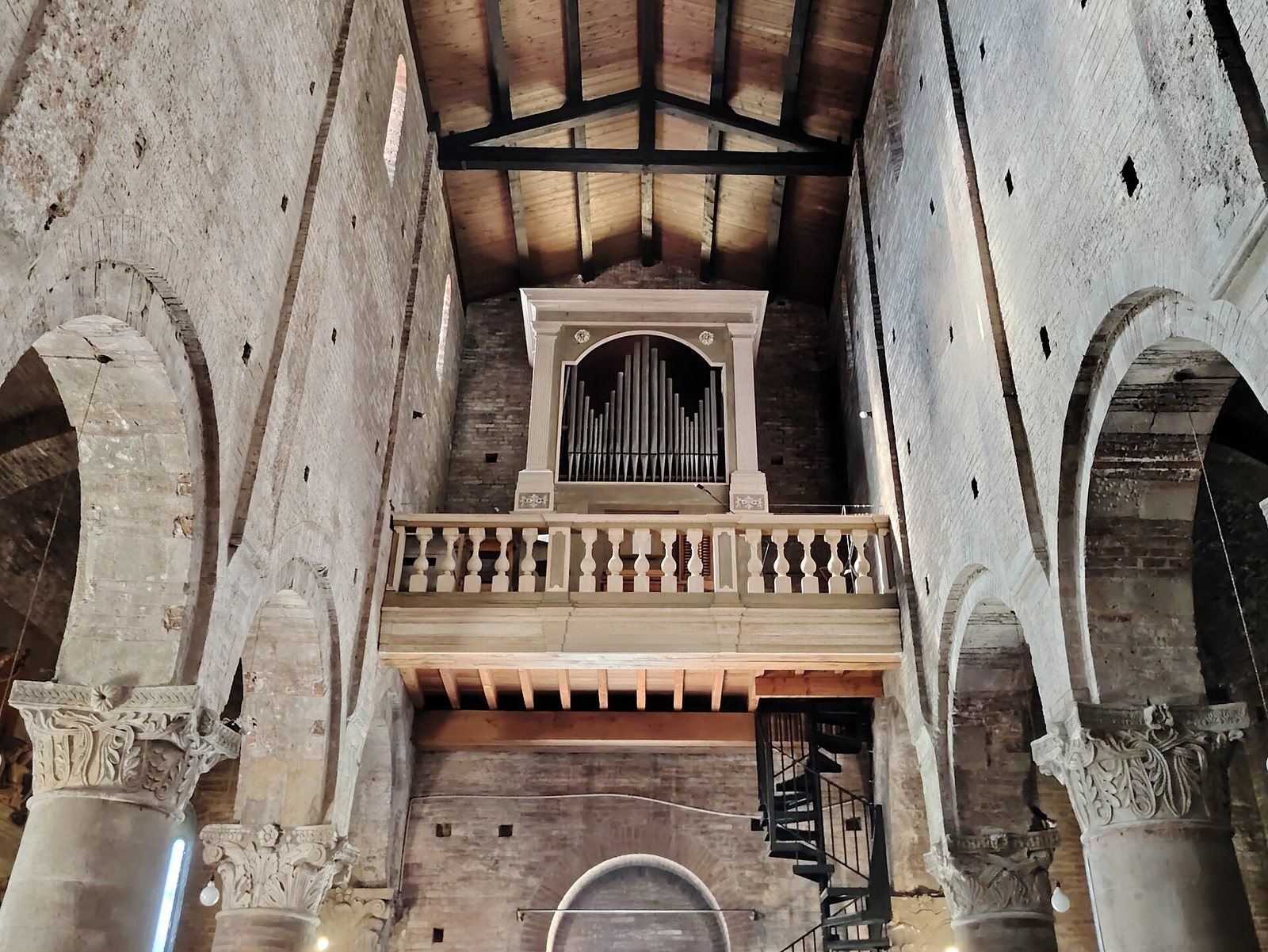
The church has a central nave flanked by two side aisles, with Roman columns dividing the space. Their carved tops belong to the pre-Romanesque period, before the development of Romanesque architecture. A bell tower is also part of the church.
Right aisle
A fragment of a marble doorway jamb, dated to about 1130, probably came from the church’s marble portal. The aisle also contains a terracotta low-relief sculpture of the Madonna and Child, attributed to the school of Renaissance sculptor Antonio Rossellino.
An eighteenth-century altar front of plaster painted to resemble marble has a central relief of the Veil of Veronica, a devotional image of Christ’s face, surrounded by objects associated with his suffering and death. Above it is a sixteenth-century fresco by an unknown artist showing Jesus in the Garden of Gethsemane.
Left aisle
The altar dedicated to San Cesario the deacon and martyr has a veined-marble front dated to the fifth or sixth century. It was found during excavations at the position of the church’s central altar. The aisle also holds Giacomo Cavedoni’s painting Saint Joseph in Glory. At its end, a fifteenth-century marble column top supports a terracotta statue of San Cesario dated to 1878.
Burials and funerary monument
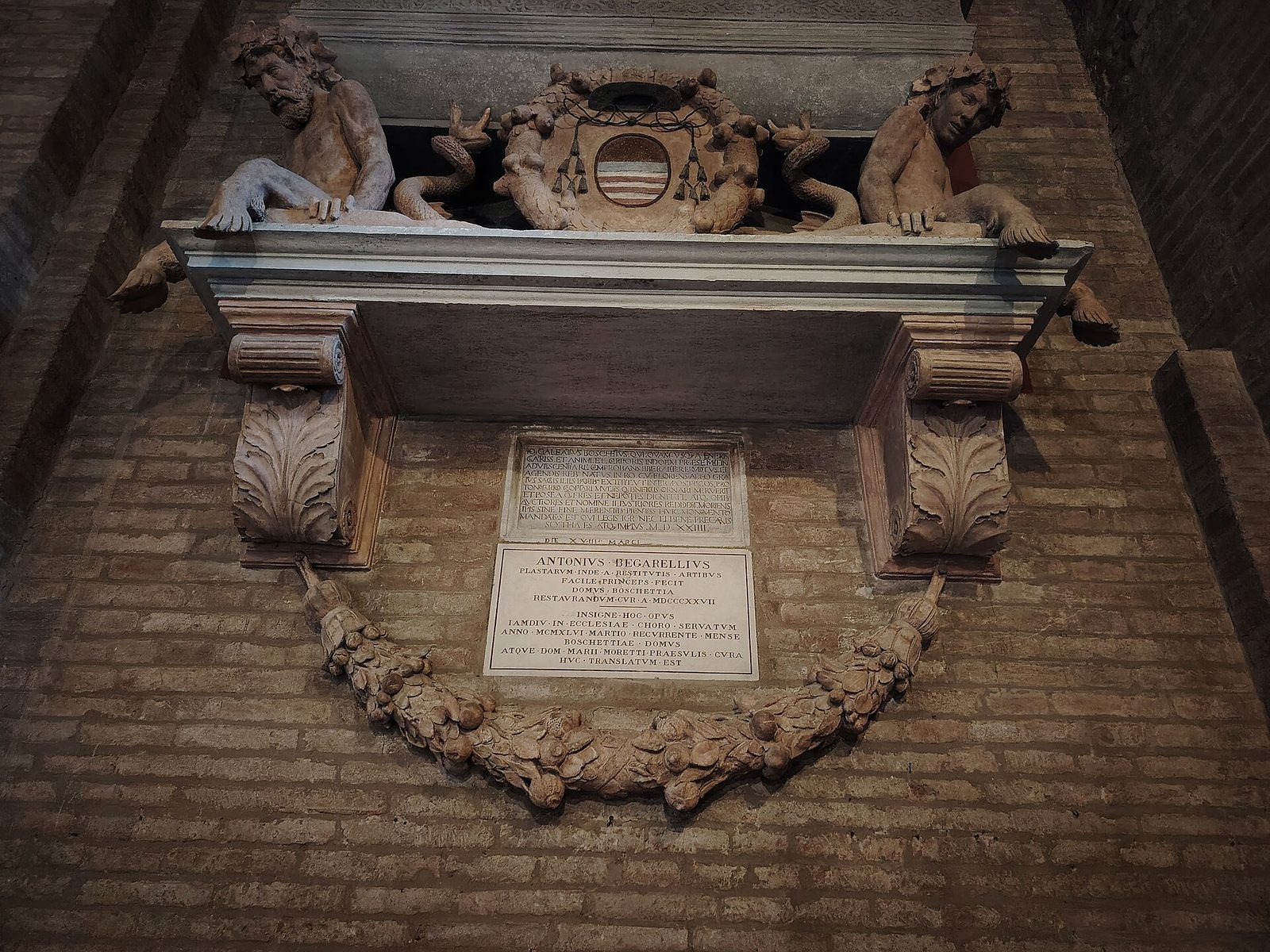
Beneath the altar containing the tabernacle is a tomb dated to the fourth or fifth century, built with covering slabs arranged like a pitched roof. The church also contains the funerary monument of Gian Galeazzo Boschetti, made in the first half of the sixteenth century by Renaissance sculptor Antonio Begarelli. Its tomb chest is decorated with terracotta sculptures.
Nativity group and organ
A statue group depicts the Nativity of Jesus with Joseph and the Virgin Mary. An organ is also among the church’s interior features.