Rabenstein Castle: A Medieval Rock Castle Protecting St. Paul’s Abbey
Site at a Glance
- Rating
- 4.6
- Popularity
- Low
- Country
- Austria
- Primary era
- Medieval
- Eras represented
- Medieval, Early Modern
- Civilizations
- Habsburg, Holy Roman Empire
- Site type
- Military
- Remains
- Castle
On this page12 sections
History
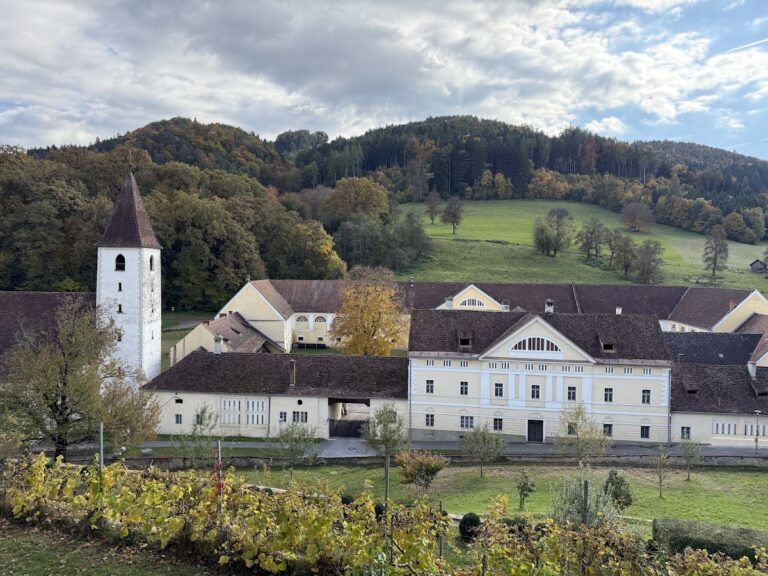
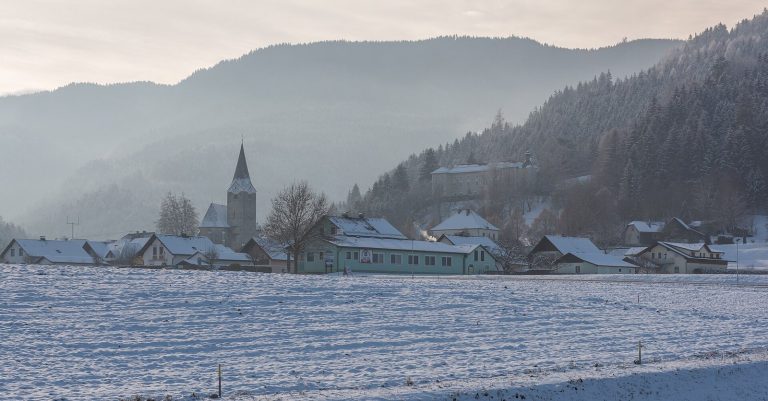
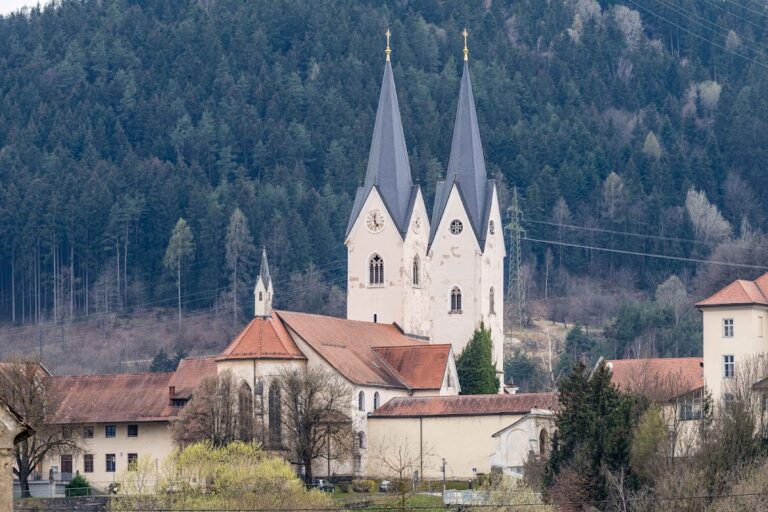
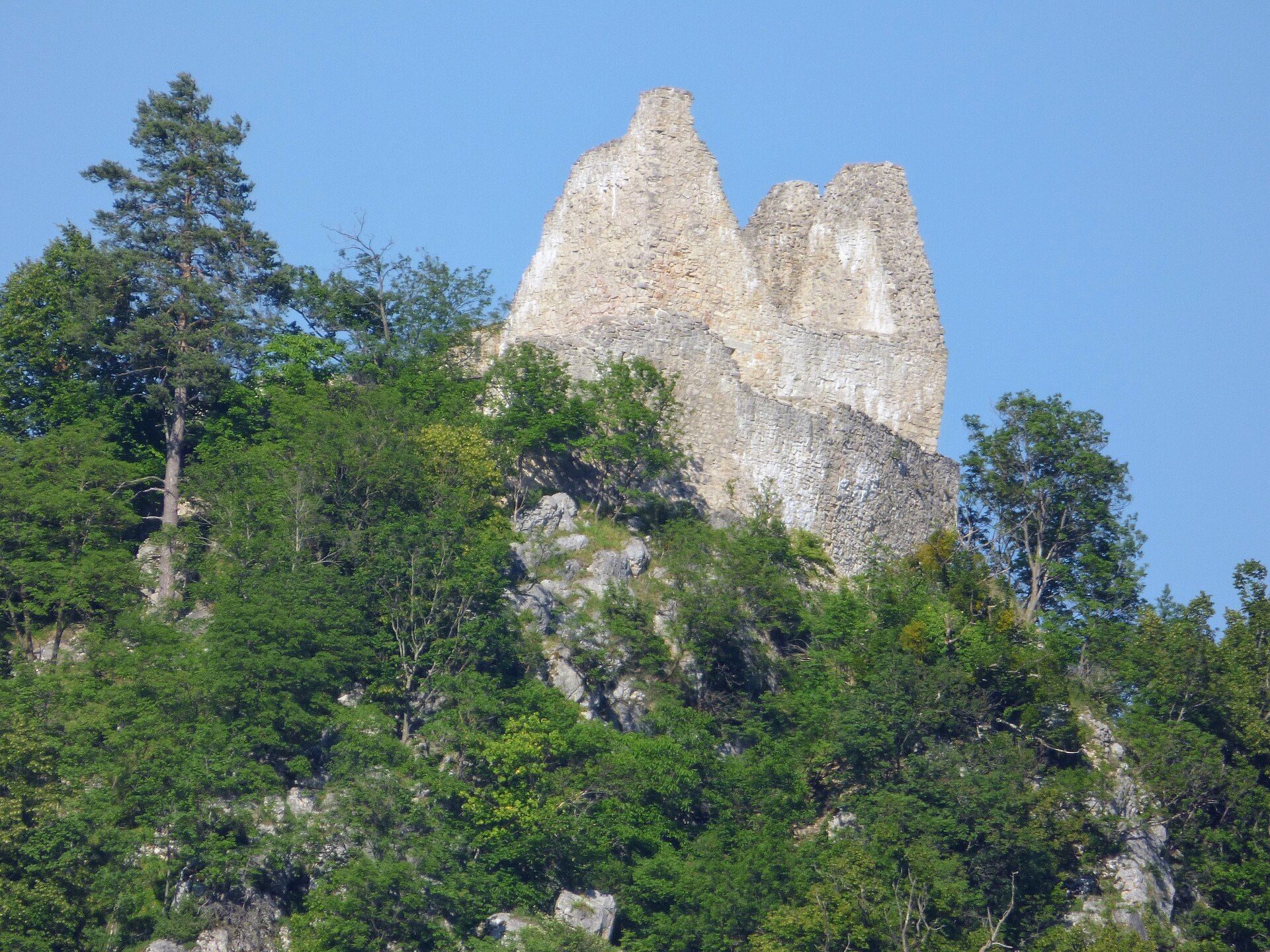
Rabenstein Castle is a former rock castle in Austria, about 300 metres south of St. Paul im Lavanttal, built around 1100 to protect St. Paul’s Abbey and the settlement around it. Rising on a 691-metre-high rocky hill, the castle occupied a strategically and climatically favourable position that supported settlement from prehistoric times into the early modern period.
Early fortress and noble ownership
Rabenstein Hill has produced Neolithic artefacts, while traces of Bronze Age and Iron Age settlement occur in the surrounding St. Paul mountains. The medieval stronghold began as a watchtower. After Engelbert I, Count of Spanheim and founder of St. Paul’s Abbey in 1091, expanded the site into a castle, it passed after his death in 1096 to his son Siegfried II, Count of Lebenau.
One family of castle lords adopted the name von Ramenstain or Rabenstein. Its line ended with Albertus de Ramenstain in 1200. The castle then passed to the counts of Pfannberg through the marriage of Ulrich of Peggau-Pfannberg to the last female descendant of the counts of Lebenau.
Salzburg rule and destruction in 1307
From 1300, Rabenstein belonged to the archbishops of Salzburg, senior bishops who governed an ecclesiastical province. Their officials administered the castle, while its lords repeatedly quarrelled and fought with the monks of St. Paul’s Abbey over revenues, property, fields, meadows, forests, vineyards, other income, and peasant services.
In 1307, a dispute over the Bohemian crown involved Duke Henry VI of Carinthia, Wenceslaus III, king of Bohemia, Rudolf, another claimant, and Emperor Albert I. Because Albert was not to receive the castle’s lordship, he ordered Otto von Weizzeneck to besiege and destroy Rabenstein. Albert then granted the property to Konrad IV, Bishop of Salzburg and one of his advisers. Konrad promptly rebuilt and enlarged the castle, later granting it as a fief to Burkhard II of Vanstorf.
Imperial ownership and Renaissance transformation
Emperor Frederick III bought the castle complex in 1461. It survived the Ottoman burning of the market town of St. Paul in 1476. Frederick’s son, Emperor Maximilian I, inherited the estate and sold it in 1514 to Franz von Dietrichstein of Weichselstädt.
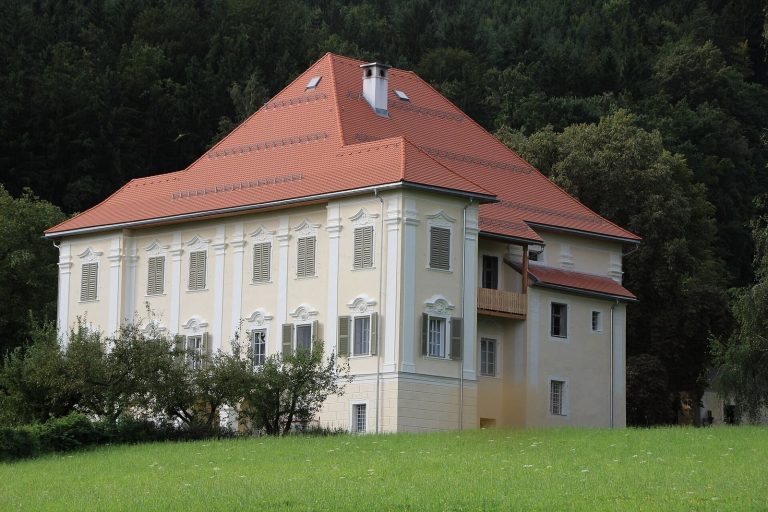
Seyfried von Dietrichstein of Weichselstädt transformed the fortress into a Renaissance palace in 1567. The property remained with the Dietrichstein noble family for about sixty years, then passed temporarily to the territorial ruler before being sold to Hans Ulrich von Eggenberg, Prince of Eggenberg. Eggenberg sold it again in 1629.
Abbey possession, fire, and later preservation
Rabenstein returned to St. Paul’s Abbey in 1629. Abbot Hieronymus Marchstaller had the chapel remodelled in the Baroque style, and the redesigned chapel was dedicated four years later.
A major fire destroyed the castle in 1636. Marchstaller was suspected of ordering it because the castle allowed his cell to be observed with a telescope, although careless peasants were also accused. The castle was not rebuilt and became a ruin. The fire left almost nothing standing apart from the chapel.
Emperor Joseph II dissolved St. Paul’s Abbey during the Josephine Reforms of 1787, a programme of religious and administrative change in the Habsburg monarchy. The abbey’s possessions, including Rabenstein Castle, passed to the state Religious Fund, which administered property taken from dissolved religious foundations. In the nineteenth century, the Rabenstein estate entered private ownership and remains privately owned.
From the late twentieth century, the surviving remains were secured. Renovation work between 1997 and 2002, involving the municipality of St. Paul, the Austrian Public Employment Service, the Province of Carinthia, and the Federal Chancellery, helped preserve the ruins.
Remains
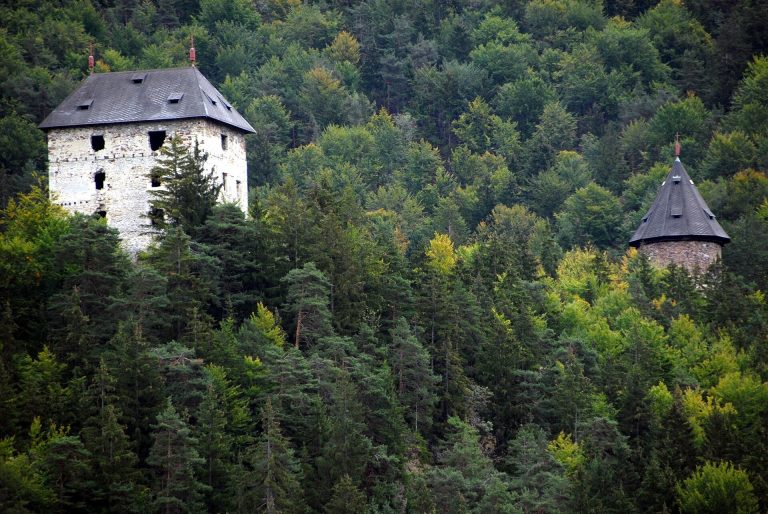
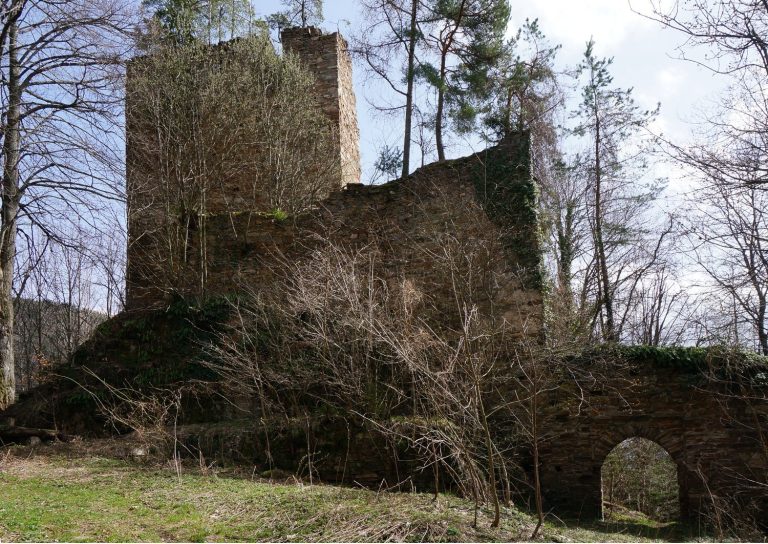
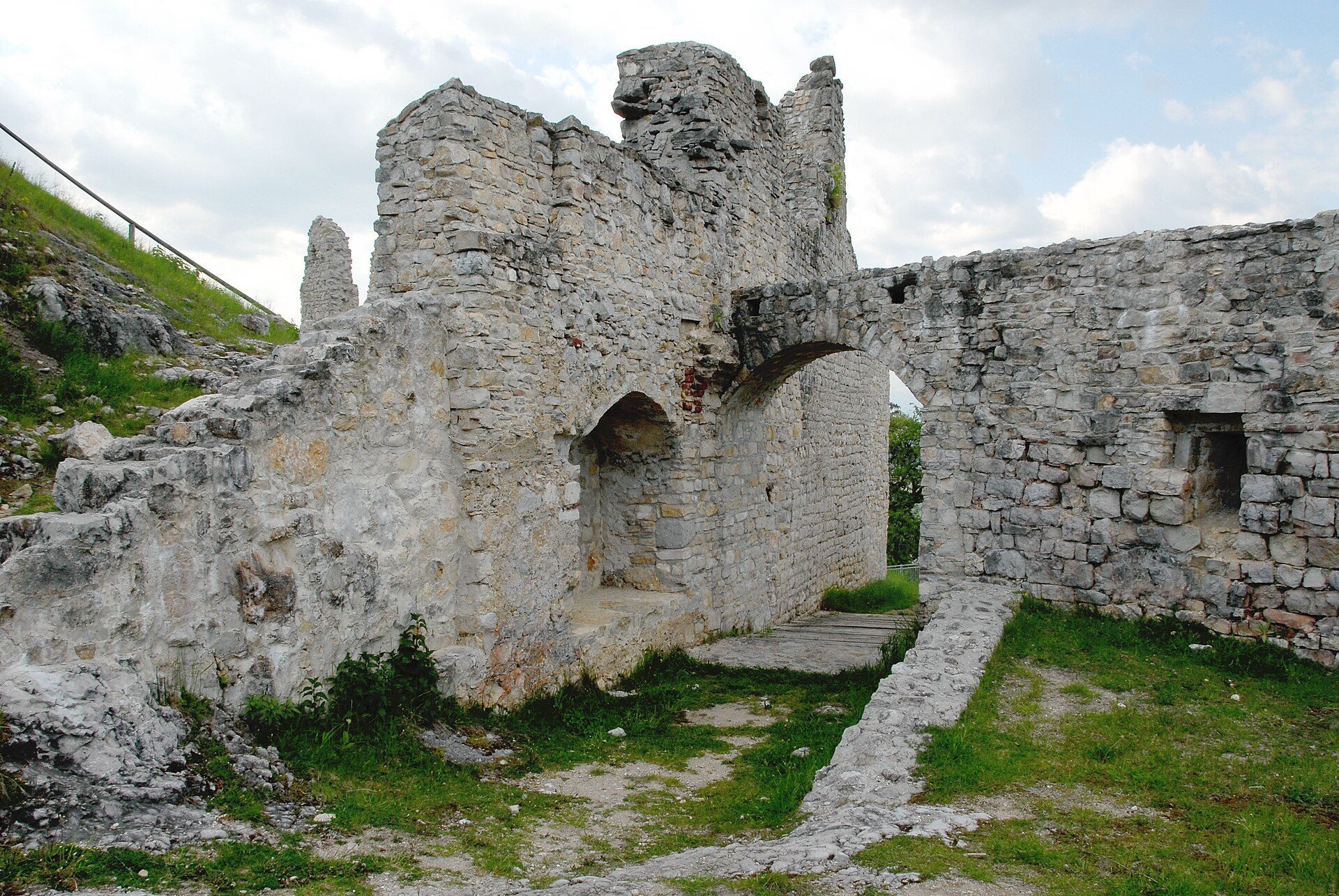
The ruin occupies the highest part of a steep rocky hill that falls away on three sides. Its elevated position defines Rabenstein as a rock castle. Surviving elements include parts of the early fortress, the keep, residential buildings, the chapel, the northern barbican, and sections of the enclosing wall.
Fortifications and principal tower
Early fortress and castle wall
Parts of the eleventh-century fortress remain visible, rising to as many as three storeys. The heavily damaged castle wall dates from the twelfth and thirteenth centuries. It was built with double-shell masonry, meaning two outer wall faces joined by a filled or bonded interior. Weathering has largely destroyed the outer shell, while much of the wall was dismantled and its stone reused in surrounding structures.
Keep and northern barbican
The keep stands at the highest point of the rock and was built in 1307 during the rebuilding ordered by Konrad IV. Originally square, it retains three walls. A semicircular barbican, an outer defensive work protecting an entrance or approach, survives on the northern side of the complex.
Residential and religious buildings
Palas and later additions
The palas, the principal residential and representative building of a medieval castle, stood south of the keep alongside additional buildings. Remains of the palas and other additions from the thirteenth and fourteenth centuries remain visible above the settlement.
Castle chapel
Remains of the castle chapel survive within the ruin. A document mentioned the chapel in 1240, and it was later remodelled in the Baroque period after Rabenstein returned to St. Paul’s Abbey. The chapel was the main element to remain standing after the fire of 1636, while the castle as a whole was never reconstructed.